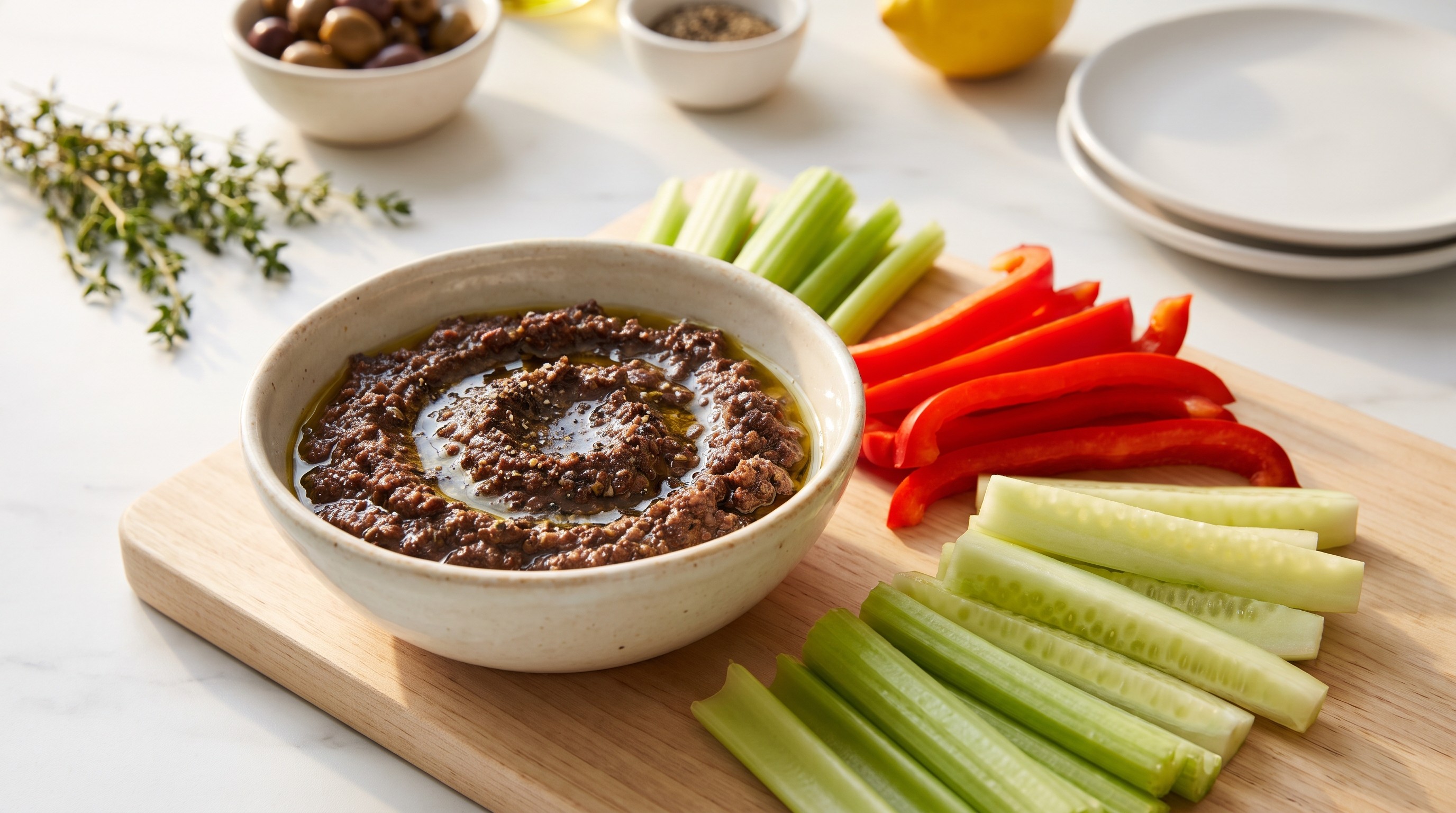
Tapenade Provençale with Crudités
A bold, briny Provençal olive spread paired with crisp vegetable batons — naturally low-glycemic, rich in healthy fats, and ready in just ten minutes.
This classic Provençal tapenade is a blood-sugar-friendly powerhouse hiding in plain sight. Built on a base of Kalamata olives, capers, and anchovies, it delivers intense Mediterranean flavour with virtually no glycemic impact. The olives and extra-virgin olive oil supply heart-healthy monounsaturated fats that slow gastric emptying, while the anchovies contribute protein and omega-3s — both of which help blunt any residual glucose response from the accompanying vegetables.
Served alongside batons of cucumber, red bell pepper, and celery rather than the traditional baguette slices, the dish swaps refined-flour carbohydrates for fibre-rich, water-dense crudités that sit firmly in the low-GI category (all below GI 40). Cucumber and celery are especially gentle on blood sugar thanks to their high water content and minimal starch, while red bell pepper adds a sweet crunch along with a generous dose of vitamin C, which some research links to improved insulin sensitivity.
For the best glycemic outcome, eat the vegetable batons first — their fibre creates a gentle buffer in the stomach — then follow with the fat-and-protein-rich tapenade. This "vegetables first" sequencing can reduce post-meal glucose spikes by up to 30 percent. The recipe makes a perfect pre-dinner appetiser, afternoon snack, or light lunch component. Pair it with a handful of walnuts or a small portion of aged cheese to add even more satiating protein and further flatten the glucose curve.
Blood Sugar Impact
Very minimal blood sugar impact expected. The combination of healthy fats from olives and olive oil, protein from anchovies, and high-fiber raw vegetables results in an extremely low glycemic load of 2.9, keeping blood sugar virtually flat.
Blood Sugar Tips
- ✓ Start with the raw crudités (cucumber, celery, bell peppers) to load up on fiber before dipping into the tapenade.
- ✓ Use this as a starter before a main course — the fats and fiber will slow gastric emptying and blunt the glucose response of whatever follows.
- ✓ Pair with a small handful of nuts or a slice of whole-grain bread to turn this into a more satiating snack without significantly raising the glycemic load.
🥗 Ingredients
- 150 g Black olive
- 20 g Caper
- 30 g Anchovy fillet
- 1 pcs Garlic
- 2 tsp Lemon juice
- 2 tbsp Extra virgin olive oil
- 1 g Black pepper
- 150 g Cucumber
- 150 g Red bell pepper
- 100 g Celery
- 5.3 oz Black olive
- 0.7 oz Caper
- 1.1 oz Anchovy fillet
- 1 pcs Garlic
- 2 tsp Lemon juice
- 2 tbsp Extra virgin olive oil
- 0.0 oz Black pepper
- 5.3 oz Cucumber
- 5.3 oz Red bell pepper
- 3.5 oz Celery
👨🍳 Instructions
- 1
Place the drained capers and anchovy fillets on a double layer of paper towel. Press gently to wick away excess brine and oil — removing this surface moisture prevents the tapenade from becoming too loose or salty.
- 2
Peel the garlic clove and halve it lengthwise. If the green germ in the centre is visible, remove it to avoid any bitter edge.
- 3
Add the pitted black olives, blotted capers, anchovy fillets, garlic, lemon juice, and black pepper to a food processor. Do not add the olive oil yet.
- 4
Pulse the mixture 8 to 10 times in short, sharp bursts. Scrape down the sides of the bowl between pulses. You are aiming for a coarse, rustic chop — the tapenade should have visible pieces, not a smooth purée.
- 5
Set the processor to run continuously and pour the extra-virgin olive oil through the feed tube in a slow, steady stream. Stop as soon as the paste comes together and looks spreadable — over-processing will make it gummy.
- 6
Taste the tapenade and adjust the seasoning if needed. A few extra grinds of black pepper or a small squeeze of lemon can brighten it. Transfer to a small serving bowl.
- 7
Prepare the crudités: slice the cucumber into finger-length batons, cut the red bell pepper into strips roughly the same width, and trim the celery into sticks. Keep the pieces uniform so they are easy to dip.
- 8
Arrange the vegetable batons around the bowl of tapenade on a serving plate. For the best blood-sugar response, start by eating a few pieces of the raw vegetables on their own before dipping into the tapenade — the fibre and water content create a gentle buffer that flattens the glucose curve of the entire snack.
📊 Nutrition Per Serving
| Per Serving | Whole Dish | |
|---|---|---|
| Calories | 302 | 604 |
| Carbs | 15g | 30g |
| Sugars | 5g | 11g |
| Natural Sugars | 5g | 11g |
| Protein | 7g | 14g |
| Fat | 25g | 50g |
| Saturated Fat | 4g | 9g |
| Unsaturated Fat | 20g | 41g |
| Fiber | 4g | 9g |
| Soluble Fiber | 1g | 3g |
| Insoluble Fiber | 3g | 6g |
| Sodium | 1440mg | 2880mg |
Predicted Glucose Response
What if you...
Estimated model — individual responses vary. Not medical advice.
🔄 Lower GI Swaps
Bell peppers already have a low GI (~15), but jicama, broccoli, and endive offer higher fiber-to-carb ratios, resulting in an even lower glycemic load per serving as crudité dippers.
Cucumber is low-GI but has minimal fiber. Zucchini, radishes, and cauliflower provide more dietary fiber per gram of carbohydrate, which further slows glucose absorption and lowers the overall glycemic load.
While garlic is already low-GI, fresh ginger has virtually no impact on blood sugar and contains gingerols that have been associated with improved insulin sensitivity. Raw shallot is similarly very low GL and adds depth of flavor.
Vinegar's acetic acid has been shown in studies to reduce postprandial blood glucose spikes by slowing gastric emptying and improving insulin sensitivity, making it a marginally better choice than lemon juice for glycemic control.
🔬 The Science Behind This Recipe
Here's the science explainer section:
---
Why This Recipe Works for Blood Sugar
This tapenade is a near-perfect blood sugar–friendly food, and the reason comes down to what it's made of — and what it's *not* made of. Olives, the star ingredient, are rich in heart-healthy monounsaturated fats and contain virtually no sugar or starch. When you eat fat alongside any carbohydrates (like the crudités you'll dip into this), it slows down digestion and helps prevent the sharp glucose spike you'd get from eating those vegetables or bread on their own. Anchovy fillets add a punch of protein, which works alongside the fat to further steady your blood sugar response. Think of fat and protein as a "speed bump" for glucose entering your bloodstream — they don't stop it, but they slow everything down beautifully.
With a Glycemic Index of just 19 and a Glycemic Load of 2.9 per serving, this recipe sits firmly in the "very low" category on both scales. Here's the key distinction: the Glycemic Index tells you *how fast* a food raises blood sugar, while the Glycemic Load factors in *how much* you're actually eating. A GL under 10 is considered low — at 2.9, this tapenade barely registers. That's because the recipe is built almost entirely from fats, protein, and flavor-packed ingredients like capers, garlic, and lemon juice, with negligible carbohydrate content to convert into glucose in the first place.
For an extra edge, try eating your crudités and tapenade *before* any starchy part of your meal. Research suggests that starting with vegetables, fats, and proteins — and saving carbohydrates for last — can reduce post-meal glucose spikes significantly. A short 10–15 minute walk after eating helps too, as your muscles actively pull glucose from the bloodstream. This dish makes an ideal appetizer for exactly that reason: enjoy it first, and let it set the stage for steadier energy throughout the rest of your meal.
Related recipes
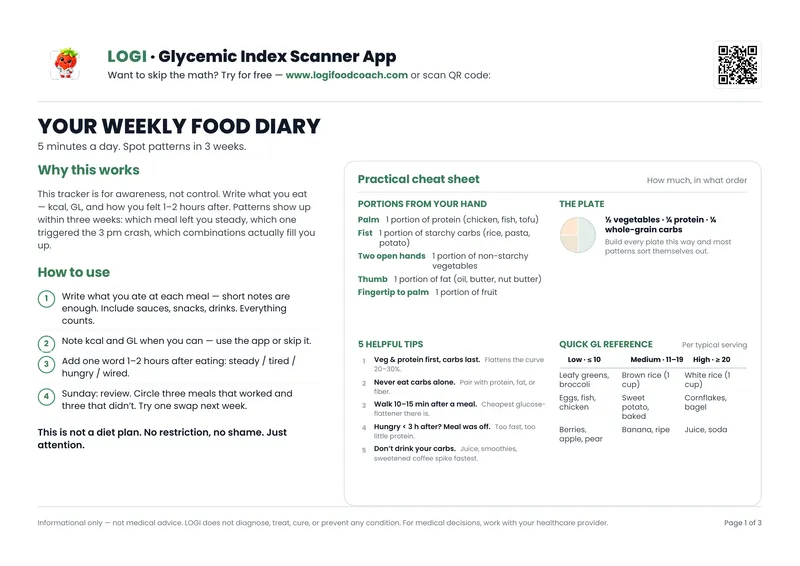
Free PDF — 3 pages
Your Weekly Food Journal
Track meals, glycemic load & mood. Spot patterns in 3 weeks.
No spam. Unsubscribe anytime.