Low-GI Zupa Ogórkowa with Celeriac
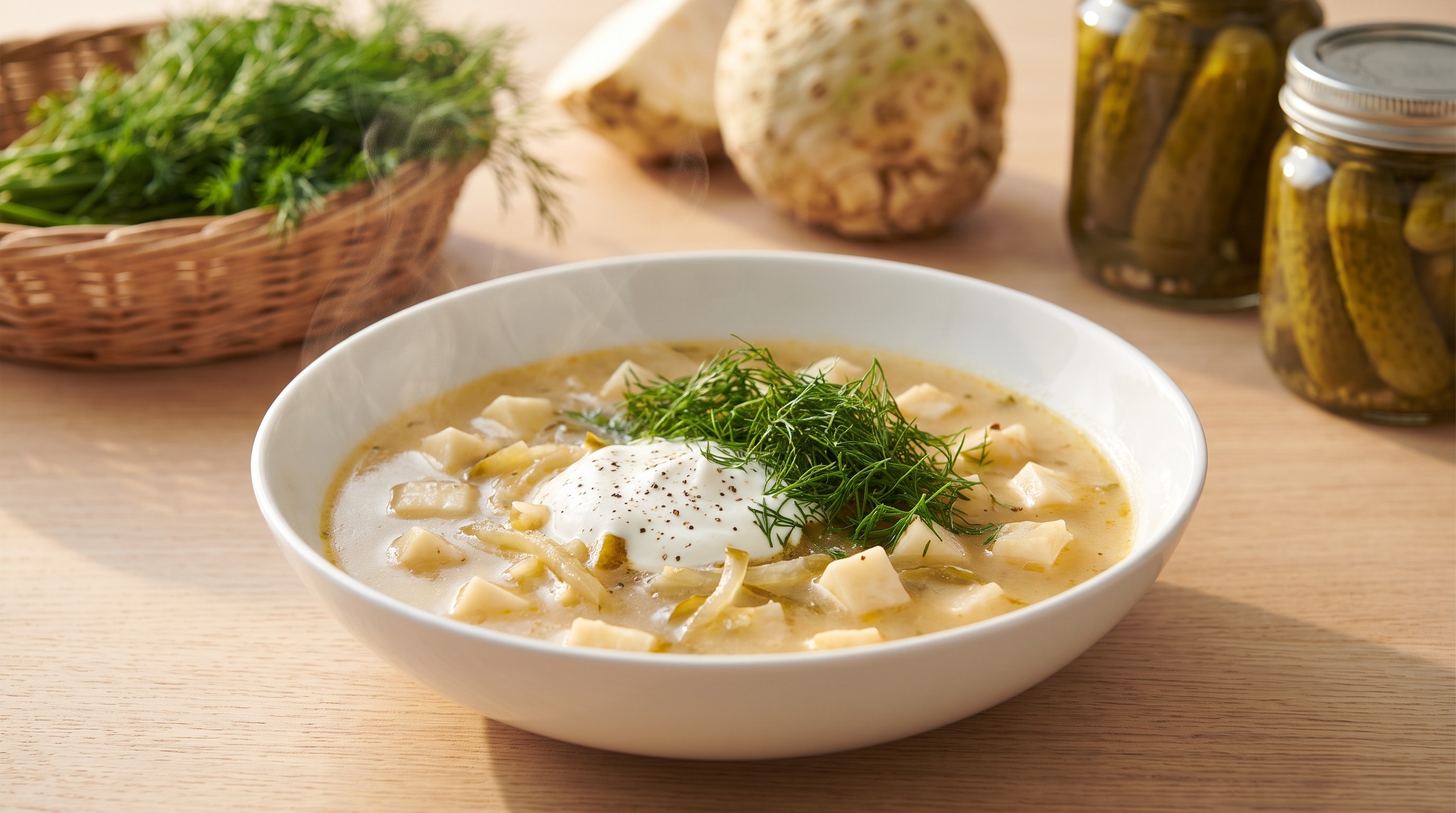
Poland's tangy pickle soup reimagined with celeriac for gentle blood sugar impact — fermented pickles and sour cream add probiotic richness and slow glucose absorption.
This blood-sugar-friendly adaptation of Poland's beloved zupa ogórkowa swaps the traditional heavy potato base for celeriac, a root vegetable with a glycemic index of roughly 35 compared to potato's 78. The result is the same velvety, starchy body the soup is known for, but with significantly less impact on your post-meal glucose curve. A small amount of potato remains for authenticity, but at just one small potato shared across four servings it contributes minimal glycemic load.
The real metabolic star here is the lacto-fermented dill pickles and their brine. The lactic and acetic acids produced during natural fermentation have been shown to slow gastric emptying and improve insulin sensitivity, effectively blunting the glucose response of the entire meal. Combined with the healthy fats from butter and full-fat sour cream — which further decelerate carbohydrate absorption — this soup delivers a remarkably flat blood sugar profile for a comfort-food classic.
For optimal glycemic results, serve this soup as a starter before a protein-rich main course. The vinegar-like acids in the pickle brine prime your digestive system, and eating the vegetable-dense broth first means fibre and fat reach your stomach before any starchier components of your meal. A generous finishing shower of fresh dill adds not just flavour but also antioxidant polyphenols that support metabolic health.
Blood Sugar Impact
With a GI of 44 and a moderate glycemic load of 13.2, this soup will cause a gentle, gradual rise in blood sugar rather than a sharp spike. The combination of fat from butter and sour cream, fiber from celeriac and carrots, and acidity from fermented pickles and brine all work together to slow glucose absorption, providing steady energy for 2-3 hours.
Blood Sugar Tips
- ✓ Ensure generous chunks of celeriac and carrot rather than pureeing the soup smooth — larger pieces slow gastric emptying and reduce the glycemic response compared to a fully blended version.
- ✓ Pair the soup with a slice of dense, whole-grain sourdough bread or a side salad with protein (e.g., hard-boiled egg) to add fiber and protein that further blunt the blood sugar rise.
- ✓ Take advantage of the fermented pickle brine — the acetic and lactic acids from fermentation have been shown to lower postprandial glucose by up to 20-30%, so don't skip or reduce the brine in the recipe.
🥗 Ingredients
- 15 g Butter
- 1 pcs Onion
- 1 pcs Carrot
- 200 g Celeriac
- 1 pcs Potato
- 600 ml Chicken stock
- 150 g Lacto-fermented dill pickle
- 60 ml Pickle brine
- 60 g Sour cream
- 2 g Salt
- 1 g Black pepper
- 10 g Dill
- 0.5 oz Butter
- 1 pcs Onion
- 1 pcs Carrot
- 7.1 oz Celeriac
- 1 pcs Potato
- 2.5 cups Chicken stock
- 5.3 oz Lacto-fermented dill pickle
- 4 tbsp Pickle brine
- 2.1 oz Sour cream
- 0.1 oz Salt
- 0.0 oz Black pepper
- 0.4 oz Dill
👨🍳 Instructions
- 1
Prepare the vegetables: peel and cut the celeriac, potato, onion, and carrot into roughly 1 cm dice. Using the large holes of a box grater, coarsely grate the lacto-fermented dill pickles into a bowl and set aside along with the pickle brine.
- 2
Place a medium pot over medium heat and melt the butter. Add the diced onion and carrot, then cook for about 5 minutes, stirring now and then, until the onion turns translucent and the carrot begins to soften.
- 3
Add the diced celeriac and potato to the pot, then pour in the chicken stock. Add the allspice berries. Raise the heat and bring the liquid to a boil.
- 4
Once boiling, lower the heat to a gentle simmer. Cook uncovered for about 15 minutes, or until the celeriac and potato pieces are completely fork-tender and starting to break apart at the edges.
- 5
Stir in the grated pickles and pickle brine. Let the soup simmer for another 5 minutes so the fermented tang melds into the broth — the acids from the brine will help moderate the glycemic impact of the starches.
- 6
Remove the pot from the heat. Spoon the sour cream into a small bowl, ladle in a scoop of the hot broth, and whisk vigorously until completely smooth. This tempering step prevents the cream from curdling when added to the soup.
- 7
Pour the tempered sour cream mixture back into the pot and stir gently to combine. Taste and adjust the seasoning with salt and freshly ground black pepper.
- 8
Ladle the soup into deep bowls and finish each serving with a generous handful of roughly chopped fresh dill. Serve immediately — for the best blood sugar response, enjoy this soup as a first course before any higher-carb dishes.
📊 Nutrition Per Serving
| Per Serving | Whole Dish | |
|---|---|---|
| Calories | 127 | 510 |
| Carbs | 15g | 61g |
| Sugars | 5g | 20g |
| Added Sugars | 0g | 0g |
| Protein | 3g | 13g |
| Fat | 7g | 26g |
| Saturated Fat | 4g | 14g |
| Unsaturated Fat | 3g | 12g |
| Fiber | 4g | 17g |
| Soluble Fiber | 1g | 5g |
| Insoluble Fiber | 3g | 12g |
| Sodium | 1169mg | 4678mg |
Predicted Glucose Response
What if you...
Estimated model — individual responses vary. Not medical advice.
🔄 Lower GI Swaps
Potato has a high glycemic index of approximately 78. Cauliflower (GI ~15), turnip (GI ~30), and kohlrabi (GI ~30) all provide body and mild sweetness to the soup while keeping blood sugar impact significantly lower.
Olive oil and ghee provide the same fat-blunting effect on blood sugar as butter. Olive oil adds anti-inflammatory polyphenols, while ghee is suitable for those avoiding casein and whey proteins.
Vegetable stock makes this soup fully vegetarian with no glycemic difference. Bone broth adds collagen protein, which may further slow gastric emptying and support a more gradual blood sugar response.
Coconut cream and cashew cream offer dairy-free alternatives with comparable fat content to slow glucose absorption. Greek yogurt provides additional protein, which further blunts blood sugar response, though it will add a tangier flavour.
🔬 The Science Behind This Recipe
Why This Soup Loves Your Blood Sugar
Celeriac is the foundation of this recipe's low-glycemic profile. With a glycemic index of approximately 35, it delivers the starchy, creamy mouthfeel traditional zupa ogórkowa relies on — but without the sharp glucose spike that comes from a potato-heavy base (GI ~78). By using 200 g of celeriac alongside just one small potato shared across four servings, the total glycemic load per bowl stays at a moderate 13.
The lacto-fermented pickles and their brine are the second key player. During natural fermentation, lactobacillus bacteria convert sugars into lactic acid. Research published in the European Journal of Clinical Nutrition has shown that organic acids like lactic acid and acetic acid slow the rate at which your stomach empties food into the small intestine, directly reducing the speed at which glucose enters the bloodstream. In practical terms, this means the fermented pickles are actively flattening the blood sugar curve of everything else in the bowl.
Fat also plays a protective role. The butter and full-fat sour cream provide a lipid matrix that further decelerates carbohydrate digestion and absorption. Studies consistently show that adding fat to a carbohydrate-containing meal lowers its effective glycemic index by 10–20 points compared to eating the same carbohydrates alone.
Finally, the allspice berries contribute more than warm flavour. Allspice contains eugenol and other phenolic compounds that have demonstrated mild insulin-sensitising effects in early research, supporting more efficient glucose uptake by your cells after the meal.
Related recipes

Free PDF — 3 pages
Your Weekly Food Journal
Track meals, glycemic load & mood. Spot patterns in 3 weeks.
No spam. Unsubscribe anytime.