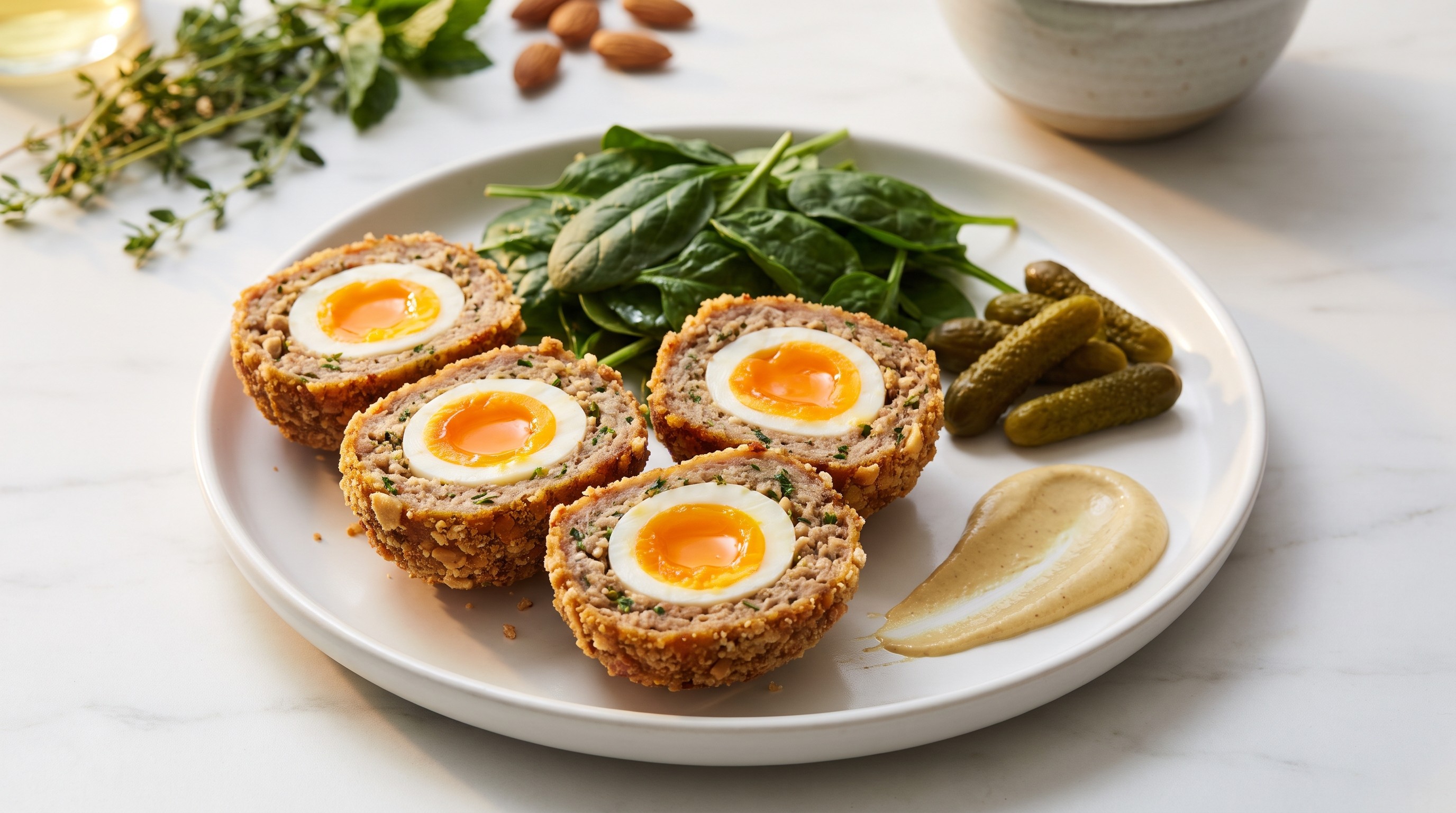
Low-GI Scotch Eggs with Almond Crumb
Crispy baked Scotch eggs coated in protein-rich almond flour — a nearly zero-carb, blood-sugar-friendly twist on the beloved British classic. Perfect for meal prep.
These baked Scotch eggs swap traditional breadcrumbs for toasted almond flour, slashing the carbohydrate content to near zero while adding heart-healthy monounsaturated fats and extra protein. The result is a satisfying crunch that rivals any deep-fried version — without the blood-sugar spike that refined breadcrumbs and hot oil would deliver. Each egg is wrapped in aromatic pork sausage meat seasoned with fresh sage, thyme, and a touch of Dijon mustard, then baked until deeply golden.
From a glycemic standpoint, this dish is exceptional. Almond flour has a glycemic index of virtually zero, and the high protein and fat content from the eggs and sausage meat further slows gastric emptying, meaning your blood sugar stays remarkably stable after eating. The accompanying baby spinach adds fibre and magnesium — a mineral that plays a key role in insulin sensitivity — while tangy cornichons contribute probiotics that support gut health and may improve post-meal glucose response.
Serve these as a hearty lunch, a satisfying snack, or pack them for an on-the-go meal. They pair beautifully with a side salad dressed in olive oil and lemon. For optimal blood-sugar management, eat the spinach first to prime your digestive system with fibre before the protein-rich egg. These Scotch eggs keep well in the refrigerator for up to two days, making them an ideal meal-prep option for busy weekdays when stable energy matters most.
Blood Sugar Impact
Very minimal blood sugar impact expected. With a glycemic load of only 1.3 and an estimated GI of 12, this high-protein, high-fat, very low-carb meal should produce virtually no glucose spike and provide stable energy for 3-4 hours.
Blood Sugar Tips
- ✓ Pair with a side of non-starchy vegetables or leafy greens to add fiber and further slow any minimal glucose absorption.
- ✓ If eating as a snack, follow with a short 10-15 minute walk to enhance insulin sensitivity and glucose uptake.
- ✓ Avoid pairing with high-GI condiments like ketchup or sweet chili sauce — opt for mustard or a vinegar-based dip instead.
🥗 Ingredients
- 4 pcs Egg
- 350 g Pork sausage meat
- 4 pcs Sage
- 1 tsp Thyme
- 1 tbsp Dijon mustard
- 0.75 tsp Sea salt
- 0.25 tsp Black pepper
- 1 pcs Egg
- 50 g Almond flour
- 2 tsp Olive oil
- 80 g Baby spinach
- 40 g Cornichon
- 4 pcs Egg
- 12.3 oz Pork sausage meat
- 4 pcs Sage
- 1 tsp Thyme
- 1 tbsp Dijon mustard
- 0.75 tsp Sea salt
- 0.25 tsp Black pepper
- 1 pcs Egg
- 1.8 oz Almond flour
- 2 tsp Olive oil
- 2.8 oz Baby spinach
- 1.4 oz Cornichon
👨🍳 Instructions
- 1
Bring a medium saucepan of water to a vigorous boil. Carefully lower in the 4 eggs using a slotted spoon and boil for exactly 6 minutes to achieve a soft, jammy centre. Immediately plunge the eggs into a bowl of ice water and let them cool for 5 minutes. Peel gently under a thin stream of cold water, then blot thoroughly dry with kitchen paper.
- 2
Set your oven to 200 °C (400 °F) and position a rack in the centre. Line a baking tray with parchment paper.
- 3
Place the sausage meat in a mixing bowl along with the chopped sage, thyme leaves, Dijon mustard, sea salt, and black pepper. Work the mixture together with your hands until the herbs and seasoning are evenly distributed throughout the meat. Divide into 4 equal portions of roughly 85 g each.
- 4
Flatten each sausage portion into a thin oval on a sheet of cling film, making it large enough to fully enclose an egg. Set a peeled egg in the centre, then use the cling film to lift the meat up and around the egg, pressing the seams firmly together so no egg white is visible. Roll the wrapped egg gently between damp palms to smooth the surface into an even shape.
- 5
Beat the remaining egg in a shallow bowl and spread the almond flour on a plate. Dip each sausage-wrapped egg into the beaten egg, turning to coat evenly, then roll it through the almond flour, pressing gently so the coating adheres on all sides. Transfer to the prepared baking tray seam-side down.
- 6
Lightly brush the tops and sides of each coated egg with olive oil. This helps the almond crust turn deeply golden and crisp in the oven without any need for deep-frying.
- 7
Bake for 25 minutes until the almond crust is a rich golden brown and the sausage meat is cooked through. Remove from the oven and allow to rest on the tray for 3 minutes — this lets the juices settle and makes slicing cleaner.
- 8
Halve each Scotch egg lengthwise with a sharp knife to reveal the soft yolk. Arrange cut-side up on plates alongside the baby spinach and cornichons. Serve with extra Dijon mustard on the side. For the best blood-sugar response, eat a few bites of the spinach before the Scotch eggs — the fibre helps moderate glucose absorption.
📊 Nutrition Per Serving
| Per Serving | Whole Dish | |
|---|---|---|
| Calories | 960 | 1919 |
| Carbs | 11g | 22g |
| Sugars | 5g | 10g |
| Added Sugars | 1g | 3g |
| Natural Sugars | 4g | 7g |
| Protein | 57g | 113g |
| Fat | 78g | 157g |
| Saturated Fat | 23g | 47g |
| Unsaturated Fat | 49g | 98g |
| Fiber | 4g | 8g |
| Soluble Fiber | 1g | 2g |
| Insoluble Fiber | 3g | 6g |
| Sodium | 2882mg | 5765mg |
Predicted Glucose Response
What if you...
Estimated model — individual responses vary. Not medical advice.
🔄 Lower GI Swaps
Commercial cornichons are often brined with added sugar, which contributes unnecessary glycemic load. Naturally fermented pickles, capers, or fresh cucumber deliver the same tangy crunch with virtually zero sugar and a lower glycemic impact.
Commercial sausage meat frequently contains breadcrumb fillers, dextrose, or other starches that raise the glycemic load. Using pure ground meat with no additives eliminates hidden carbohydrates entirely, keeping the GL as close to zero as possible.
Some commercial Dijon mustards include added sugar or white wine with residual sugars. Whole grain mustard retains the intact seed coat, adding a small amount of fiber that helps moderate any glucose absorption, while mustard powder has zero added sugars.
While almond flour is already low-GI (GI ~20), blending it with ground flaxseed or psyllium husk adds soluble fiber that forms a gel in the digestive tract, further slowing glucose absorption and reducing the overall glycemic response of the meal.
🔬 The Science Behind This Recipe
Why This Recipe Works for Blood Sugar
Scotch eggs might sound indulgent, but this version is a blood sugar champion — and it all comes down to what's *not* in it. Traditional scotch eggs use breadcrumbs, which can cause a rapid rise in blood sugar. By swapping those out for an almond crumb coating, you're replacing fast-digesting refined carbs with a combination of healthy fats, fiber, and plant protein. Almonds are digested slowly, which means glucose enters your bloodstream at a gentle, steady pace rather than in a sudden rush. That's a big reason this recipe lands at a remarkably low glycemic index of just 12.
The real magic here is how the core ingredients team up. Eggs and sausage are rich in both protein and fat — two nutrients that significantly slow down digestion. When your stomach takes longer to empty, any carbohydrates you eat alongside them are absorbed more gradually. Think of protein and fat as a natural "speed bump" for glucose. This is why pairing strategies matter so much: even if you enjoy these scotch eggs with a side of roasted vegetables or a small portion of whole grains, the protein and fat from the eggs and sausage will help buffer the blood sugar impact of that entire meal.
It's also worth noting the concept of glycemic load, which tells you how much a realistic serving actually affects your blood sugar — not just how fast. With a glycemic load of just 1.3 per serving, this recipe is about as gentle on your blood sugar as food gets. For an easy win, try eating any vegetable sides first before digging into the scotch eggs, and consider a short 10-15 minute walk after your meal. Both habits have been shown to further smooth out your body's glucose response, helping you feel energized and steady long after eating.
Related recipes
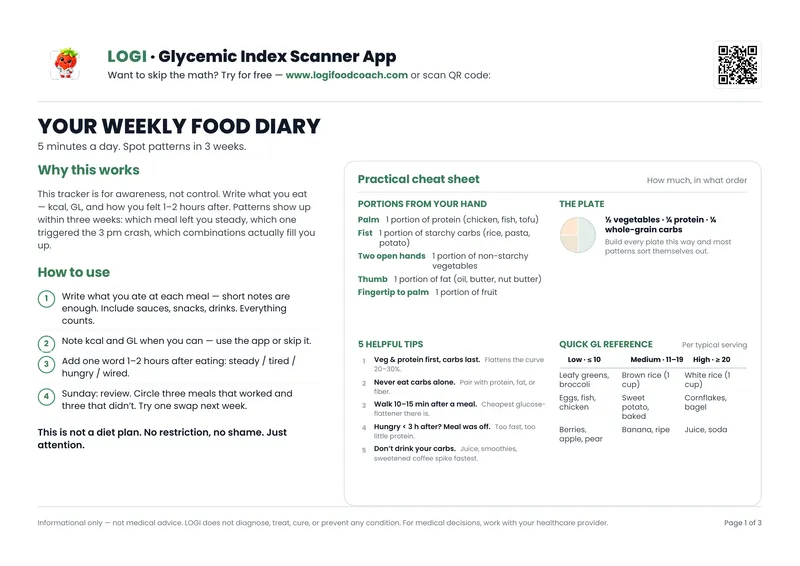
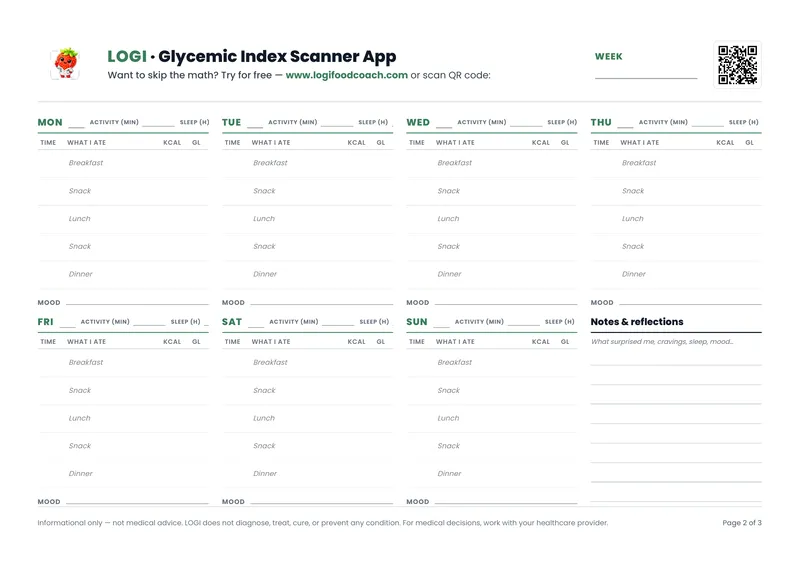
Free PDF — 3 pages
Your Weekly Food Journal
Track meals, glycemic load & mood. Spot patterns in 3 weeks.
No spam. Unsubscribe anytime.