Tzatziki with Crudités
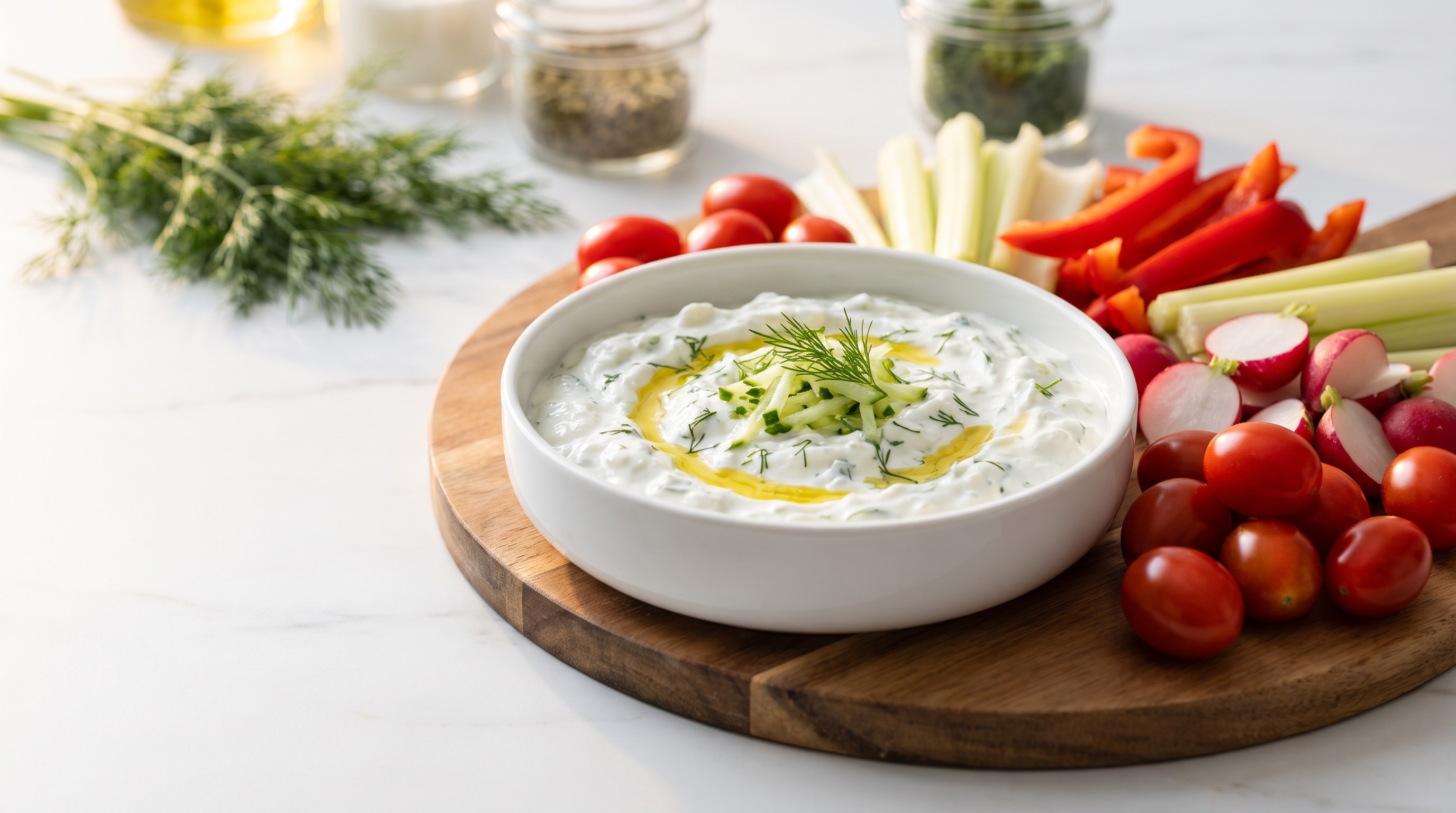
Creamy garlic-dill tzatziki paired with colorful raw vegetables — rich in protein and fiber with virtually no blood sugar impact. Ready in just 10 minutes.
This classic Greek tzatziki dip is a near-perfect low-glycemic snack. Full-fat Greek yogurt delivers 10 g of protein per serving while its combination of protein, fat, and live cultures produces an almost flat glucose curve. The strained cucumber adds volume and freshness without adding starch, and a generous drizzle of extra-virgin olive oil contributes heart-healthy monounsaturated fats that further slow any residual carbohydrate absorption.
Served alongside a rainbow of raw crudités — bell pepper, celery, radishes, and cherry tomatoes — the dish becomes a masterclass in blood-sugar-friendly eating. Each vegetable brings its own fiber matrix that buffers glucose release: celery is particularly notable for its minimal carbohydrate load, while the lycopene in tomatoes and capsaicin precursors in peppers offer additional metabolic benefits beyond glycemic control.
For optimal blood sugar management, enjoy this as an afternoon snack or as a starter before a main meal. Eating the fiber-rich vegetables first primes your digestive system to handle any subsequent carbohydrates more gracefully. The protein and fat in the yogurt base will also promote satiety, reducing the temptation to reach for higher-GI foods later.
Blood Sugar Impact
Very low blood sugar impact expected. The combination of high-fat Greek yogurt, fiber-rich raw vegetables, and olive oil results in a very low glycemic load (4.1) and GI (26), promoting stable blood sugar and sustained energy for 3-4 hours.
Blood Sugar Tips
- ✓ Start with the raw crudités (bell peppers, celery, radish) before dipping into the tzatziki to front-load fiber and further blunt any glucose response.
- ✓ Use generous amounts of the tzatziki dip — the fat and protein from Greek yogurt and olive oil slow gastric emptying and reduce any residual glucose absorption.
- ✓ Enjoy this as a starter before a higher-carb main course to leverage the 'second meal effect,' where the fat, protein, and fiber prime your body to handle subsequent carbohydrates more efficiently.
🥗 Ingredients
- 150 g Cucumber
- 200 g Greek yogurt
- 2 pcs Garlic clove
- 1.5 tbsp Extra-virgin olive oil
- 1 tbsp Dill
- 1 tbsp Lemon juice
- 0.25 tsp Salt
- 120 g Red bell pepper
- 100 g Celery
- 80 g Radish
- 100 g Cherry tomato
- 5.3 oz Cucumber
- 7.1 oz Greek yogurt
- 2 pcs Garlic clove
- 1.5 tbsp Extra-virgin olive oil
- 1 tbsp Dill
- 1 tbsp Lemon juice
- 0.25 tsp Salt
- 4.2 oz Red bell pepper
- 3.5 oz Celery
- 2.8 oz Radish
- 3.5 oz Cherry tomato
👨🍳 Instructions
- 1
Grate the cucumber on the coarse side of a box grater, leaving the skin on for extra fiber. Gather the shreds in a clean kitchen towel, twist tightly, and press firmly over the sink for about 30 seconds until no more liquid runs out. This step is essential — excess moisture will thin the dip.
- 2
Grate the garlic cloves on a microplane or crush them into a fine paste using the flat side of a knife blade pressed against a pinch of the salt.
- 3
Spoon the Greek yogurt into a mixing bowl. Add the squeezed cucumber, garlic paste, chopped dill, lemon juice, and salt. Pour in about two-thirds of the olive oil (roughly 1 tablespoon), reserving the rest for finishing.
- 4
Stir everything together until the mixture is smooth and evenly combined. Taste and adjust the seasoning — add more lemon juice for brightness or a pinch of salt if needed. The flavour will deepen as it sits.
- 5
Prepare the crudités: slice the bell pepper into thick strips, cut the celery into 8 cm sticks, and halve the radishes lengthwise. Leave the cherry tomatoes whole.
- 6
Transfer the tzatziki to a serving bowl and arrange it on a board or platter. Fan the vegetable pieces around the dip in groups so guests can easily identify each one.
- 7
Drizzle the remaining olive oil over the surface of the tzatziki and place a fresh dill sprig on top. Serve immediately, or refrigerate for up to 24 hours — the flavours meld beautifully overnight.
📊 Nutrition Per Serving
| Per Serving | Whole Dish | |
|---|---|---|
| Calories | 268 | 537 |
| Carbs | 16g | 32g |
| Sugars | 10g | 20g |
| Natural Sugars | 10g | 20g |
| Protein | 11g | 22g |
| Fat | 21g | 41g |
| Saturated Fat | 8g | 16g |
| Unsaturated Fat | 12g | 25g |
| Fiber | 4g | 8g |
| Soluble Fiber | 1g | 2g |
| Insoluble Fiber | 3g | 5g |
| Sodium | 393mg | 786mg |
Predicted Glucose Response
What if you...
Estimated model — individual responses vary. Not medical advice.
🔄 Lower GI Swaps
Cherry tomatoes contain slightly more natural sugars than other crudité options. Jicama, broccoli, and cauliflower have a lower glycemic index (GI ~15 vs ~10) and higher fiber content, which further blunts any blood sugar response.
Red, yellow, and orange bell peppers have more natural sugars than green peppers. Green bell peppers, zucchini, and endive have a lower glycemic load due to less sugar and more fiber per serving.
Skyr and labneh have higher protein-to-carb ratios than standard Greek yogurt, meaning less lactose (milk sugar) per serving. Higher protein content slows gastric emptying and reduces the overall glycemic response of the meal.
🔬 The Science Behind This Recipe
Here's the science explainer section for the Tzatziki with Crudités recipe:
---
Why This Works for Blood Sugar
This tzatziki hits a remarkable glycemic load of just 4.1 per serving — well within the "low" category — thanks to a near-perfect combination of protein, healthy fat, and fiber with virtually no starchy carbohydrates. Full-fat Greek yogurt is the star here: its high protein content (around 10g per 100g) slows gastric emptying, meaning your stomach releases food into the small intestine more gradually. The natural fat in full-fat yogurt amplifies this effect, creating a slow, steady trickle of nutrients rather than a sudden flood of glucose. Research consistently shows that full-fat dairy produces a significantly flatter blood sugar curve compared to low-fat alternatives, because removing the fat removes one of nature's best built-in glucose buffers.
Extra virgin olive oil adds another layer of protection. Its monounsaturated fats coat the digestive process, further slowing carbohydrate absorption. When you pair olive oil with any carb-containing food — even the small amount of natural sugar in cucumber — it blunts the glucose response. Think of healthy fats as a "speed bump" that forces sugar to enter your bloodstream gradually rather than all at once.
The crudités (raw vegetables) bring fiber and water content, both of which add volume without raising blood sugar. Here's a practical tip worth remembering: when you eat vegetables and protein *before* any carbohydrates in a meal, studies show the glucose spike can be reduced by up to 40%. So enjoy this tzatziki as a starter, and you're essentially priming your body to handle whatever comes next. A short 10-15 minute walk after eating further helps your muscles absorb circulating glucose. With a glycemic load this low, you're looking at a snack that barely registers on your blood sugar radar — proof that the *amount* of carbohydrate matters just as much as its type.
Related recipes
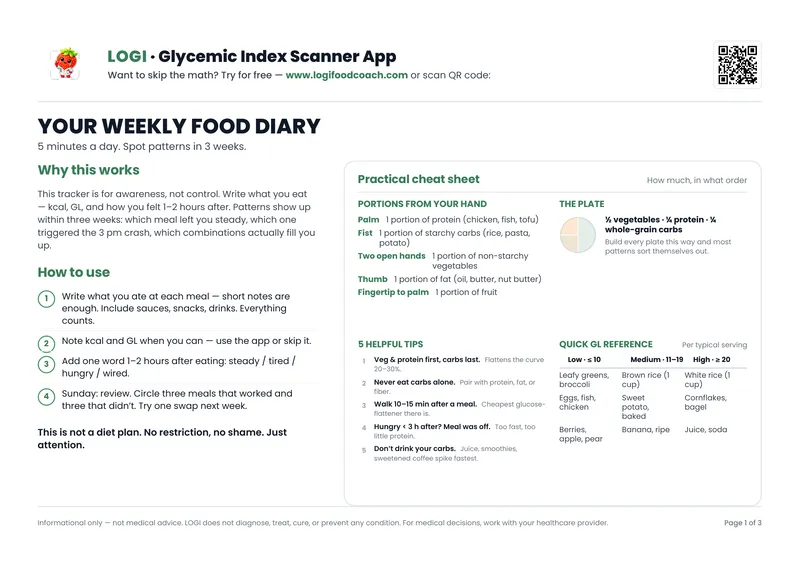
Free PDF — 3 pages
Your Weekly Food Journal
Track meals, glycemic load & mood. Spot patterns in 3 weeks.
No spam. Unsubscribe anytime.