Saag Paneer with Cauliflower Rice
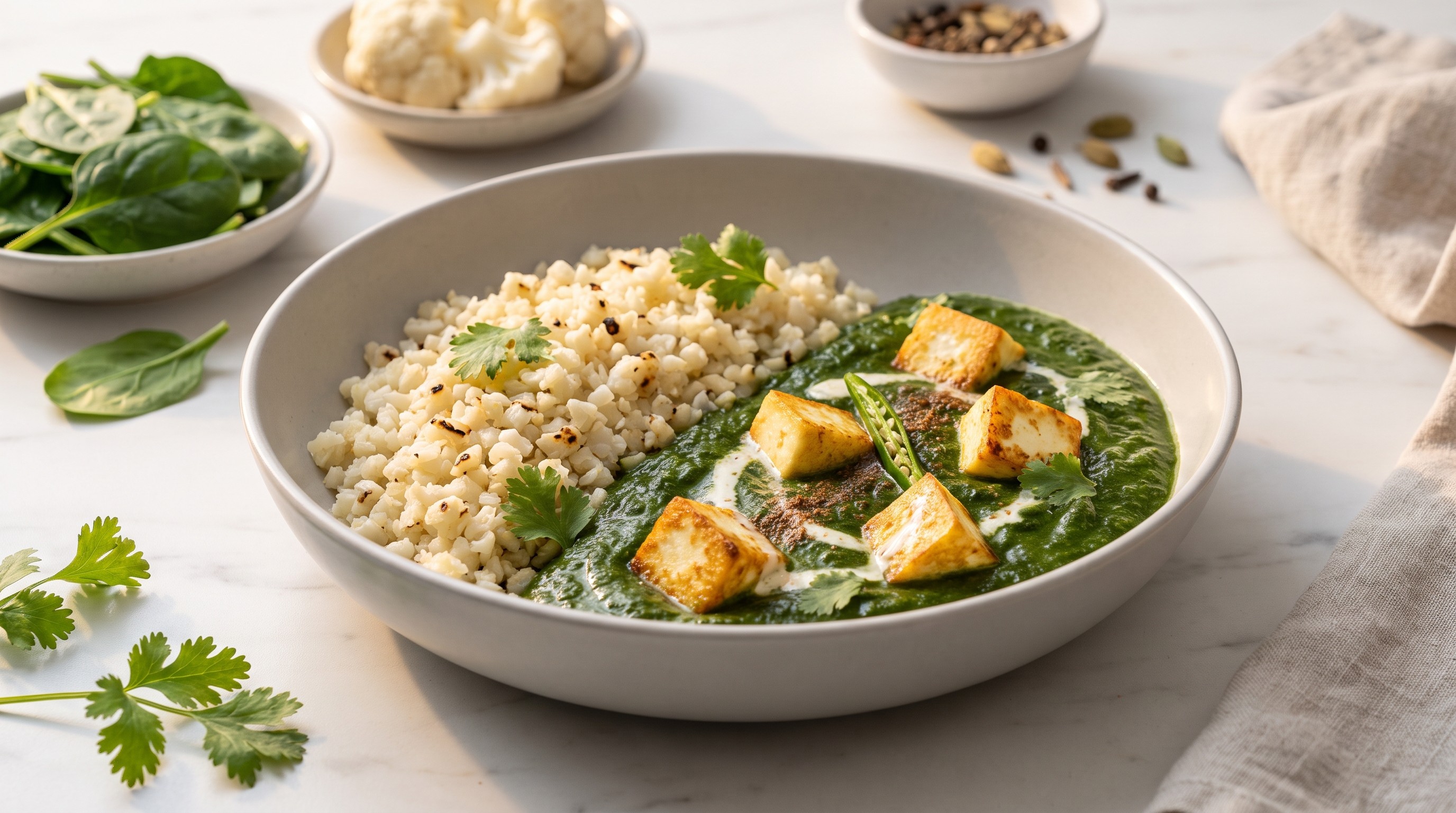
Protein-rich paneer in a vibrant spinach purée served over cauliflower rice — a naturally low-glycemic Indian classic that keeps blood sugar steady and satisfying.
Saag paneer is one of North India's most beloved vegetarian dishes, and this version is purpose-built for blood sugar management. Creamy cubes of golden-fried paneer nestle into a bright, velvety spinach sauce seasoned with cumin, turmeric, and garam masala, then served alongside lightly toasted cauliflower rice. Every component on the plate works in your favour: paneer delivers slow-digesting protein and fat, spinach contributes fibre and magnesium (a mineral linked to improved insulin sensitivity), and cauliflower rice stands in for basmati at a fraction of the glycemic load.
The trio of ghee, cream, and paneer may sound indulgent, but dietary fat is a powerful brake on glucose absorption — it slows gastric emptying so that the modest carbohydrates in onion and cauliflower enter the bloodstream gradually rather than in a spike. Turmeric's active compound, curcumin, has also been studied for its potential to support healthy fasting glucose levels, making this spice blend more than just flavour.
For the gentlest possible glucose response, eat a few bites of the cauliflower rice and spinach before the paneer — vegetables first is a well-documented strategy for flattening post-meal blood sugar curves. Pair with a small side salad dressed in lemon juice and olive oil, or follow the meal with a short ten-minute walk. Ready in thirty-five minutes and requiring only a blender and two pans, this is weeknight-friendly comfort food that respects your metabolic health without sacrificing a single layer of flavour.
Blood Sugar Impact
Very low blood sugar impact expected. With a glycemic load of 5.1 and estimated GI of 21, this meal combines high-fat paneer and fiber-rich spinach with cauliflower rice instead of grains, resulting in a slow, minimal glucose rise and stable energy for 3-4 hours.
Blood Sugar Tips
- ✓ Eat the spinach and cauliflower rice first before the paneer to front-load fiber, which slows gastric emptying and blunts any glucose response.
- ✓ Use generous ghee — the healthy fats further slow digestion and help maintain steady blood sugar levels throughout the meal.
- ✓ Take a gentle 10-15 minute walk after eating to enhance glucose uptake by muscles and keep blood sugar completely flat.
🥗 Ingredients
- 350 g Baby spinach
- 200 g Paneer
- 250 g Cauliflower
- 1 pcs Onion
- 3 pcs Garlic
- 1 pcs Ginger
- 1 pcs Green chili
- 2 tbsp Ghee
- 1 tsp Cumin seeds
- 1 tsp Garam masala
- 0.5 tsp Ground turmeric
- 1 tsp Salt
- 2 tbsp Heavy cream
- 12.3 oz Baby spinach
- 7.1 oz Paneer
- 8.8 oz Cauliflower
- 1 pcs Onion
- 3 pcs Garlic
- 1 pcs Ginger
- 1 pcs Green chili
- 2 tbsp Ghee
- 1 tsp Cumin seeds
- 1 tsp Garam masala
- 0.5 tsp Ground turmeric
- 1 tsp Salt
- 2 tbsp Heavy cream
👨🍳 Instructions
- 1
Bring a large pot of water to a vigorous boil. Drop in the baby spinach and blanch for two minutes until wilted and bright green. Drain immediately and transfer to a bowl of ice water to lock in the colour. Once cool, gather the spinach in a clean tea towel, squeeze out as much liquid as possible, then blend to a smooth, vivid purée. Set aside.
- 2
Break the cauliflower into florets and pulse in a food processor until the pieces resemble rice-sized grains — about eight to ten short pulses. Alternatively, grate the florets on the coarse side of a box grater. Set the cauliflower rice aside.
- 3
Cut the paneer into roughly 2 cm cubes. Heat half the ghee in a wide non-stick pan over medium-high heat. Lay the paneer cubes in a single layer and fry undisturbed for about ninety seconds per side until each face is a deep golden colour. Transfer to a plate and set aside.
- 4
Return the pan to medium heat and add the remaining ghee along with the cumin seeds. Let the seeds sizzle and splutter for about thirty seconds until they release their nutty aroma. Add the diced onion and cook for five minutes, stirring occasionally, until soft and translucent.
- 5
Stir in the minced garlic, grated ginger, and slit green chili. Cook for one minute, stirring constantly, until the raw garlic smell gives way to a warm, fragrant base. Add the turmeric, garam masala, and salt, and stir for another thirty seconds to toast the spices in the fat.
- 6
Pour the spinach purée into the pan and stir well to combine with the aromatics. Cook over medium heat for about four minutes, stirring occasionally, until the saag thickens slightly and darkens a shade. Stir in the heavy cream, then gently nestle the fried paneer cubes into the sauce. Reduce the heat and let everything simmer together for two minutes so the paneer absorbs the flavours.
- 7
While the saag simmers, place a separate dry pan over high heat. Add the cauliflower rice and spread it in an even layer. Cook for three to four minutes, tossing frequently, until the grains are just tender and carry a few golden spots. Season with a small pinch of salt.
- 8
Divide the cauliflower rice between two warm plates or shallow bowls. Spoon the saag paneer generously alongside or over the rice. For the best blood sugar response, begin with a few forkfuls of cauliflower rice and spinach before eating the paneer — this vegetables-first approach helps moderate the post-meal glucose curve.
📊 Nutrition Per Serving
| Per Serving | Whole Dish | |
|---|---|---|
| Calories | 570 | 1139 |
| Carbs | 24g | 48g |
| Sugars | 7g | 14g |
| Natural Sugars | 7g | 14g |
| Protein | 28g | 55g |
| Fat | 43g | 86g |
| Saturated Fat | 26g | 52g |
| Unsaturated Fat | 17g | 33g |
| Fiber | 8g | 16g |
| Soluble Fiber | 3g | 5g |
| Insoluble Fiber | 6g | 11g |
| Sodium | 1181mg | 2362mg |
Predicted Glucose Response
What if you...
Estimated model — individual responses vary. Not medical advice.
🔄 Lower GI Swaps
Cauliflower rice contains only 3–4 g of net carbs per serving compared with 35–40 g in the same volume of cooked basmati rice (GI ~58). This swap alone drops the meal's glycemic load from moderate into very low territory while preserving the familiar rice-alongside-curry format.
🔬 The Science Behind This Recipe
Why This Meal Is a Blood Sugar Winner
Saag paneer with cauliflower rice is practically engineered for a flat glucose curve, and the reasons are layered across every ingredient on the plate.
Cauliflower rice replaces a major glucose driver. A typical 150 g serving of cooked basmati rice delivers roughly 35–40 g of digestible carbohydrate with a GI around 58. The same volume of cauliflower rice contains only about 3–4 g of net carbs and has a negligible glycemic index. That single swap alone drops the meal's glycemic load from a moderate range into very low territory.
Protein and fat form a natural glucose brake. Paneer is roughly 20 % protein and 25 % fat, while ghee and cream add further dietary fat. When protein and fat arrive in the stomach alongside carbohydrates, they slow gastric emptying — the rate at which food leaves the stomach and enters the small intestine. Slower emptying means glucose trickles into the bloodstream rather than flooding it, producing a lower, flatter post-meal curve.
Spinach contributes fibre and magnesium. The fibre in 350 g of spinach adds bulk that further slows digestion, while magnesium — a mineral many people under-consume — plays a role in insulin signalling. Observational studies consistently link higher magnesium intake with improved insulin sensitivity.
Turmeric and curcumin add a metabolic bonus. Curcumin, the bright-yellow polyphenol in turmeric, has been investigated in clinical trials for its potential to support healthy fasting glucose and reduce markers of insulin resistance. Importantly, curcumin is poorly absorbed on its own, but the fat in ghee significantly enhances its bioavailability — so cooking turmeric in ghee is not just traditional, it is scientifically strategic.
The vegetables-first eating order matters. Research published in peer-reviewed nutrition journals shows that eating fibre-rich vegetables before protein and carbohydrates can reduce the post-meal glucose spike by up to 30–40 % compared with eating carbohydrates first. Starting with a few bites of cauliflower rice and spinach before the paneer leverages this simple, evidence-based strategy.
With an estimated glycemic load of just 5.1 and a GI of 21, this meal sits firmly in the very-low-impact category — comfortable territory for anyone focused on steady energy and long-term metabolic health.
Related recipes
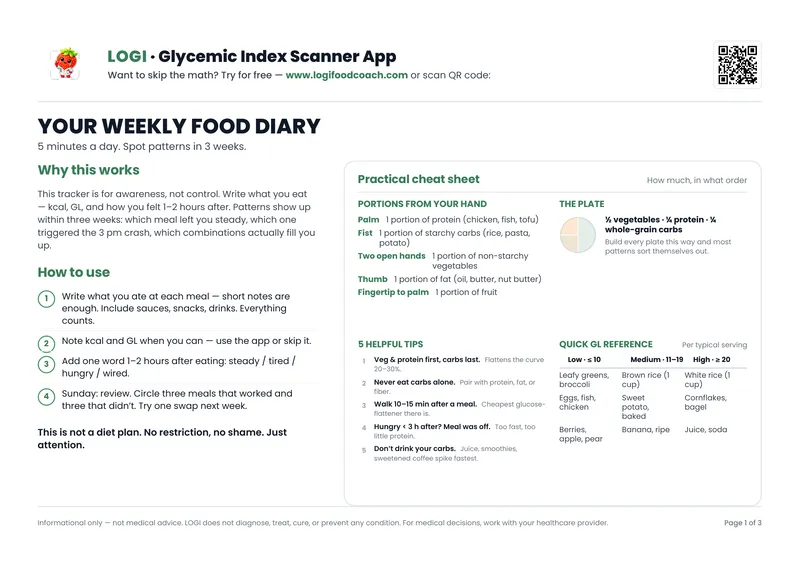
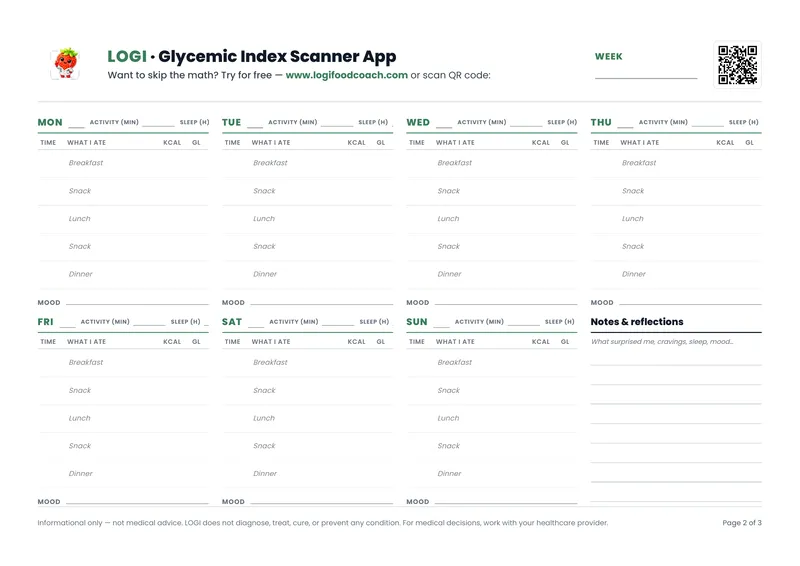
Free PDF — 3 pages
Your Weekly Food Journal
Track meals, glycemic load & mood. Spot patterns in 3 weeks.
No spam. Unsubscribe anytime.