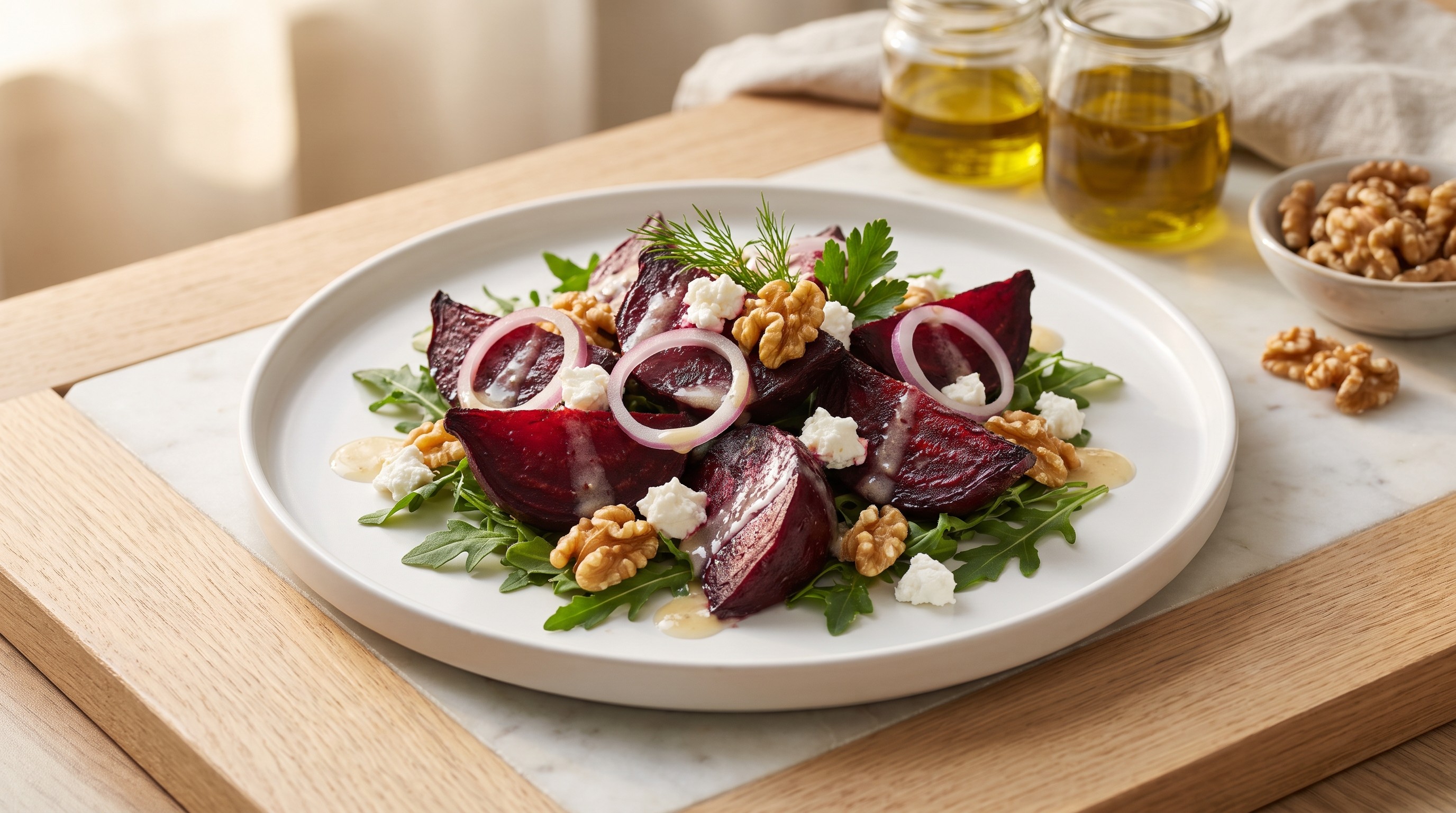
Roasted Beetroot Salad with Horseradish Vinaigrette and Walnuts
Caramelized beetroot wedges over peppery arugula with a sharp horseradish vinaigrette, crumbled chèvre, and toasted walnuts — fat and acid tame the glucose curve.
This German-inspired Rote-Bete-Salat swaps the traditional pickled beetroot for oven-roasted wedges that develop deep, earthy sweetness on the outside while staying pleasantly firm within. Although beetroot sits in the medium-GI range on its own, this recipe is engineered to flatten the glucose response: generous healthy fats from olive oil, goat cheese, and walnuts slow gastric emptying, while the apple cider vinegar in the horseradish dressing has been shown to reduce post-meal blood sugar spikes by up to 30 percent.
The freshly grated horseradish root delivers a clean, sinus-clearing heat that pairs beautifully with the natural sweetness of the beets. Peppery arugula provides a bitter counterpoint and a dose of fibre, and thinly sliced red onion adds crunch along with quercetin — a flavonoid linked to improved insulin sensitivity. Toasted walnuts round out the dish with protein, omega-3 fatty acids, and a satisfying crunch that makes this salad feel substantial enough for a main course.
Each serving contains roughly 250 g of roasted beetroot — a portion size that keeps the glycemic load moderate at around 14. For the best blood-sugar outcome, eat the arugula and onion first, then move on to the beetroot and cheese. Pair with a glass of sparkling water rather than juice, and consider serving alongside grilled chicken or smoked salmon if you need additional protein to anchor the meal.
Blood Sugar Impact
Moderate-low impact — the beetroot provides some natural sugars (GI 40, GL 14.1), but the healthy fats from olive oil, walnuts, and goat cheese combined with fiber from arugula will slow glucose absorption, resulting in a gentle, gradual rise rather than a sharp spike.
Blood Sugar Tips
- ✓ Eat the arugula and walnuts first before the beetroot pieces — consuming fiber and fat before the higher-glycemic component blunts the glucose curve.
- ✓ Add an extra handful of walnuts or increase the goat cheese portion to boost the fat-and-protein buffer, which further flattens the blood sugar response.
- ✓ Take a 10-15 minute walk after eating to enhance glucose uptake by your muscles and keep post-meal blood sugar in a tighter range.
🥗 Ingredients
- 500 g Beetroot
- 3 g Sea salt
- 1 g Black pepper
- 50 g Walnut halves
- 20 g Horseradish root
- 20 g Apple cider vinegar
- 80 g Red onion
- 100 g Arugula
- 100 g Goat cheese
- 1.1 lb Beetroot
- 1.1 oz Extra-virgin olive oil
- 0.1 oz Sea salt
- 0.0 oz Black pepper
- 1.8 oz Walnut halves
- 0.7 oz Horseradish root
- 0.7 oz Apple cider vinegar
- 2.8 oz Red onion
- 3.5 oz Arugula
- 3.5 oz Goat cheese
👨🍳 Instructions
- 1
Heat the oven to 200 °C (400 °F) and line a large baking tray with parchment. Scrub the beetroot under cold running water, trim the root and stem ends, then slice each beet into wedges roughly 2 cm (¾ in) thick.
- 2
Spread the beetroot wedges on the prepared tray in a single layer. Drizzle with half of the olive oil (about 15 g / 1 tablespoon), season with half the sea salt and all of the black pepper, and toss with your hands until evenly coated.
- 3
Roast the beetroot for 35 minutes, flipping the wedges once at the halfway mark. They are ready when the edges are deeply caramelized and a knife slides through the centre with little resistance. Remove from the oven and let them cool for a couple of minutes — warm beets absorb dressing best.
- 4
While the beetroot roasts, place the walnut halves in a dry frying pan over medium heat. Toast for 3 to 4 minutes, shaking the pan occasionally, until they smell nutty and darken slightly. Transfer to a plate immediately to stop the cooking — residual heat in the pan can burn them quickly.
- 5
Peel the horseradish root and finely grate it on a microplane or the smallest holes of a box grater. In a small bowl, whisk together the grated horseradish, apple cider vinegar, remaining olive oil (about 15 g / 1 tablespoon), and a pinch of the remaining salt until the dressing emulsifies lightly. Taste and adjust the sharpness — the vinegar's acetic acid is a key blood-sugar ally here.
- 6
Peel the red onion and slice it into very thin rings. If the raw bite is too sharp for your taste, soak the rings in ice water for five minutes, then drain and pat dry — this mellows the pungency without losing the beneficial quercetin.
- 7
Divide the arugula evenly between two serving plates, creating a generous bed of greens. Arrange the warm roasted beetroot wedges over the arugula, scatter the red onion rings on top, then crumble the goat cheese in large, rustic pieces across each plate.
- 8
Finish each plate by distributing the toasted walnuts and spooning the horseradish dressing generously over everything. For the gentlest blood-sugar response, eat the greens and onion first, then the beetroot with its cheese and nut toppings. Serve immediately while the beets are still warm.
📊 Nutrition Per Serving
| Per Serving | Whole Dish | |
|---|---|---|
| Calories | 602 | 1204 |
| Carbs | 36g | 72g |
| Sugars | 23g | 46g |
| Natural Sugars | 23g | 46g |
| Protein | 20g | 40g |
| Fat | 45g | 91g |
| Saturated Fat | 13g | 26g |
| Unsaturated Fat | 32g | 64g |
| Fiber | 11g | 22g |
| Soluble Fiber | 4g | 7g |
| Insoluble Fiber | 7g | 14g |
| Sodium | 1068mg | 2136mg |
Predicted Glucose Response
What if you...
Estimated model — individual responses vary. Not medical advice.
🔄 Lower GI Swaps
Beetroot has a moderate GI of around 64 when cooked. Radishes and turnips offer substantially lower sugar content and glycemic impact while delivering a comparable roasted texture and earthy taste profile.
Both goat cheese and these alternatives are low-GI and provide fat and protein to slow glucose absorption. The swaps accommodate personal taste or availability without changing the blood-sugar profile of the dish.
All three options are low-GI and rich in healthy fats that slow gastric emptying. Pumpkin seeds are an excellent choice for those with tree nut allergies while still providing the crunch and blood-sugar-stabilizing fats the recipe relies on.
The blood-sugar benefit comes from acetic acid, which is present in all vinegars at similar concentrations. Any quality vinegar works equally well for glucose management; the choice is purely about flavour preference with the horseradish.
🔬 The Science Behind This Recipe
Beetroot has a moderate glycemic index of around 64 when boiled, but the way this recipe is constructed brings the effective meal GI down to approximately 40 and keeps the glycemic load at a manageable 14 per serving. Three mechanisms work together to blunt the glucose curve.
First, fat slows gastric emptying. Each serving delivers roughly 20 g of healthy fats from olive oil, goat cheese, and walnuts. When fat enters the duodenum it triggers the release of cholecystokinin (CCK), a hormone that delays stomach emptying and gives the small intestine more time to absorb glucose gradually rather than in a single rush.
Second, acetic acid from apple cider vinegar has been shown in controlled studies to reduce post-meal blood glucose by 20 to 30 percent. The proposed mechanism is inhibition of disaccharidase enzymes in the intestinal brush border, which slows the breakdown of complex sugars. Even a single tablespoon of vinegar with a meal can make a measurable difference.
Third, fibre from arugula and the structural fibre retained in roasted (rather than boiled) beetroot adds a physical matrix that slows carbohydrate digestion. Roasting preserves more of the beet's cell-wall structure compared to boiling, which means sugars are released more slowly during digestion.
Walnuts contribute an additional benefit beyond fat: their polyphenols, particularly ellagitannins, have been associated with improved insulin sensitivity in clinical trials. The quercetin in red onion operates via a similar pathway, supporting glucose transporter regulation at the cellular level.
Note that individual blood-sugar responses can vary significantly based on factors such as insulin sensitivity, medication use, meal timing, and gut microbiome composition. People with insulin-dependent diabetes should monitor their response to beetroot-containing meals and adjust portions as needed.
Related recipes
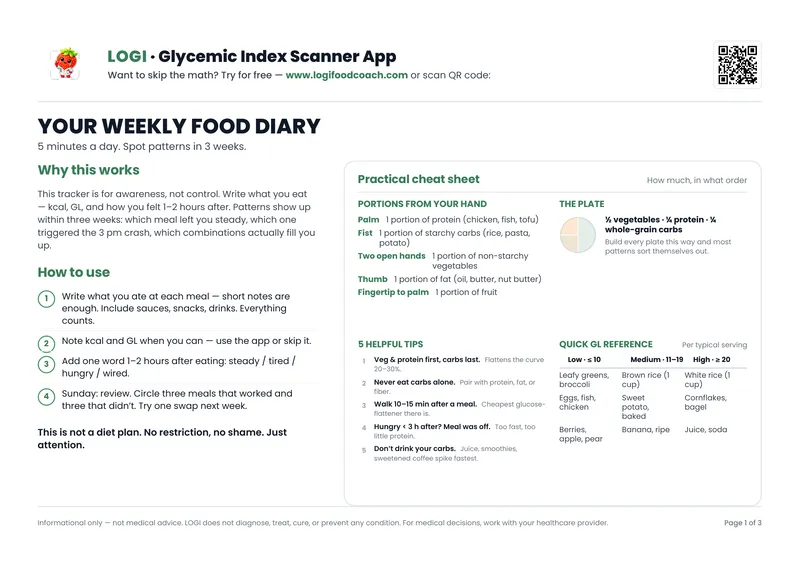
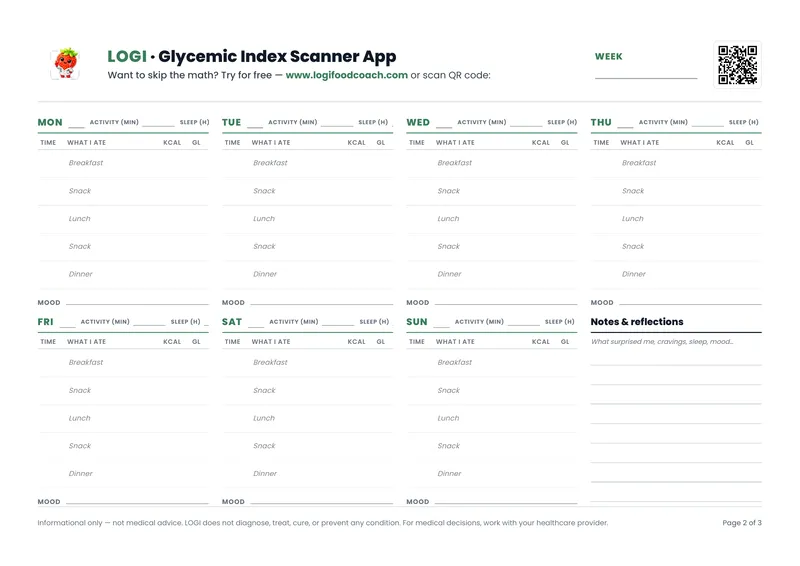
Free PDF — 3 pages
Your Weekly Food Journal
Track meals, glycemic load & mood. Spot patterns in 3 weeks.
No spam. Unsubscribe anytime.