Lower-GI Kedgeree with Cauliflower Rice
Smoky poached haddock and jammy eggs over spiced cauliflower-basmati rice — a low-GI British classic that keeps blood sugar steady without losing comfort.
Kedgeree is one of Britain's most beloved brunch dishes, but the traditional all-rice base can send blood sugar on a roller-coaster. This clever adaptation replaces more than three-quarters of the grain with riced cauliflower, dropping the glycemic load dramatically while preserving the fragrant, buttery character that makes kedgeree so satisfying. The small portion of basmati rice that remains contributes familiar texture and a moderate glycemic index of around 58 — well below white or jasmine rice — while the cauliflower adds fibre that further slows glucose absorption.
Protein is the real star here. Smoked haddock delivers roughly 25 grams of high-quality protein per fillet, and two soft-boiled eggs add another 12 grams. Eating protein alongside carbohydrates blunts the post-meal glucose spike, so this dish is engineered for a flatter blood-sugar curve. The butter and natural fats from the eggs also slow gastric emptying, giving your body more time to process the modest starch content.
For the best glycemic result, serve the eggs and haddock on top of the rice mixture rather than stirring everything together — eating the protein-rich components first primes your digestive system to handle the carbohydrates that follow. A squeeze of fresh lemon juice at the table adds brightness and a small dose of vitamin C, which some research links to improved insulin sensitivity. The entire dish comes together in about thirty minutes, making it a realistic weekday breakfast for anyone managing blood sugar through diet.
Blood Sugar Impact
Moderate-low impact — the blend of cauliflower rice and basmati rice brings the GI down to 45 with a moderate glycemic load of 15.4, while the protein from haddock and egg plus fat from butter will further slow glucose absorption, providing steady energy for 3-4 hours.
Blood Sugar Tips
- ✓ Eat the protein (haddock and egg) and cauliflower rice portions first before the basmati rice to blunt the glucose curve.
- ✓ Increase the cauliflower-to-basmati rice ratio to further lower the glycemic load — aim for at least 2:1 cauliflower to basmati.
- ✓ Take a 10-15 minute walk after eating to enhance glucose uptake by your muscles and flatten the postprandial spike.
🥗 Ingredients
- 250 g Smoked haddock fillet
- 2 pcs Egg
- 200 g Cauliflower rice
- 60 g Basmati rice
- 20 g Unsalted butter
- 1 pcs Onion
- 1 tsp Curry powder
- 10 g Flat-leaf parsley
- 15 ml Lemon juice
- 0.5 g Black pepper
- 8.8 oz Smoked haddock fillet
- 2 pcs Egg
- 7.1 oz Cauliflower rice
- 2.1 oz Basmati rice
- 0.7 oz Unsalted butter
- 1 pcs Onion
- 1 tsp Curry powder
- 0.4 oz Flat-leaf parsley
- 1 tbsp Lemon juice
- 0.0 oz Black pepper
👨🍳 Instructions
- 1
Lay the smoked haddock fillet skin-side down in a wide, shallow pan. Pour in enough cold water to just cover the fish. Set the pan over medium heat and bring the water to a bare simmer — you want gentle bubbles, not a rolling boil. Poach for 7 minutes until the flesh turns opaque and separates easily when pressed with a fork.
- 2
While the haddock poaches, bring a small saucepan of water to a boil and carefully lower in the eggs. Cook for 10 minutes for a just-set, slightly jammy yolk. Transfer the eggs to a bowl of cold water to stop the cooking, then peel and set aside.
- 3
In a separate saucepan, cook the basmati rice in plenty of boiling water for 10 minutes until tender but still with a slight bite. Drain thoroughly in a fine-mesh sieve and set aside. Cooking the rice with excess water and draining it can reduce its starch content slightly.
- 4
Lift the poached haddock out of the water onto a plate. Once cool enough to handle, peel away and discard the skin, then break the flesh into generous flakes using a fork. Keep the chunks large — they will break down a little more when folded into the rice.
- 5
Melt the butter in a large non-stick frying pan or skillet over medium heat. Add the diced onion and cook gently for about 3 minutes, stirring occasionally, until the onion turns soft and translucent without taking on any colour.
- 6
Sprinkle the curry powder over the softened onion and stir for 30 seconds until fragrant. Add the cauliflower rice straight away and toss everything together. Cook for 3 minutes, stirring often, until the cauliflower is just tender but retains a little texture — overcooking will make it mushy.
- 7
Fold the drained basmati rice into the cauliflower mixture, then gently add the flaked haddock. Toss carefully with a spatula to combine without crushing the fish. Warm everything through for 2 minutes over medium-low heat, then squeeze the lemon juice over the top and toss once more.
- 8
Divide the kedgeree between two warmed plates or shallow bowls. Quarter the peeled eggs and arrange them on top of each serving. Finish with a generous grind of black pepper and a scattering of chopped parsley. Serve immediately — for the best blood-sugar response, eat the egg and fish pieces first before working through the rice.
📊 Nutrition Per Serving
| Per Serving | Whole Dish | |
|---|---|---|
| Calories | 398 | 796 |
| Carbs | 34g | 68g |
| Sugars | 4g | 8g |
| Natural Sugars | 4g | 8g |
| Protein | 34g | 68g |
| Fat | 15g | 29g |
| Saturated Fat | 7g | 14g |
| Unsaturated Fat | 8g | 15g |
| Fiber | 4g | 8g |
| Soluble Fiber | 1g | 2g |
| Insoluble Fiber | 3g | 6g |
| Sodium | 184mg | 368mg |
Predicted Glucose Response
What if you...
Estimated model — individual responses vary. Not medical advice.
🔄 Lower GI Swaps
Basmati rice (GI ~58) is the main glycemic load driver in this dish. Pearl barley (GI ~28), quinoa (GI ~53), and buckwheat groats (GI ~49) all deliver a lower glycemic impact while providing a similar hearty texture alongside the cauliflower rice.
While all cooking fats have a negligible GI, extra virgin olive oil and avocado oil are rich in monounsaturated fats and oleic acid, which have been shown to improve insulin sensitivity and help moderate the overall post-meal blood sugar response compared to saturated-fat-dominant butter.
Generic curry powder contributes flavor but misses an opportunity: Ceylon cinnamon has been shown to improve insulin sensitivity and lower fasting blood glucose, while fenugreek seeds contain soluble fiber that slows carbohydrate absorption, actively helping to flatten the post-meal glucose curve.
While lemon juice adds acidity, vinegars—especially apple cider vinegar—contain acetic acid, which research shows can reduce post-meal blood sugar spikes by 20-30% by slowing gastric emptying and improving muscle glucose uptake. A tablespoon in the dish provides the same brightness with added glycemic benefit.
🔬 The Science Behind This Recipe
Why This Recipe Works for Blood Sugar
The clever twist in this kedgeree is the cauliflower rice blend. By replacing half the grain with cauliflower, you dramatically cut the carbohydrate load while keeping the satisfying, fluffy texture you expect. This is where glycemic load comes in — it's not just about how fast a food raises blood sugar (the GI score), but how *much* carbohydrate you're actually eating. With a glycemic load of 15.4 per serving, this dish lands in the moderate range, meaning your body can process the glucose steadily without the sharp spike-and-crash cycle that leaves you reaching for snacks an hour later.
The protein duo of poached haddock and egg is doing serious behind-the-scenes work here. Protein and fat naturally slow down the rate at which your stomach empties, which means glucose trickles into your bloodstream gradually rather than flooding in all at once. The butter adds another gentle brake on digestion. Together, these ingredients act like a buffer around the basmati rice — which already has a lower GI than most white rices thanks to its long-grain structure and higher amylose starch content. When you pair that moderate-GI grain with protein, fat, and fiber-rich cauliflower, the overall blood sugar response is significantly gentler than eating rice on its own.
Want to go a step further? Try eating the flaked haddock and egg first, saving the rice portion for the last few bites — research suggests this simple food-ordering trick can further smooth out your glucose response. A 10-minute walk after your meal helps too, as your muscles use circulating glucose for fuel, bringing levels down naturally. Small habits, big difference.
Related recipes
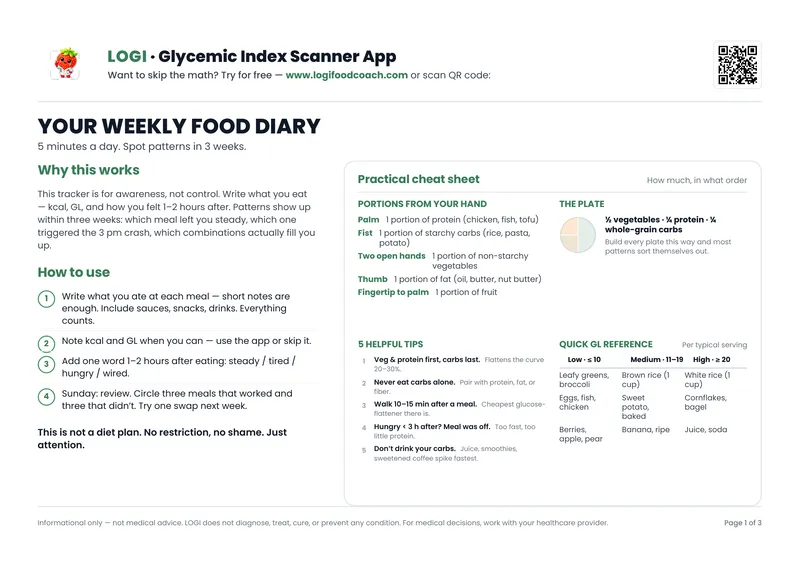
Free PDF — 3 pages
Your Weekly Food Journal
Track meals, glycemic load & mood. Spot patterns in 3 weeks.
No spam. Unsubscribe anytime.