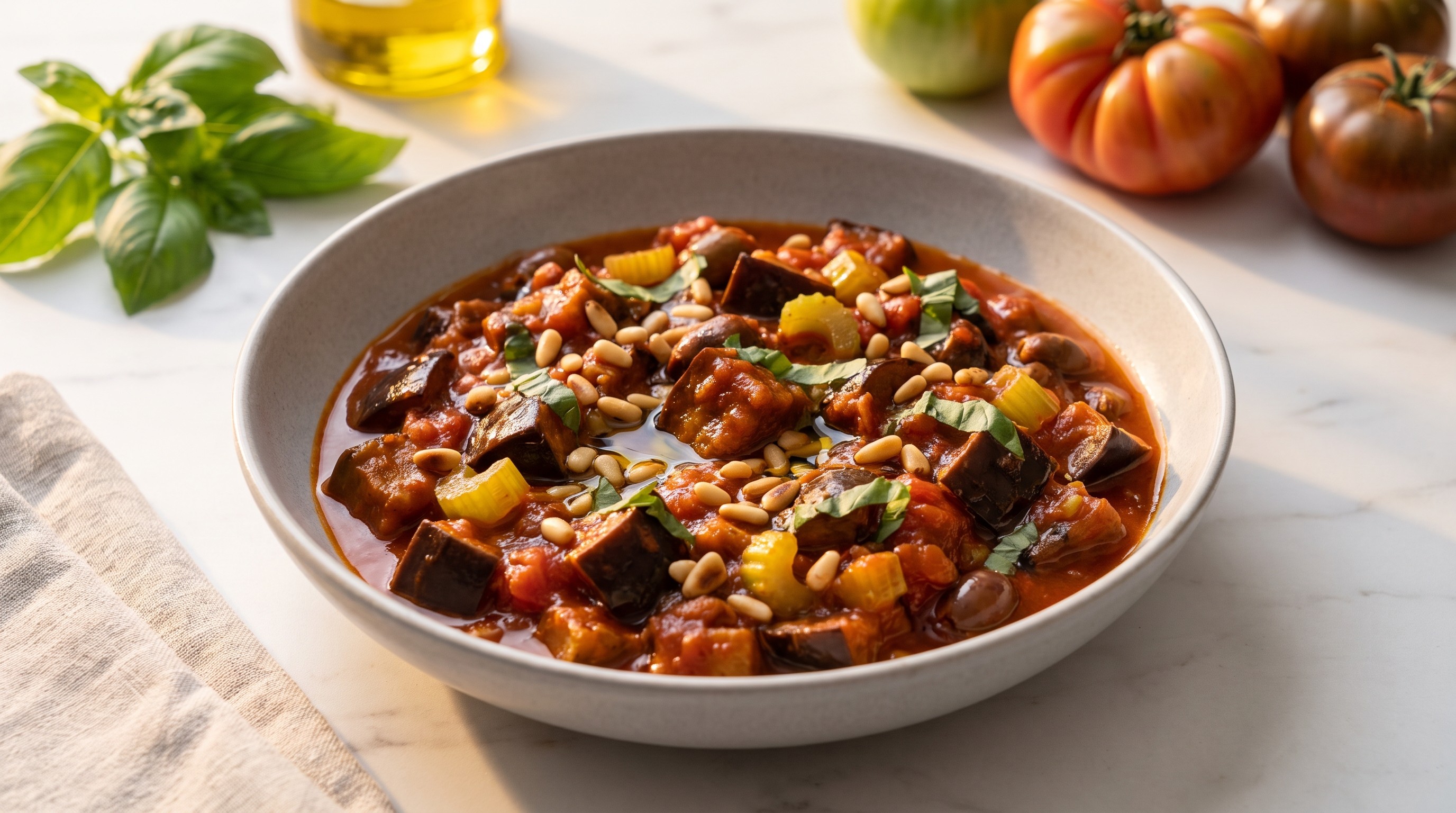
Low-GI Caponata (Sicilian Sweet-and-Sour Aubergine)
Sicily's beloved sweet-and-sour aubergine stew made blood-sugar-friendly — raisins replace sugar for a gentler glucose curve with rich agrodolce flavor.
Caponata is one of Sicily's greatest gifts to the table: a tangle of golden-fried aubergine, sharp vinegar, briny olives, and a whisper of sweetness that pulls it all together. Traditional recipes call for white sugar in the agrodolce sauce, but this low-glycemic version swaps it for a small handful of raisins — delivering the same sweet-sour harmony with added fiber that slows glucose absorption. The result is a dish that tastes entirely authentic yet sits far more gently on your blood sugar.
Every component works in your favor here. Aubergine is rich in soluble fiber and has a very low glycemic index, while the generous pour of extra-virgin olive oil provides monounsaturated fats that further blunt the post-meal glucose spike. Red wine vinegar is a proven ally for blood sugar management — studies show that acetic acid can reduce the glycemic response of a meal by up to 30 percent when consumed alongside carbohydrates. Pine nuts add protein and healthy fats, rounding out the macronutrient balance.
Serve the caponata warm or at room temperature as a side dish, spooned over grilled fish, or as part of an antipasti spread. For the best glycemic outcome, pair it with a source of protein — grilled chicken, white fish, or even a simple handful of almonds on the side — and eat the vegetables before any accompanying bread or grain. The dish improves overnight as the flavors marry, making it an ideal make-ahead option for weeknight meal prep.
Blood Sugar Impact
Very low blood sugar impact expected. The combination of fiber-rich eggplant, healthy fats from olive oil, and the low glycemic load of 9.2 should produce a gentle, sustained rise in blood glucose with stable energy for 3-4 hours.
Blood Sugar Tips
- ✓ Serve over a bed of leafy greens or alongside a mixed salad to add even more fiber and further slow glucose absorption.
- ✓ Pair with a source of protein such as grilled chicken, fish, or chickpeas to blunt any residual blood sugar rise from the raisins and tomato.
- ✓ Take a 10-15 minute walk after eating to enhance glucose uptake by your muscles and keep levels steady.
🥗 Ingredients
- 1 pcs Aubergine
- 2 tbsp Extra-virgin olive oil
- 1 pcs Onion
- 2 pcs Celery
- 2 pcs Garlic
- 200 g Canned chopped tomatoes
- 40 g Green olives
- 1 tbsp Capers
- 15 g Raisins
- 2 tbsp Red wine vinegar
- 15 g Pine nuts
- 0.5 tsp Salt
- 5 pcs Basil
- 1 pcs Aubergine
- 2 tbsp Extra-virgin olive oil
- 1 pcs Onion
- 2 pcs Celery
- 2 pcs Garlic
- 7.1 oz Canned chopped tomatoes
- 1.4 oz Green olives
- 1 tbsp Capers
- 0.5 oz Raisins
- 2 tbsp Red wine vinegar
- 0.5 oz Pine nuts
- 0.5 tsp Salt
- 5 pcs Basil
👨🍳 Instructions
- 1
Place the aubergine cubes in a colander, sprinkle generously with salt, and toss to coat. Set aside for 10 minutes to draw out excess moisture — this ensures the cubes fry up golden and crisp rather than steaming in the pan.
- 2
Blot the aubergine thoroughly with kitchen paper until the surfaces feel dry. Heat the olive oil in a wide, heavy-based skillet over medium-high heat until it shimmers.
- 3
Spread the aubergine cubes in a single layer across the pan. Fry for about 8 minutes, turning every couple of minutes, until deep golden on most sides. Lift onto a plate and set aside.
- 4
Lower the heat to medium. In the same pan, cook the diced onion and sliced celery for around 5 minutes, stirring occasionally, until the onion turns translucent and the celery begins to soften.
- 5
Add the sliced garlic and stir constantly for 30 seconds until fragrant — be careful not to let it colour past pale gold. Pour in the chopped tomatoes, then add the olives, capers, raisins, and red wine vinegar. Stir everything together and bring to a gentle simmer.
- 6
Return the fried aubergine to the pan and fold it gently into the sauce. Let the mixture simmer uncovered for 10 minutes, stirring once or twice, until the sauce has thickened noticeably and the aubergine pieces are silky-soft and infused with the agrodolce flavours.
- 7
Take the pan off the heat. Scatter the pine nuts over the top and tear the fresh basil leaves directly over the dish. Serve warm or allow to cool to room temperature — caponata tastes even better after resting for a few hours, or overnight in the fridge.
📊 Nutrition Per Serving
| Per Serving | Whole Dish | |
|---|---|---|
| Calories | 315 | 630 |
| Carbs | 28g | 56g |
| Sugars | 16g | 31g |
| Natural Sugars | 16g | 31g |
| Protein | 5g | 10g |
| Fat | 22g | 45g |
| Saturated Fat | 3g | 6g |
| Unsaturated Fat | 19g | 38g |
| Fiber | 9g | 17g |
| Soluble Fiber | 3g | 6g |
| Insoluble Fiber | 6g | 12g |
| Sodium | 1185mg | 2370mg |
Predicted Glucose Response
What if you...
Estimated model — individual responses vary. Not medical advice.
🔄 Lower GI Swaps
Raisins have a GI of around 65 and are the most concentrated sugar source in this dish. Unsweetened dried cranberries (GI ~45), goji berries (GI ~29), or fresh pomegranate arils (GI ~35) all deliver a similar sweet-tart contrast at a significantly lower glycemic impact, helping reduce the overall GL of the recipe.
Canned tomatoes have a GI of roughly 45 due to processing and occasional added sugars. Fresh ripe tomatoes have a GI of only about 15, and sugar-free passata sits around 20–25. Switching to fresh or minimally processed tomatoes meaningfully lowers the glycemic load of the sauce base.
While pine nuts are already low-GI, walnuts and almonds provide more fiber and a higher ratio of blood-sugar-stabilizing monounsaturated and omega-3 fats per serving, which slows glucose absorption from the overall meal. Macadamia nuts are particularly rich in monounsaturated fat, further blunting the postprandial blood sugar response.
🔬 The Science Behind This Recipe
Here's the science explainer section:
---
Why This Dish Is a Blood Sugar Winner
This Sicilian classic is naturally gentle on your blood sugar, and the secret starts with eggplant. Aubergines are remarkably low in starch and packed with soluble fiber — the kind that forms a gel-like barrier in your digestive tract, slowing the rate at which sugars enter your bloodstream. That means a gradual, steady rise in energy rather than a sharp spike and crash. The onions and celery add even more fiber to the mix, creating a vegetable-rich base that your body digests nice and slowly. With a glycemic index of just 33, this dish sits firmly in the "low" category — but what matters even more is the glycemic load of 9.2 per serving. Glycemic load takes portion size into account, not just how fast a food raises blood sugar, and anything under 10 is considered low. In other words, a normal serving of this caponata has very little impact on your glucose levels.
Then there's the extra virgin olive oil — the Mediterranean secret weapon. Healthy fats slow gastric emptying, which means your stomach takes longer to pass food along to your intestines. This acts like a natural speed bump for sugar absorption. The combination of fiber-rich vegetables cooked in quality olive oil creates what nutritionists call a "blunted glucose response" — your body gets the energy it needs without the rollercoaster.
Want to make this dish work even harder for you? If you're serving caponata alongside bread or pasta, eat the caponata first — research suggests that eating vegetables and fats before carbohydrates can significantly flatten your post-meal glucose curve. Even better, a short 10-15 minute walk after eating helps your muscles soak up circulating blood sugar naturally. Small habits, big difference.
---
Word count: 265 — Structured in 3 clear paragraphs covering the vegetable fiber science, the role of olive oil, and practical meal-timing tips. Evidence-based, jargon-free, and focused on empowering the reader rather than making medical claims.
Related recipes
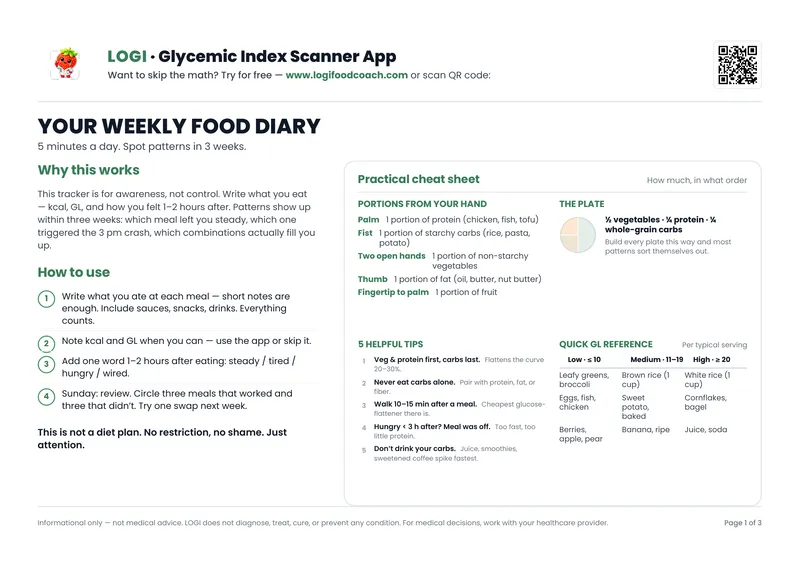
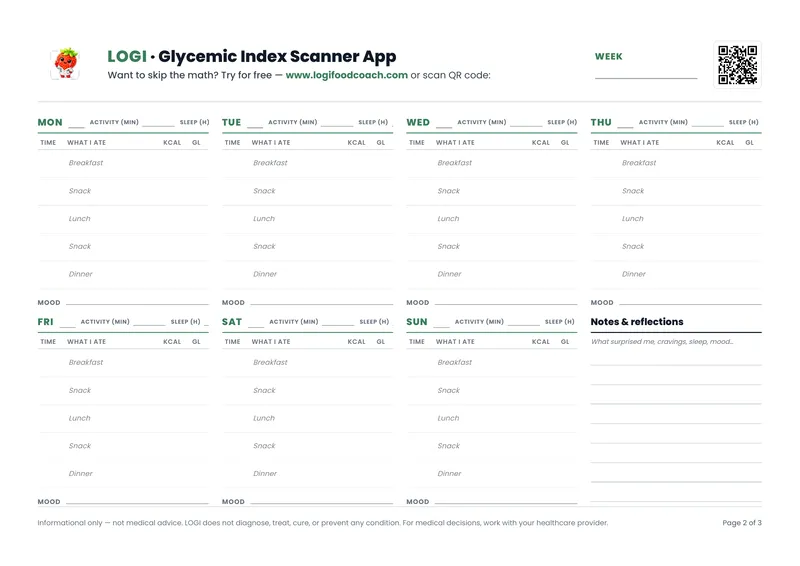
Free PDF — 3 pages
Your Weekly Food Journal
Track meals, glycemic load & mood. Spot patterns in 3 weeks.
No spam. Unsubscribe anytime.