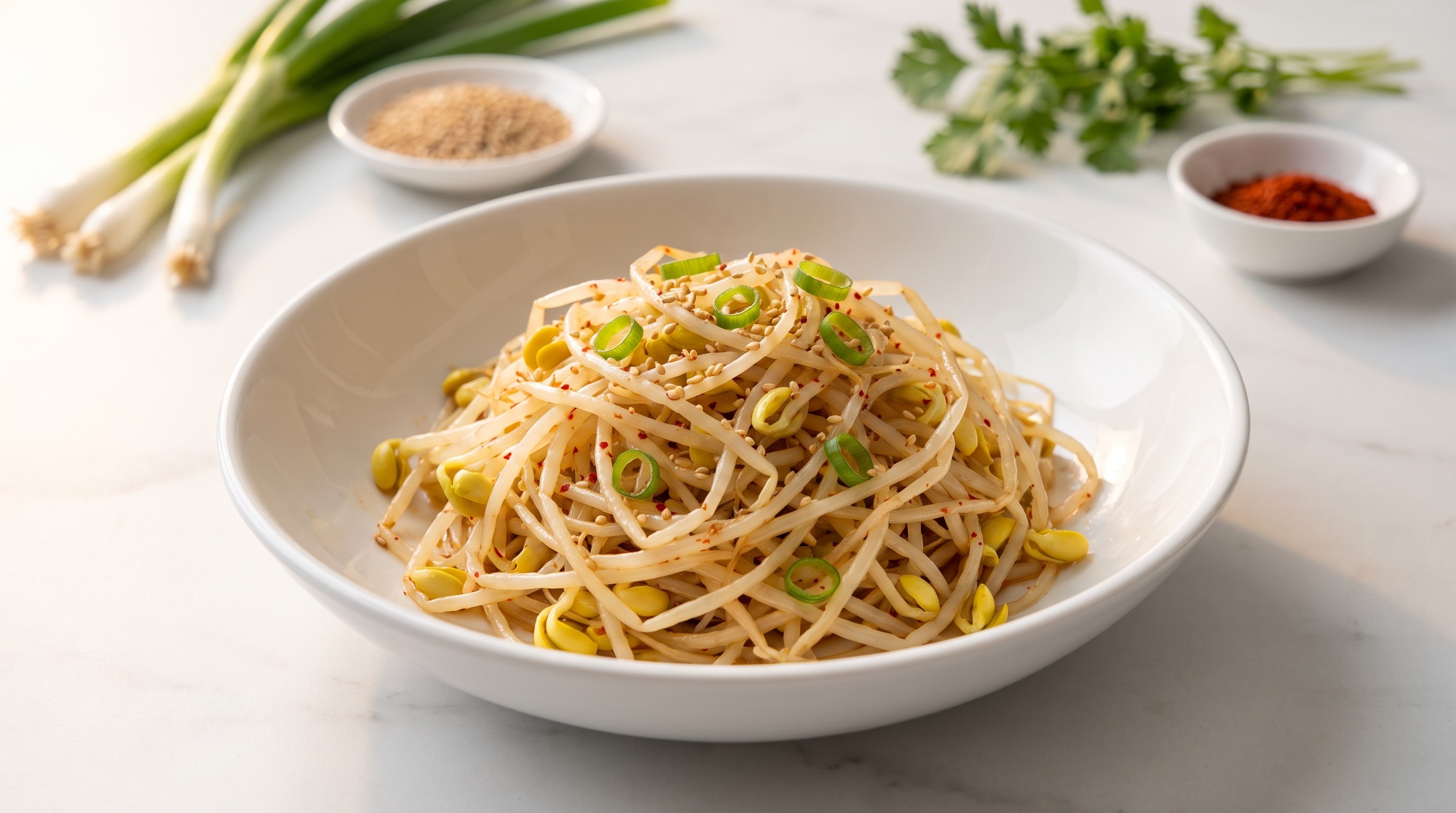
Kongnamul-Muchim (Korean Seasoned Soybean Sprouts)
Crisp blanched soybean sprouts tossed in sesame oil, garlic, and gochugaru — a classic Korean banchan with near-zero glycemic impact and plant protein.
Kongnamul-muchim is one of the most beloved banchan in Korean cuisine, and it also happens to be one of the most blood-sugar-friendly dishes you can put on the table. Soybean sprouts are remarkably low in digestible starch while delivering a generous amount of plant-based protein and soluble fiber — two nutrients that help slow glucose absorption when eaten alongside higher-carb components of a Korean meal. A single serving of this side dish contains under 3 grams of net carbohydrates, making it an ideal accompaniment for anyone managing their blood sugar.
The preparation could not be simpler: sprouts are blanched for just three minutes with the lid firmly on — a traditional Korean technique that eliminates the raw bean taste without overcooking — then shocked in ice water to lock in their signature crunch. The dressing is a five-ingredient powerhouse of sesame oil, soy sauce, raw garlic, gochugaru, and toasted sesame seeds. Each ingredient contributes healthy fats, antioxidants, or capsaicin compounds that research associates with improved insulin sensitivity.
Note that soybean sprouts (kongnamul) are nutritionally distinct from mung bean sprouts (sukju) — soybean sprouts contain more protein and fiber per serving and have a lower glycemic impact, so be sure to use the correct variety for the best blood sugar results.
Serve kongnamul-muchim as the first bite of a meal to take advantage of the "vegetable-first" eating strategy: consuming fiber and protein before carbohydrates has been shown to reduce post-meal glucose spikes by up to 30 percent. This banchan pairs beautifully with grilled fish, Korean-style stews, or a bowl of cauliflower rice for a fully low-glycemic Korean spread. It stores well in the refrigerator for up to three days, so consider making a double batch for easy meal prep throughout the week.
Blood Sugar Impact
Very low blood sugar impact expected. With a GI of 31 and a glycemic load of only 5.9, soybean sprouts are high in plant protein and fiber, which will result in a slow, minimal rise in blood glucose and stable energy levels.
Blood Sugar Tips
- ✓ Pair with a portion of brown rice or whole grains to create a balanced meal — the sprouts' protein and fiber will blunt the glycemic response of the starch.
- ✓ Include a source of healthy fat such as extra sesame oil or avocado to further slow gastric emptying and glucose absorption.
- ✓ Eat the kongnamul-muchim at the start of the meal before any higher-carb side dishes to take advantage of the 'vegetables first' effect on postprandial blood sugar.
🥗 Ingredients
- 300 g Soybean sprouts
- 2 pcs Garlic
- 1 pcs Spring onion
- 1 tbsp Sesame oil
- 1 tbsp Soy sauce
- 1 tsp Gochugaru
- 1 tsp Toasted sesame seeds
- 0.25 tsp Fine sea salt
- 10.6 oz Soybean sprouts
- 2 pcs Garlic
- 1 pcs Spring onion
- 1 tbsp Sesame oil
- 1 tbsp Soy sauce
- 1 tsp Gochugaru
- 1 tsp Toasted sesame seeds
- 0.25 tsp Fine sea salt
👨🍳 Instructions
- 1
Fill a large pot with water and bring it to a vigorous, rolling boil over high heat.
- 2
Add the soybean sprouts to the boiling water all at once. Immediately place the lid on the pot and set a timer for exactly 3 minutes. Do not remove the lid at any point during blanching — this is a traditional Korean technique that prevents the sprouts from developing an unpleasant raw bean flavor.
- 3
While the sprouts blanch, prepare a large bowl of ice water. As soon as the timer goes off, drain the sprouts through a colander and transfer them directly into the ice bath. Let them sit for 1 minute to stop the cooking and set their crisp texture.
- 4
Drain the chilled sprouts thoroughly. Take small handfuls at a time and squeeze them firmly between both palms to press out as much excess water as possible. This step is essential — waterlogged sprouts will dilute the dressing and make the dish bland.
- 5
Peel and finely mince the garlic cloves. Trim the spring onions and cut them into thin slices on a sharp diagonal for visual appeal.
- 6
Place the squeezed sprouts in a mixing bowl. Add the minced garlic, sliced spring onions, sesame oil, soy sauce, gochugaru, and sea salt. Toss everything together with your hands or tongs until the sprouts are evenly and thoroughly coated with the dressing.
- 7
Taste and adjust the seasoning — add a small pinch more salt or a splash more soy sauce if needed. The flavor should be nutty, slightly spicy, and well-balanced.
- 8
Transfer the dressed sprouts to a serving bowl and scatter the toasted sesame seeds over the top. Serve immediately as a banchan alongside your meal, or cover and refrigerate for up to 3 days. For the best blood sugar response, eat this dish as the first course before any rice or starchy sides.
📊 Nutrition Per Serving
| Per Serving | Whole Dish | |
|---|---|---|
| Calories | 176 | 351 |
| Carbs | 19g | 37g |
| Sugars | 3g | 5g |
| Added Sugars | 0g | 0g |
| Natural Sugars | 2g | 5g |
| Protein | 8g | 16g |
| Fat | 10g | 19g |
| Saturated Fat | 1g | 3g |
| Unsaturated Fat | 8g | 17g |
| Fiber | 4g | 7g |
| Soluble Fiber | 1g | 2g |
| Insoluble Fiber | 2g | 5g |
| Sodium | 999mg | 1999mg |
Predicted Glucose Response
What if you...
Estimated model — individual responses vary. Not medical advice.
🔄 Lower GI Swaps
Some soy sauce brands contain added sugars that can raise glycemic load. Tamari is traditionally brewed without sugar, and coconut aminos offer a naturally lower-sodium, sugar-free alternative. Always check the label and choose a soy sauce with no added sugar if keeping the original.
Mung bean sprouts can substitute in a pinch but have a slightly different nutrition profile — less protein and fiber per serving than soybean sprouts, which means a marginally higher glycemic response. Soybean sprouts are the preferred choice for optimal blood sugar management.
🔬 The Science Behind This Recipe
Soybean sprouts are a powerhouse of blood-sugar-friendly nutrition. During germination, the starch stored in the soybean is largely consumed by the growing embryo, leaving behind a vegetable that is high in protein (about 6 g per 100 g) and soluble fiber but remarkably low in digestible carbohydrates. This combination means that soybean sprouts produce a very slow, minimal rise in blood glucose — studies place their glycemic index around 15–30, well within the low-GI category.
The dressing ingredients further support glycemic control. Sesame oil provides monounsaturated and polyunsaturated fats that slow gastric emptying, giving your body more time to process incoming glucose. Raw garlic contains allicin, a sulfur compound that multiple studies have linked to improved insulin sensitivity and lower fasting blood sugar levels. Gochugaru (Korean red pepper flakes) delivers capsaicin, which research suggests may enhance glucose uptake by muscle cells and reduce insulin resistance over time.
The "vegetable-first" eating strategy used in Korean cuisine — starting a meal with fiber-rich banchan like kongnamul-muchim before touching rice or noodles — has strong clinical support. A 2015 study in Diabetes Care found that eating vegetables and protein before carbohydrates reduced post-meal glucose by up to 29 percent compared to eating carbohydrates first. By making this banchan your opening course, you effectively create a fiber-and-protein buffer that blunts the glucose spike from any higher-GI foods that follow.
Related recipes
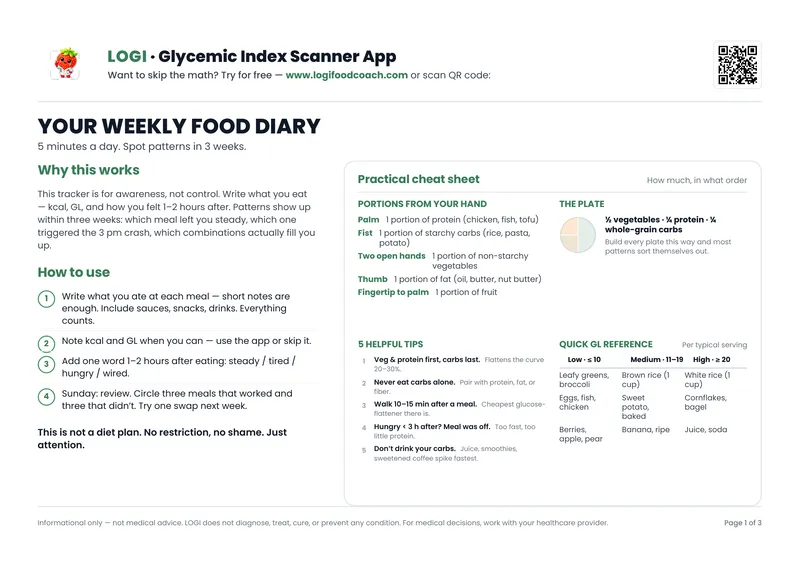
Free PDF — 3 pages
Your Weekly Food Journal
Track meals, glycemic load & mood. Spot patterns in 3 weeks.
No spam. Unsubscribe anytime.