Korean — low-GI recipes
Korean: 8 low-GI recipes from the LOGI catalogue. The median glycemic load is 5.6 per serving. Preparation takes 6 to 60 minutes.
Sorted by glycemic load, lowest first.
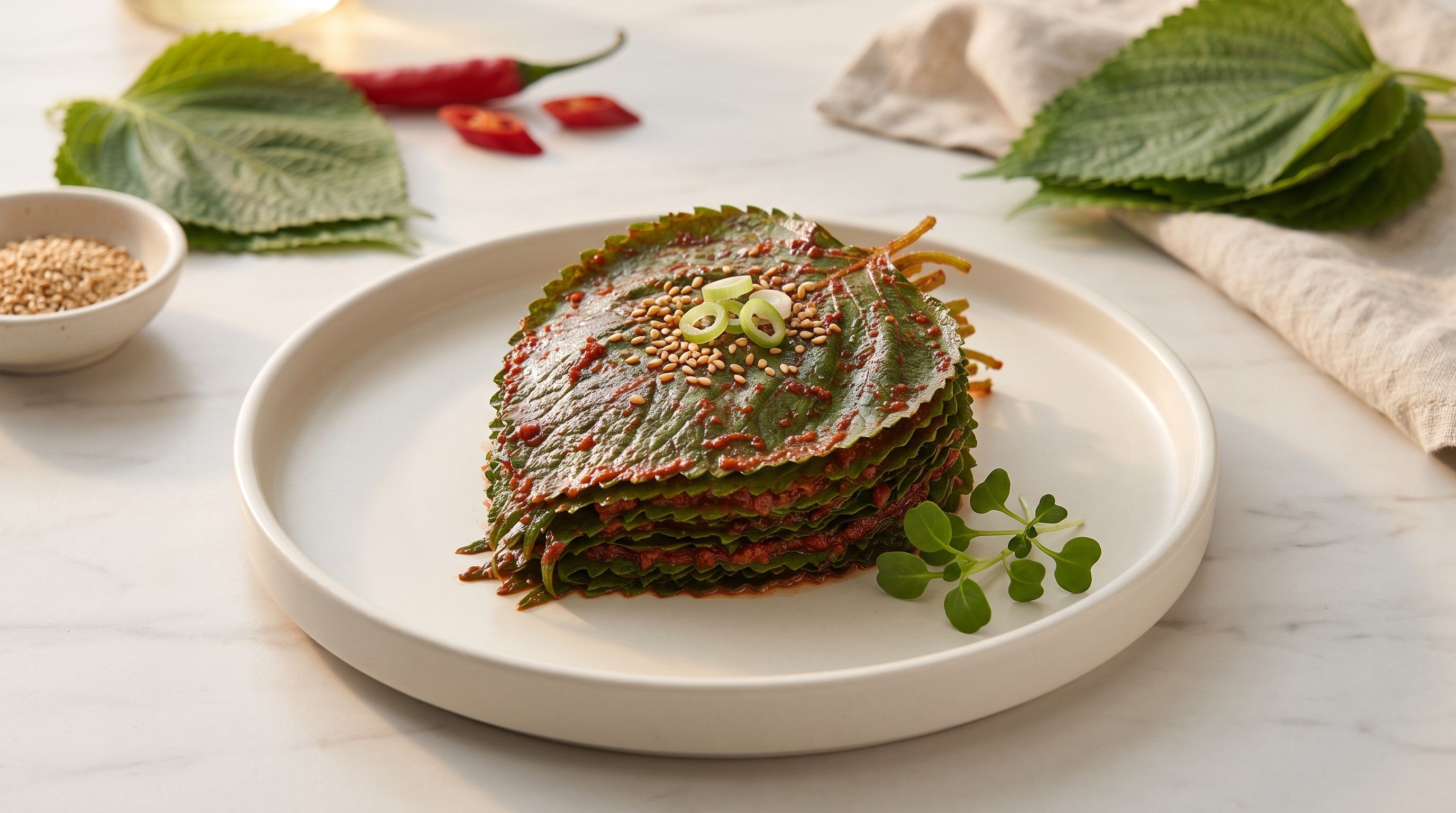
Kkaennip-Jjim (Korean Steamed Seasoned Perilla Leaves)
Silky perilla leaves layered with a bold soy-garlic-gochugaru paste and gently steamed — virtually zero-carb Korean banchan that won't budge your glucose.

Oi Muchim (Korean Spicy Cucumber Salad)
A fiery, crunchy Korean cucumber banchan with gochugaru, sesame, and rice vinegar — virtually zero-carb and ready in fifteen refreshing minutes.
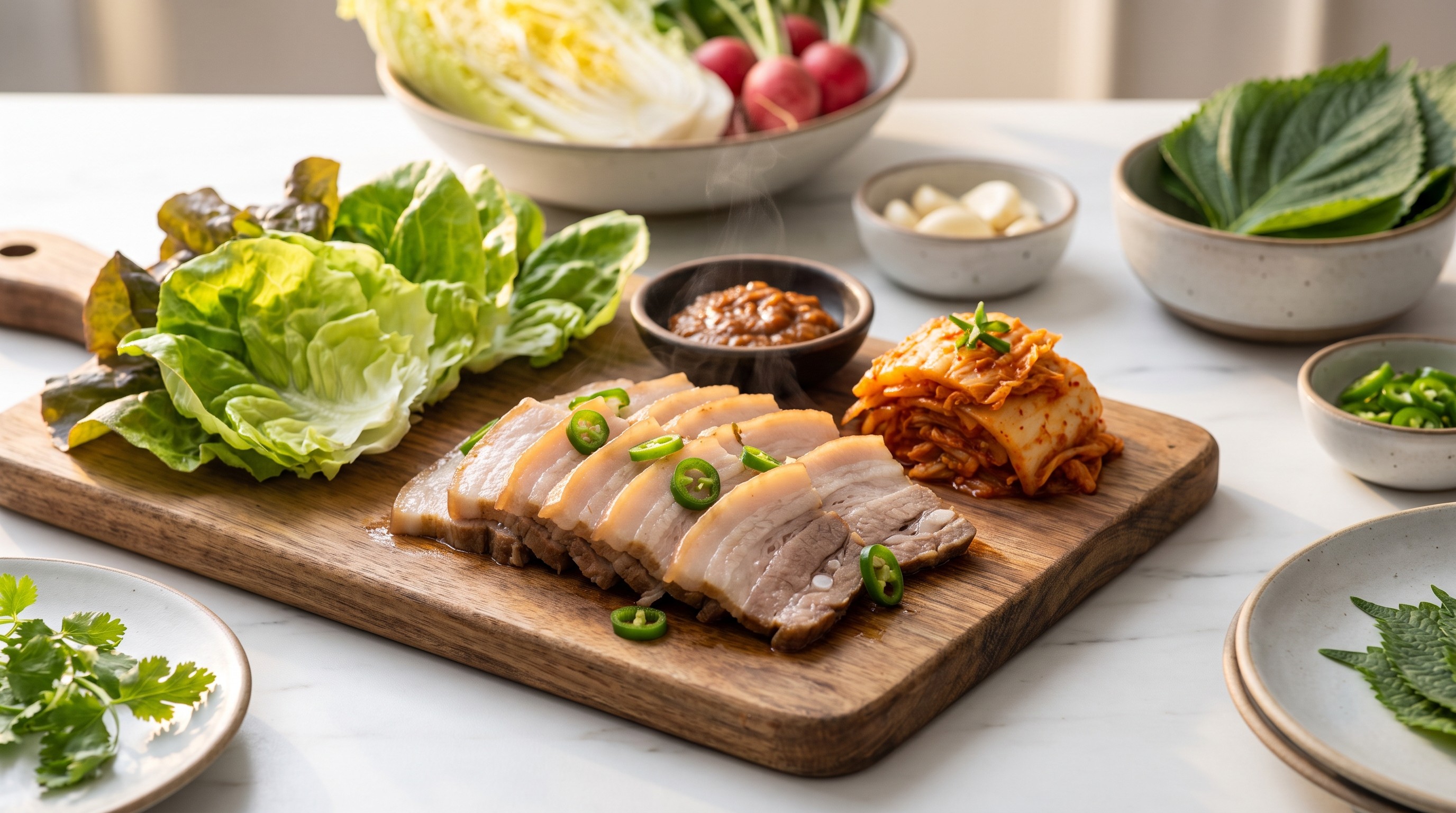
Bossam — Korean Simmered Pork Belly Lettuce Wraps
Tender pork belly poached in a doenjang broth, sliced thin and wrapped in crisp butter lettuce with ssamjang and tangy kimchi — naturally low-glycemic Korean comfort.
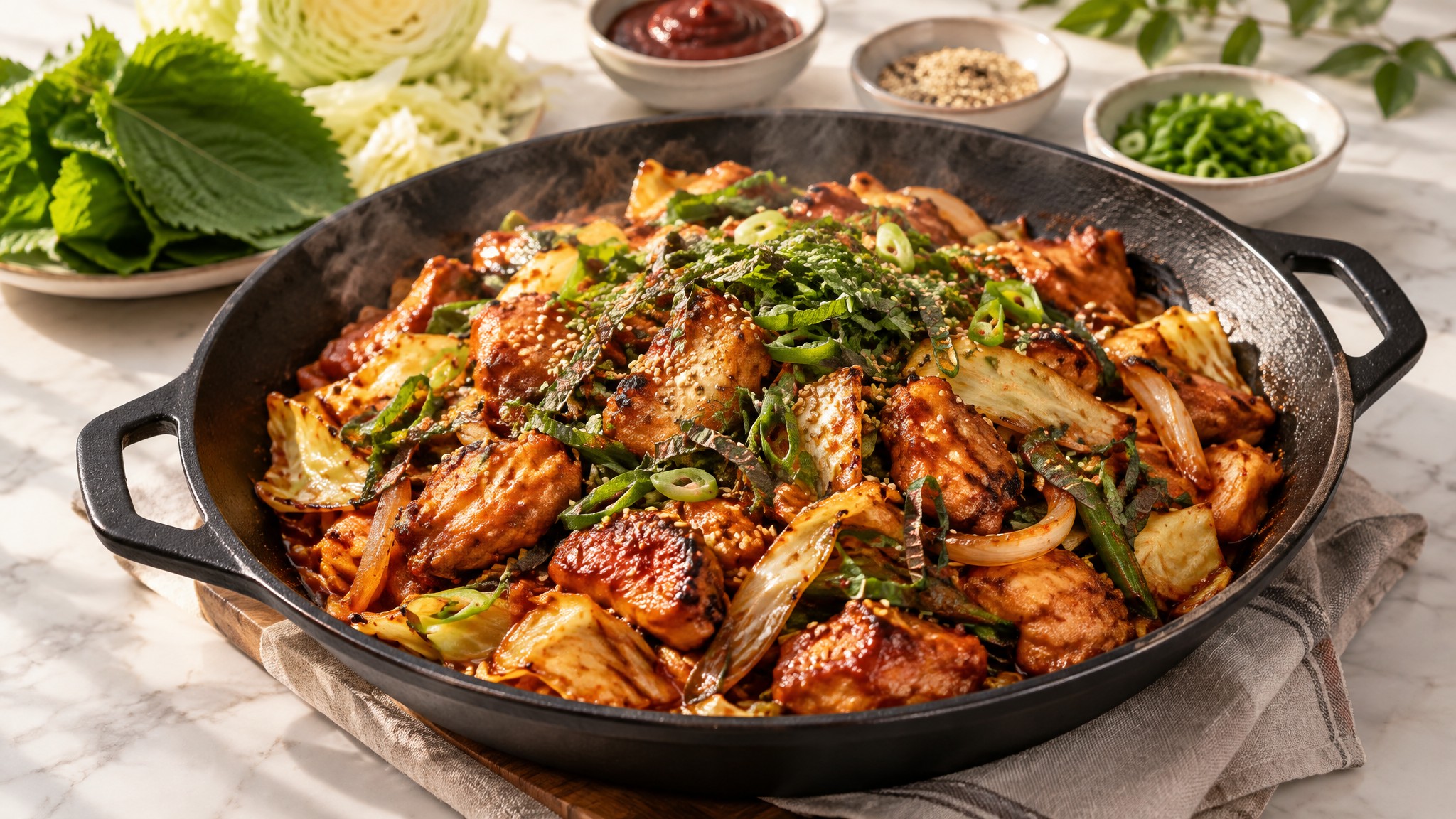
Low-GI Dakgalbi with Extra Cabbage and Perilla
Sticky, spicy gochujang chicken thighs tossed with charred cabbage and perilla. Chuncheon-style dakgalbi without rice cakes, made for steadier blood sugar.
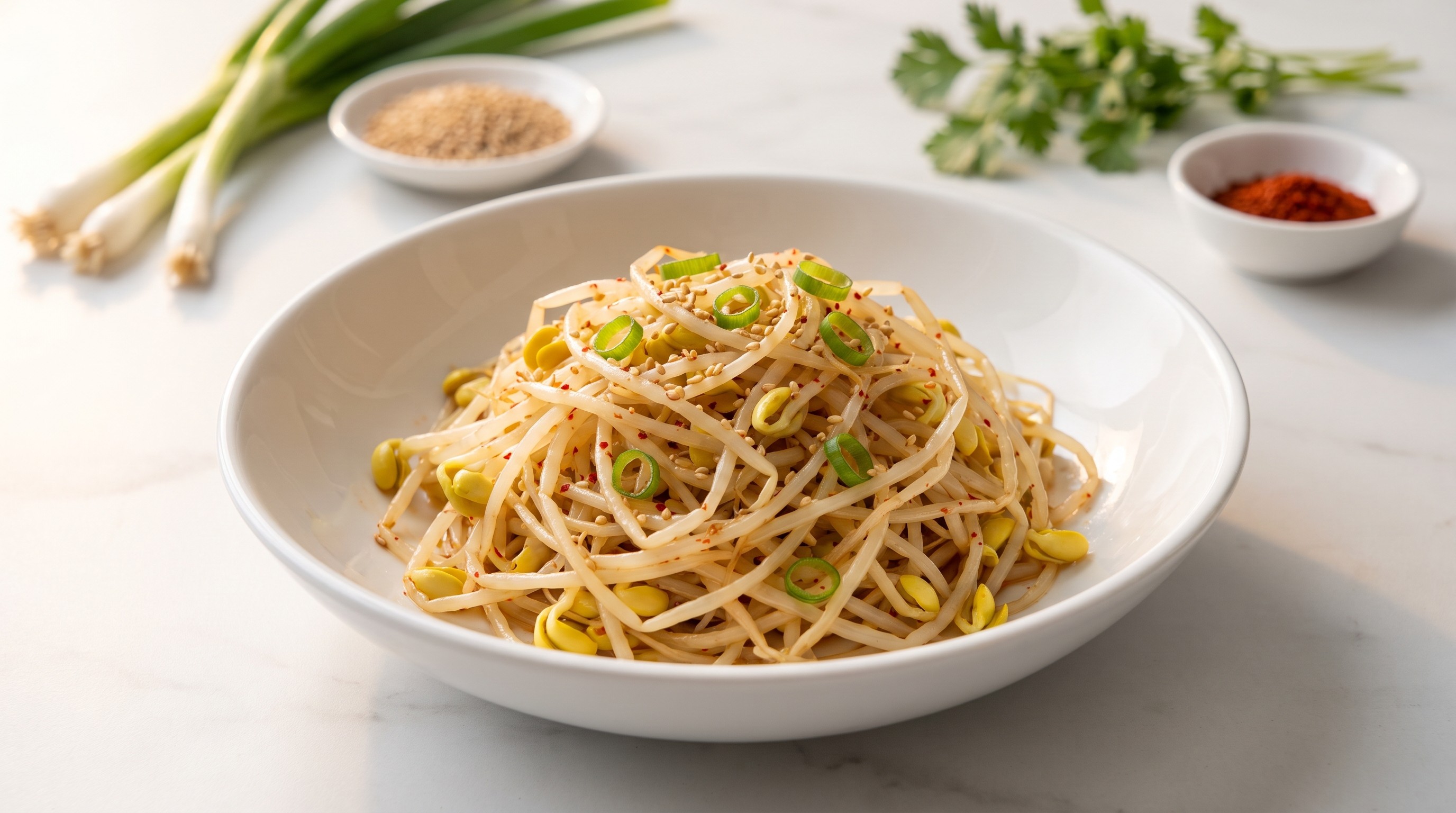
Kongnamul-Muchim (Korean Seasoned Soybean Sprouts)
Crisp blanched soybean sprouts tossed in sesame oil, garlic, and gochugaru — a classic Korean banchan with near-zero glycemic impact and plant protein.

Bibimbap Bowl with Cauliflower Rice and Gochujang Egg
A grain-free Korean bibimbap on cauliflower rice with sautéed vegetables and a runny egg — low-glycemic comfort in every colorful, savory bite.

Sundubu Jjigae (Korean Soft Tofu Stew)
A fiery Korean soft tofu stew with pork and runny egg — naturally low-glycemic, high-protein comfort food that keeps blood sugar steady.

Bulgogi Lettuce Wraps
Smoky Korean bulgogi nestled in crisp lettuce cups — high-protein, nearly zero-starch, and blood-sugar-friendly with pear replacing most of the marinade sugar.