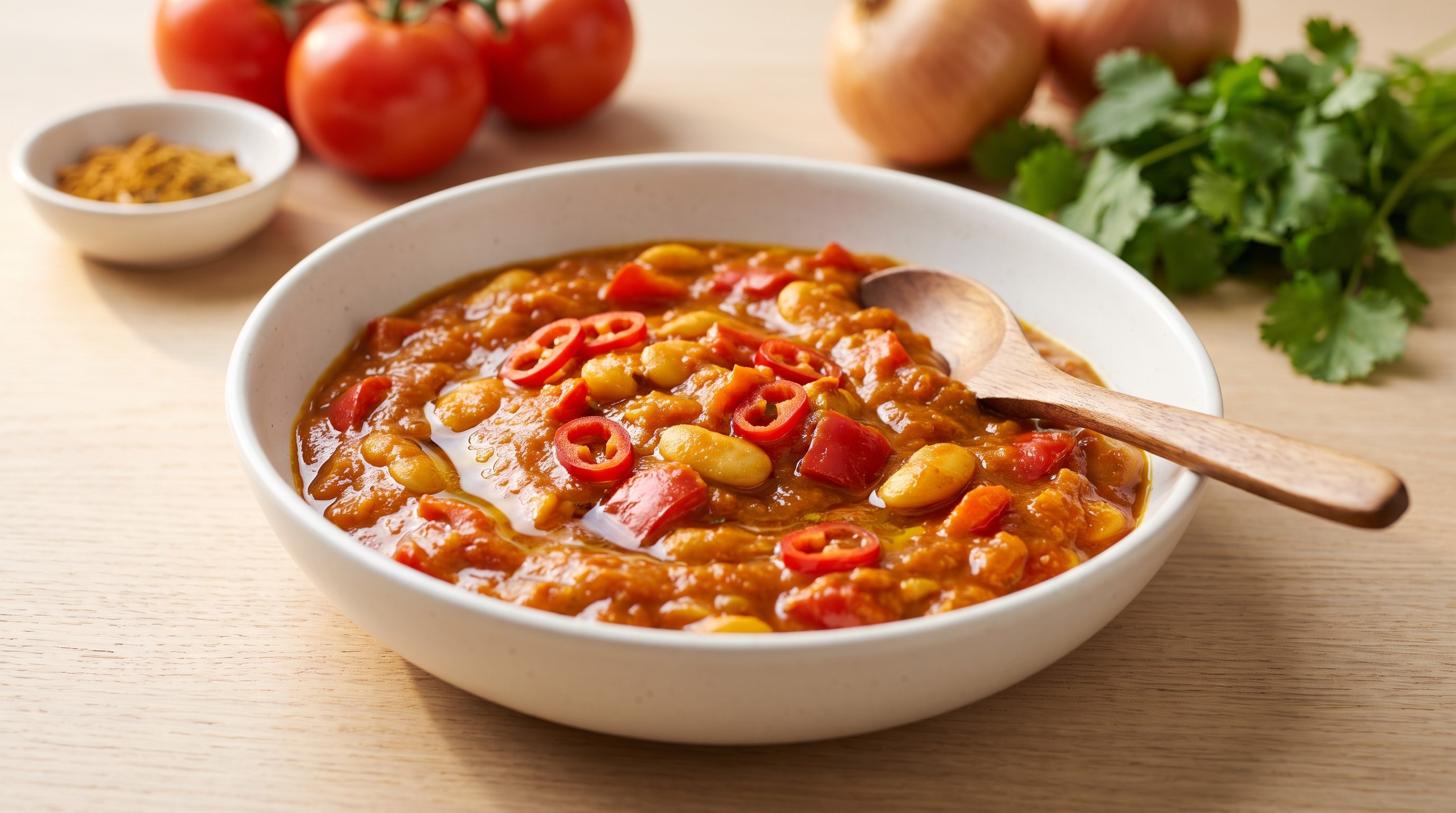
Chakalaka (South African Spiced Vegetable Relish)
A fibre-packed South African vegetable relish loaded with curry spice, butter beans and grated carrot — naturally low-GI with no added starch.
Chakalaka is one of those rare dishes that arrives at the table already blood-sugar-friendly without needing a single swap. Originating from South African townships and braai gatherings, this vibrant vegetable relish is built on a base of slow-cooked onion, grated carrot and diced pepper, simmered down in spiced tomato sauce until thick and jammy. There is no rice, no bread, no starch filler — just fibre-dense vegetables and protein-rich butter beans doing all the heavy lifting.
Butter beans are the star ingredient from a glycemic standpoint. With a GI of roughly 31, they deliver sustained energy alongside a generous dose of soluble fibre that slows glucose absorption from the entire meal. The carrots, sometimes flagged as medium-GI when boiled and mashed, behave very differently here: they are coarsely grated and cooked briefly in an oil-based sauce, which lowers their effective glycemic impact. Meanwhile, the curry powder blend — typically turmeric, coriander, cumin and fenugreek — brings compounds that have been studied for their potential to improve insulin sensitivity.
Serve chakalaka as a standalone bowl meal for a light, satisfying lunch, or spoon it alongside grilled chicken, fish or lamb for a complete plate. For the best blood-sugar response, eat the vegetable relish before any starchy side. It keeps well in the fridge for three days and tastes even better the next morning, making it an ideal meal-prep option for steady energy throughout the week.
Blood Sugar Impact
With a low GI of 28 and a moderate glycemic load of 14.7, this dish will produce a gentle, gradual rise in blood sugar. The combination of fiber-rich beans, vegetables, and healthy fats from olive oil slows glucose absorption, supporting stable energy for 3-4 hours.
Blood Sugar Tips
- ✓ Eat the vegetable and bean portions first before any starchy side dish to leverage the fiber and protein for blunting glucose response.
- ✓ Pair with a short 10-15 minute walk after eating to enhance glucose uptake by muscles and further flatten the blood sugar curve.
- ✓ If serving with rice or bread, keep the starchy side small — the chakalaka's beans already provide sustained carbohydrates, so extra starches can push the overall glycemic load higher.
🥗 Ingredients
- 1 tbsp Olive oil
- 1 pcs Onion
- 2 pcs Garlic
- 1 pcs Red chilli
- 2 pcs Carrot
- 1 pcs Red bell pepper
- 1 tbsp Curry powder
- 200 g Canned chopped tomatoes
- 400 g Butter beans
- 0.5 tsp Salt
- 1 tbsp Olive oil
- 1 pcs Onion
- 2 pcs Garlic
- 1 pcs Red chilli
- 2 pcs Carrot
- 1 pcs Red bell pepper
- 1 tbsp Curry powder
- 7.1 oz Canned chopped tomatoes
- 8.5 oz Butter beans
- 0.5 tsp Salt
👨🍳 Instructions
- 1
Place a wide, heavy-based pan over medium heat and add the olive oil. Once the oil shimmers, tip in the diced onion and cook for about 5 minutes, stirring now and then, until it turns soft and translucent.
- 2
Drop in the minced garlic and sliced red chilli. Stir everything together for 30 seconds until the garlic becomes fragrant — watch closely so it does not scorch.
- 3
Add the coarsely grated carrots and the diced red bell pepper to the pan. Cook for around 5 minutes, stirring frequently, until the carrots start to soften and break down into the onion mixture.
- 4
Sprinkle the curry powder over the vegetables and stir well for 30 seconds so every piece is evenly coated. The spices should smell warm and toasty.
- 5
Pour in the canned chopped tomatoes and add the salt. Give everything a good stir to combine and bring the mixture to a gentle simmer.
- 6
Let the relish bubble away uncovered for about 10 minutes, stirring occasionally, until the sauce thickens to a jammy consistency and the carrots have mostly melted into the sauce.
- 7
Gently fold in the drained and rinsed butter beans. Allow them to warm through for 2 to 3 minutes without breaking them apart.
- 8
Taste the chakalaka and adjust the salt if needed. Serve warm straight from the pan, or let it cool to room temperature — it is delicious either way and keeps well in the fridge for up to three days.
📊 Nutrition Per Serving
| Per Serving | Whole Dish | |
|---|---|---|
| Calories | 327 | 655 |
| Carbs | 52g | 103g |
| Sugars | 17g | 33g |
| Natural Sugars | 17g | 33g |
| Protein | 13g | 27g |
| Fat | 9g | 18g |
| Saturated Fat | 1g | 3g |
| Unsaturated Fat | 7g | 15g |
| Fiber | 16g | 32g |
| Soluble Fiber | 5g | 10g |
| Insoluble Fiber | 11g | 23g |
| Sodium | 773mg | 1546mg |
Predicted Glucose Response
What if you...
Estimated model — individual responses vary. Not medical advice.
🔄 Lower GI Swaps
Chakalaka is naturally blood-sugar-friendly. All ingredients — butter beans (GI ~31), vegetables, olive oil and spices — are already low-GI. No high-glycemic ingredients need replacing.
🔬 The Science Behind This Recipe
Why This Recipe Works for Blood Sugar
Chakalaka is naturally low-glycemic, earning an estimated GI of 28 and a glycemic load of 15 per serving. Three mechanisms keep your blood sugar steady.
First, butter beans (GI ~31) are rich in soluble fibre and resistant starch, both of which form a gel-like matrix in the gut that slows the rate at which glucose enters the bloodstream. A single serving of this relish delivers a meaningful dose of plant protein alongside that fibre, further blunting any post-meal spike.
Second, the carrots here are coarsely grated and cooked briefly in olive oil rather than boiled until soft. Cooking method matters: intact cell walls and the presence of fat reduce the speed of carbohydrate digestion, keeping the effective glycemic impact of carrot well below its often-cited boiled value.
Third, the curry powder blend contributes turmeric (containing curcumin) and fenugreek, two spices with emerging evidence for supporting insulin sensitivity and glucose uptake in muscle cells. While the amounts in a single dish are modest, regular inclusion in meals adds up over time.
Finally, there is no added starch, sugar or refined grain in this recipe. The tomato base provides lycopene and a small amount of natural sugar, but the overall carbohydrate density remains low. Pairing chakalaka with a protein source such as grilled chicken or fish creates a complete, balanced plate that supports stable energy for hours.
Related recipes

Free PDF — 3 pages
Your Weekly Food Journal
Track meals, glycemic load & mood. Spot patterns in 3 weeks.
No spam. Unsubscribe anytime.
