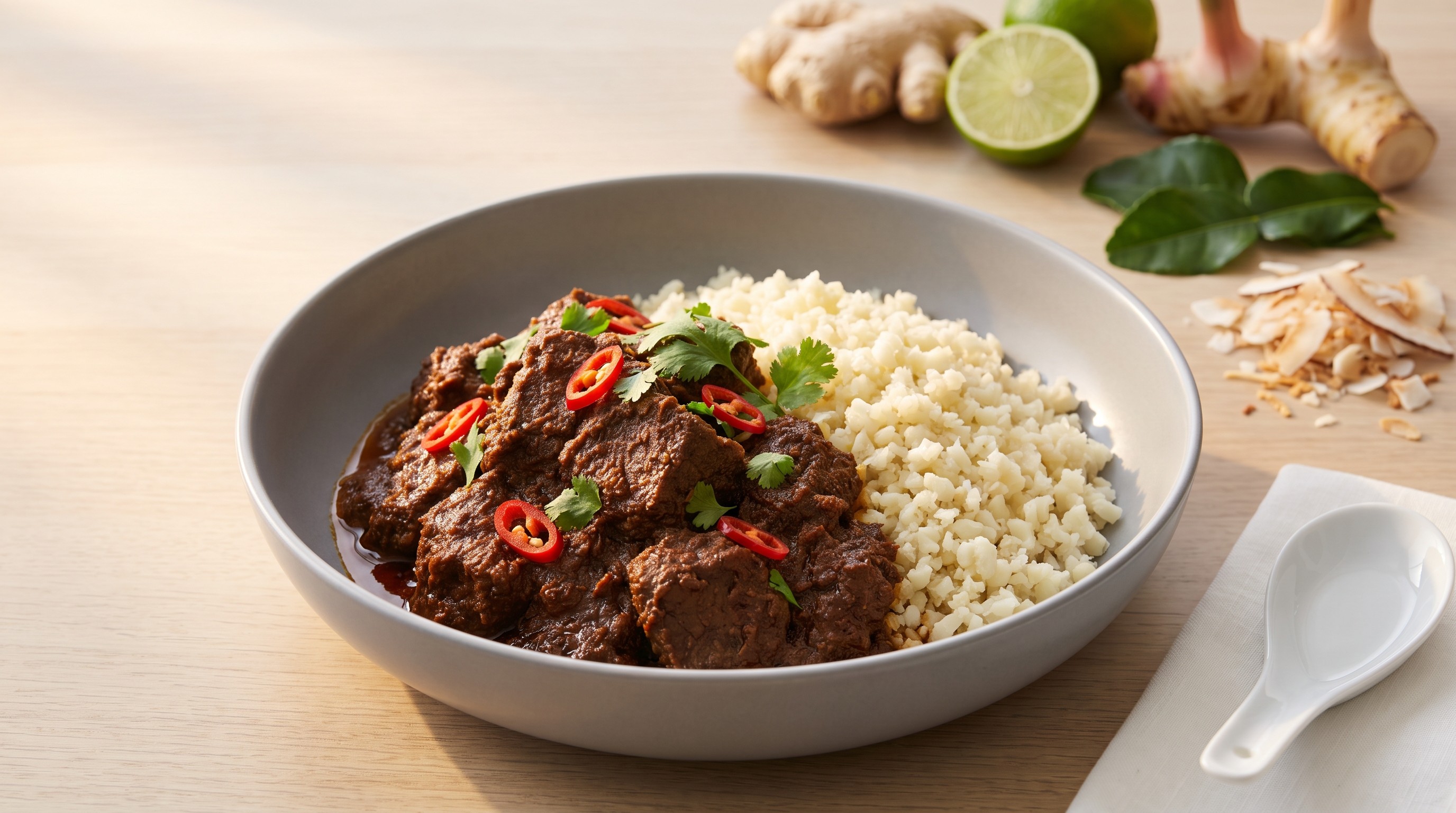
Beef Rendang with Cauliflower Rice
Tender beef slow-simmered in a fragrant coconut-spice paste, served over cauliflower rice — a naturally low-glycemic Indonesian classic that keeps blood sugar steady.
Rendang is one of those rare dishes that is inherently blood-sugar friendly without any modification at all. The long, gentle braise turns affordable beef chuck into meltingly tender morsels coated in a dark, intensely savory paste of coconut, lemongrass, and warm spices. Because the sauce reduces down to almost nothing, every bite delivers deep umami and fragrant heat with virtually zero carbohydrate impact. Protein and healthy fats from the beef and coconut milk work together to slow gastric emptying, keeping your glucose curve flat and your energy sustained for hours after the meal.
Swapping traditional steamed white rice (GI ~73) for cauliflower rice is the single smartest move here. Cauliflower contributes just 5 g of carbohydrate per 100 g compared to roughly 28 g for cooked white rice, and its fibre content further blunts any glucose response. The turmeric and ginger in the paste are not just flavour powerhouses — both contain bioactive compounds that studies have linked to improved insulin sensitivity. Ground coriander adds an earthy warmth while contributing negligible sugars.
For the best blood-sugar outcome, eat a few forkfuls of the cauliflower rice on its own before combining it with the rendang — starting with the vegetable component primes your digestive system and slows carbohydrate absorption. Pair this dish with a simple cucumber-and-vinegar side salad; the acetic acid in vinegar has been shown to reduce post-meal glucose spikes by up to 30 percent. If you plan to meal-prep, rendang actually improves overnight as the spices continue to meld, making it an ideal batch-cook option for busy weeknight dinners that support steady blood sugar.
Blood Sugar Impact
Very low blood sugar impact expected. With a glycemic load of 5.5 and an estimated GI of 21, this high-protein, high-fat meal with cauliflower rice instead of white rice will produce a slow, minimal rise in blood glucose, providing stable energy for 4-5 hours.
Blood Sugar Tips
- ✓ Eat the cauliflower rice alongside the beef rather than on its own to keep the protein and fat buffering any carbohydrate absorption.
- ✓ Take a gentle 10-15 minute walk after the meal to further blunt any modest postprandial glucose rise.
- ✓ Avoid adding sweet condiments or sugary drinks on the side, as they would negate the naturally low-glycemic profile of this dish.
🥗 Ingredients
- 400 g Beef chuck
- 3 pcs Shallot
- 3 pcs Garlic clove
- 1 pcs Fresh ginger
- 1 pcs Lemongrass stalk
- 1 pcs Red chili
- 1 tbsp Coconut oil
- 1 tsp Ground turmeric
- 1 tsp Ground coriander
- 200 ml Coconut milk
- 0.5 tsp Salt
- 300 g Cauliflower
- 14.1 oz Beef chuck
- 3 pcs Shallot
- 3 pcs Garlic clove
- 1 pcs Fresh ginger
- 1 pcs Lemongrass stalk
- 1 pcs Red chili
- 1 tbsp Coconut oil
- 1 tsp Ground turmeric
- 1 tsp Ground coriander
- 14 tbsp Coconut milk
- 0.5 tsp Salt
- 10.6 oz Cauliflower
👨🍳 Instructions
- 1
Place the shallots, garlic, ginger, lemongrass, and the halved red chili into a food processor. Set aside a few thin chili slices for garnish before blitzing. Pulse until a coarse, slightly chunky paste forms — avoid over-processing into a purée, as small pieces of aromatics add texture to the finished rendang.
- 2
Set a heavy-based saucepan or Dutch oven over medium heat and add the coconut oil. Once the oil shimmers, scrape in the spice paste along with the ground turmeric and ground coriander. Stir constantly for about 4 minutes until the paste turns a shade darker, smells deeply fragrant, and the oil starts to separate around the edges.
- 3
Turn the heat up to high and add the beef cubes to the pan. Toss the meat through the paste so every piece is well coated, then let it sear undisturbed for about 1 minute per side — roughly 2 minutes total — until sealed and lightly browned on all sides.
- 4
Pour in the coconut milk and add the salt. Stir once to combine, then bring the liquid to a gentle simmer. Reduce the heat to low, cover the pan with a lid, and let the beef braise for 25 minutes. The meat should be fork-tender and the sauce still fairly loose at this point.
- 5
Remove the lid and raise the heat to medium-high. Stir the rendang frequently for 6 to 8 minutes, allowing the coconut sauce to reduce and darken into a thick, almost dry paste that clings to each piece of beef. Watch carefully during the last few minutes to prevent burning — the natural sugars in the coconut will caramelise quickly.
- 6
While the rendang reduces, break the cauliflower florets into rough chunks and pulse them in a food processor in two batches until the pieces are roughly the size of rice grains. Be careful not to over-process — a few quick pulses are enough. If you don't have a food processor, grate the florets on the coarse side of a box grater.
- 7
Heat a large non-stick frying pan over high heat without any oil. Add the cauliflower rice in a single layer and dry-fry for about 3 minutes, tossing occasionally, until it is just tender but still has a slight bite. Season with a tiny pinch of salt if desired. Remove from the heat immediately — overcooked cauliflower rice turns mushy.
- 8
Divide the cauliflower rice between two warm plates or shallow bowls. Spoon the rendang over the top, making sure each serving gets a generous amount of the dark, caramelised paste. Scatter with the reserved thin chili slices and serve straight away.
📊 Nutrition Per Serving
| Per Serving | Whole Dish | |
|---|---|---|
| Calories | 825 | 1650 |
| Carbs | 27g | 54g |
| Sugars | 10g | 20g |
| Natural Sugars | 10g | 20g |
| Protein | 45g | 90g |
| Fat | 63g | 125g |
| Saturated Fat | 41g | 83g |
| Unsaturated Fat | 19g | 38g |
| Fiber | 7g | 14g |
| Soluble Fiber | 2g | 4g |
| Insoluble Fiber | 5g | 10g |
| Sodium | 770mg | 1540mg |
Predicted Glucose Response
What if you...
Estimated model — individual responses vary. Not medical advice.
🔄 Lower GI Swaps
Regular coconut milk contains natural sugars that contribute to glycemic load. Full-fat coconut cream has a higher fat-to-sugar ratio, slowing gastric emptying and glucose absorption. Plant-milk blends further reduce the sugar content while maintaining the creamy texture and keeping GL minimal.
Shallots have a higher sugar content per gram than many other alliums, contributing a modest glycemic load. Spring onion greens and chives deliver aromatic depth with significantly less natural sugar per serving, helping keep the overall GL as low as possible.
While coconut oil is low-GI as a fat, extra virgin olive oil and avocado oil are richer in monounsaturated fatty acids (MUFAs), which studies associate with improved insulin sensitivity and better post-meal blood sugar responses. Ghee also contains conjugated linoleic acid, which may support glucose metabolism.
Grass-fed and pasture-raised cuts have a higher omega-3 to omega-6 ratio, which is linked to improved insulin sensitivity and lower inflammatory markers that can worsen blood sugar regulation. Beef shin offers more collagen and connective tissue, which slows digestion and contributes to a steadier post-meal glucose curve.
🔬 The Science Behind This Recipe
Why This Recipe Works for Your Blood Sugar
This Beef Rendang with Cauliflower Rice is a standout meal for steady energy, and it starts with one smart swap: cauliflower rice instead of white rice. Traditional rendang is served over steamed rice, which can send blood sugar climbing quickly. Cauliflower, by contrast, is extremely low in carbohydrates and rich in fiber, meaning your body breaks it down slowly and gradually. That single substitution is the biggest reason this dish lands at a glycemic load of just 5.5 per serving — well within the "low" range. Remember, glycemic load tells you how much a realistic portion of food will actually affect your blood sugar, which matters far more than the glycemic index number alone. You could eat a low-GI food in huge quantities and still see a spike — but with a low GL like this, portion size is already working in your favor.
The beef chuck brings a generous amount of protein and healthy fat, both of which act as natural brakes on digestion. When protein and fat are present in a meal, your stomach empties more slowly, which means glucose trickles into your bloodstream instead of flooding it. The rich, slow-cooked sauce — built on shallots, garlic, ginger, and lemongrass — adds another layer of benefit. Ginger in particular has been studied for its ability to support healthy glucose metabolism, while the fiber from the aromatics and vegetables contributes to that gentle, sustained energy release.
To get even more from this meal, try eating any vegetable side first before digging into the rendang itself. Starting with fiber-rich foods helps create a buffer in your digestive system. A short 10–15 minute walk after eating can also help your muscles absorb glucose more efficiently. With its high protein content, minimal refined carbohydrates, and a glycemic load that barely registers, this rendang proves that deeply flavorful comfort food and blood-sugar-friendly eating can absolutely go hand in hand.
Related recipes
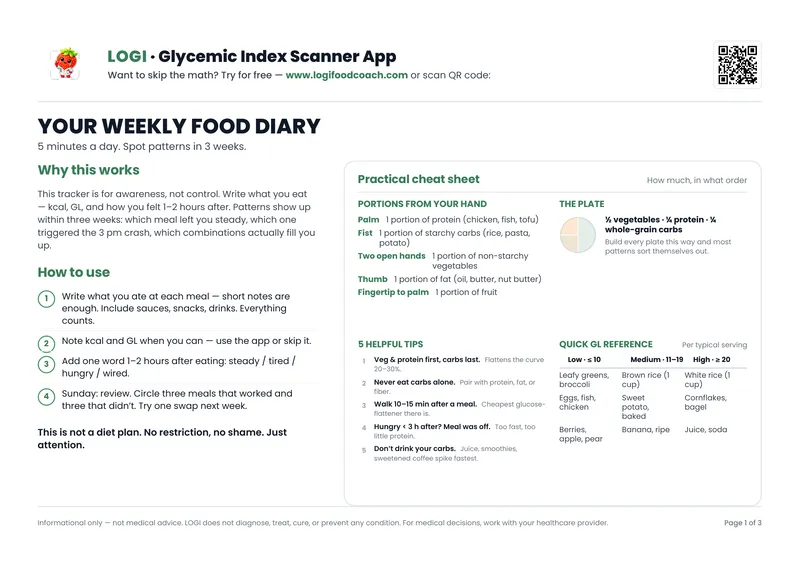
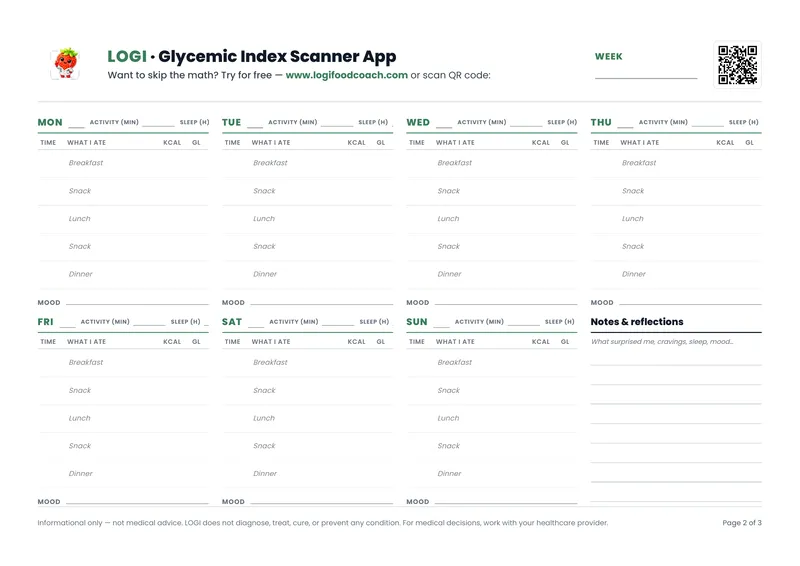
Free PDF — 3 pages
Your Weekly Food Journal
Track meals, glycemic load & mood. Spot patterns in 3 weeks.
No spam. Unsubscribe anytime.