Signs of Insulin Resistance: A 12-Question Self-Check (And What the Answers Mean)
Signs of Insulin Resistance: A 12-Question Self-Check (And What the Answers Mean)
Insulin resistance often shows up years — sometimes a decade — before a doctor will hand you a diagnosis. Fasting glucose stays in the “normal” range. HbA1c looks fine. But the body is already working harder to keep blood sugar where it needs to be, and that effort produces a recognizable pattern of symptoms.
This self-check pulls the 12 most consistent early signs from clinical literature on metabolic syndrome and prediabetes. None of them is diagnostic on its own. But four or more “yes” answers means it’s worth a conversation with your doctor and a closer look at what you eat and when.
A note on what insulin resistance actually is, in one paragraph: your cells need insulin to let glucose in. When they stop responding well to normal amounts, the pancreas pumps out more. That extra insulin keeps blood sugar normal for a while — but it also tells your body to store fat (especially around the middle), blocks fat burning, drives hunger, and slowly wears the system down. The symptoms below are downstream of this hidden imbalance.
The 12 Questions
1. Do you carry weight mainly around your midsection?
Visceral fat — the kind packed around your organs — is both a cause and a consequence of insulin resistance. It pumps out inflammatory signals that make cells less responsive to insulin, which then drives more fat storage in the same area. A waist circumference above 35 inches (88 cm) for women or 40 inches (102 cm) for men is one of the official criteria for metabolic syndrome.
A waist-to-height ratio above 0.5 is an even better predictor. Your waist should be less than half your height. If it isn’t, that’s a single sign — not yet a diagnosis.
2. Do you feel hungry again 1–2 hours after eating, even after a full meal?
This is the postprandial dip pattern. A meal high in refined carbohydrates (bread, pasta, rice, juice) drives a sharp insulin response. Insulin clears glucose from the blood — sometimes too aggressively — and you end up below your starting baseline within 90 minutes. The body reads “low blood sugar” as “find more food now.”
People with healthy insulin sensitivity rarely have this pattern after a balanced meal. If you eat lunch and need a snack by 2 PM, that’s a signal worth paying attention to.
3. Do you feel sleepy or foggy 30–60 minutes after eating?
Postprandial fatigue — feeling tired after a meal — is one of the earliest symptoms. The mechanism is the same insulin overshoot. Glucose drops, the brain (which runs on glucose) underperforms briefly, and you reach for coffee.
We covered this in detail in Why Am I Tired After Eating?. If it’s a daily pattern after specific meals (especially breakfast or lunch), it’s worth tracking which meals trigger it.
4. Do you have skin tags or dark, velvety patches on the back of your neck, in your armpits, or in skin folds?
This is acanthosis nigricans — the most visible external sign of insulin resistance. High insulin levels stimulate skin cell growth in friction zones. The patches don’t itch and aren’t painful, but they often appear years before any blood test goes abnormal.
Skin tags in the same areas (neck, armpits, groin) follow the same mechanism. If you’ve noticed either, mention it to your doctor and ask for a fasting insulin test (not just glucose).
5. Have you struggled to lose weight despite eating less and moving more?
This is a defining frustration. The simple “calories in, calories out” model assumes the body burns stored fat when energy is short. But high insulin levels actively block lipolysis — the breakdown of fat for energy. You eat less, the body lowers its metabolic rate to match, and the fat stays put.
We unpacked this in [Why Am I Not Losing Weight Eating Less?](/en/blog/why-not-losing-weight-eating-less/) The short version: when insulin is the dominant signal, calorie restriction alone often fails. The fix is shifting what you eat (lower glycemic load, more protein, more fiber) before worrying about how much.
6. Do you have intense cravings for sugar or refined carbs, especially in the afternoon or evening?
Insulin resistance creates a craving loop. High insulin drives glucose into cells too fast, blood sugar dips, and the brain interprets the dip as urgent calorie need. The cravings are usually specific — bread, pasta, sweets, sweetened drinks — because those foods reverse the dip fastest.
Healthy insulin sensitivity correlates with stable hunger signals. Strong, predictable cravings at the same time every day (3 PM crash, evening snacking after dinner) point toward dysregulation.
7. For women: have you been diagnosed with PCOS or had irregular periods, acne, or excess facial hair?
Polycystic ovary syndrome and insulin resistance are deeply linked. Roughly 70% of women with PCOS have measurable insulin resistance, and elevated insulin drives the androgen excess behind the visible symptoms. If you have PCOS, insulin sensitivity is a higher-leverage target than calorie restriction.
For women without a PCOS diagnosis: persistent acne in adulthood, hirsutism (excess facial or body hair), or irregular cycles can all be downstream of insulin issues even before a formal diagnosis.
8. Do you have a family history of type 2 diabetes, gestational diabetes, or PCOS?
Insulin resistance has a strong genetic component. If a parent or sibling has type 2 diabetes, your risk is 2–3x baseline. If your mother had gestational diabetes, your risk doubles independently. This doesn’t mean you’ll develop diabetes — but it means insulin resistance can show up earlier in your life and at a lower body weight than it would in someone without the family pattern.
Asian, Hispanic, Black, Native American, and Pacific Islander populations also carry higher baseline genetic risk. None of this is destiny — diet and movement still dominate the outcome — but the cushion is smaller.
9. Has your fasting glucose been creeping up over the past few years, even within “normal” range?
Fasting glucose under 100 mg/dL (5.5 mmol/L) is “normal.” But there’s a meaningful difference between 82 and 98. A drift from 85 → 92 → 97 over five years often signals quietly developing insulin resistance — the body is working harder each year to keep that number where it is.
If you have access to old blood test results, look at the trajectory, not just the latest value. The same logic applies to HbA1c (long-term blood sugar marker): drift from 5.2% → 5.4% → 5.6% is the same warning, even though all three are still classified as “normal.”
10. Do you have high triglycerides, low HDL cholesterol, or both?
Triglycerides above 150 mg/dL combined with HDL below 40 (men) or 50 (women) is one of the classic insulin resistance fingerprints. The triglyceride-to-HDL ratio above 3 is a stronger predictor of insulin resistance than fasting glucose alone in many studies.
Total cholesterol matters less than this ratio. If your LDL looks fine but your triglycerides are high and HDL is low, ask your doctor about insulin resistance markers — not just standard cholesterol panel.
11. Do you wake up tired even after 7–8 hours of sleep, or wake up at 3–4 AM and struggle to fall back asleep?
Sleep disruption is bidirectional with insulin resistance. Poor sleep worsens insulin sensitivity (one bad night can drop it by 20%). And insulin resistance disrupts sleep — particularly through nocturnal blood sugar swings. Waking up wired at 3 AM often correlates with a glucose dip that triggers cortisol release.
If “I sleep enough but wake up exhausted” is a pattern for you, insulin sensitivity is one of several things worth investigating (alongside sleep apnea, especially if you snore).
12. Do you have high blood pressure (over 130/85), even when you’re otherwise healthy?
Insulin has direct effects on blood pressure regulation. High insulin levels promote sodium retention (fluid stays in the system), increase sympathetic nervous system activity, and stiffen blood vessel walls. About half of people with hypertension have measurable insulin resistance — even at normal weight.
If your blood pressure is borderline-high without an obvious explanation, it’s worth checking insulin levels, not just standard cardiac markers.
What Your Score Means
0–3 yes answers: Low probability of meaningful insulin resistance right now. Worth periodic re-checking — especially if any of those 0–3 are family history or visible signs (acanthosis nigricans, midsection weight).
4–6 yes answers: Moderate signal. This is the range where most people with early insulin resistance live for years before diagnosis. Lifestyle interventions (diet, sleep, walking) are highly effective at this stage. Talk to your doctor about getting a fasting insulin test (not just fasting glucose) and a HOMA-IR score.
7+ yes answers: Strong pattern. Get blood work soon. Ask specifically for fasting insulin, HbA1c, fasting glucose, triglycerides, HDL, and ALT (liver enzymes — fatty liver tracks closely with insulin resistance). Don’t accept “your glucose is normal” as the end of the conversation.
What Actually Moves the Needle
Insulin resistance reverses. Slowly, but it does. The interventions that work most reliably are not exotic.
Low glycemic load eating — more protein, more fiber, more fat, fewer refined carbohydrates. The goal isn’t zero carbs. It’s keeping blood sugar swings small enough that insulin doesn’t have to spike to clear them. We covered the mechanics in Glycemic Load vs. Glycemic Index — load is what matters, not just index.
Walking after meals — even 10 minutes of light walking after eating reduces post-meal glucose by 15–25%. Your muscles pull glucose from the blood without needing insulin, which gives the system a break.
Strength training 2–3x per week — muscle is the largest glucose sink in the body. More muscle = more insulin-independent glucose disposal = lower insulin requirements at rest.
Sleep 7+ hours — non-negotiable. One night of poor sleep tanks insulin sensitivity. Chronic short sleep makes every other intervention harder.
Time-restricted eating — compressing meals into a 10–12 hour window gives insulin time to drop between meals. Even modest fasts (12 hours overnight, no late snacking) help.
What doesn’t reliably help: extreme low-fat diets, “diabetic-friendly” processed foods that are still high in refined carbs, and pure calorie restriction without changing food composition.
How Logi Helps
The hardest part of fixing insulin resistance is converting “eat better” into specific decisions at specific meals. Generic GI tables don’t account for portion size, what you ate alongside, or how your body specifically responds. Logi closes that gap:
- Scan your meal, see the glycemic load and predicted glucose curve before you eat. Adjust the portion or swap an ingredient if the prediction is too high.
- Plan meals 1–14 days ahead with low-glycemic-load templates designed for insulin resistance. The Meal Planner builds shopping lists and respects portions for 1–6 people.
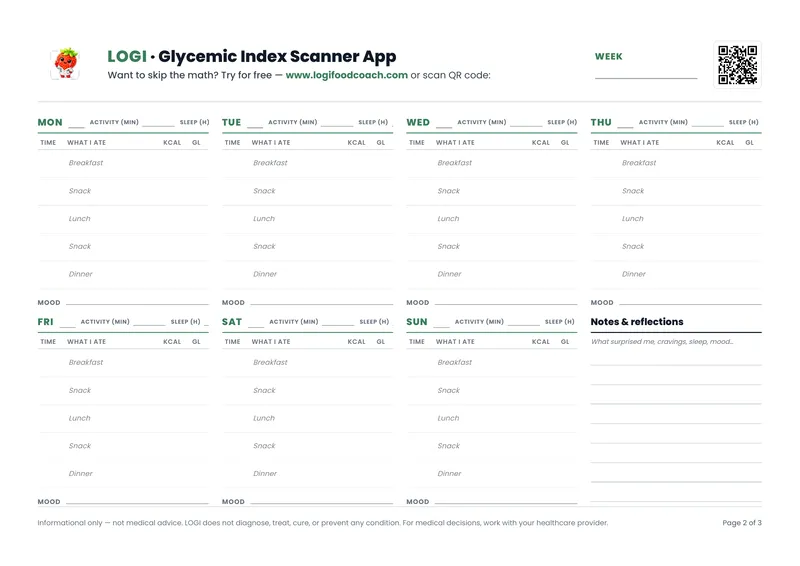
- Track patterns — energy after meals, weight, optional HOMA-IR if you log lab work. See what’s actually moving over months, not just one bad day.
- PDF export for your doctor — print a 30-day summary of meals, predicted vs. actual glucose response (if you log a meter reading), and weight trend. Productive doctor visits start with data they can read.
Available on iOS and Android, free to try with 10 meal scans, low-glycemic meal planning behind a 7-day trial.
Get Logi for iOS | Get Logi for Android
Bottom Line
Insulin resistance is more common than the diagnosis rate suggests — recent estimates put the prevalence in adults at 30–40% in developed countries, but the formal diagnosis lags by years. The signs above are not subtle; they’re just easy to dismiss individually.
If four or more of these resonate, treat it as useful information, not a verdict. The interventions that work are well-understood, accessible, and show measurable results within 8–12 weeks. The earlier you start, the smaller the lift.
If your score was 0–3 and you’re still here reading: keep checking once a year. Insulin resistance develops quietly. Catching it before fasting glucose drifts is a much easier fix than catching it after.
Disclosure: this content is educational and not a substitute for medical advice. If you’ve answered yes to multiple questions, particularly about visible signs (acanthosis nigricans, family history, measured lab values), schedule a conversation with your doctor.
Take control of your blood sugar
Scan your meals, track glycemic load, and see your patterns — all in one app.
Započnite besplatni probni period →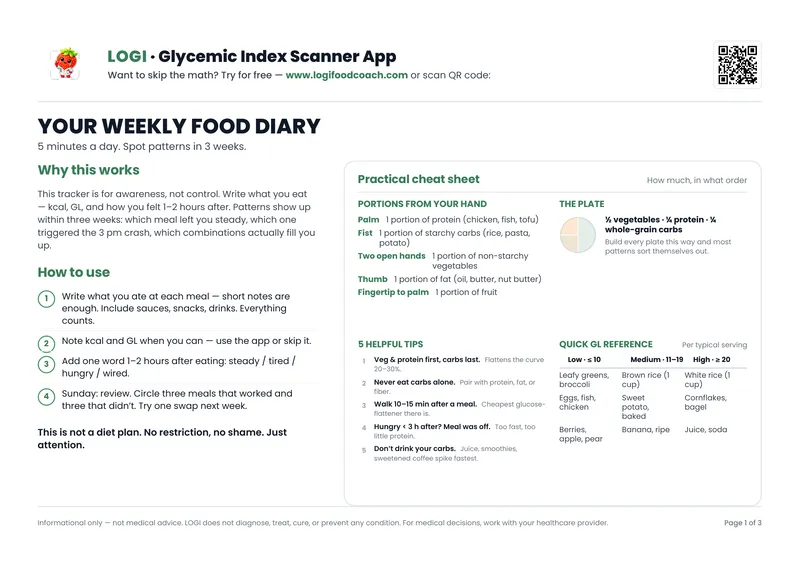
Бесплатан PDF — 3 стр.
Твој недељни дневник исхране
Бележи оброке, гликемијско оптерећење и расположење. Уочи обрасце за 3 недеље.
Без спама. Одјави се кад год желиш.