Glycemic Load vs. Glycemic Index: The Number That Actually Predicts Your Blood Sugar Spike
You’ve been told that watermelon has a high glycemic index. So you skip it at summer barbecues while everyone else is eating the slice you wanted.
Here’s what you weren’t told: a normal serving of watermelon has a glycemic load of just 5. That’s lower than a banana, lower than a glass of orange juice, and lower than most breakfast cereals marketed as “heart healthy.”
The glycemic index number that scared you? It’s technically accurate — and practically useless without one more piece of information.
What the Glycemic Index Actually Measures
The glycemic index (GI) ranks foods on a scale of 0 to 100 based on how quickly they raise blood glucose compared to pure glucose (GI = 100).
The catch: GI is measured using a fixed 50 grams of available carbohydrates from that food. Not 50 grams of the food itself — 50 grams of the carbohydrate portion.
To get 50g of carbs from watermelon, you’d need to eat roughly 600–700 grams of watermelon — about 6–7 thick slices. That’s not a serving; that’s a challenge.
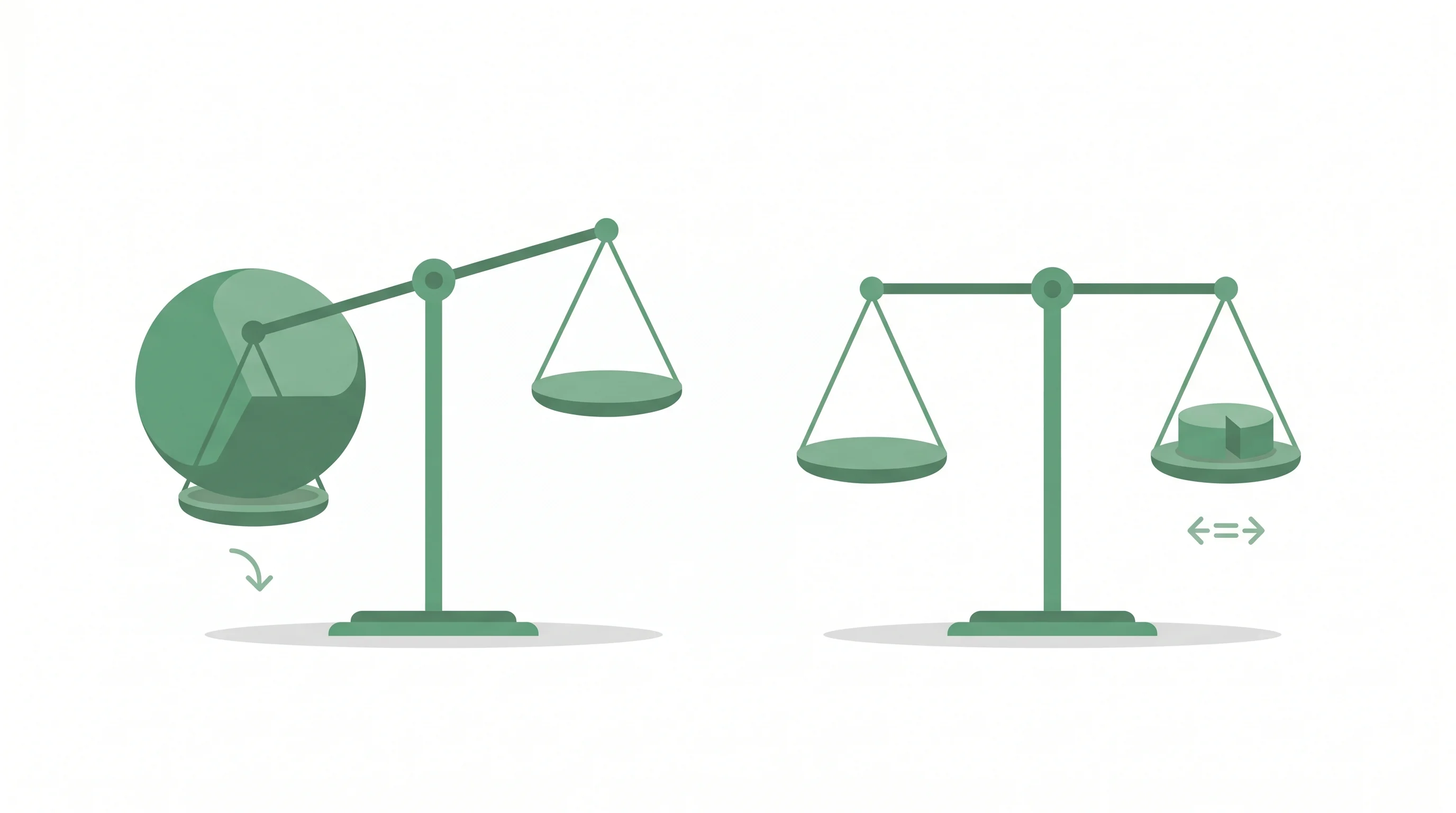
This is why GI misleads. It tells you about the rate of glucose release but ignores the dose you actually eat.
What Glycemic Load Adds
Glycemic load corrects this by accounting for how much carbohydrate is actually in a realistic portion.
Formula:
GL = (GI × grams of available carbohydrate per serving) ÷ 100
Watermelon example:
- GI = 76 (high)
- Carbs per 120g serving = 7.5g
- GL = (76 × 7.5) ÷ 100 = 5.7 (low)
White rice example:
- GI = 72 (high)
- Carbs per 150g cooked serving = 38g
- GL = (72 × 38) ÷ 100 = 27.4 (high)
Both watermelon and white rice have similar GI scores. Their glycemic loads are completely different.
The Scale That Matters
GL is classified into three tiers:
| GL Category | Score | Effect |
|---|---|---|
| Low | ≤ 10 | Minimal blood sugar impact |
| Medium | 11–19 | Moderate impact |
| High | ≥ 20 | Significant spike risk |
For people managing insulin resistance or prediabetes, the practical target is:
- Each meal: total GL ≤ 20–25
- Each day: total GL ≤ 100
These aren’t strict rules — they’re working benchmarks. Your body’s response also depends on what you eat with a food (fat and protein slow absorption), how it’s cooked, and your current insulin sensitivity.
Five Foods Where GI Misleads and GL Clarifies
| Food | GI | Typical Serving | GL per Serving |
|---|---|---|---|
| Watermelon | 76 | 120g | 6 |
| Carrots (cooked) | 47 | 80g | 3 |
| White bread | 75 | 30g (1 slice) | 11 |
| Boiled lentils | 32 | 150g | 5 |
| Jasmine rice | 109 | 150g cooked | 46 |
Notice lentils: low GI and low GL — a genuinely safe choice. Jasmine rice is the opposite — both GI and GL are high. White bread sits in the middle: moderate GI, but a single slice already delivers a medium GL.
Why This Matters More for Insulin Resistance
In a healthy metabolism, the body corrects a blood sugar spike quickly. In insulin resistance, the correction is slower, requires more insulin, and costs more metabolically each time it happens.
This means the dose matters more than the rate.
A sharp but tiny glucose rise (high GI, low GL — like watermelon) is less of a problem than a sustained, large rise (high GL — like white rice or pasta in a large portion). Your pancreas cares about how much insulin it needs to produce total, not just how fast glucose arrived.
This is why low-GL eating is a more forgiving and practical framework than strict low-GI eating. It allows for food flexibility — watermelon in summer, a small amount of rice with fish — while keeping the total glycemic burden of each meal in check.
How to Apply This Without a Spreadsheet
Three practical rules that cover most situations:
1. Shrink the portion before eliminating the food. Before cutting out a food entirely, check its GL per realistic serving. Many “forbidden” foods (carrots, beets, bananas) become manageable when portioned correctly.
2. Pair high-GL foods with protein and fat. Adding olive oil, nuts, eggs, or fatty fish to a meal slows gastric emptying and reduces the glycemic impact of every food in that meal. A bowl of rice with chicken and avocado behaves very differently than rice alone.
3. Track total meal GL, not individual foods. The goal is to keep the total GL of a meal under 20–25. One medium-GL component in a meal full of low-GL foods is not a problem.
Tools That Do the Math for You
Calculating GL manually requires knowing the GI of each food, the available carbohydrates per 100g, and the actual weight of your serving. For most people, this is too much friction to sustain.
The Logi app calculates glycemic load automatically for every meal you log — either by scanning a photo of your plate or entering ingredients manually. The app draws from a database of over 7,000 ingredients and shows your meal’s GL alongside macros and a predicted blood sugar curve for the next 3 hours.
For people managing insulin resistance or prediabetes, having the GL number visible every time you eat changes how you make decisions in the moment — without needing to remember formulas.
Summary
- GI measures how fast a food raises blood sugar, using an unrealistically large carbohydrate dose.
- GL measures how much a realistic portion actually raises blood sugar — combining GI with actual carb content.
- For insulin resistance management, GL is the more actionable number.
- Low GL = ≤ 10 per serving. Aim for total meal GL under 20–25.
- Many high-GI foods have low GL in normal portions. Many processed foods have high GL regardless.
You don’t need to memorize tables or avoid entire food groups. You need to know the GL of what you’re actually eating — and keep the total reasonable.
Frequently Asked Questions
Is glycemic load the same as net carbs? No. Net carbs subtract fiber from total carbohydrates. GL uses net carbs (available carbohydrates) but then multiplies by the GI score. A food can be low in net carbs but still have a high GL if its GI is very high (like some breakfast cereals).
Should I only eat low-GL foods? Not necessarily. Medium-GL foods (11–19 per serving) are fine when the rest of your meal is low-GL. The goal is to manage the total glycemic load of each meal, not to achieve a perfect score on every ingredient.
How do cooking methods affect GL? Significantly. Cooking time and method change both GI and GL. Al dente pasta has a lower GL than overcooked pasta. Cooling cooked potatoes and reheating them lowers their GL (resistant starch formation). Roasting increases the GL of some vegetables compared to steaming.
Can I eat fruit with insulin resistance? Most fruits have a low GL per serving despite having a medium or high GI. Berries, apples, pears, peaches, and watermelon all have GL values below 10 per typical serving. Dates, dried fruit, and fruit juice concentrate are exceptions — their GL per serving is high.
Related recipes

Grilled White Fish Tacos with Fresh Watermelon-Avocado Salsa
Vibrant low-GI fish tacos featuring grilled cod in crisp lettuce wraps, topped with a refreshing watermelon salsa that won't spike your blood sugar.

Low-GI Cassoulet — French White Bean Stew Without the Blood Sugar Spike
A rustic French cassoulet built on low-GI white beans, chicken thighs, and pork sausage — hearty comfort food that keeps blood sugar steady.

Handful of Macadamia Nuts
A perfectly portioned low-glycemic snack that delivers healthy fats and sustained energy without spiking blood sugar levels—ideal for metabolic health.
Take control of your blood sugar
Scan your meals, track glycemic load, and see your patterns — all in one app.
Start Free Trial →
Free PDF — 3 pages
Your Weekly Food Journal
Track meals, glycemic load & mood. Spot patterns in 3 weeks.
No spam. Unsubscribe anytime.
