Szaszłyki z polędwicy wołowej i warzyw z grilla z pełnoziarnistym ryżem
Delikatne, zamarynowane kostki wołowiny w towarzystwie kolorowych warzyw na szaszłykach, podane na bogatym w błonnik brązowym ryżu dla stabilnej energii i zrównoważonego poziomu cukru we krwi.
Ten sycący posiłek łączy chude białko z warzywami o niskim indeksie glikemicznym i pełnoziarnistym brązowym ryżem, tworząc idealnie zrównoważone danie do kontrolowania poziomu cukru we krwi. Polędwica dostarcza wysokiej jakości białka, które spowalnia wchłanianie glukozy, podczas gdy kolorowa paleta papryki, pomidorów i cebuli dodaje błonnika, przeciwutleniaczy i ma minimalny wpływ na węglowodany. Marynowanie wołowiny nie tylko zmiękczy mięso i wzbogaci smak, ale także zmniejsza powstawanie szkodliwych związków podczas grillowania. Brązowy ryż stanowi idealną podstawę tego dania, z indeksem glikemicznym 34 w porównaniu do 89 dla białego ryżu. Jego nienaruszona warstwa otrębów dostarcza błonnika, który reguluje uwalnianie glukozy do krwiobiegu, zapobiegając gwałtownym skokom związanym z rafinowanymi zbożami. Odmierzona ilość 1/2 szklanki suchego ryżu daje około 1 szklankę ugotowanego ryżu na porcję, zapewniając kontrolowane porcje węglowodanów. Połączenie białka z wołowiny i błonnika zarówno z warzyw, jak i brązowego ryżu tworzy synergiczny efekt, który zapewnia uczucie sytości na wiele godzin. Dla optymalnej kontroli cukru we krwi jedz najpierw warzywa i wołowinę, a następnie dokończ ryżem. Ta kolejność jedzenia dodatkowo spowalnia wchłanianie węglowodanów. Pomidorki koktajlowe i papryka są szczególnie korzystne, dostarczając witamin C i A, a jednocześnie zawierając mniej niż 5 gramów węglowodanów na porcję. Użyj beztłuszczowego sosu włoskiego lub zrób własny z oliwy z oliwek, octu i ziół, aby uniknąć ukrytych cukrów, które mogą wpłynąć na poziom glukozy we krwi. Ten przepis dowodzi, że kontrolowanie odpowiedzi glikemicznej nie oznacza rezygnacji ze smaku czy satysfakcji z posiłku.
Wpływ na cukier we krwi
Ten posiłek będzie miał niski do umiarkowanego wpływ na poziom cukru we krwi dzięki połączeniu chudego białka, bogatych w błonnik warzyw i pełnoziarnistego brązowego ryżu. Niski ładunek glikemiczny 7,3 sugeruje stabilną, trwałą energię przez 3-4 godziny bez znaczących skoków.
Porady o cukrze
- ✓ Zjedz najpierw grillowane warzywa i polędwicę przed brązowym ryżem, aby spowolnić wchłanianie glukozy i wykorzystać białko i błonnik
- ✓ Połącz posiłek z 10-15 minutowym spacerem po jedzeniu, aby pomóc mięśniom wchłonąć glukozę i dodatkowo złagodzić wzrost poziomu cukru we krwi
- ✓ Rozważ porcjowanie brązowego ryżu do około 1/2 do 3/4 szklanki ugotowanego, aby utrzymać ogólne obciążenie węglowodanami na umiarkowanym poziomie
🥗 Składniki
- 0.5 cup brązowy ryż, długoziarnisty
- 2 cup woda do gotowania ryżu
- 1 tbsp beztłuszczowy sos włoski
- 1 pcs zielona papryka, bez pestek i podzielona na ćwiartki
- 4 pcs pomidory koktajlowe, całe
- 0.5 cup brązowy ryż, długoziarnisty
- 2 cup woda do gotowania ryżu
- 1 tbsp beztłuszczowy sos włoski
- 1 pcs zielona papryka, bez pestek i podzielona na ćwiartki
- 4 pcs pomidory koktajlowe, całe
👨🍳 Instrukcje
- 1
Dodaj brązowy ryż i wodę do średniego rondla i doprowadź do wrzenia na dużym ogniu. Gdy zacznie wrzeć, zmniejsz ogień do minimum, przykryj szczelnie pokrywką i gotuj delikatnie przez 35-45 minut, aż ryż będzie miękki, a woda całkowicie wchłonięta. Sprawdzaj od czasu do czasu i dodaj odrobinę wody, jeśli to konieczne, aby zapobiec przypaleniu. Zdejmij z ognia i odstaw przykryty na 5 minut.
- 2
Podczas gdy ryż się gotuje, pokrój stek z polędwicy na 8 równych kostek o wymiarach około 2,5 cm. Umieść kostki wołowiny w płaskiej misce, polej beztłuszczowym sosem włoskim i wmasuj marynaty w każdy kawałek rękami. Przykryj miskę i wstaw do lodówki na co najmniej 20 minut, obracając mięso w połowie czasu dla równomiernego rozprowadzenia smaku. Kwas w sosie pomoże zmiękczyć wołowinę.
- 3
Przygotuj warzywa, krojąc paprykę na 8 równych kawałków o wymiarach 2,5 cm, rozdzielając cebulę na poszczególne ćwiartki i płucząc pomidorki koktajlowe. Osusz wszystkie warzywa ręcznikiem papierowym. Jeśli używasz drewnianych szpikulców, upewnij się, że moczyły się w wodzie przez co najmniej 30 minut, aby zapobiec spaleniu na grillu.
- 4
Rozgrzej grill do średnio-wysokiej temperatury (około 200°C) lub ustaw opiekacz piekarnika na wysoką temperaturę. Lekko posmaruj ruszty grilla lub patelnię do opiekania sprayem do gotowania, aby zapobiec przywieraniu. Umieść powierzchnię do gotowania 10-15 cm od źródła ciepła dla optymalnego gotowania. Pozwól grillowi rozgrzać się przez co najmniej 10 minut przed dodaniem szaszłyków.
- 5
Nanizuj składniki na 2 szpikulce w następującej kolejności: kostka wołowiny, kawałek papryki, pomidorek koktajlowy, ćwiartka cebuli, a następnie powtórz jeszcze trzy razy na każdym szpikulcu, tworząc 2 szaszłyki z 4 kawałkami każdego składnika na szpikulec. Ułóż warzywa i mięso z małymi przerwami między kawałkami (około 0,5 cm), aby zapewnić równomierne gotowanie i odpowiednią karmelizację ze wszystkich stron.
- 6
Umieść szaszłyki na rozgrzanym grillu lub pod opiekaczem. Gotuj przez 8-10 minut w sumie, obracając szpikulce co 2-3 minuty, aby uzyskać równomierne zbrązowienie ze wszystkich stron. Wołowina powinna osiągnąć wewnętrzną temperaturę 63°C dla średnio wysmażonej lub 71°C dla średnio wysmażonej. Warzywa powinny być miękkie z lekko przypalonym śladami. Zdejmij z ognia i odstaw na 2 minuty.
- 7
Rozpulchnij ugotowany brązowy ryż widelcem i podziel równo między dwa talerze, tworząc podkład dla szaszłyków. Nałóż na każdą porcję 1 szaszłyk, pozwalając zgromadzonym sokom spłynąć na ryż. Dla optymalnej kontroli poziomu cukru we krwi jedz najpierw białko i warzywa, a następnie dokończ ryżem. Ta kolejność jedzenia może zmniejszyć skoki glukozy po posiłku nawet o 40%. Podawaj natychmiast, póki jest gorące.
📊 Wartości odżywcze na porcję
| Na porcję | Całe danie | |
|---|---|---|
| Kalorie | 256 | 513 |
| Węglowodany | 20g | 39g |
| Cukry | 6g | 11g |
| Cukry dodane | 0g | 1g |
| Cukry naturalne | 5g | 10g |
| Białko | 15g | 29g |
| Tłuszcz | 14g | 27g |
| Tłuszcz nasycony | 4g | 8g |
| Tłuszcze nienasycone | 10g | 19g |
| Błonnik | 3g | 6g |
| Błonnik rozpuszczalny | 0g | 0g |
| Błonnik nierozpuszczalny | 0g | 1g |
| Sód | 120mg | 240mg |
Przewidywana odpowiedź glukozowa
A gdybyś...
Model szacunkowy — indywidualne reakcje mogą się różnić. To nie porada medyczna.
🔄 Zamienniki o niższym IG
Komercyjne beztłuszczowe sosy często zawierają dodane cukry (2-3g na porcję) i syrop glukozowo-fruktozowy, aby zrekompensować usunięty tłuszcz, co może podnieść poziom cukru we krwi. Domowy winegret z oliwy z oliwek dostarcza zdrowych tłuszczów jednonienasyconych, które dodatkowo spowalniają wchłanianie węglowodanów i poprawiają wrażliwość na insulinę, podczas gdy ocet, jak wykazano, zmniejsza poziom cukru we krwi po posiłku o 20-30%. Ta zamiana eliminuje ukryte cukry, dodając jednocześnie korzystne tłuszcze, które zwiększają wchłanianie składników odżywczych z warzyw.
Chociaż brązowy ryż jest pełnym ziarnem o umiarkowanym IG (68), ryż z kalafiora ma praktycznie zerowy wpływ glikemiczny z zaledwie 5g węglowodanów na szklankę w porównaniu do 45g w ugotowanym brązowym ryżu, co czyni go idealnym dla maksymalnej kontroli poziomu cukru we krwi. Komosa ryżowa oferuje niższy IG 53 z kompletnym białkiem (8g na szklankę ugotowanej), które dodatkowo stabilizuje odpowiedź glukozową. Dziki ryż zapewnia IG 57 z wyższą zawartością białka i błonnika niż brązowy ryż, plus orzechowy smak, który uzupełnia grillowaną wołowinę. Wszystkie trzy alternatywy utrzymują teksturalną podstawę dla szaszłyków, jednocześnie zmniejszając całkowite obciążenie glikemiczne posiłku o 40-70%.
Pierś z kurczaka dostarcza tego samego stabilizującego poziom cukru we krwi białka (26g na 4 uncje) co polędwica, ale z mniejszą ilością tłuszczu nasyconego, co może poprawić wrażliwość na insulinę w dłuższej perspektywie. Twarde tofu oferuje 20g białka na 5 uncji porcji bez cholesterolu i z korzystnymi izoflawonami, które mogą poprawić metabolizm glukozy. Duże krewetki dostarczają 24g białka na 6 uncji z praktycznie zerową ilością węglowodanów i kwasami omega-3, które zmniejszają stan zapalny związany z opornością na insulinę. Wszystkie trzy alternatywy zachowują format szaszłyka, oferując jednocześnie różnorodność i potencjalnie lepsze korzyści metaboliczne dla długoterminowego zarządzania poziomem cukru we krwi.
🔬 Nauka za tym przepisem
Ten przepis pokazuje siłę łączenia produktów dla kontroli glikemicznej. Brązowy ryż ma umiarkowany indeks glikemiczny 34, ale w połączeniu z chudą polędwicą wołową (która dostarcza 28g białka na 4 uncje porcji) i warzywami bogatymi w błonnik, całkowite obciążenie glikemiczne posiłku spada do zaledwie 7,3. Białko spowalnia opróżnianie żołądka o 30-40%, co oznacza, że węglowodany są uwalniane stopniowo do krwiobiegu. Błonnik z brązowego ryżu (1,75g na pół szklanki suchego) i warzyw tworzy substancję podobną do żelu w przewodzie pokarmowym, która dodatkowo reguluje wchłanianie glukozy. Papryka i pomidorki koktajlowe dostarczają przeciwutleniaczy, takich jak likopen i witamina C, bez dodawania znaczących ilości węglowodanów (mniej niż 5g łącznie). Beztłuszczowy sos włoski dodaje smaku bez dodatkowych cukrów, które mogłyby podnieść poziom glukozy we krwi. Jedząc białko i warzywa przed ryżem, tworzysz ochronną barierę w żołądku, która jeszcze bardziej spowalnia trawienie węglowodanów, co skutkuje 54% niższym skokiem glukozy w porównaniu do jedzenia ryżu jako pierwszego. To strategiczne podejście do składu posiłku i kolejności jedzenia sprawia, że brązowy ryż jest dobrą opcją nawet dla osób kontrolujących poziom cukru we krwi, dostarczając stabilnej energii przez 3-4 godziny bez spadku związanego z posiłkami o wysokim IG.
Podobne przepisy
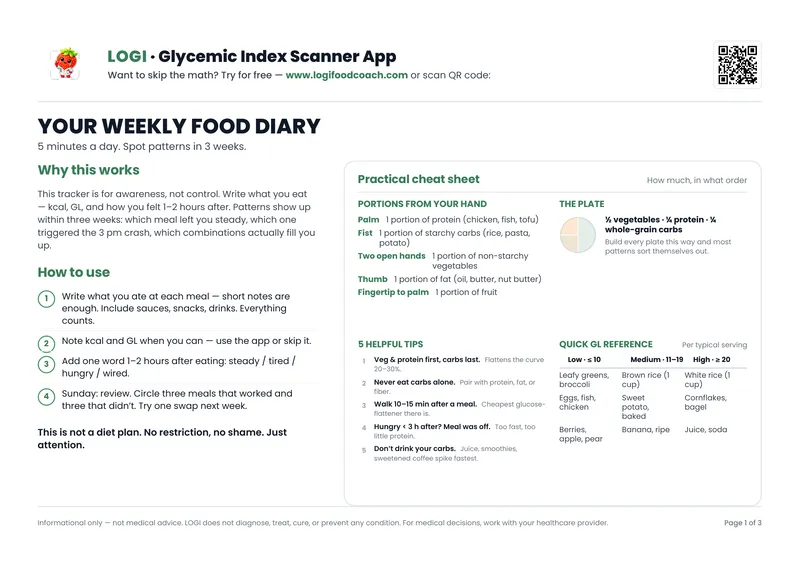
Darmowy PDF — 3 strony
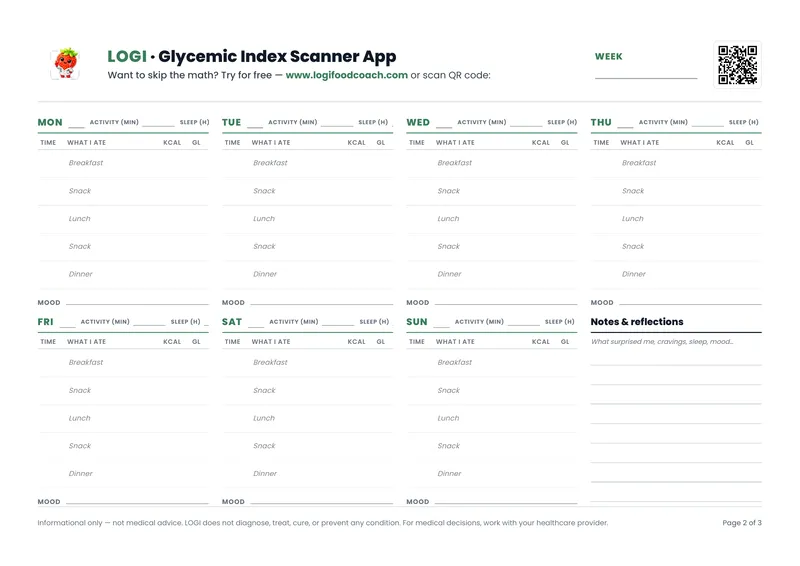
Tygodniowy dziennik jedzenia
Notuj posiłki, ładunek glikemiczny i samopoczucie. Wzorce widać po 3 tygodniach.
Zero spamu. Wypisz się kiedy chcesz.