Insalata messicana di fagioli neri a basso indice glicemico con chips di tortilla al forno
I fagioli neri ricchi di fibre e l'avocado cremoso creano un'insalata amica della glicemia che è saziante, colorata e ricca di nutrienti per un'energia costante.
Questa vivace insalata di ispirazione messicana è una lezione magistrale nella gestione della glicemia attraverso l'abbinamento intelligente degli ingredienti. I fagioli neri forniscono fibre eccezionali e amido resistente che rallentano l'assorbimento del glucosio, mentre i grassi sani dell'avocado moderano ulteriormente la risposta glicemica. La combinazione di proteine, fibre e grassi monoinsaturi crea un pasto saziante che non farà impennare la glicemia.
A differenza delle insalate tradizionali che si basano su crostini ad alto indice glicemico fatti con pane bianco, questa ricetta usa piccole porzioni di pezzi di tortilla al forno per dare croccantezza senza l'impennata di glucosio. Le verdure fresche aggiungono volume, vitamine e fibre aggiuntive, mentre il succo di lime non solo ravviva i sapori ma può anche aiutare a rallentare la digestione dei carboidrati. Mangiare prima le verdure a foglia verde e le verdure, seguite dai fagioli e dall'avocado, può ottimizzare ulteriormente la risposta glicemica.
Questa insalata esemplifica i principi dell'alimentazione a basso indice glicemico: enfatizzare i cibi integrali, combinare strategicamente i macronutrienti e scegliere ingredienti con contenuto naturale di fibre. I fagioli neri hanno un indice glicemico di circa 30, mentre gli avocado sono quasi a zero sull'indice glicemico. Le chips di tortilla al forno hanno un indice glicemico moderato di circa 60-70, ma la piccola porzione di circa 15 grammi (1/4 di tazza) per porzione mantiene basso il carico glicemico complessivo a 15 per porzione. Perfetto per pranzo o una cena leggera, questo piatto fornisce energia costante senza il crollo pomeridiano che i pasti ad alto indice glicemico spesso causano. Ogni porzione fornisce circa 1,5 tazze di insalata con macronutrienti bilanciati per un controllo ottimale della glicemia.
Impatto sulla glicemia
Questo pasto dovrebbe avere un impatto da basso a moderato sulla glicemia con un aumento graduale e sostenuto piuttosto che un picco improvviso. La combinazione di fibre dai fagioli neri, grassi sani dall'avocado e ingredienti a basso indice glicemico dovrebbe fornire energia stabile per 3-4 ore.
Consigli glicemia
- ✓ Mangia prima la porzione di insalata prima delle chips di tortilla per permettere alle fibre e alle proteine di rallentare la digestione
- ✓ Limita le chips di tortilla al forno a una piccola manciata e concentrati sui componenti di fagioli e verdure che forniscono più fibre
- ✓ Considera di consumare questo pasto dopo una leggera attività fisica o abbinalo a una passeggiata di 10-15 minuti dopo per aiutare i muscoli ad assorbire il glucosio in modo più efficiente
🥗 Ingredienti
- 1 tbsp olio extravergine d'oliva
- 400 g fagioli neri in scatola, sciacquati e scolati
- 200 g pomodorini, tagliati a metà
- 1 pcs lime fresco, spremuto
- 0.5 cup foglie di coriandolo fresco
- 1 tbsp olio extravergine d'oliva
- 14.1 oz fagioli neri in scatola, sciacquati e scolati
- 7.1 oz pomodorini, tagliati a metà
- 1 pcs lime fresco, spremuto
- 0.5 cup foglie di coriandolo fresco
👨🍳 Istruzioni
- 1
Preriscalda il forno a 200°C (180°C ventilato). Rivesti una teglia con carta da forno per una pulizia facile.
- 2
Taglia le tortillas di farina in pezzi delle dimensioni di un boccone, quadrati di circa 2-3 cm. Distribuiscili uniformemente sulla teglia preparata in un unico strato per garantire una doratura uniforme. Nota: per un impatto glicemico più basso, considera l'uso di tortillas di farina di mandorle o di cocco invece di tortillas di farina di grano.
- 3
Versa l'olio d'oliva sui pezzi di tortilla e cospargi con il condimento cajun o messicano. Mescola tutto con le mani finché i pezzi non sono uniformemente ricoperti. Cuoci per 10-12 minuti, controllando a 8 minuti, finché non sono dorati e croccanti. Il metodo di cottura al forno mantiene l'IG intorno a 60-70 rispetto alle chips fritte che possono superare 75 di IG. Metti da parte a raffreddare completamente per la massima croccantezza. Questa ricetta usa solo 15 grammi di chips di tortilla per porzione per ridurre al minimo l'impatto glicemico.
- 4
Mentre le chips di tortilla cuociono, prepara le verdure. Taglia la lattuga romana in pezzi delle dimensioni di un boccone e metti in una grande ciotola da portata. La romana fornisce significativamente più vitamine A, K e folati rispetto alla lattuga iceberg mantenendo lo stesso basso impatto glicemico. Per un controllo ancora migliore della glicemia, puoi sostituire con spinaci o rucola che contengono composti aggiuntivi che regolano la glicemia. Taglia a metà i pomodorini e aggiungili alla ciotola.
- 5
Sciacqua accuratamente i fagioli neri sotto acqua fredda in un colino per rimuovere l'eccesso di sodio e amido. Scola bene e aggiungi alla ciotola dell'insalata. I fagioli neri forniscono la base di questo pasto a basso IG con il loro IG di circa 30-35 e alto contenuto di fibre di 15 grammi per tazza. L'amido resistente nei fagioli neri agisce come prebiotico e aiuta a regolare i livelli di glicemia per ore dopo aver mangiato.
- 6
Taglia gli avocado a metà, rimuovi i noccioli e togli la polpa. Affetta in pezzi uniformi e mescola immediatamente con il succo di lime fresco in una piccola ciotola per prevenire l'imbrunimento e aggiungere un sapore vivace. I grassi monoinsaturi sani nell'avocado aiutano a rallentare l'assorbimento dei carboidrati e abbassano la risposta glicemica complessiva del pasto. Ogni porzione contiene circa mezzo avocado, fornendo 15 grammi di grassi sani.
- 7
Aggiungi l'avocado condito con lime alla ciotola dell'insalata. Mescola delicatamente tutti gli ingredienti insieme, facendo attenzione a non schiacciare l'avocado. Per un controllo ottimale della glicemia, puoi mangiare prima le verdure, poi i fagioli e l'avocado, il che aiuta a moderare l'assorbimento del glucosio attraverso la strategia di mangiare prima le fibre.
- 8
Dividi l'insalata tra 4 piatti o ciotole da portata, assicurandoti che ogni porzione sia di circa 1,5 tazze di base di insalata. Guarnisci ogni porzione con circa 15 grammi (1/4 di tazza) delle chips di tortilla croccanti e decora con foglie di coriandolo fresco appena prima di servire. Servi immediatamente per il miglior contrasto di consistenza tra chips croccanti e verdure fresche. Questa dimensione della porzione fornisce macronutrienti bilanciati con 12 grammi di proteine, 15 grammi di grassi sani e 35 grammi di carboidrati mantenendo il carico glicemico a circa 15 per porzione per una risposta glicemica stabile.
📊 Nutrizione per porzione
| Per porzione | Piatto intero | |
|---|---|---|
| Calorie | 385 | 1538 |
| Carboidrati | 49g | 194g |
| Zuccheri | 5g | 21g |
| Zuccheri aggiunti | 0g | 1g |
| Zuccheri naturali | 5g | 20g |
| Proteine | 14g | 56g |
| Grassi | 17g | 69g |
| Grassi saturi | 3g | 11g |
| Grassi insaturi | 15g | 58g |
| Fibre | 17g | 68g |
| Fibra solubile | 2g | 9g |
| Fibra insolubile | 5g | 22g |
| Sodio | 218mg | 870mg |
Risposta glicemica prevista
E se tu...
Modello stimato — le risposte individuali variano. Non è un consiglio medico.
🔄 Alternative a basso IG
Le tortillas standard di farina di grano hanno un indice glicemico di circa 70, che può causare picchi moderati di glicemia anche in piccole porzioni. Sebbene questa ricetta limiti la porzione a 15 grammi per porzione per ridurre al minimo l'impatto, passare a tortillas di farina di mandorle o di cocco può ridurre l'IG del 40-50%, fornendo un migliore controllo della glicemia. Le tortillas di farina di mandorle offrono il vantaggio aggiuntivo di proteine e grassi monoinsaturi che rallentano ulteriormente l'assorbimento del glucosio. Per chi cerca la massima stabilità glicemica, omettere le tortillas e usare semi tostati fornisce una croccantezza soddisfacente senza alcun impatto glicemico significativo.
Sebbene la lattuga iceberg abbia un basso indice glicemico, offre un valore nutrizionale minimo rispetto alle verdure a foglia verde più scure. La lattuga romana fornisce significativamente più vitamine e minerali con lo stesso impatto sulla glicemia. Gli spinaci e la rucola contengono fitonutrienti aggiuntivi che secondo la ricerca possono migliorare la sensibilità all'insulina e il metabolismo del glucosio. La ricetta specifica già la romana al passaggio 4, rendendo questa sostituzione già implementata, ma gli utenti dovrebbero sapere che le verdure più scure offrono benefici superiori per la gestione della glicemia oltre al semplice basso IG.
🔬 La scienza dietro questa ricetta
Questa ricetta dimostra molteplici strategie di gestione della glicemia che lavorano insieme. I fagioli neri contengono amido resistente, un tipo di carboidrato che resiste alla digestione nell'intestino tenue e agisce più come una fibra, risultando in un indice glicemico molto basso di 37-35. Quando mangi fagioli neri, l'amido resistente nutre i batteri intestinali benefici e produce acidi grassi a catena corta che migliorano la sensibilità all'insulina. I 15 grammi di fibre per tazza di fagioli neri rallentano significativamente l'assorbimento del glucosio. L'avocado contribuisce con grassi monoinsaturi che ritardano lo svuotamento gastrico, il che significa che il cibo si muove più lentamente dallo stomaco all'intestino, risultando in un rilascio graduale di glucosio nel flusso sanguigno piuttosto che in un picco. Il succo di lime contiene acido citrico, che secondo la ricerca può inibire gli enzimi che scompongono gli amidi in zuccheri, moderando ulteriormente la risposta glicemica. La piccola porzione di chips di tortilla al forno (15 grammi per porzione) fornisce una croccantezza soddisfacente con un impatto glicemico minimo quando combinata con i componenti ad alto contenuto di fibre e grassi dell'insalata. Il carico glicemico totale di 15,0 per porzione è considerato basso, il che significa che questo pasto dovrebbe causare solo un aumento modesto e graduale della glicemia che raggiunge un picco più basso e ritorna alla linea di base più velocemente rispetto ai pasti ad alto indice glicemico. La strategia di mangiare prima le fibre raccomandata nelle istruzioni—mangiare le verdure prima dei fagioli e dell'avocado—può ridurre i picchi di glucosio dopo i pasti fino al 73% secondo ricerche recenti, poiché la fibra crea una barriera fisica nel tratto digestivo che rallenta l'assorbimento dei carboidrati.
Ricette correlate
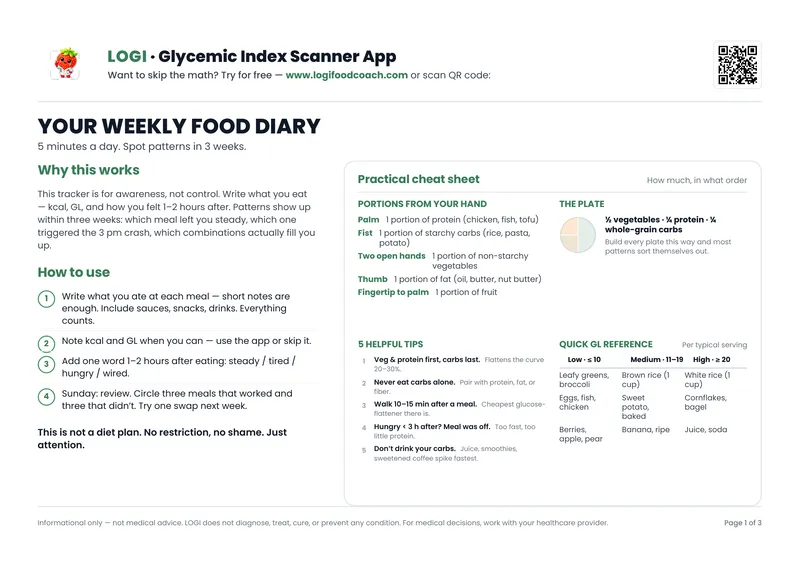
PDF gratuito — 3 pagine
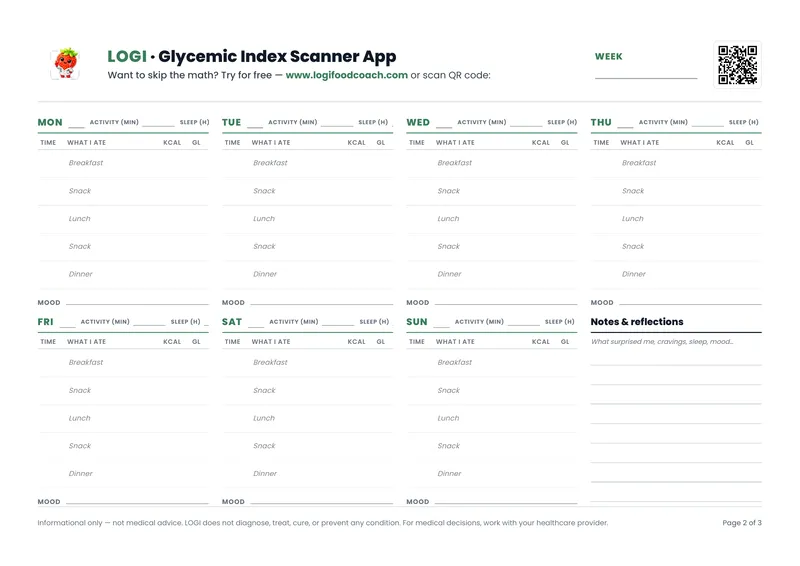
Il tuo diario alimentare settimanale
Registra pasti, carico glicemico e umore. Individua schemi in 3 settimane.
Niente spam. Cancellati quando vuoi.