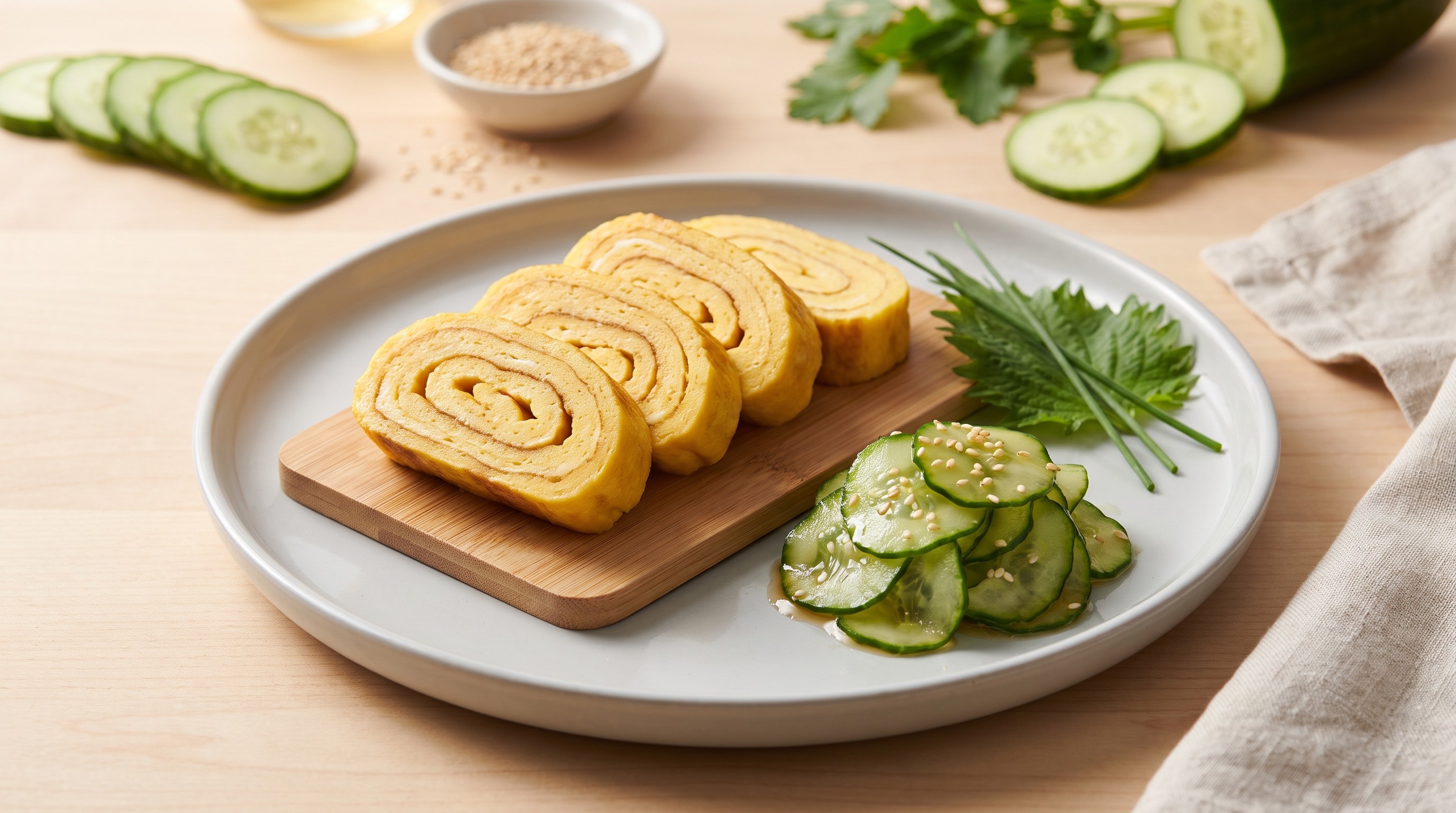
Sugar-Free Tamagoyaki with Cucumber Sunomono
Protein-rich Japanese rolled omelette paired with tangy cucumber salad — zero added sugar, near-zero carbs, and virtually no impact on blood sugar.
This Kansai-inspired dashimaki tamago proves that great Japanese cooking needs no sugar at all. Traditional tamagoyaki recipes lean on sugar and mirin to sweeten each silky layer, but here savoury dashi stock delivers all the depth you need while keeping the dish almost carb-free. Four eggs supply roughly 24 grams of protein and zero glycemic load, making this an ideal breakfast or light meal for anyone managing blood sugar.
The accompanying cucumber sunomono is dressed simply in rice vinegar and a splash of soy sauce. Vinegar has been shown in several studies to blunt post-meal glucose spikes when consumed alongside other foods, so this bright, tangy side dish does double duty — refreshing the palate and supporting steadier blood sugar. The cucumber itself is over 95 percent water with negligible carbohydrate, adding satisfying crunch without adding glucose.
For the best glycemic outcome, enjoy this plate as a standalone meal or pair it with a small portion of cooled brown rice, which forms resistant starch that digests more slowly. Eating the sunomono and any vegetables first, followed by the protein-rich tamagoyaki, can further moderate glucose absorption. The entire dish comes together in just twenty minutes, proving that blood-sugar-friendly eating can be fast, flavourful, and deeply satisfying.
Blood Sugar Impact
Very minimal blood sugar impact expected. With a glycemic load of just 1.2 and a GI of 21, this protein-and-vegetable-based meal will produce a negligible glucose rise, providing stable energy for 3-4 hours.
Blood Sugar Tips
- ✓ Eat the cucumber sunomono first — the vinegar (acetic acid) in rice vinegar has been shown to slow gastric emptying and reduce post-meal glucose spikes by up to 20-30%.
- ✓ Enjoy the tamagoyaki slowly rather than rushing; mindful eating pace helps moderate any insulin response, even with already low-glycemic meals.
- ✓ If serving alongside rice or other starches, eat the tamagoyaki and sunomono before the carbohydrate portion to blunt the overall glycemic response of the full meal.
🥗 Ingredients
- 1 pcs Cucumber
- 0.5 tsp Fine salt
- 2 tbsp Rice vinegar
- 1 tbsp Soy sauce
- 4 pcs Egg
- 40 ml Dashi stock
- 2 tsp Neutral oil
- 1 tsp Toasted sesame seeds
- 1 pcs Cucumber
- 0.5 tsp Fine salt
- 2 tbsp Rice vinegar
- 1 tbsp Soy sauce
- 4 pcs Egg
- 3 tbsp Dashi stock
- 2 tsp Neutral oil
- 1 tsp Toasted sesame seeds
👨🍳 Instructions
- 1
Cut the cucumber into very thin rounds, roughly 2 mm thick. A mandoline gives the most consistent slices, but a sharp knife works well. Place the slices in a bowl and sprinkle the salt over them, tossing to coat evenly. Leave for about 10 minutes while you prepare the egg mixture.
- 2
Take handfuls of the salted cucumber and squeeze firmly to press out as much liquid as possible — the drier the slices, the better the dressing will cling. Transfer the squeezed cucumber to a clean bowl.
- 3
Dress the cucumber with the rice vinegar and about one-third of the soy sauce (roughly 5 g). Toss gently, then set the sunomono aside to marinate while you cook the tamagoyaki.
- 4
Crack the eggs into a bowl, add the dashi stock and the remaining soy sauce. Whisk gently with chopsticks or a fork just until the yolks are incorporated — avoid creating foam, as bubbles will cause uneven layers in the finished roll.
- 5
Set a tamagoyaki pan or small non-stick skillet over medium-low heat. Dip a folded paper towel in the oil and wipe the cooking surface with a thin, even coat.
- 6
Pour just enough egg mixture to thinly cover the base of the pan. When the surface is half-set and still slightly glossy on top, use chopsticks or a spatula to roll the egg toward you into a compact log. Slide the roll to the far side of the pan.
- 7
Wipe the exposed pan surface with the oiled paper towel and pour another thin layer of egg mixture. Lift the existing roll slightly so the new layer flows underneath, bonding the layers together. Once the fresh layer is half-set, roll the log toward you again, wrapping the new layer around the old. Repeat this process until all the egg mixture is used up, typically three to four pours in total.
- 8
Transfer the finished roll to a cutting board and let it rest for 2 minutes so it firms up and holds its shape. Slice crosswise into pieces about 2 cm wide. Arrange the tamagoyaki alongside the marinated sunomono on a plate and scatter the toasted sesame seeds over both dishes before serving.
📊 Nutrition Per Serving
| Per Serving | Whole Dish | |
|---|---|---|
| Calories | 218 | 436 |
| Carbs | 6g | 11g |
| Sugars | 2g | 5g |
| Natural Sugars | 2g | 5g |
| Protein | 14g | 29g |
| Fat | 16g | 32g |
| Saturated Fat | 4g | 8g |
| Unsaturated Fat | 12g | 24g |
| Fiber | 1g | 1g |
| Soluble Fiber | 0g | 1g |
| Insoluble Fiber | 0g | 1g |
| Sodium | 1193mg | 2385mg |
Predicted Glucose Response
What if you...
Estimated model — individual responses vary. Not medical advice.
🔄 Lower GI Swaps
Rice vinegar can contain residual sugars from the rice fermentation process, contributing a small glycemic load. Apple cider vinegar has virtually zero residual sugar and studies show it may improve post-meal insulin sensitivity, actively helping to blunt blood sugar spikes. White wine vinegar is similarly sugar-free.
Generic vegetable oils (soybean, canola) are highly refined and may promote inflammation that worsens insulin resistance over time. Extra virgin olive oil and avocado oil are rich in monounsaturated fats and polyphenols shown to improve insulin sensitivity and slow gastric emptying, which helps flatten the overall glycemic response of the meal.
Standard soy sauce can contain small amounts of added sugars or wheat-derived carbohydrates. Coconut aminos has a lower glycemic index (GI ~35 vs. conventional soy sauce) and contains less total carbohydrate per serving. Tamari is a wheat-free alternative with negligible carbohydrate content, keeping the glycemic load as low as possible.
🔬 The Science Behind This Recipe
Why This Recipe Works for Blood Sugar
This dish is a standout for steady blood sugar, and the numbers tell the story: with a glycemic index of just 21 and a glycemic load of only 1.2 per serving, it lands firmly in the "low impact" category. But what does that actually mean? Glycemic load takes into account not just *how fast* a food raises blood sugar (that's the GI), but *how much* carbohydrate you're actually eating. Since tamagoyaki and cucumber sunomono are naturally very low in carbs, even the small amount present has minimal effect on your glucose levels. Think of it this way: glycemic load is like the difference between a drizzle of rain and a downpour — speed matters, but volume matters more.
Eggs are the hero here. They're essentially a zero-carb source of high-quality protein and healthy fat, both of which slow digestion and help keep blood sugar stable. When protein and fat are present in a meal, your stomach empties more gradually, meaning any carbohydrates you eat alongside them get absorbed at a gentler pace — no sharp spike, no energy crash afterward. Cucumber adds fiber and water content with virtually no sugar, making it one of the most blood-sugar-friendly vegetables you can eat.
Here's a practical tip: the rice vinegar in the sunomono isn't just for flavor. Research suggests that vinegar consumed with or before a meal can modestly reduce the post-meal glucose response. To get the most benefit, try eating the cucumber sunomono first before the tamagoyaki — vegetables and acidic foods before protein is a simple ordering strategy that can further smooth out your blood sugar curve. A short 10–15 minute walk after eating amplifies the effect even more, helping your muscles absorb glucose naturally.
Related recipes
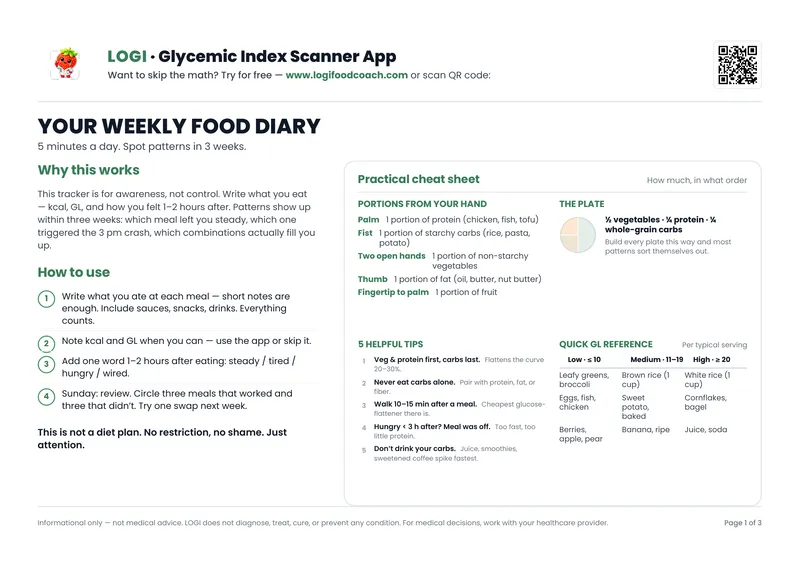
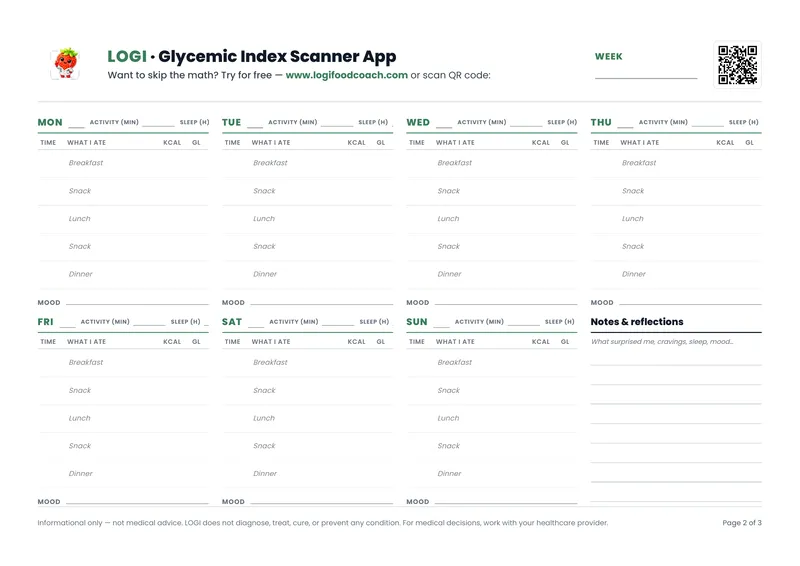
Free PDF — 3 pages
Your Weekly Food Journal
Track meals, glycemic load & mood. Spot patterns in 3 weeks.
No spam. Unsubscribe anytime.