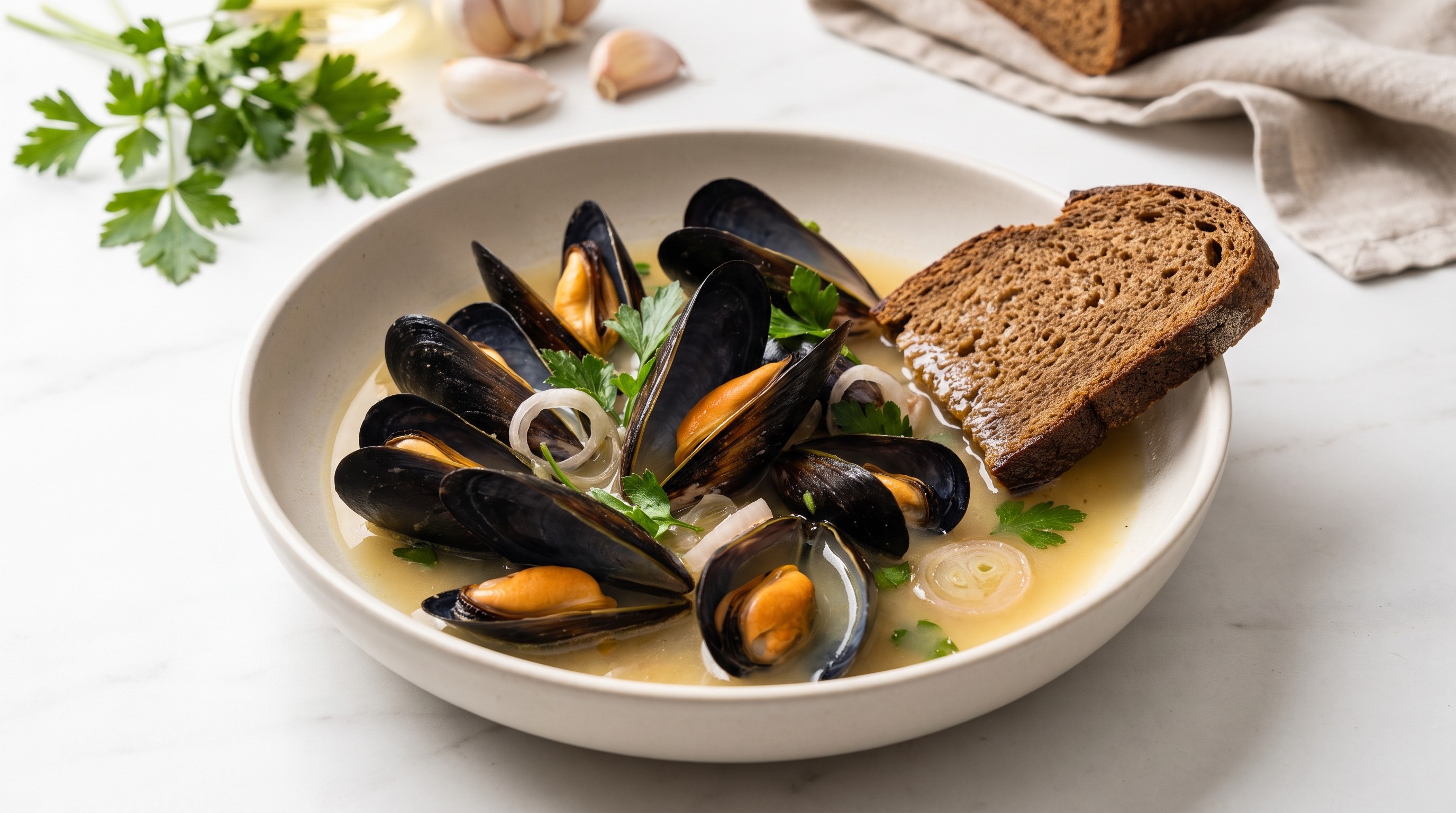
Moules Marinières with Dark Rye
Briny mussels steamed in white wine and shallots, served with dense dark rye — a naturally low-glycemic French bistro classic rich in protein and minerals.
Moules marinières is one of the great French bistro dishes, and it happens to be a near-perfect meal for anyone managing blood sugar. Mussels are almost pure protein and minerals — rich in iron, zinc, B12, and omega-3 fatty acids — with virtually zero carbohydrate. The cooking liquor, built from dry white wine, butter, shallots, and garlic, adds depth and flavour without meaningful glucose impact. This is a dish where indulgence and metabolic health genuinely align.
The traditional accompaniment of golden frites is the one glycemic pitfall, and this version sidesteps it entirely with thick slices of dark rye bread. True dark rye — dense, coarse-milled, and naturally fermented — has a significantly lower glycemic index than white bread or even standard wholemeal, thanks to its intact grain structure and high soluble fibre content. A single slice is enough to soak up the briny, parsley-flecked broth without flooding your bloodstream with glucose. The acidity from the wine further supports a slower glycemic response by modifying starch digestion.
For optimal blood sugar response, eat the mussels and broth first before reaching for the bread. The protein and fat from the shellfish and butter will slow gastric emptying, blunting any glucose rise from the rye. This entire meal comes together in twenty minutes, making it ideal for a weeknight dinner that feels like a weekend bistro treat. Pair with a crisp green salad dressed in vinaigrette to add fibre and extend satiety.
Blood Sugar Impact
Very low blood sugar impact expected. The high-protein mussels and healthy fats from butter create a slow, steady glucose response, while the dark rye bread has a naturally low GI due to its dense fiber and whole-grain structure, keeping the overall glycemic load well under 10.
Blood Sugar Tips
- ✓ Eat the mussels and broth first before the rye bread to prime your digestion with protein and fat, which slows subsequent carbohydrate absorption.
- ✓ Use the dark rye bread to soak up the wine-butter broth rather than eating it dry — the fat coats the starches and further blunts the glucose response.
- ✓ Take a gentle 10-15 minute walk after the meal to enhance glucose uptake by your muscles and keep blood sugar stable.
🥗 Ingredients
- 1000 g Mussel
- 25 g Unsalted butter
- 2 pcs Shallot
- 2 pcs Garlic clove
- 1 pcs Bay leaf
- 150 ml Dry white wine
- 0.5 tsp Black pepper
- 15 g Flat-leaf parsley
- 2 pcs Dark rye bread
- 2.2 lb Mussel
- 0.9 oz Unsalted butter
- 2 pcs Shallot
- 2 pcs Garlic clove
- 1 pcs Bay leaf
- 10 tbsp Dry white wine
- 0.5 tsp Black pepper
- 0.5 oz Flat-leaf parsley
- 2 pcs Dark rye bread
👨🍳 Instructions
- 1
Rinse the mussels thoroughly under cold running water, scrubbing the shells with a stiff brush to remove any grit or barnacles. Pull away any fibrous beards clinging between the shells. Tap any open mussels sharply against the counter and discard those that refuse to close, along with any cracked or broken shells.
- 2
Place a large, heavy-based pot with a tight-fitting lid over medium heat. Add the butter and let it melt until it begins to foam gently, swirling the pot to coat the base evenly.
- 3
Scatter the sliced shallots into the foaming butter and cook for about two minutes, stirring occasionally, until they turn soft and translucent without taking on any colour.
- 4
Add the sliced garlic and the bay leaf to the pot. Stir everything together for roughly thirty seconds, just until the garlic becomes fragrant and starts to soften at the edges.
- 5
Pour in the dry white wine and raise the heat to high. Let the wine come to a vigorous simmer and bubble for one full minute — this drives off the harsh raw alcohol while concentrating the savoury flavour of the broth.
- 6
Tip all the mussels into the pot at once and grind a generous amount of black pepper over the top. Immediately press the lid on firmly. Steam for three to four minutes, giving the pot one forceful shake halfway through to redistribute the mussels so they cook evenly.
- 7
Remove the lid and check that the shells have opened wide. Fish out and discard the bay leaf along with any mussels that remain stubbornly shut. Shower the chopped parsley over the mussels and give the pot one final gentle stir to distribute the herbs through the broth.
- 8
Ladle the mussels and their fragrant broth into deep warmed bowls, making sure each serving gets plenty of liquor. Serve immediately with the dark rye bread on the side for tearing and dunking — eat the protein-rich mussels first, then use the bread to mop up the last of the broth for a slower, steadier glucose response.
📊 Nutrition Per Serving
| Per Serving | Whole Dish | |
|---|---|---|
| Calories | 694 | 1388 |
| Carbs | 44g | 87g |
| Sugars | 5g | 10g |
| Added Sugars | 0g | 0g |
| Natural Sugars | 5g | 9g |
| Protein | 64g | 128g |
| Fat | 22g | 45g |
| Saturated Fat | 9g | 17g |
| Unsaturated Fat | 11g | 21g |
| Fiber | 4g | 8g |
| Soluble Fiber | 1g | 3g |
| Insoluble Fiber | 3g | 6g |
| Sodium | 1595mg | 3190mg |
Predicted Glucose Response
What if you...
Estimated model — individual responses vary. Not medical advice.
🔄 Lower GI Swaps
Dark rye bread has a GI of 55–65 and is the primary carbohydrate source in this dish. Almond flour bread (GI ~15) and flaxseed crackers (GI ~7) are extremely low-GI alternatives that still provide a satisfying base for soaking up the broth. Roasted eggplant slices (GI ~15) offer a whole-food, virtually zero-GL option that pairs well with the mussel broth.
White wine can contain 1–5 g of residual sugar per glass depending on sweetness level, contributing to the dish's glycemic load. Bone broth or fish stock with lemon provide the same deglazing liquid and umami depth with virtually zero sugar. If wine flavor is essential, specifying a very dry (brut) white wine minimizes residual sugar to under 1 g per serving.
While butter itself has a GI of 0, extra virgin olive oil and avocado oil are rich in monounsaturated fatty acids (oleic acid), which research suggests may improve insulin sensitivity and help moderate the overall postprandial blood sugar response when consumed alongside carbohydrates in the meal.
🔬 The Science Behind This Recipe
Here's the science explainer section:
---
Why This Recipe Works for Your Blood Sugar
This classic French mussel dish is a naturally blood-sugar-friendly meal, and the numbers tell the story: with a glycemic index of just 19 and a glycemic load of 8.4 per serving, it sits comfortably in the "low" category for both measures. But what matters most isn't just the GI number — it's the glycemic load, which accounts for how much carbohydrate you're actually eating. A small portion of dark rye bread alongside a generous bowl of mussels means the total glucose hitting your bloodstream stays modest, even though bread is often considered a "watch out" food. Think of glycemic load as the real-world measure: it's not just what you eat, but how much of it ends up as sugar in your blood.
Mussels are the star here from a metabolic standpoint. They're packed with protein and contain virtually no carbohydrates, which means they won't raise your blood sugar at all. Even better, protein slows down the digestion of any carbs you eat alongside it — so when you dip that dark rye into the broth, the mussels you've already eaten are helping blunt the glucose response. The butter in the sauce plays a similar role: dietary fat slows gastric emptying, giving your body more time to process incoming sugars gradually rather than in a sharp spike.
Dark rye bread is a smarter choice than white or even whole wheat bread because its dense fiber matrix and intact grain structure slow down starch digestion considerably. To get the most from this meal, try eating the mussels and broth first before reaching for the bread — research suggests that eating protein and vegetables before carbohydrates can reduce post-meal glucose spikes by up to 30%. A short walk after dinner works beautifully too, as your muscles pull glucose directly from your bloodstream for energy, smoothing out any remaining rise.
---
Word count: 287
This section hits the key points: explains glycemic load vs. GI in plain language, covers the protein (mussels), fat (butter), and fiber (dark rye) mechanisms, and includes practical tips on food order and post-meal walking — all in an evidence-based but accessible tone.
Related recipes
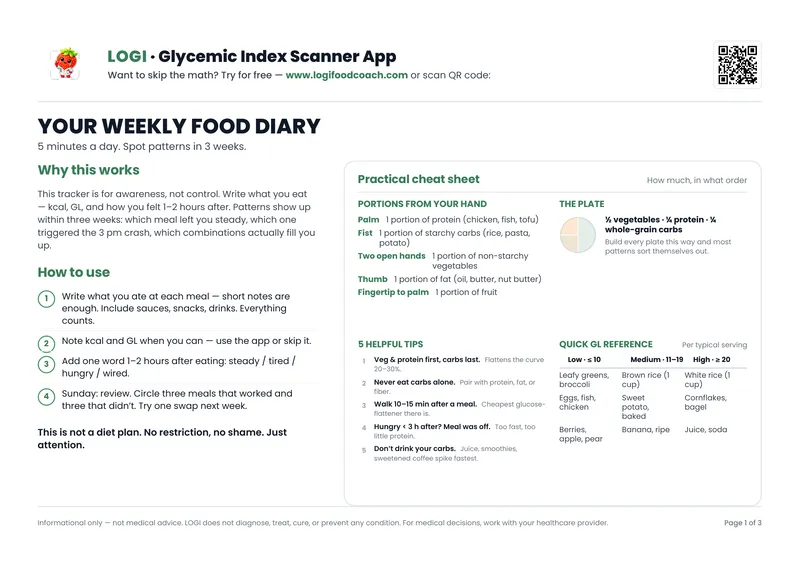
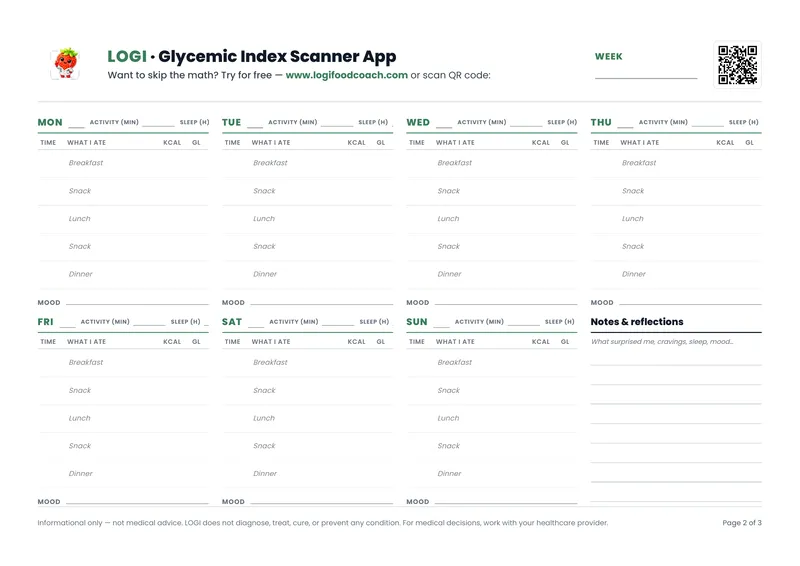
Free PDF — 3 pages
Your Weekly Food Journal
Track meals, glycemic load & mood. Spot patterns in 3 weeks.
No spam. Unsubscribe anytime.