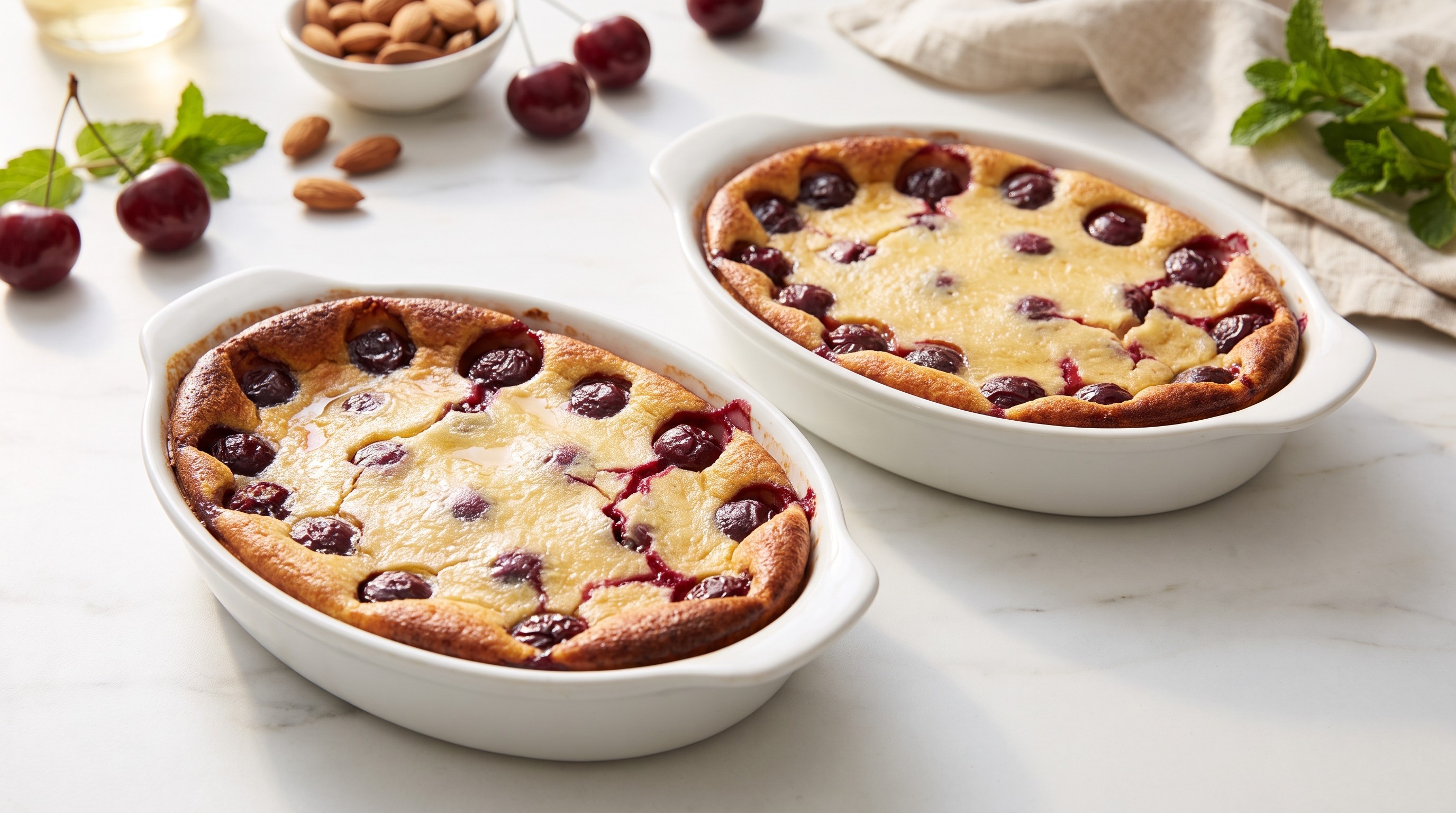
Low-GI Clafoutis aux Cerises
Flour-free French cherry custard built on ground almonds, eggs, and naturally low-GI cherries — a blood-sugar-friendly dessert that still reads as pâtisserie.
This low-glycemic clafoutis replaces every gram of white flour with ground almonds, turning a traditionally high-GI French dessert into something genuinely suitable for blood sugar management. The batter is simpler than most — eggs, a restrained measure of sugar, ground almonds, whole milk, and melted butter — producing a custard that is denser and more flan-like than a flour-based version, with a rich almond fragrance that pairs beautifully with the tart sweetness of fresh cherries.
The ingredient choices here work together to moderate glucose response. Cherries sit at a GI of around 22, making them one of the most blood-sugar-friendly fruits available. Ground almonds contribute healthy fats and fibre that slow gastric emptying, while three whole eggs provide substantial protein to further blunt any post-meal spike. The 20 grams of sugar — roughly two teaspoons per serving — is the only refined carbohydrate in the entire dish, and even that is buffered by the fat and protein surrounding it.
For the gentlest blood sugar response, serve this clafoutis at the end of a meal that included vegetables and protein rather than eating it on an empty stomach. A short walk after dessert can further smooth the glucose curve. The batter comes together in under five minutes with no special equipment, and the hands-off baking time makes this an effortless finish to a weeknight dinner. Leftovers keep well in the refrigerator for a day and can be enjoyed cold or gently rewarmed — the custard texture actually improves as it sets overnight.
Blood Sugar Impact
Very low impact expected — with a glycemic load of only 5.0 and an estimated GI of 18, the generous fat and protein from eggs, almonds, butter, and whole milk significantly slow glucose absorption, resulting in a gentle, gradual rise in blood sugar rather than a spike.
Blood Sugar Tips
- ✓ Enjoy the clafoutis at the end of a meal that includes vegetables or salad, so that pre-existing fiber and protein further blunt any glucose response.
- ✓ Take a light 10–15 minute walk after eating to help your muscles absorb circulating glucose more efficiently.
- ✓ Avoid pairing it with other sugary items (juice, sweetened coffee); instead serve alongside a handful of extra almonds or a cup of unsweetened tea to keep the meal's overall glycemic load low.
🥗 Ingredients
- 15 g Unsalted butter
- 250 g Cherry
- 3 pcs Egg
- 20 g Caster sugar
- 35 g Ground almonds
- 100 ml Whole milk
- 1 tsp Vanilla extract
- 1 tsp Lemon zest
- 0.5 g Salt
- 0.5 oz Unsalted butter
- 8.8 oz Cherry
- 3 pcs Egg
- 0.7 oz Caster sugar
- 1.2 oz Ground almonds
- 7 tbsp Whole milk
- 1 tsp Vanilla extract
- 1 tsp Lemon zest
- 0.0 oz Salt
👨🍳 Instructions
- 1
Set the oven to 180 °C (350 °F) with a rack in the centre. Take roughly a third of the butter and rub it generously around the inside of two shallow gratin dishes or 15 cm ramekins to coat them evenly.
- 2
Pit the cherries if you have not already, then scatter them in a single even layer across the buttered dishes, dividing them equally between the two.
- 3
Place the remaining butter in a small saucepan over low heat or in a microwave-safe bowl and melt it gently. Set it aside to cool for a minute or two while you prepare the batter.
- 4
Crack the eggs into a mixing bowl, add the caster sugar, and whisk briskly by hand for about one minute until the mixture is smooth, slightly pale, and free of visible yolk streaks.
- 5
Add the ground almonds, whole milk, cooled melted butter, vanilla extract, lemon zest, and salt to the egg mixture. Stir with a spatula or whisk until everything is just incorporated — a few small almond lumps are perfectly fine and the batter should not be overworked.
- 6
Pour the batter slowly and evenly over the cherries, dividing it equally between the two dishes. The batter should come roughly two-thirds of the way up the fruit. Give each dish one firm tap on the counter to release any trapped air bubbles.
- 7
Bake for 25 to 30 minutes until the edges are golden and puffed and the centre is just set with a gentle wobble — it will firm as it cools. Avoid opening the oven door during the first 20 minutes to prevent the custard from collapsing.
- 8
Remove from the oven and let the clafoutis rest in the dishes for five minutes before serving. The custard continues to set as it cools and is best enjoyed warm rather than piping hot.
📊 Nutrition Per Serving
| Per Serving | Whole Dish | |
|---|---|---|
| Calories | 379 | 757 |
| Carbs | 27g | 54g |
| Sugars | 20g | 40g |
| Added Sugars | 0g | 0g |
| Natural Sugars | 20g | 40g |
| Protein | 16g | 32g |
| Fat | 24g | 48g |
| Saturated Fat | 8g | 16g |
| Unsaturated Fat | 16g | 32g |
| Fiber | 5g | 10g |
| Soluble Fiber | 1g | 3g |
| Insoluble Fiber | 3g | 7g |
| Sodium | 227mg | 453mg |
Predicted Glucose Response
What if you...
Estimated model — individual responses vary. Not medical advice.
🔄 Lower GI Swaps
Caster sugar has a GI of ~65. Coconut sugar (GI ~35) provides a similar caramel sweetness at nearly half the glycemic impact. Erythritol-monk fruit blends and allulose have a GI of 0, producing virtually no blood sugar spike while maintaining the sweetness needed for the custard.
Sweet cherries have a GI of ~22 and higher natural sugar content. Sour Morello cherries (GI ~22 but significantly lower sugar per serving) reduce glycemic load while being the traditional clafoutis fruit. Blackberries (GI ~25) and raspberries (GI ~25) are very low in sugar and high in fiber, further lowering the overall glycemic load of the dessert.
Whole milk has a GI of ~27-40 and contains lactose, a natural sugar that contributes to glycemic load. Unsweetened almond milk (GI ~25, near-zero carbs) and unsweetened coconut milk (GI ~0, minimal carbs) dramatically reduce the carbohydrate content of the custard base, lowering the dish's overall glycemic load.
Whole almonds are already low-GI (~0-15), but switching to almond flour or hazelnut flour allows you to replace more of the traditional wheat-flour component of clafoutis batter with nut-based flour, increasing fat and protein content which slows glucose absorption and reduces the overall glycemic load of the dish.
🔬 The Science Behind This Recipe
Why This Clafoutis Loves Your Blood Sugar
This isn't your typical sugary French dessert — it's a smartly balanced treat where every ingredient plays a role in keeping your blood sugar steady. The star players here are almonds, cherries, and eggs, and together they create what nutritionists call a "blunted glucose response." Almonds are rich in healthy fats, protein, and fiber — a triple threat that slows down how quickly your body breaks down and absorbs sugars. When almond flour replaces some of the regular flour in a traditional clafoutis, you're swapping fast-digesting starch for slow-burning fuel. The eggs and butter add even more protein and fat to the mix, which acts like a speed bump for glucose entering your bloodstream.
Sweet cherries are one of the friendliest fruits for blood sugar management, with a naturally lower glycemic index than many other fruits. Their fiber and natural plant compounds help moderate the pace of sugar absorption. And here's where the concept of glycemic load really matters: while glycemic index tells you how fast a food raises blood sugar, glycemic load factors in how much carbohydrate you're actually eating per serving. This clafoutis has a glycemic load of just 5.0 — well within the "low" range (anything under 10 is considered low). That means even though there's some sugar in the recipe, the overall impact on your blood sugar is minimal thanks to the portion size and the balancing effect of fats and protein.
Want to make this even more blood-sugar-friendly? Try eating it after a meal that started with vegetables or a salad — research suggests that eating carbs last in a meal can reduce glucose spikes significantly. A short 10-15 minute walk after enjoying your slice can also help your muscles soak up glucose more efficiently. Small habits, big difference.
Related recipes
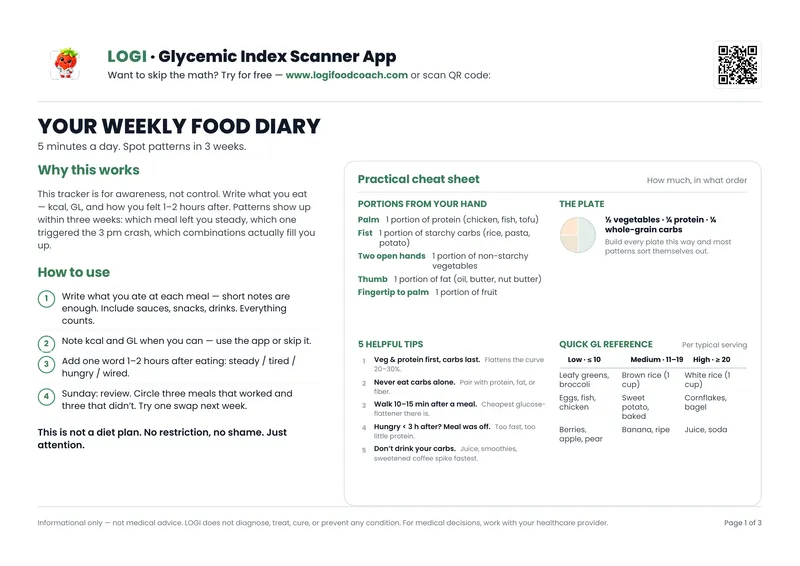
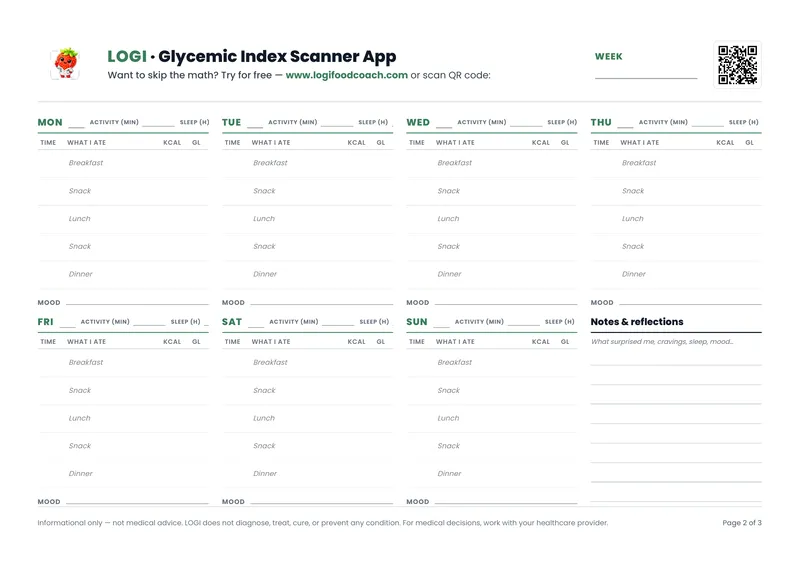
Free PDF — 3 pages
Your Weekly Food Journal
Track meals, glycemic load & mood. Spot patterns in 3 weeks.
No spam. Unsubscribe anytime.