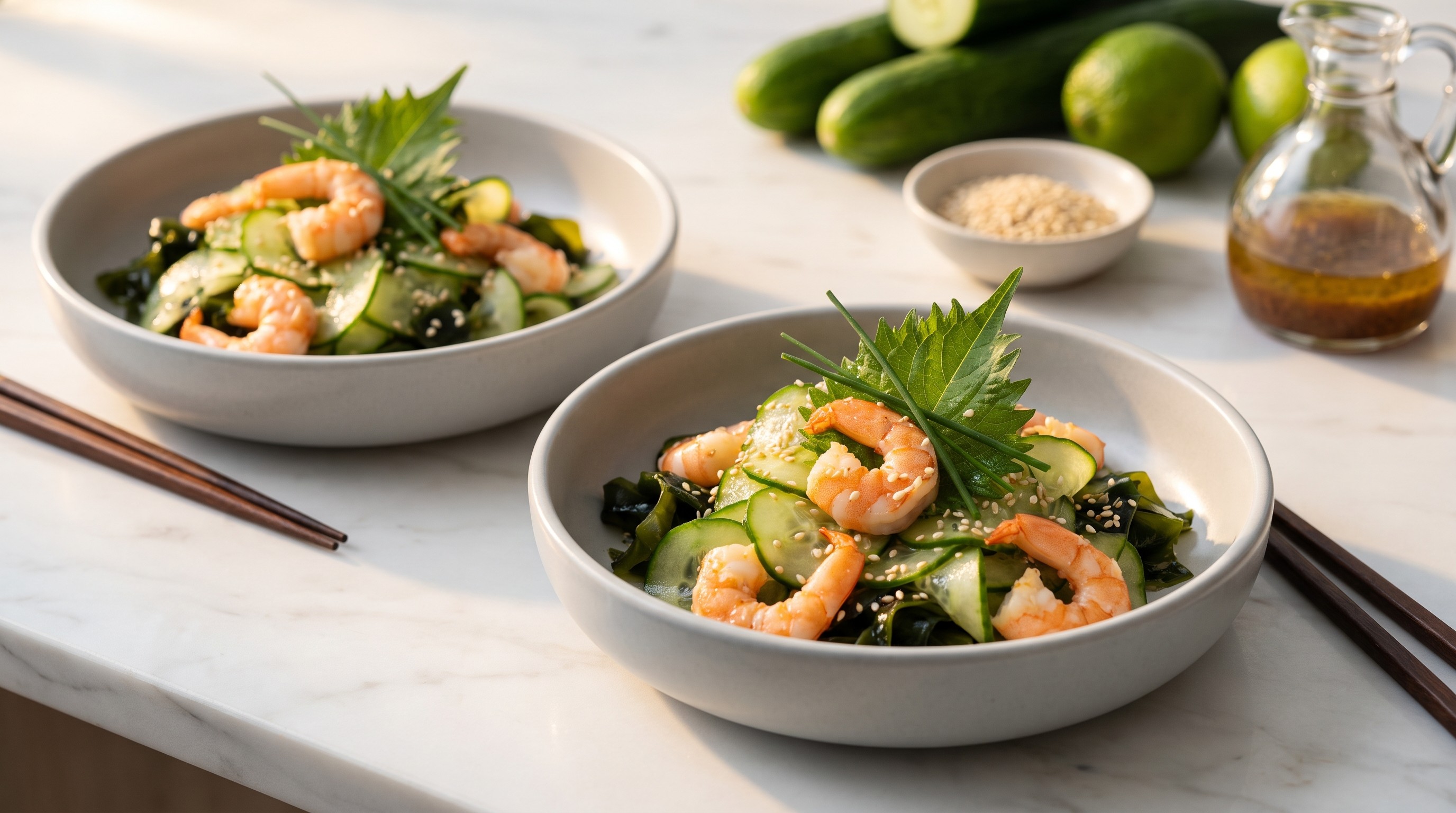
Ebi Sunomono (Prawn & Cucumber Salad with Sesame)
A crisp Japanese vinegared salad of prawns, cucumber, and wakame — naturally low-GI, high in protein, and rich in acetic acid to slow glucose response.
Sunomono is one of the most blood-sugar-friendly dishes in the entire Japanese repertoire. Built on a foundation of crisp salted cucumber, mineral-rich wakame seaweed, and lean blanched prawns, this salad delivers substantial protein and fibre with virtually no glycemic load. The single teaspoon of sugar dissolved across two generous servings is negligible — and it is more than counterbalanced by the rice vinegar dressing, whose acetic acid has been shown in clinical studies to slow gastric emptying and reduce postprandial blood glucose spikes by up to 30 percent.
The technique matters as much as the ingredients. Salting and firmly wringing the cucumbers removes excess water so they stay snappy rather than diluting the sharp, sesame-scented dressing. Wakame rehydrates in minutes and adds soluble fibre that further moderates glucose absorption, while the prawns supply clean protein that keeps you satiated without any insulin surge. A finishing scatter of toasted sesame seeds contributes healthy fats and a gentle nutty crunch.
Serve this salad as a standalone light lunch or as the opening course of a larger meal — eating vegetables and protein before any carbohydrate-heavy dish is a well-documented strategy for flattening your glucose curve. It comes together in twenty minutes, keeps well for a few hours in the fridge, and tastes even better as the dressing soaks in.
Blood Sugar Impact
Very low blood sugar impact expected. With a glycemic load of just 4.4 and an estimated GI of 30, this protein-and-vegetable-rich salad will cause minimal glucose elevation and support stable energy levels for several hours.
Blood Sugar Tips
- ✓ Eat the prawns and cucumber first before finishing any remaining vinegar dressing, as the protein and fiber will slow absorption of the small amount of sugar.
- ✓ Add a handful of edamame or sliced avocado to boost protein and healthy fats, further blunting any minor glucose response from the rice vinegar and caster sugar.
- ✓ Enjoy this as a starter before a higher-carb course — the vinegar (acetic acid) has been shown to reduce the glycemic response of subsequent foods by up to 30%.
🥗 Ingredients
- 2 pcs English cucumber
- 0.5 tsp Fine salt
- 250 g Prawn
- 60 ml Rice vinegar
- 1 tbsp Soy sauce
- 1 tsp Caster sugar
- 2 tsp Toasted sesame oil
- 1 tsp Ginger
- 1 tbsp Toasted white sesame seeds
- 2 pcs English cucumber
- 0.5 tsp Fine salt
- 0.3 oz Dried wakame seaweed
- 8.8 oz Prawn
- 4 tbsp Rice vinegar
- 1 tbsp Soy sauce
- 1 tsp Caster sugar
- 2 tsp Toasted sesame oil
- 1 tsp Ginger
- 1 tbsp Toasted white sesame seeds
👨🍳 Instructions
- 1
Cut the cucumbers in half lengthways and run a teaspoon down the centre to scrape out the watery seeds. Slice each half crosswise into thin half-moon pieces, about 2 mm thick.
- 2
Transfer the cucumber slices to a colander set over a bowl. Sprinkle with the fine salt, toss to coat evenly, and leave to drain for 10 minutes while you prepare the remaining ingredients.
- 3
Place the dried wakame in a bowl of cold water and soak for 5 minutes until it softens and expands. Drain well, squeeze out excess moisture, and roughly chop any long ribbons into bite-sized pieces.
- 4
Prepare the dressing by whisking together the rice vinegar, soy sauce, caster sugar, toasted sesame oil, and freshly grated ginger in a small bowl. Stir until the sugar has fully dissolved and the dressing is smooth.
- 5
Bring a small saucepan of water to a rolling boil over high heat. Drop in the prawns and cook for about 2 minutes, until they turn pink and curl tightly. Drain immediately and run under cold water to stop the cooking. Pat dry.
- 6
Return to the salted cucumbers. Take firm handfuls and squeeze tightly to wring out as much liquid as possible — they should feel almost dry and slightly translucent. This step is essential for a crisp, well-dressed salad rather than a watery one.
- 7
Combine the squeezed cucumbers, chopped wakame, and blanched prawns in a serving bowl. Pour the dressing over the top and toss gently with chopsticks or tongs until everything is evenly coated.
- 8
Scatter the toasted sesame seeds over the salad and serve immediately. If preparing ahead, keep the dressed salad refrigerated for up to 2 hours — the flavour deepens as it sits.
📊 Nutrition Per Serving
| Per Serving | Whole Dish | |
|---|---|---|
| Calories | 248 | 496 |
| Carbs | 15g | 29g |
| Sugars | 6g | 13g |
| Added Sugars | 2g | 4g |
| Natural Sugars | 4g | 9g |
| Protein | 33g | 67g |
| Fat | 7g | 15g |
| Saturated Fat | 1g | 2g |
| Unsaturated Fat | 6g | 12g |
| Fiber | 2g | 4g |
| Soluble Fiber | 1g | 1g |
| Insoluble Fiber | 2g | 3g |
| Sodium | 1239mg | 2478mg |
Predicted Glucose Response
What if you...
Estimated model — individual responses vary. Not medical advice.
🔄 Lower GI Swaps
Caster sugar has a GI of ~65 and is the primary glycemic load driver in this recipe. Erythritol (GI 0), monk fruit sweetener (GI 0), and allulose (GI 0) provide comparable sweetness with virtually no blood sugar impact, reducing the already low GL even further.
Some rice vinegars contain residual sugars or added sugar that contribute to glycemic load. Apple cider vinegar has been shown in studies to improve post-meal insulin sensitivity and slow gastric emptying, actively helping to blunt blood sugar spikes. White wine vinegar is also sugar-free and provides a similar acidity.
Standard soy sauce can contain small amounts of added sugar from the brewing process. Tamari is typically brewed without added sugars, and coconut aminos, while mildly sweet, has a very low GI (~35) and contains less sugar per serving than many commercial soy sauces, keeping the overall glycemic load minimal.
🔬 The Science Behind This Recipe
Why This Recipe Works for Blood Sugar
This dish is a near-perfect example of blood sugar-friendly eating, and it starts with what's *not* on the plate: starchy carbohydrates. English cucumber is mostly water and fiber, meaning it contributes very little glucose to your bloodstream. Wakame seaweed adds soluble fiber, which forms a gel-like barrier in your digestive tract that slows the absorption of any sugars present. Together, these two ingredients create a meal foundation that's gentle on your metabolism — your body simply doesn't have much glucose to process.
Prawns are the protein anchor here, and that matters more than you might think. When you eat protein alongside even small amounts of carbohydrate, it signals your body to release hormones that help manage blood sugar more effectively. The fat and protein in prawns also slow gastric emptying — the rate at which food leaves your stomach — giving your body more time to handle incoming glucose gradually rather than all at once. Rice vinegar plays a supporting role too: studies suggest that the acetic acid in vinegar can improve your body's sensitivity to insulin, helping cells absorb glucose more efficiently after a meal.
With a glycemic load of just 4.4 per serving, this recipe falls well into the "low" category. Remember, glycemic load accounts for both the *type* and *amount* of carbohydrate in a realistic portion — it's a much more useful measure than glycemic index alone. A GI of 30 tells you the carbs present are slow-releasing, and the low load confirms there simply aren't many of them. To maximize the benefits, enjoy this salad at the start of your meal before any rice or noodles — eating vegetables and protein first has been shown to reduce post-meal glucose spikes significantly. A short walk afterward can help even more, as your muscles draw glucose directly from your blood for energy.
Related recipes
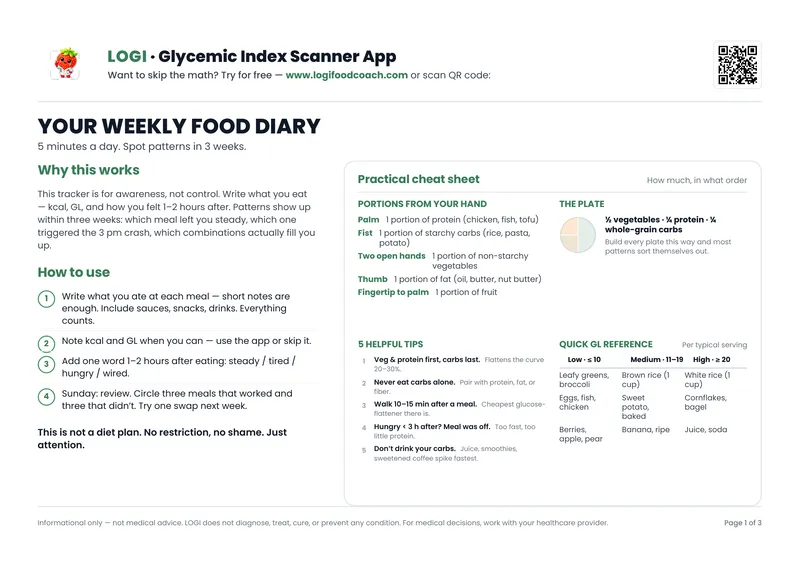
Free PDF — 3 pages
Your Weekly Food Journal
Track meals, glycemic load & mood. Spot patterns in 3 weeks.
No spam. Unsubscribe anytime.