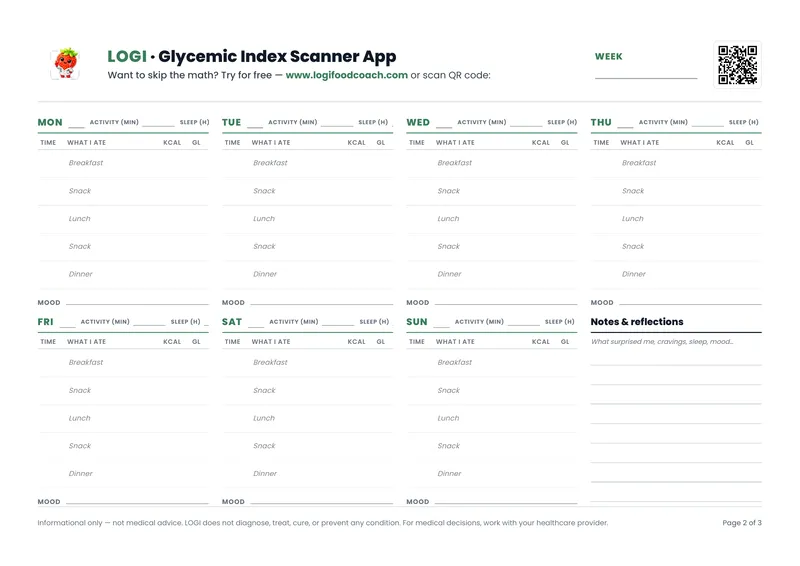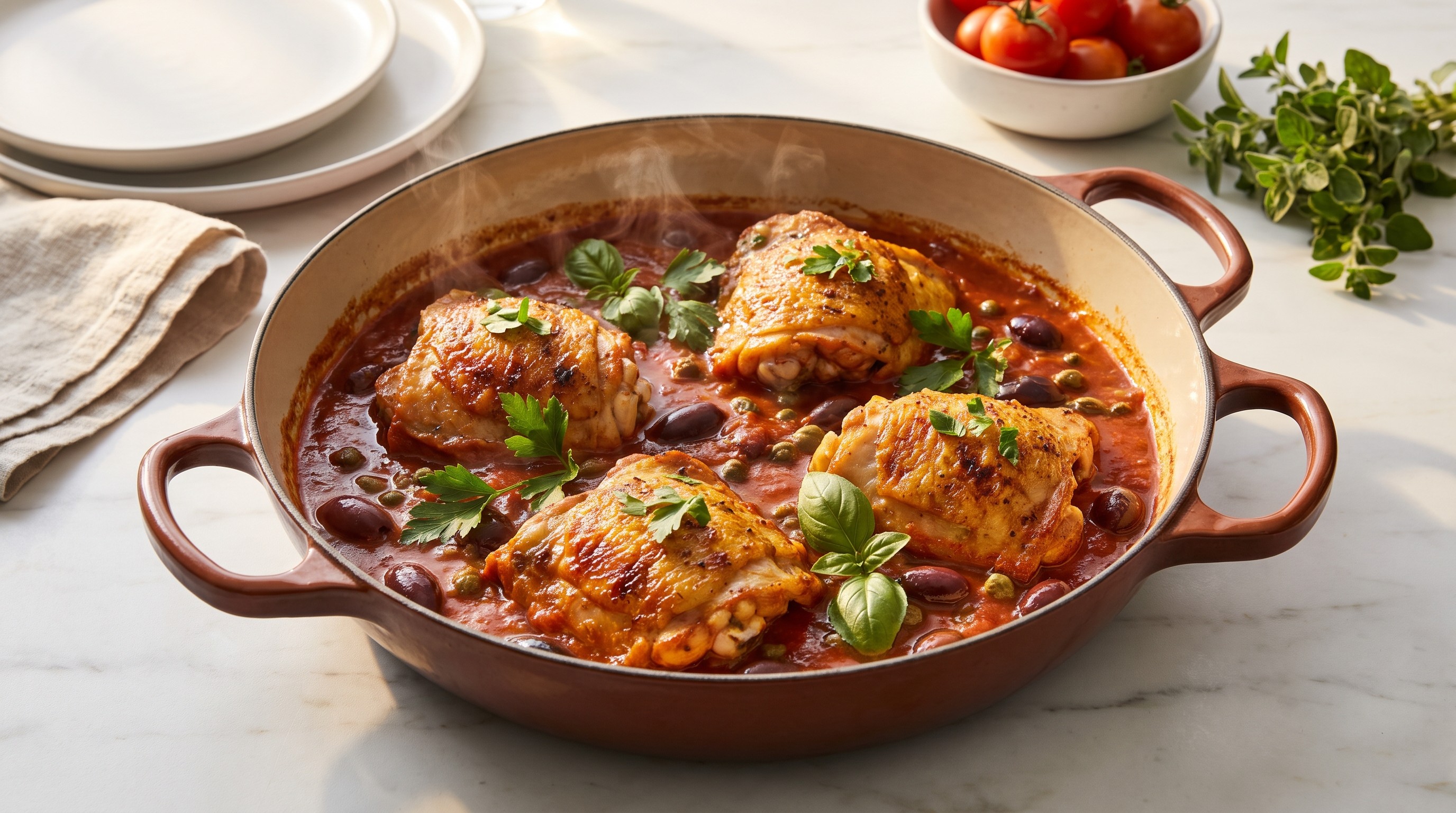
Chicken Cacciatore
Hunter's chicken braised in a rustic tomato-pepper sauce with olives and capers — naturally low-glycemic, high-protein comfort food with no starchy fillers.
Chicken cacciatore — literally "hunter-style chicken" — is one of those rare Italian classics that needs zero modification to fit a blood-sugar-friendly lifestyle. Bone-in thighs deliver satiating protein and healthy fats that slow glucose absorption, while the braising sauce is built entirely from low-glycemic vegetables, tomatoes, and aromatic seasonings. There is no pasta, no bread, no hidden sugar — just a deeply flavoured one-pot braise that keeps your postprandial curve flat and steady.
The combination of tomatoes, bell pepper, and onion provides a generous dose of fibre, lycopene, and vitamin C, all of which support metabolic health. Kalamata olives and a splash of dry white wine add complexity without adding carbohydrate load, and the rendered chicken fat carries flavour so effectively that very little added oil is required. A long, gentle simmer melds everything into a thick, glossy sauce that clings to each piece of chicken.
For optimal blood sugar response, serve the cacciatore over a bed of sautéed leafy greens or cauliflower rice rather than pasta or polenta. Eating the vegetable-rich sauce first, before the protein, can further blunt any glucose rise. This dish also reheats beautifully — the sauce deepens overnight — making it an ideal meal-prep option for steady energy across a busy week.
Blood Sugar Impact
Very low blood sugar impact expected. With a glycemic load of just 6.6 and an estimated GI of 26, this protein-and-fat-rich dish with low-carb vegetables will produce a minimal, slow glucose rise and provide stable energy for 3-4 hours.
Blood Sugar Tips
- ✓ If serving with a side starch like pasta or bread, keep the portion small and eat the chicken and vegetables first to blunt the glucose response.
- ✓ Add a leafy green side salad dressed with olive oil and vinegar before the main dish — the fiber and acetic acid further flatten any blood sugar rise.
- ✓ Take a 10-15 minute walk after the meal to enhance glucose uptake by your muscles and keep levels steady.
🥗 Ingredients
- 4 pcs Chicken thigh
- 1 tbsp Olive oil
- 1 pcs Onion
- 1 pcs Red bell pepper
- 3 pcs Garlic
- 100 ml Dry white wine
- 400 g Whole peeled tomato
- 50 g Kalamata olive
- 1 tbsp Caper
- 1 tsp Dried oregano
- 0.5 tsp Salt
- 0.25 tsp Black pepper
- 4 pcs Chicken thigh
- 1 tbsp Olive oil
- 1 pcs Onion
- 1 pcs Red bell pepper
- 3 pcs Garlic
- 7 tbsp Dry white wine
- 14.1 oz Whole peeled tomato
- 1.8 oz Kalamata olive
- 1 tbsp Caper
- 1 tsp Dried oregano
- 0.5 tsp Salt
- 0.25 tsp Black pepper
👨🍳 Instructions
- 1
Blot the chicken thighs thoroughly with kitchen paper and season generously on both sides with the salt and black pepper.
- 2
Warm the olive oil in a large, heavy pan or Dutch oven over medium-high heat until shimmering. Lay the thighs in skin-side down and let them sear without moving for about 5 minutes until the skin turns a deep, crisp golden brown and lifts away from the pan cleanly. Turn and brown the flesh side for 2 minutes, then move the chicken to a clean plate.
- 3
Lower the heat to medium. Tip the sliced onion and bell pepper strips into the pan with the rendered chicken fat. Cook for 5 minutes, stirring now and then, until the vegetables have softened and picked up some colour from the fond on the bottom.
- 4
Scatter in the sliced garlic and stir for about 1 minute until aromatic. Pour in the white wine and use a wooden spoon to scrape up all the caramelised bits stuck to the pan. Let the wine bubble until it reduces by roughly half, about 2 minutes.
- 5
Crush the whole peeled tomatoes by hand directly into the pan, adding all the juices from the can. Stir in the halved olives, drained capers, and dried oregano. Mix everything together into a chunky, rustic sauce.
- 6
Nestle the seared chicken pieces back into the pan, skin-side facing up so the skin stays above the liquid. Spoon a little sauce over each thigh without submerging the skin. Bring the liquid to a gentle, steady simmer.
- 7
Place the lid on the pan and reduce the heat to low. Braise for 25 minutes until the chicken registers at least 75 °C (165 °F) at the thickest part and the sauce has reduced to a thick, glossy consistency.
- 8
Remove the lid and let the cacciatore rest off the heat for 5 minutes. This allows the juices to redistribute and the sauce to thicken further. Serve straight from the pan, spooning plenty of the olive-caper tomato sauce over each portion.
📊 Nutrition Per Serving
| Per Serving | Whole Dish | |
|---|---|---|
| Calories | 695 | 1391 |
| Carbs | 25g | 50g |
| Sugars | 14g | 27g |
| Natural Sugars | 14g | 27g |
| Protein | 60g | 121g |
| Fat | 36g | 72g |
| Saturated Fat | 8g | 16g |
| Unsaturated Fat | 27g | 54g |
| Fiber | 7g | 13g |
| Soluble Fiber | 2g | 4g |
| Insoluble Fiber | 5g | 9g |
| Sodium | 1708mg | 3416mg |
Predicted Glucose Response
What if you...
Estimated model — individual responses vary. Not medical advice.
🔄 Lower GI Swaps
Jarred peeled tomatoes often contain added sugars that raise glycemic load. Fresh tomatoes have a lower GI (~15) compared to processed canned/jarred varieties (~25-30), and using them eliminates hidden sugars from the ingredient list.
White wine contains residual sugars (typically 1-3 g per serving) that contribute to glycemic load. Bone broth adds zero sugar, while vinegar-based alternatives provide acidity without the carbohydrate content. The acetic acid in vinegar has also been shown to slow gastric emptying, helping moderate postprandial blood sugar response.
Cooked onion has a moderate GI (~45-50) due to caramelization of natural sugars during braising. Celery (GI ~15) and fennel (GI ~15) provide aromatic depth with significantly fewer sugars per serving, resulting in a lower overall glycemic load for the dish.
Red bell peppers have a slightly higher sugar content (~6 g per pepper) than green bell peppers (~3.5 g) due to ripening. Zucchini (GI ~15, very low GL) and mushrooms (GI ~15, nearly zero GL) provide bulk and texture with minimal blood sugar impact while adding fiber that helps moderate the glycemic response of the overall meal.
🔬 The Science Behind This Recipe
Here's the science explainer section:
---
This Chicken Cacciatore is a naturally blood-sugar-friendly meal, and it starts with what's *not* on the plate: refined carbohydrates. The base of this dish is protein-rich chicken thigh paired with olive oil, a combination that dramatically slows digestion. When protein and healthy fats arrive in your stomach together, they act like a gentle brake on the speed at which glucose enters your bloodstream. The olive oil deserves special attention — its monounsaturated fats have been shown to improve how your body responds to insulin, the hormone responsible for clearing sugar from your blood. Meanwhile, the chicken provides steady, slow-burning energy without triggering any glucose spike at all.
The supporting vegetables — onion, red bell pepper, and garlic — bring fiber and powerful plant compounds to the mix. Bell peppers are particularly interesting: they're low in sugar, high in fiber, and packed with vitamin C, which some research links to better blood sugar regulation. Garlic and onion contain sulfur compounds that may support healthy insulin function. Together, these vegetables add bulk and nutrients without meaningfully raising the meal's carbohydrate load. If you're serving this over a side of rice or pasta, try eating the cacciatore first — research suggests that eating vegetables and protein *before* carbohydrates can reduce post-meal glucose spikes by up to 30%.
With a glycemic load of just 6.6 per serving, this dish falls firmly in the "low" category. Remember, glycemic load accounts for both the *type* and *amount* of carbohydrates — it's the number that matters most in real-world eating. A ten-minute walk after your meal can further help your muscles absorb glucose efficiently, turning this already smart choice into an even steadier source of energy.
Related recipes
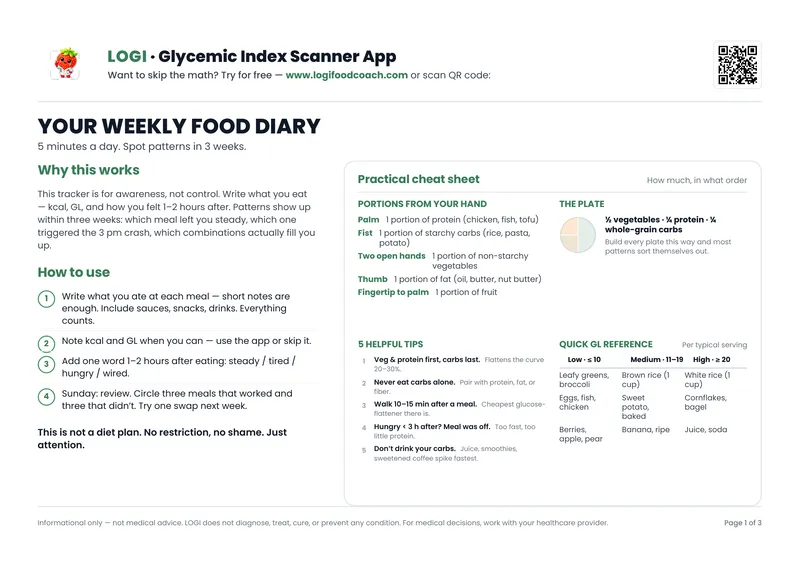
Free PDF — 3 pages
Your Weekly Food Journal
Track meals, glycemic load & mood. Spot patterns in 3 weeks.
No spam. Unsubscribe anytime.