Legumes and Blood Sugar — The Rare Starch That Behaves
Legumes and Blood Sugar — The Rare Starch That Behaves
Most of the food-and-blood-sugar conversation is defensive. Bread, rice, cereal, potatoes, sweets — each piece is a version of “here is why this common food is harder on your glucose than you think, and here is how to make it less bad.” It is genuinely useful information, but it can start to feel like everything with carbohydrate in it is a problem to be managed.
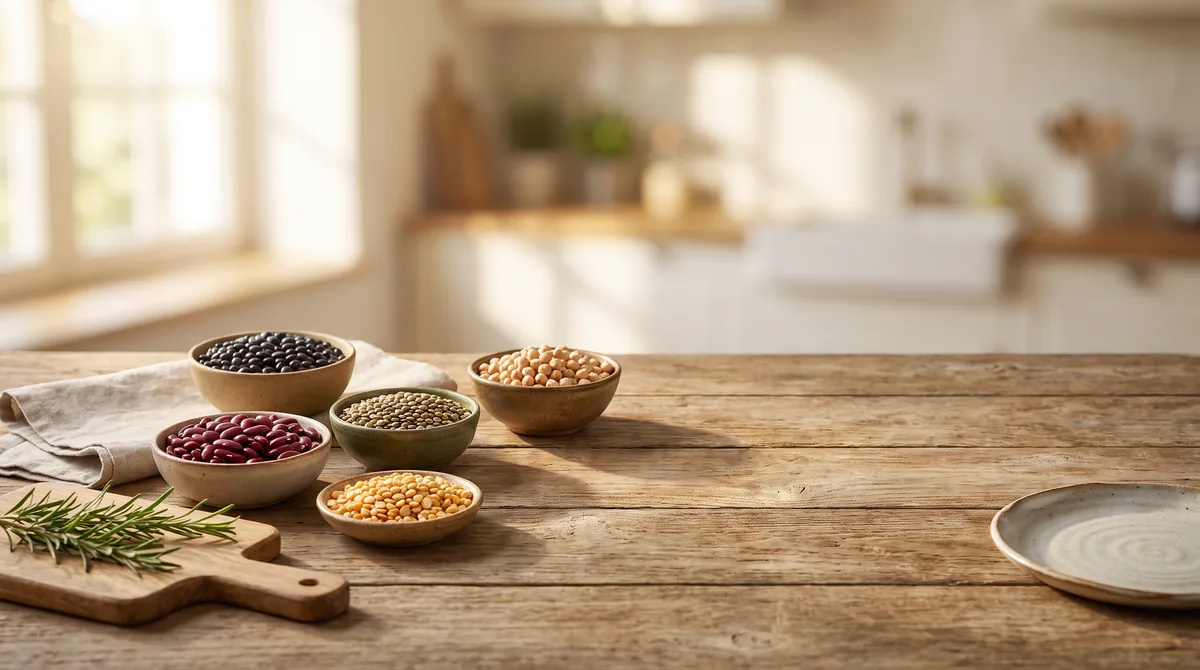
Legumes are the exception. Beans, lentils, chickpeas, split peas, and their relatives are the rare starchy foods that reliably produce a small, slow glucose rise — often smaller than a “healthy” whole-grain bread, often on par with steel-cut oats, sometimes lower. And unusually, they carry an effect that extends past the meal you eat them at: legumes eaten at lunch flatten the glucose response to the meal you eat for dinner. Very few foods do that.
This piece walks through the legumes people actually eat — kidney beans, black beans, chickpeas, lentils, split peas, hummus and bean dips, canned vs dried, and refried beans — what each one does to blood sugar and why, and how to fit more of them into a life where glucose matters.
The mechanism — why legumes behave differently than other starches
Legumes carry starch, but they package it in a way that fundamentally slows digestion.
High soluble fiber, low starch density. A cup of cooked beans typically contains 30–40 grams of carbohydrate, of which 10–15 grams is fiber — much of it soluble. Soluble fiber forms a gel in the gut that physically slows the movement of everything else through the small intestine, so glucose reaches the bloodstream more gradually. In practice, half of what looks like carbohydrate on the label is actually fiber that will not become blood sugar at all.
Resistant starch. A meaningful fraction of legume starch is resistant to digestion in the small intestine. It travels intact to the large intestine, where gut bacteria ferment it. That starch simply does not become blood glucose. Cooling cooked beans (bean salad the next day) increases the resistant-starch fraction further.
A dense protein-starch matrix. Bean starch is physically embedded in a protein and cell-wall structure that digestive enzymes have to work through. This is similar to why dried pasta digests more slowly than bread — the starch is protected, not exposed. Cooked beans keep more of that structure intact than most cooked grains.
Substantial protein. A cup of cooked lentils has as much protein as an egg-and-a-half. Protein-with-carbohydrate meals produce lower glucose peaks than carbohydrate alone, so legumes come with their own built-in glucose flattener.
Add these together and you get a starch that reliably tests low on the glycemic index — most legumes land in the 20s and 30s, compared with 70+ for most breads and 60+ for most cooked white rice — and that produces the small, slow curve people watching their glucose want.
The second-meal effect — legumes at lunch flatten dinner too
This is the property that makes legumes unusual. Beans eaten at one meal have been repeatedly shown to lower the glucose response to a carbohydrate meal eaten four to six hours later. Eat lentil soup at lunch; your bread-and-pasta dinner produces a smaller peak than it would have on its own.
Two mechanisms are involved. First, the resistant starch and fiber that reach the large intestine feed bacteria that produce short-chain fatty acids, which enter the bloodstream and improve insulin sensitivity for several hours. Second, the slow digestion of the legume meal itself is still trickling glucose into the blood at the second meal, and the body adjusts by handling the next carbohydrate more efficiently.
For someone managing blood sugar, this is a very cheap intervention. A cup of lentils at midday is a small, satisfying meal on its own and quietly improves the metabolic behavior of the day.
Lentils — the fastest-cooking, most versatile option
Lentils are the entry point most people underuse. Red lentils cook in 15 minutes with no soaking; green and brown lentils take 25–30 minutes. All of them keep the low-glycemic behavior of the family, and their protein content is meaningful — around 18 grams per cooked cup.
The forms matter slightly. Whole lentils (green, brown, black) hold their shape and produce the gentlest curve. Split red lentils break down into a purée as they cook, which is more convenient for soups and dals but digests a little faster than intact whole lentils. Even so, red lentil soup remains well below the glycemic response of an equivalent rice or pasta dish.
Practical use: a bowl of lentil soup, a lentil-and-vegetable stew over a small portion of grain, or lentils tossed with olive oil and vinegar as a cold salad are all straightforward weeknight meals.
Chickpeas — the second-most-versatile legume
Chickpeas (garbanzos) share the same low-glycemic profile as lentils and are, if anything, even more useful in a home kitchen. A cup of cooked chickpeas contains 12–14 grams of protein and about 12 grams of fiber, and their firm texture holds up in salads, curries, roasted snacks, and hummus.
Roasted chickpeas — chickpeas tossed with oil and spices and baked until crisp — are one of the few crunchy snacks that behave like a bean glycemically rather than like a chip. Chickpea flour (besan) similarly retains much of the low-glycemic behavior of the whole bean, and flatbreads, savory pancakes, and batters made from it are gentler than their wheat counterparts.
Black beans, kidney beans, pinto beans — the classic staples
The common cooked beans of Latin American, Mediterranean, and North American cooking all sit in the same low-glycemic band. Black beans, kidney beans, pinto beans, cannellini beans, and their relatives produce small, slow glucose responses when cooked whole and eaten as they are — in a stew, over a small portion of rice, in a bean salad, or in a soup.
The version that behaves less well is heavily processed refried beans, especially the canned kind cooked with lard and puréed to a smooth paste. Puréeing exposes the starch and lard adds a lot of fat, which can lengthen the glucose tail (the same “long tail after a fatty meal” pattern that shows up with pizza). Whole beans lightly mashed at home behave much better than commercial refried beans.
Split peas and dals — soup that quietly does a lot
Split pea soup, yellow dal, chana dal — cooked-down legume soups are among the most blood-sugar-friendly hot meals you can eat. They deliver protein, fiber, and complex carbohydrate in a form that satisfies for hours and produces a very moderate glucose response. In the traditional cuisines they come from, they are also usually paired with rice or flatbread; the second-meal effect described above means the legume portion is quietly improving the response to the grain it is served with.
For someone building a low-glycemic weekly rhythm, a pot of split-pea or lentil soup made on the weekend is one of the highest-leverage things a Sunday afternoon can produce.
Hummus and bean dips — small doses, big usefulness
Hummus (chickpeas, tahini, olive oil, lemon, garlic) is a low-glycemic dip that pairs well with the foods people commonly want to snack on: vegetables, whole-grain crackers, pita. A snack of hummus with sliced peppers, cucumber, and carrot is a rare snack that satisfies without producing much of a glucose response. Homemade white bean dips and black bean dips behave similarly.
The pairing matters. Hummus with pita bread is still a bread event; the hummus dampens the response but does not remove it. Hummus with vegetables is essentially a glucose non-event.
Canned vs dried — no meaningful difference for glucose
Canned beans are just as good as dried beans for blood sugar. The soaking and cooking that goes on inside a can is the same soaking and cooking you would do at home. The one thing worth doing is rinsing canned beans in a sieve — this removes much of the added salt and the starchy liquid — but for the glucose response specifically, canned and dried are equivalent.
If you never cook dried beans, do not treat that as a barrier to eating more legumes. Canned chickpeas, black beans, and kidney beans are one of the most useful pantry categories a person watching their glucose can keep stocked.
Practical patterns that use legumes well
- Aim for a bean or lentil meal three or more times a week. Lentil soup, chickpea salad, black bean bowl, hummus-and-vegetables lunch. The lower ceiling on your daily glucose curve is the payoff.
- Legumes at lunch quietly improve dinner. The second-meal effect is real; a lentil-based lunch is one of the cheapest ways to soften a starchier dinner.
- Whole beans over puréed and refried. Home-mashed beans behave much better than industrial refried beans.
- Rinse canned beans, use them freely. Canned is as good as dried for the glucose response.
- Pair a small portion of grain with a larger portion of legumes, not the other way around. Beans-and-rice in the traditional bean-heavy ratio is one of the world’s most glucose-friendly ways to eat a grain.
- A cup of hummus with vegetables is one of the best snacks in the low-GI toolkit. Keep it in the fridge.
- Cook once, eat twice. Cold or reheated legume dishes gain a bit of extra resistant starch, so the second serving is even gentler than the first.
The bigger picture
Most of the low-glycemic conversation is about limiting foods you enjoy. Legumes are the opposite: a food most people would benefit from eating substantially more of, that behaves gently on the glucose curve, and that carries a rare bonus effect on the meal after. They are inexpensive, shelf-stable, plant-based, high in protein and fiber, and endlessly versatile across cuisines.
If you take one habit change away from a piece like this, adding a legume meal or two per week is among the highest-leverage ones available. It is not the exciting move, but on the score that matters — how your body handles carbohydrate, day after day, for years — it may be the one that quietly does the most.
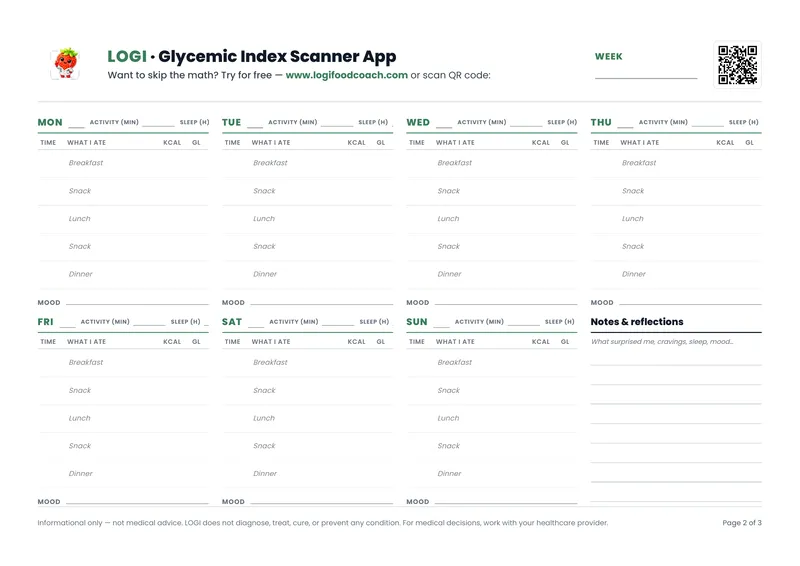
Curious how a lentil-heavy meal compares to your usual dinner? With Logi you photograph the plate and see the estimated glycemic load in about sixty seconds — beans and all. Two weeks free. Download Logi.
This article is general nutrition education, not medical advice. If you are managing diabetes, insulin resistance, or another condition, discuss dietary changes with your doctor or a registered dietitian.
Take control of your blood sugar
Scan your meals, track glycemic load, and see your patterns — all in one app.
Ξεκινήστε δωρεάν δοκιμή →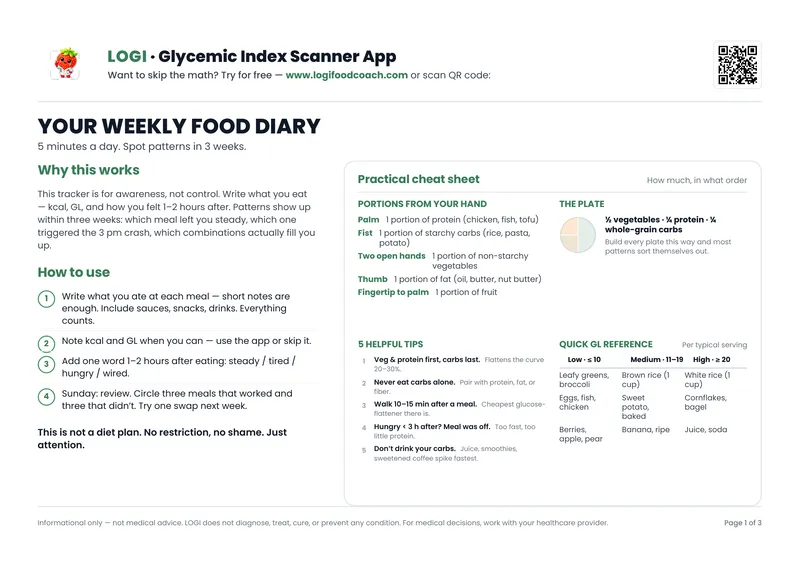
Δωρεάν PDF — 3 σελίδες
Το εβδομαδιαίο ημερολόγιο διατροφής σου
Καταγράψτε γεύματα, γλυκαιμικό φορτίο & διάθεση. Εντοπίστε μοτίβα σε 3 εβδομάδες.
Χωρίς spam. Διαγραφή ανά πάσα στιγμή.