Date paste
Low GI
GL 5.7 per typical tablespoon (15 g) · GL 38 per 100 g
- High fiber content
- Very high total sugars
Date paste has a glycemic index of 50 (Low). One typical tablespoon (15 g) adds a glycemic load of 5.7.
Updated Sep 27, 2026 · Sources: Logi Nutrition Team (USDA-derived composition, AI-assisted) · Not medical advice · Report an error
Instead of this
- GL 0.3 per 100 g Monk fruit provides sweetness with a negligible glycemic impact compared to the high glycemic load of date paste.
 Monk fruit
- GL 0.1 per 100 g Chia seed gel offers a fiber-rich, low-glycemic alternative that can provide texture and binding properties similar to date paste in recipes.
 Chia seed gel (chia seeds soaked in water)
Forms of Date paste


Logi · Manage Insulin Resistance
Lower your blood sugar through smarter food choices
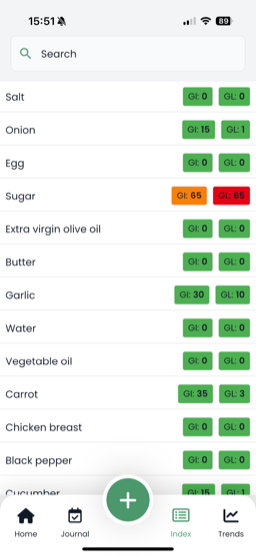
Date paste is one of the 11,150 foods Logi scores when you photograph a meal — with the portion.


Nutrition Facts (per 100g)
per 100g
| Calories | 280 kcal |
| Carbohydrates | 75 g |
| Sugars (Total) | 66 g |
| Natural | 66 g |
| Added | 0 g |
| Fiber | 8 g |
| Soluble | 3 g |
| Insoluble | 5 g |
| Protein | 2.5 g |
| Fat | 0.2 g |
| Saturated | 0.05 g |
| Unsaturated | 0.15 g |
| Sodium | 2 mg |
Processing Level
Why this score?
- High fiber content
- No added sugars
- Moderate glycemic index
- Very high total sugars
- High glycemic load
- Low protein content
Calculate the glycemic load of a meal with Date paste
Allergens
No EU-14 allergen listed
Low-GI recipes on Logi Food Coach
Frequently Asked Questions
What is the glycemic index of Date paste?
Date paste has a glycemic index of 50 (Low). One typical tablespoon (15 g) has a glycemic load of 5.7; per 100 g the glycemic load is 38.
Is Date paste good for people with insulin resistance?
Date paste has a low glycemic index (50), making it a good option for people with insulin resistance. It causes a slow, gradual rise in blood sugar.
Which form of Date paste has the lowest glycemic load?
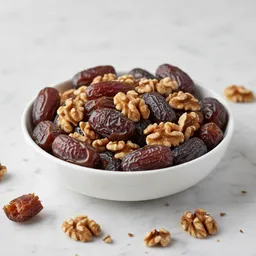
Among the forms of Date paste in this database, Date and walnut mix has the lowest glycemic load (25 per 100 g).
Check Date paste in the Logi app, with your portion.