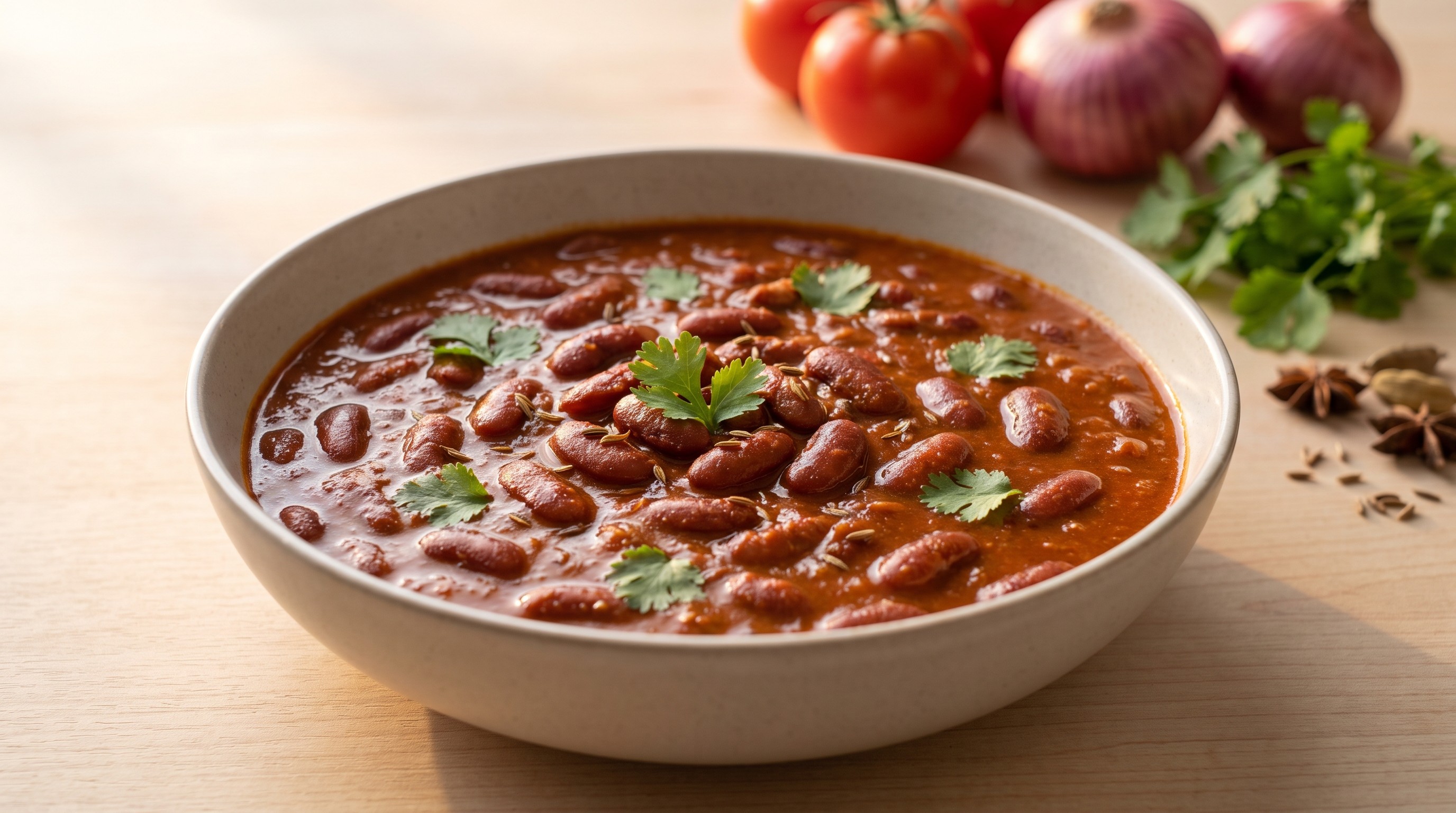
Quick Rajma Kidney Bean Curry
A fibre-rich kidney bean curry simmered with crushed tomatoes and warm spices — naturally low-GI, ready in 30 minutes, and ideal for steady blood sugar.
Rajma is one of the most blood-sugar-friendly comfort foods you can make. Red kidney beans clock in at a GI of just 24, thanks to their dense matrix of soluble fibre and plant protein that slows gastric emptying and blunts the post-meal glucose rise. Combined with tomatoes, ghee, and aromatic spices, this curry delivers deep satisfaction without the spike.
The healthy fat from ghee further moderates glucose absorption, while cumin and garam masala contribute anti-inflammatory compounds that support metabolic health. By mashing a few beans into the sauce you create a naturally thick, creamy gravy — no flour or cornstarch thickener needed. The result is a bowl that sits comfortably in the low-glycemic zone while tasting like it simmered all afternoon.
For the best glucose response, serve this rajma over a bed of cauliflower rice or alongside a small portion of cooled basmati rice (cooling increases resistant starch). Eating a side of raw cucumber or leafy greens before the curry primes your digestive system to handle carbohydrates more gradually. A dollop of plain full-fat yogurt on top adds protein and probiotics for an even gentler blood sugar curve.
Blood Sugar Impact
Very low impact expected. Kidney beans have one of the lowest GIs among legumes, and combined with healthy fats from ghee and fiber from whole ingredients, this curry should produce a slow, gentle blood sugar rise with stable energy for 3-4 hours.
Blood Sugar Tips
- ✓ Serve over cauliflower rice instead of white rice to keep the overall glycemic load low.
- ✓ Include a side of leafy greens or a cucumber raita to add fiber and volume without raising blood sugar.
- ✓ Allow the curry to cool slightly before eating — cooled and reheated legumes form more resistant starch, which further blunts glucose response.
🥗 Ingredients
- 1 tbsp Ghee
- 0.5 tsp Cumin seeds
- 1 pcs Onion
- 2 pcs Garlic
- 1 pcs Ginger
- 1 tsp Garam masala
- 150 g Crushed tomatoes
- 240 g Red kidney beans
- 1 tbsp Ghee
- 0.5 tsp Cumin seeds
- 1 pcs Onion
- 2 pcs Garlic
- 1 pcs Ginger
- 1 tsp Garam masala
- 5.3 oz Crushed tomatoes
- 8.5 oz Red kidney beans
👨🍳 Instructions
- 1
Place a heavy-bottomed saucepan over medium heat and add the ghee. Once it shimmers, drop in the cumin seeds and let them crackle and pop for about 30 seconds until they turn a shade darker and release their nutty aroma.
- 2
Tip in the finely diced onion and spread it across the pan. Cook for 4 to 5 minutes, stirring every so often, until the pieces soften and pick up a light golden colour at the edges.
- 3
Add the minced garlic and freshly grated ginger to the onion. Stir continuously for about 1 minute so the aromatics bloom without scorching.
- 4
Pour in the crushed tomatoes and sprinkle the garam masala over the top. Stir everything together and let the mixture bubble gently for 3 minutes until it thickens noticeably and small pools of ghee begin to appear at the surface.
- 5
Drain and rinse the kidney beans, then add them to the pan along with 100 ml of water. Stir well to coat the beans in the spiced tomato base and bring the curry to a steady simmer.
- 6
Let the curry cook at a gentle simmer for 12 to 15 minutes. Halfway through, press a few beans against the side of the pan with the back of a spoon to break them apart — this thickens the gravy naturally without any added starch.
- 7
Taste the curry and season with salt as needed. If the gravy is too thick, splash in a little extra water; if too thin, simmer uncovered for another couple of minutes.
- 8
Ladle the rajma into warm bowls. Finish with a scattering of fresh cilantro leaves and serve alongside cauliflower rice or a small portion of cooled basmati for the gentlest glucose response.
📊 Nutrition Per Serving
| Per Serving | Whole Dish | |
|---|---|---|
| Calories | 267 | 534 |
| Carbs | 38g | 77g |
| Sugars | 5g | 10g |
| Natural Sugars | 5g | 10g |
| Protein | 12g | 25g |
| Fat | 8g | 16g |
| Saturated Fat | 4g | 9g |
| Unsaturated Fat | 4g | 7g |
| Fiber | 10g | 20g |
| Soluble Fiber | 3g | 6g |
| Insoluble Fiber | 7g | 14g |
| Sodium | 172mg | 344mg |
Predicted Glucose Response
What if you...
Estimated model — individual responses vary. Not medical advice.
🔄 Lower GI Swaps
Leeks and spring onions provide a similar savoury base with a milder, sweeter flavour. All three options are low-GI and work well in curries — choose whichever you prefer or have on hand.
For a dairy-free version, extra-virgin olive oil or coconut oil can replace ghee. All three are healthy fats that slow glucose absorption equally well. Coconut oil gives a subtly richer flavour that complements Indian spices.
Dried kidney beans soaked overnight and boiled have a marginally lower GI (~24) compared to canned (~26–29), because canning involves higher-temperature processing that gelatinises a small amount of additional starch. The difference is minor, but if you are optimising closely, home-cooked beans give you a slight edge and let you control sodium as well.
Fresh tomatoes have a virtually identical low GI (~15) to canned. Use roughly 3 medium tomatoes in place of 150 g canned. The curry may need an extra 2–3 minutes of simmering to break down the fresh tomatoes into a saucy consistency.
🔬 The Science Behind This Recipe
Red kidney beans are among the lowest-GI foods available, with a glycemic index of approximately 24 for boiled beans. Their dense cellular structure traps starch granules inside intact plant cell walls, forcing your digestive enzymes to work through these barriers layer by layer rather than accessing all the starch at once. This slow enzymatic breakdown translates directly into a gradual, modest rise in blood glucose rather than a sharp spike.
The soluble fibre in kidney beans — primarily galactomannans and resistant starch — forms a viscous gel in the small intestine that further slows glucose absorption. Combined with a meaningful protein content of roughly 9 grams per 100-gram serving, the beans trigger satiety hormones (GLP-1 and PYY) that help regulate appetite and support insulin sensitivity.
Ghee contributes to the low glycemic response by slowing gastric emptying. When fat is present in a meal, the pyloric sphincter partially closes, releasing stomach contents into the small intestine more gradually. This mechanism spreads carbohydrate absorption over a longer window, flattening the glucose curve. The overall glycemic load of this curry sits at approximately 10.5 per serving — well within the low range — meaning the total glucose-raising potential of the meal is modest despite being deeply satisfying.
Related recipes
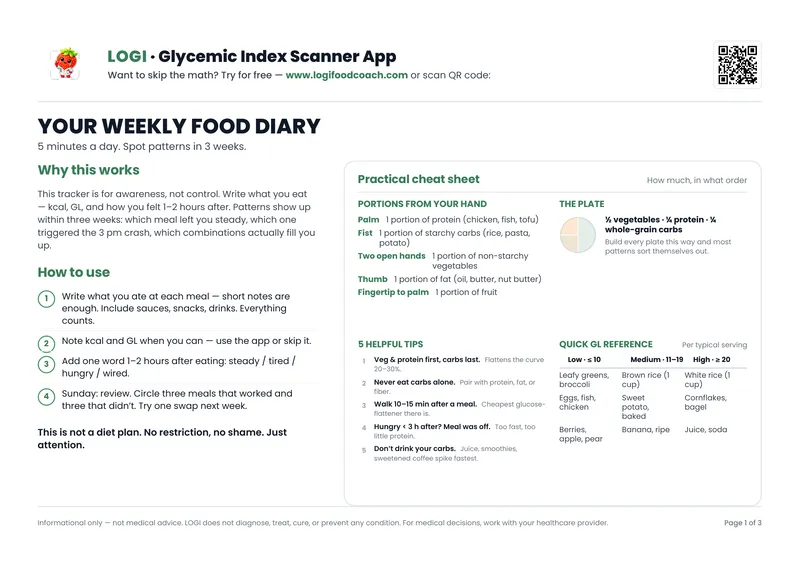
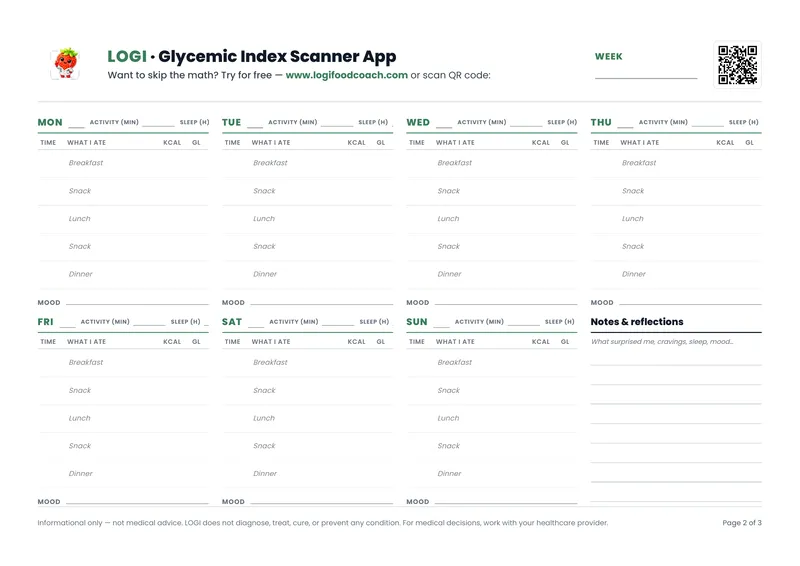
Free PDF — 3 pages
Your Weekly Food Journal
Track meals, glycemic load & mood. Spot patterns in 3 weeks.
No spam. Unsubscribe anytime.