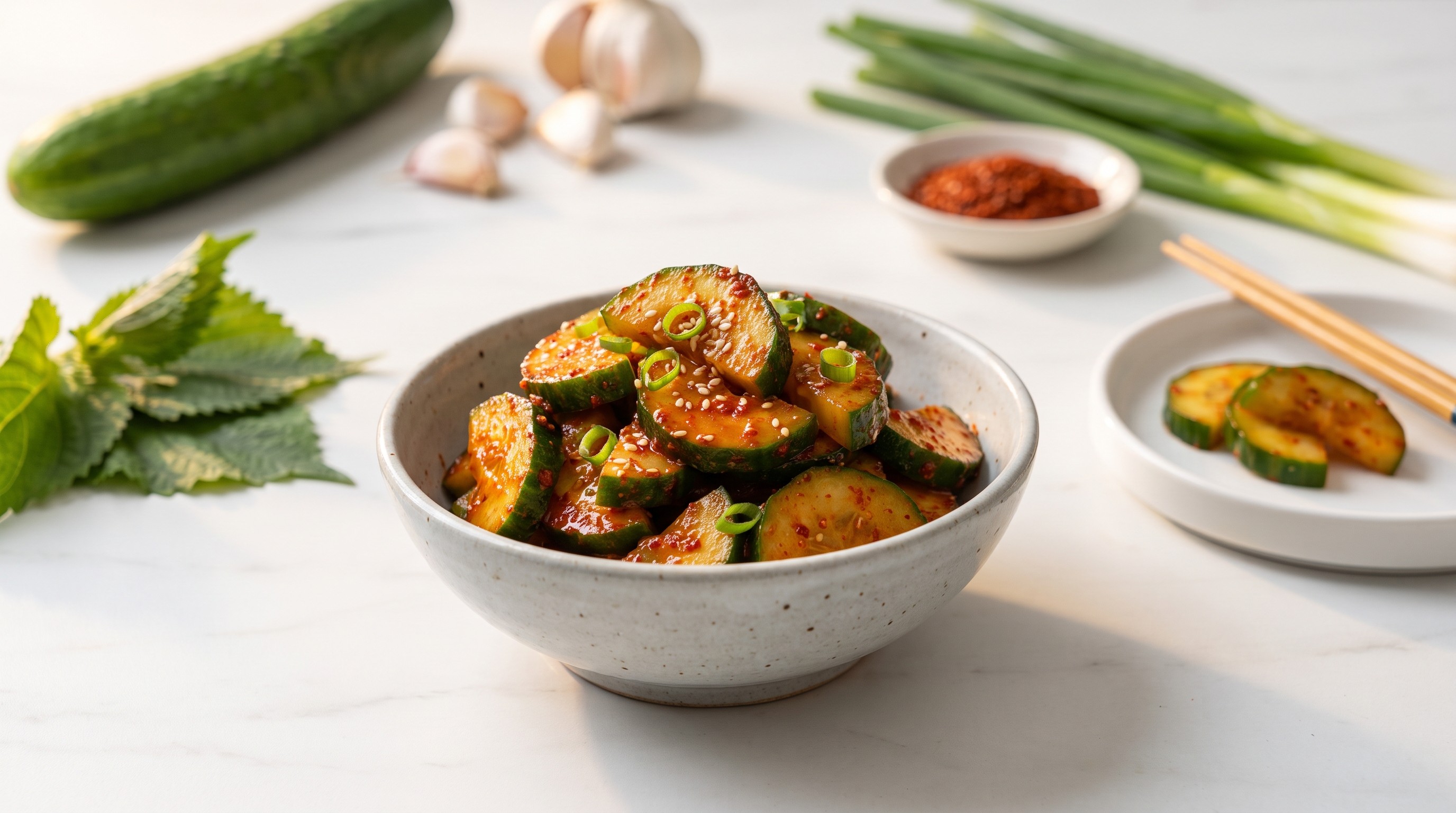
Oi Muchim (Korean Spicy Cucumber Salad)
A fiery, crunchy Korean cucumber banchan with gochugaru, sesame, and rice vinegar — virtually zero-carb and ready in fifteen refreshing minutes.
Oi muchim is one of the most blood-sugar-friendly side dishes you can put on a table. Cucumbers are over ninety-five percent water with a glycemic index near zero, making them an ideal base for anyone managing glucose levels. The salting-and-squeezing step concentrates their crunch while driving off excess moisture so the spicy dressing clings to every half-moon slice rather than pooling at the bottom of the bowl.
The dressing itself is a powerhouse of metabolic allies. Rice vinegar has been shown in clinical studies to blunt postprandial glucose spikes when consumed alongside a meal, while garlic contains allicin, a compound linked to improved insulin sensitivity. Toasted sesame oil contributes heart-healthy monounsaturated fats that slow gastric emptying, further flattening the blood sugar curve of whatever you eat alongside this banchan. Gochugaru brings capsaicin, which emerging research associates with enhanced glucose uptake in muscle cells.
The recipe calls for just half a teaspoon of sugar — roughly two grams — dissolved into the dressing to round out the vinegar's acidity. At under one gram of sugar per serving, the glycemic impact is negligible. Serve this salad at the start of a Korean meal to take advantage of the "vegetables first" eating strategy: consuming fiber and vinegar before rice or protein can reduce the overall glucose response of the entire meal by up to thirty percent. It pairs beautifully alongside grilled protein, bibimbap bowls built on cauliflower rice, or any banchan spread.
Blood Sugar Impact
Very low blood sugar impact expected. With a glycemic load of just 3.3 and an estimated GI of 28, this cucumber-based salad will cause minimal glucose elevation, providing stable energy without a notable spike.
Blood Sugar Tips
- ✓ Enjoy this salad as a starter before higher-carb dishes to slow overall glucose absorption from the meal.
- ✓ Be mindful of the added white sugar — if preparing at home, reduce or substitute with a pinch of stevia or monkfruit sweetener to further lower the glycemic impact.
- ✓ Pair with a protein source like grilled fish or tofu to create a more satiating, blood-sugar-friendly complete meal.
🥗 Ingredients
- 2 pcs Cucumber
- 0.5 tsp Fine sea salt
- 1 tbsp Gochugaru
- 1 tbsp Toasted sesame oil
- 1 tbsp Rice vinegar
- 2 tsp Soy sauce
- 1 pcs Garlic
- 0.5 tsp White sugar
- 1 tsp Toasted sesame seeds
- 1 pcs Scallion
- 2 pcs Cucumber
- 0.5 tsp Fine sea salt
- 1 tbsp Gochugaru
- 1 tbsp Toasted sesame oil
- 1 tbsp Rice vinegar
- 2 tsp Soy sauce
- 1 pcs Garlic
- 0.5 tsp White sugar
- 1 tsp Toasted sesame seeds
- 1 pcs Scallion
👨🍳 Instructions
- 1
Halve the cucumbers lengthwise, then cut them crosswise into half-moon slices about 5 mm (¼ inch) thick. Keeping the slices uniform ensures they salt and dress evenly.
- 2
Place the cucumber slices in a large mixing bowl, sprinkle the fine sea salt over them, and toss gently to distribute. Set the bowl aside for 10 minutes — the salt will draw out excess water and intensify the cucumbers' crunch.
- 3
Working in two or three handfuls, squeeze the salted cucumbers firmly over the sink until no more liquid drips out. The slices should feel pliable and noticeably reduced in volume, roughly a third less than when you started. Discard the extracted liquid.
- 4
While the cucumbers drain, prepare the dressing. In the same bowl (wiped dry), combine the gochugaru, toasted sesame oil, rice vinegar, soy sauce, finely grated garlic, and sugar. Whisk briskly until the sugar dissolves completely and the gochugaru blooms into a vibrant red sauce.
- 5
Thinly slice the scallion on a sharp bias to create elongated ovals. Set a small pinch aside for garnish and add the rest to the dressing bowl.
- 6
Add the squeezed cucumber slices to the dressing. Using your hands or tongs, toss thoroughly for about 30 seconds until every half-moon is evenly coated in the spicy red sauce. Taste and adjust — add a few extra drops of vinegar for brightness or a touch more sesame oil if you prefer a rounder finish.
- 7
Transfer the dressed cucumbers to a shallow serving bowl or plate, mounding them gently in the centre. Scatter the toasted sesame seeds and reserved scallion slices over the top.
- 8
Serve immediately for maximum crunch, or cover and refrigerate for up to 2 hours. For the best blood-sugar strategy, eat this banchan at the beginning of your meal before any starches or rice — the vinegar and fibre prime your body for a gentler glucose response.
📊 Nutrition Per Serving
| Per Serving | Whole Dish | |
|---|---|---|
| Calories | 123 | 246 |
| Carbs | 12g | 24g |
| Sugars | 5g | 10g |
| Added Sugars | 1g | 2g |
| Natural Sugars | 4g | 8g |
| Protein | 3g | 5g |
| Fat | 8g | 17g |
| Saturated Fat | 1g | 2g |
| Unsaturated Fat | 7g | 14g |
| Fiber | 2g | 4g |
| Soluble Fiber | 1g | 1g |
| Insoluble Fiber | 1g | 3g |
| Sodium | 865mg | 1730mg |
Predicted Glucose Response
What if you...
Estimated model — individual responses vary. Not medical advice.
🔄 Lower GI Swaps
White sugar has a GI of ~65. Monk fruit sweetener, allulose, and erythritol all have a GI of 0, eliminating the primary glycemic load contributor in this recipe while maintaining the balancing sweetness against the gochugaru heat.
Some rice vinegars contain residual sugars that contribute to glycemic load. Apple cider vinegar has a GI of 0 and studies suggest its acetic acid content may help moderate postprandial blood sugar response, making it a more blood-sugar-supportive choice.
Standard soy sauce can contain small amounts of residual sugars from fermentation. Coconut aminos has a lower glycemic index and tamari is typically free of added sugars, both providing umami depth with a marginally lower glycemic impact.
Lower glycemic impact alternative with better blood sugar response for this recipe context.
🔬 The Science Behind This Recipe
Here's the science explainer section:
---
Why This Recipe Works for Blood Sugar
Cucumber is one of the most blood-sugar-friendly vegetables you can eat. It's over 95% water and packed with soluble fiber, which means it digests slowly and releases very little glucose into your bloodstream. With an estimated glycemic index (GI) of just 28 and a glycemic load of only 3.3 per serving, this salad sits firmly in "low" territory on both scales. Here's an important distinction: GI tells you how *fast* a food raises blood sugar, but glycemic load tells you how *much* it actually raises it based on a real serving size. A glycemic load under 10 is considered low — and at 3.3, this dish barely registers.
The supporting ingredients make this recipe even smarter. Sesame oil brings healthy fats that slow gastric emptying — the rate at which food leaves your stomach — giving your body more time to process any sugars gradually rather than in a sudden rush. Rice vinegar is a quiet star here: studies have shown that vinegar consumed with a meal can reduce the post-meal blood sugar response by helping your muscles absorb glucose more efficiently. Even a small amount makes a measurable difference. Together, the fat from sesame oil and the acidity from rice vinegar act as natural "speed bumps" for digestion.
Want to maximize the benefits? If you're serving this alongside rice or noodles, eat the cucumber salad first. Starting a meal with vegetables and their fiber creates a buffer in your digestive system, so when carbohydrates arrive later, they're absorbed more slowly. Pairing this salad with a protein — like grilled tofu or fish — adds another layer of blood sugar stability. And a short 10-15 minute walk after eating is one of the simplest, most effective ways to help your muscles use up circulating glucose. Small choices, big impact.
Related recipes
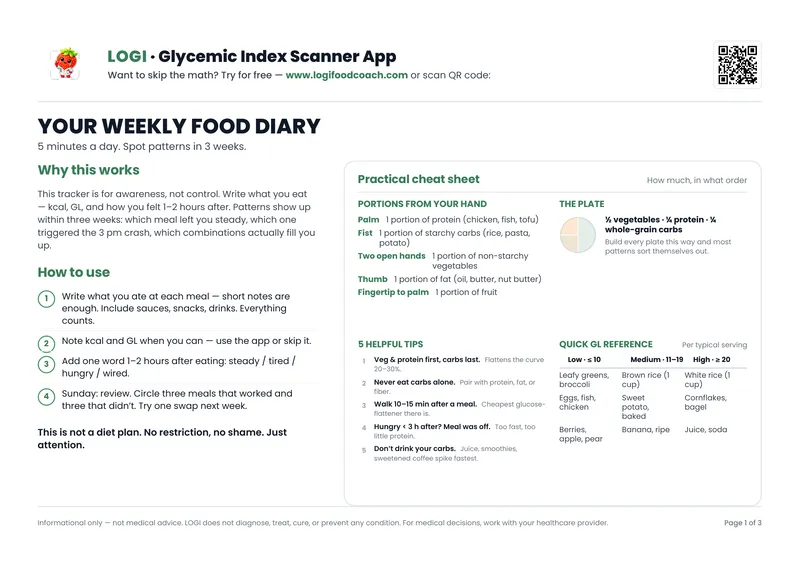
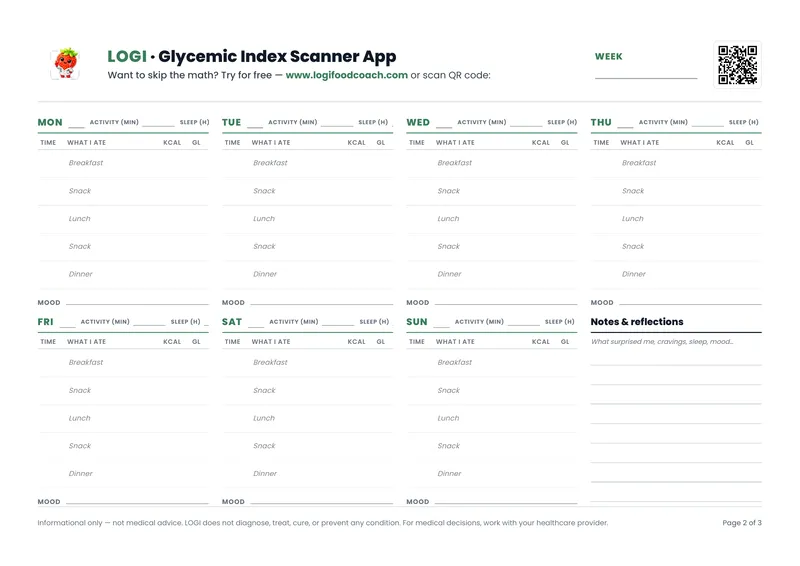
Free PDF — 3 pages
Your Weekly Food Journal
Track meals, glycemic load & mood. Spot patterns in 3 weeks.
No spam. Unsubscribe anytime.