Low-GI Rote Grütze with Quark
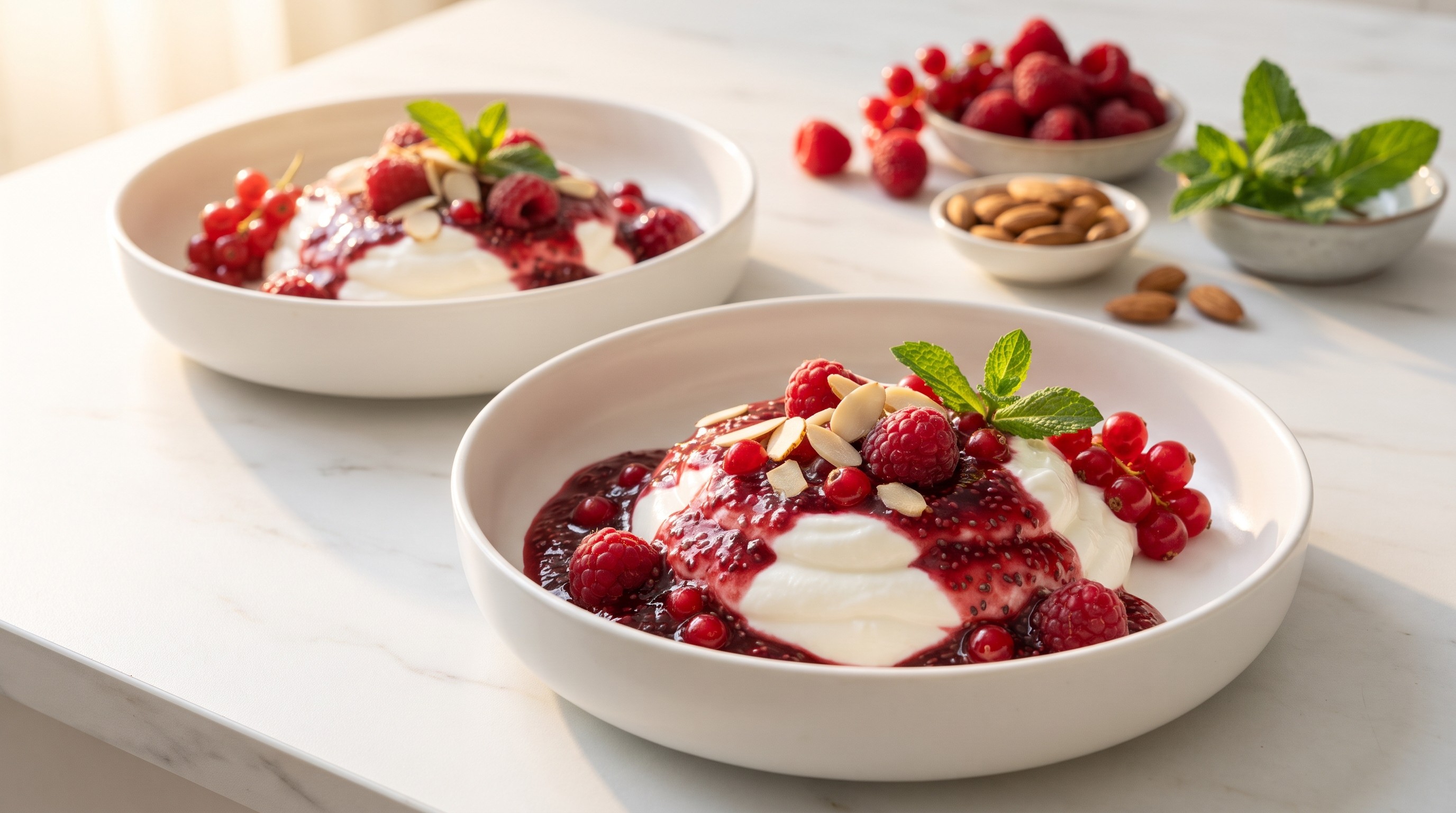
Warm, antioxidant-rich berry compote gelled with chia seeds over cold protein-packed quark — a naturally low-GI take on Germany's beloved Rote Grütze.
Rote Grütze is one of Northern Germany's most cherished desserts, traditionally thickened with cornstarch and sweetened with sugar — both rapid blood-sugar spikers. This low-glycemic version swaps them out entirely, relying on chia seeds to gel the warm berry juices into a soft, spoonable compote without any added sweetener or refined starch. The result is remarkably close to the original in texture while delivering soluble fiber that actively slows glucose absorption.
Strawberries, raspberries, and red currants are among the lowest-glycemic fruits available, each scoring well below 40 on the GI scale. Their natural tartness means no sugar is missed, especially when brightened with a squeeze of fresh lemon. The chia seeds do double duty: they thicken the compote and contribute omega-3 fatty acids plus an additional fiber boost that further flattens any post-meal glucose curve.
Spooned over cold, full-fat quark, this dessert becomes a genuinely balanced mini-meal. Quark contributes roughly 12 grams of protein per serving, and its tangy richness creates a satisfying warm-cool contrast with the berry compote. A scattering of sliced almonds adds crunch and healthy monounsaturated fats. For the gentlest blood-sugar response, eat the quark first before the fruit — the protein and fat prime your digestion to handle the natural berry sugars more slowly. Ready in just 20 minutes, this is a weeknight-friendly dessert you can feel genuinely good about.
Blood Sugar Impact
Very low blood sugar impact expected. With a glycemic load of 6.0 and estimated GI of 22, this dessert will produce a gentle, minimal rise in blood glucose, supported by the fiber from berries and chia seeds, healthy fats from almonds, and protein from quark.
Blood Sugar Tips
- ✓ Eat the quark and almonds first before the fruit compote to slow gastric emptying and blunt any glucose response.
- ✓ Ensure the chia seeds are well-soaked so they form a gel, which further slows carbohydrate absorption in the gut.
- ✓ Enjoy as a post-meal dessert rather than on an empty stomach to take advantage of the second-meal effect and minimize any residual spike.
🥗 Ingredients
- 150 g Strawberry
- 100 g Raspberry
- 80 g Red currant
- 10 ml Lemon juice
- 20 g Chia seed
- 0.5 tsp Vanilla extract
- 250 g Quark
- 10 g Sliced almond
- 5.3 oz Strawberry
- 3.5 oz Raspberry
- 2.8 oz Red currant
- 2 tsp Lemon juice
- 0.7 oz Chia seed
- 0.5 tsp Vanilla extract
- 8.8 oz Quark
- 0.4 oz Sliced almond
👨🍳 Instructions
- 1
Prepare the fruit: hull the strawberries and cut each one in half lengthwise. If using fresh red currants, run a fork down each stem to strip the berries cleanly into a bowl.
- 2
Measure out the chia seeds, lemon juice, and vanilla extract into a small dish so they are ready to add quickly once the berries come off the heat.
- 3
Place the strawberries, raspberries, and red currants together in a medium saucepan. Set the pan over medium heat and let the berries warm through without adding any liquid — their own juices will provide all the moisture needed.
- 4
Cook for 5 to 6 minutes, stirring gently every minute or so, until the berries have softened and released a deep red pool of juice. Use the back of a wooden spoon to press a few strawberry halves against the side of the pan — this breaks them down and naturally thickens the liquid.
- 5
Take the saucepan off the heat immediately. Scatter the chia seeds evenly over the surface, then pour in the lemon juice and vanilla extract. Stir everything through with a few gentle folds to distribute the chia seeds without crushing the remaining whole berries.
- 6
Set the compote aside and leave it completely undisturbed for 10 minutes. During this time the chia seeds absorb the berry juice and swell, gelling the mixture into a soft, spoonable compote. Resist the urge to stir — the gel sets best when left still.
- 7
While the compote rests, divide the cold quark evenly between two serving bowls. Spread it into a shallow well in the centre of each bowl to cradle the compote.
- 8
Spoon the warm, gelled berry compote over the cold quark. Scatter sliced almonds across the top for crunch and serve immediately — the warm-cool contrast is best enjoyed straight away.
📊 Nutrition Per Serving
| Per Serving | Whole Dish | |
|---|---|---|
| Calories | 239 | 478 |
| Carbs | 28g | 56g |
| Sugars | 14g | 28g |
| Added Sugars | 0g | 0g |
| Natural Sugars | 14g | 28g |
| Protein | 19g | 39g |
| Fat | 6g | 13g |
| Saturated Fat | 1g | 1g |
| Unsaturated Fat | 5g | 11g |
| Fiber | 11g | 21g |
| Soluble Fiber | 3g | 6g |
| Insoluble Fiber | 7g | 15g |
| Sodium | 53mg | 107mg |
Predicted Glucose Response
What if you...
Estimated model — individual responses vary. Not medical advice.
🔄 Lower GI Swaps
Blackberries and boysenberries have a lower glycemic index (GI ~25) than strawberries (GI ~40) and contain significantly more fiber per serving, which further slows glucose absorption and reduces overall glycemic load.
Blackcurrants and gooseberries have higher fiber content and slightly lower natural sugar levels than red currants, resulting in a gentler blood sugar response and a marginally lower contribution to the dish's glycemic load.
Ceylon cinnamon has been shown to improve insulin sensitivity and slow gastric emptying, actively helping to lower the postprandial blood sugar spike. Replacing or supplementing vanilla extract with cinnamon adds a functional blood-sugar-lowering benefit without increasing glycemic load.
While almonds are already low-GI, walnuts and pecans have higher omega-3 fatty acid content and slightly more fat per serving, which can further blunt the glycemic response of the entire meal. Macadamia nuts have the highest fat-to-carb ratio of any nut, contributing the least to glycemic load.
🔬 The Science Behind This Recipe
Here's the science explainer section:
---
Why This Recipe Works for Your Blood Sugar
This Low-GI Rote Grütze scores an estimated Glycemic Index of just 22 and a Glycemic Load of 6.0 per serving — both remarkably low. But what do those numbers actually mean? The Glycemic Index tells you how quickly a food raises blood sugar, while Glycemic Load factors in the amount you're actually eating. Think of it this way: GI is the speed limit, but GL tells you how far you're driving. A GL under 10 is considered low, so at 6.0, this dessert is gentle on your blood sugar even though it tastes indulgent.
The berry trio — strawberries, raspberries, and red currants — is doing a lot of the heavy lifting here. Unlike tropical fruits such as mango or pineapple, these berries are naturally low in sugar and packed with fiber. That fiber acts like a speed bump in your digestive system, slowing down the rate at which sugars enter your bloodstream. Red currants are especially noteworthy, delivering one of the highest fiber-to-sugar ratios of any fruit. Meanwhile, chia seeds bring an extra layer of protection: when they absorb liquid, they form a gel-like coating that further slows digestion and helps blunt any glucose response. Pairing this with protein-rich quark creates an ideal combination — the protein and fat slow gastric emptying, meaning the natural fruit sugars are released even more gradually.
To get the most out of this recipe, try a simple trick: if you're serving it after a meal, eat your vegetables and protein courses first before finishing with this dessert. A short 10–15 minute walk afterward can also help your muscles absorb glucose more efficiently. Small habits like these, combined with naturally low-GI ingredients, make enjoying something sweet a lot more blood-sugar-friendly.
Related recipes
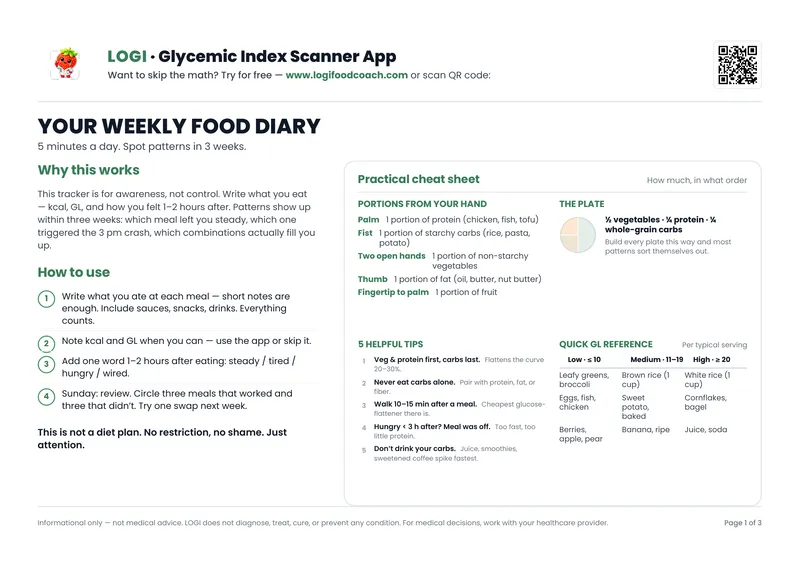
Free PDF — 3 pages
Your Weekly Food Journal
Track meals, glycemic load & mood. Spot patterns in 3 weeks.
No spam. Unsubscribe anytime.