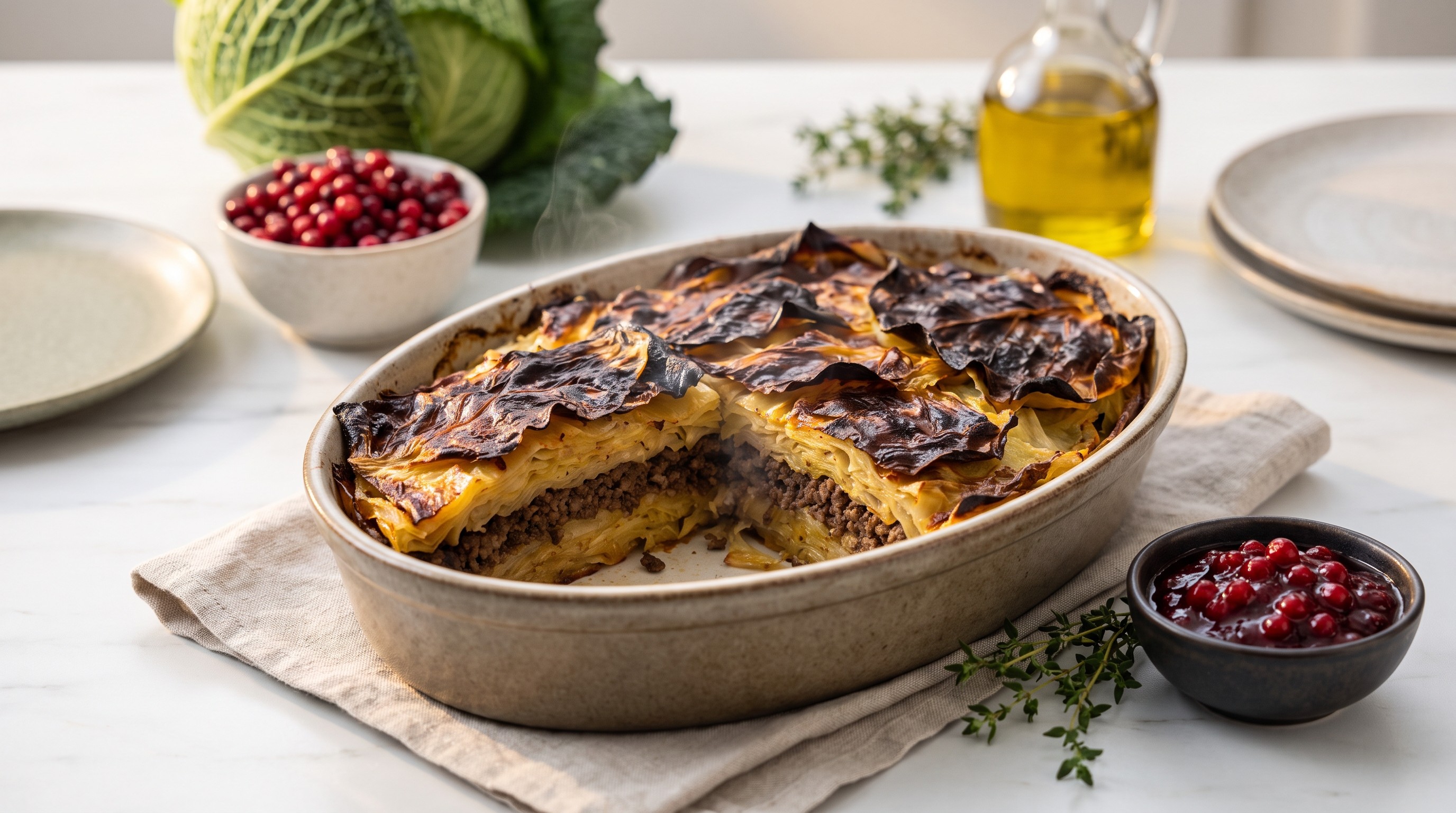
Low-GI Kålpudding (Swedish Cabbage and Beef Bake)
Layers of deeply caramelized cabbage and allspice-seasoned beef bake into a crispy-topped Swedish classic — naturally low-GI with no rice, syrup, or added sugar.
Kålpudding is one of Sweden's most beloved husmanskost (home-cooking) dishes — a humble layered bake of browned cabbage and seasoned minced beef that emerges from the oven with irresistibly crispy, curled edges. Traditional versions rely on white rice for bulk and dark syrup (mörk sirap) for sweetness, both of which spike blood sugar sharply. This adaptation strips both out entirely, letting the cabbage do what it does best when given enough time and heat: caramelize into something deeply sweet, nutty, and golden without a single gram of added sugar.
The glycemic profile of this dish is excellent. Cabbage is one of the lowest-GI vegetables available (GI ~10), rich in fiber that slows gastric emptying and blunts any glucose response from the meal. The generous protein from beef and egg further flattens the blood-sugar curve, while butter provides satiating fat that keeps you full longer. Ground allspice — the signature Swedish meat spice — contains eugenol, a compound studied for its potential to support insulin sensitivity. With no starchy fillers and no sweeteners, this is a genuinely blood-sugar-friendly comfort meal.
For optimal glucose management, consider serving alongside a small side salad dressed with vinegar — acetic acid has been shown to reduce post-meal glucose spikes by up to 30%. Eat the vegetables first, then the protein-rich bake. This dish also reheats beautifully, and cold leftovers the next day may offer even better blood-sugar results thanks to the formation of resistant starch in any residual vegetable fiber.
Blood Sugar Impact
Very minimal blood sugar impact expected. With a GI of 16 and glycemic load of only 2.8, this high-protein, high-fat, low-carb dish should produce a very flat glucose response and provide stable energy for 3-4 hours.
Blood Sugar Tips
- ✓ Eat the cabbage portions first before the beef to further blunt any minor glucose rise from the vegetables.
- ✓ Pair this meal with a side salad dressed in vinegar or lemon juice — the acidity can reduce glycemic response of the overall meal by up to 30%.
- ✓ Take a 10-15 minute walk after eating to enhance glucose uptake by muscles and keep blood sugar even flatter.
🥗 Ingredients
- 400 g White cabbage
- 25 g Butter
- 100 g Yellow onion
- 250 g Minced beef
- 0.5 tsp Ground allspice
- 1 pcs Egg
- 100 ml Beef stock
- 0.75 tsp Salt
- 0.25 tsp Black pepper
- 14.1 oz White cabbage
- 0.9 oz Butter
- 3.5 oz Yellow onion
- 8.8 oz Minced beef
- 0.5 tsp Ground allspice
- 1 pcs Egg
- 7 tbsp Beef stock
- 0.75 tsp Salt
- 0.25 tsp Black pepper
👨🍳 Instructions
- 1
Heat the oven to 200 °C (390 °F) with a rack in the centre position. Core the cabbage and cut it into rough strips about 1 cm wide.
- 2
Place a large frying pan over medium-high heat and melt roughly half the butter. Add the shredded cabbage and let it cook, turning it every couple of minutes, until the edges are deeply golden-brown and the cabbage tastes noticeably sweet — this takes about 12 minutes. Resist the urge to stir constantly; letting the cabbage sit against the hot pan is what develops caramelization and natural sweetness. Season with a small pinch of salt, then transfer to a bowl.
- 3
Return the pan to medium heat and add the remaining butter. Once melted, add the diced onion and cook for about 3 minutes until softened and translucent.
- 4
Add the minced beef to the pan with the onions, breaking it into small crumbles with a wooden spoon. Cook until the meat is well browned and any released liquid has evaporated, roughly 5 minutes. Stir in the ground allspice, the remaining salt, and the black pepper. Remove from the heat.
- 5
Lightly grease a small baking dish (approximately 20 × 15 cm / 8 × 6 inches). Spread half of the caramelized cabbage evenly across the bottom. Spoon the seasoned mince mixture over the cabbage in an even layer, then top with the remaining cabbage.
- 6
In a small bowl, whisk the egg into the beef stock until well combined. Pour this mixture slowly and evenly over the layered dish, letting it seep down through the layers.
- 7
Place the dish on the centre rack and bake uncovered for 25 minutes, until the top layer of cabbage is deeply browned and crisp at the edges and the egg-stock liquid has been fully absorbed.
- 8
Remove from the oven and let the kålpudding rest for 5 minutes before serving. This allows the layers to set and makes portioning easier. Serve as-is or alongside a simple vinegar-dressed green salad — the acetic acid in the dressing helps further moderate the post-meal glucose response.
📊 Nutrition Per Serving
| Per Serving | Whole Dish | |
|---|---|---|
| Calories | 518 | 1036 |
| Carbs | 17g | 35g |
| Sugars | 9g | 17g |
| Natural Sugars | 9g | 17g |
| Protein | 29g | 58g |
| Fat | 38g | 76g |
| Saturated Fat | 17g | 35g |
| Unsaturated Fat | 18g | 36g |
| Fiber | 6g | 12g |
| Soluble Fiber | 2g | 4g |
| Insoluble Fiber | 4g | 9g |
| Sodium | 1235mg | 2470mg |
Predicted Glucose Response
What if you...
Estimated model — individual responses vary. Not medical advice.
🔄 Lower GI Swaps
Commercial beef stock often contains hidden sugars, maltodextrin, or dextrose that raise its glycemic index. Homemade bone broth or unsweetened vegetable broth eliminates these added carbohydrates, keeping the glycemic load as close to zero as possible.
While butter has a negligible GI, extra virgin olive oil and avocado oil are rich in monounsaturated fats that have been shown to slow gastric emptying and blunt postprandial blood sugar spikes more effectively. EVOO in particular helps improve overall glycemic response when consumed with a meal.
All these proteins have a GI of zero, but leaner meats reduce the saturated fat load of the meal. High saturated fat intake over time can impair insulin sensitivity, which worsens long-term blood sugar control. Leaner proteins support better insulin function and glycemic management.
🔬 The Science Behind This Recipe
Why This Recipe Works for Blood Sugar
Kålpudding is a beautiful example of how traditional comfort food can naturally support steady blood sugar. The star here is white cabbage, which is extremely low on the glycemic index and rich in fiber. That fiber acts like a slow-release mechanism — it forms a gel-like layer in your digestive system that slows the breakdown of any carbohydrates into glucose. Instead of a sharp spike followed by an energy crash, you get a gentle, sustained rise that your body can manage with ease. With cabbage making up the bulk of this dish, you're essentially building your meal on a foundation that keeps blood sugar remarkably stable.
The ground beef and butter add two more powerful blood-sugar allies: protein and fat. When protein enters your digestive system, it triggers hormones that slow gastric emptying — meaning food leaves your stomach more gradually, which spreads glucose absorption over a longer window. Fat works similarly, acting as a natural brake on digestion. Together, they create what nutritionists call a "blunting effect," cushioning the impact of any carbohydrates in the meal. This is why pairing strategies matter so much: even a higher-carb food behaves differently when eaten alongside protein and fat.
The numbers tell the story clearly. This dish has a glycemic load of just 2.8 per serving — well under 10, which is considered low. Remember, glycemic load accounts for both the *type* and *amount* of carbohydrates, making it a far more practical measure than glycemic index alone. A food might have a moderate GI, but if you're eating very little of that carbohydrate (as with this cabbage-heavy dish), the actual impact on your blood sugar stays minimal. To maximize the benefit, try eating the cabbage portion first before the beef, and consider a 10–15 minute walk after your meal — both simple habits that research shows can further smooth out your glucose response.
Related recipes
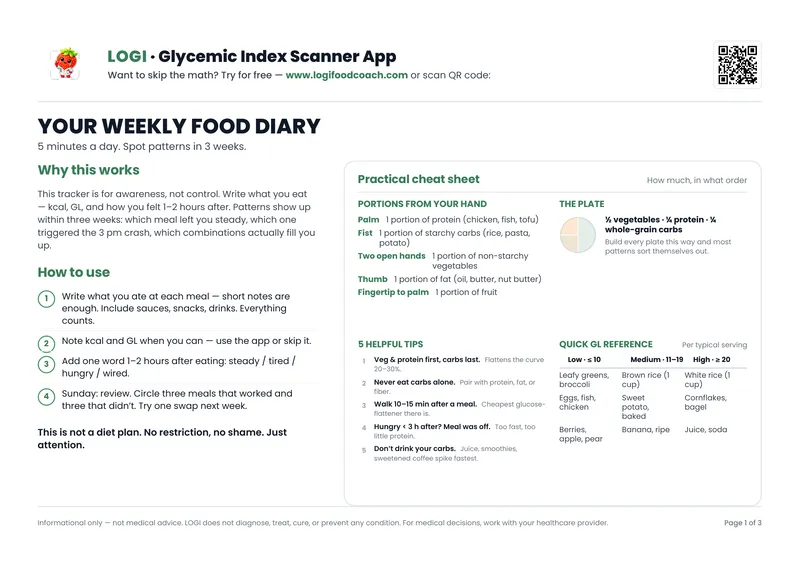
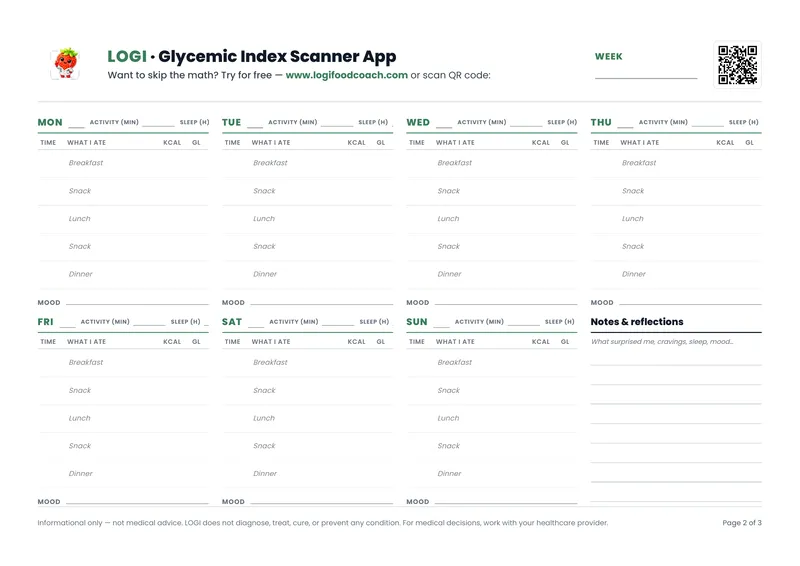
Free PDF — 3 pages
Your Weekly Food Journal
Track meals, glycemic load & mood. Spot patterns in 3 weeks.
No spam. Unsubscribe anytime.