Low-GI Huevos Rancheros
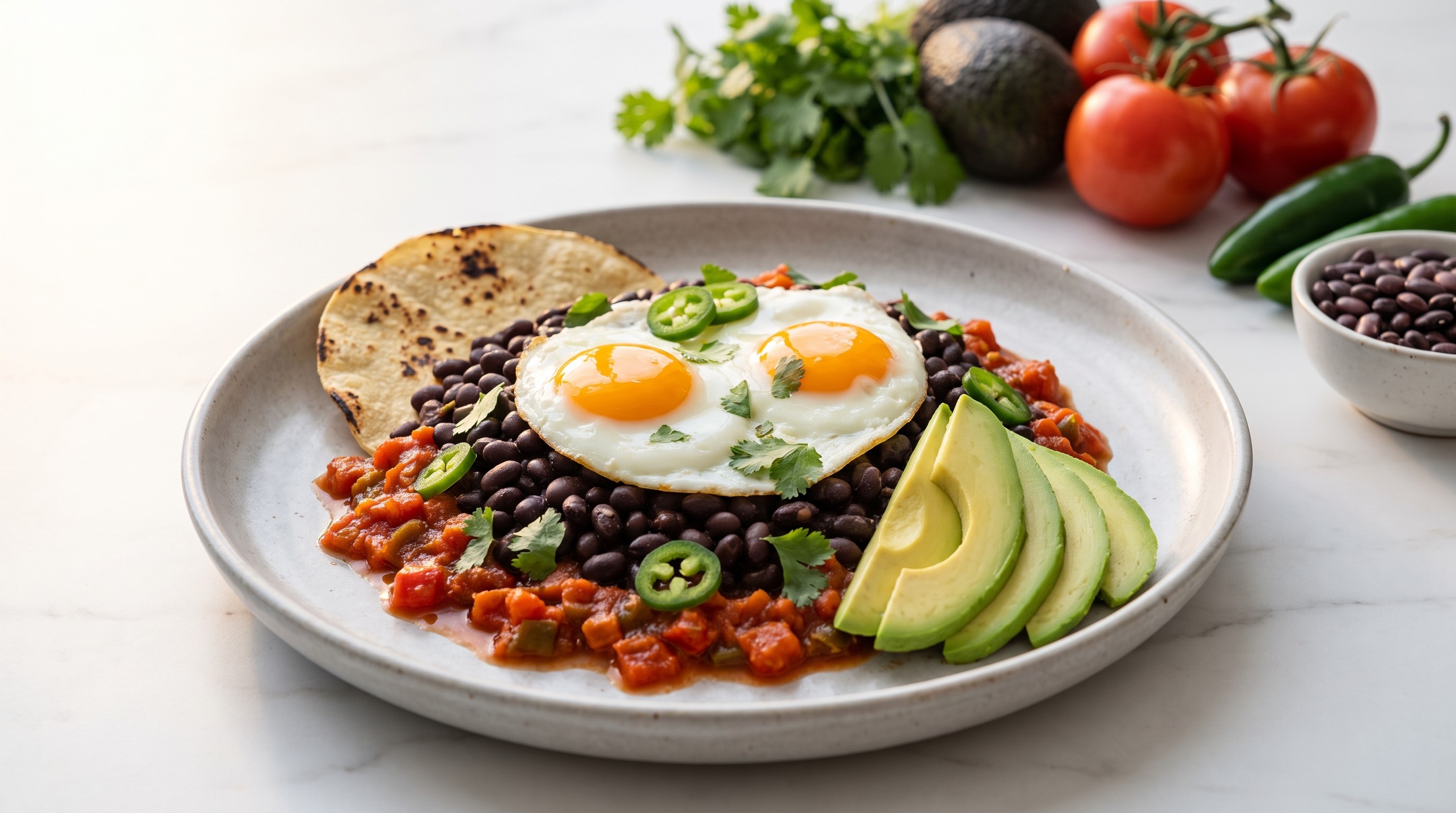
Black beans and eggs nestle in a smoky tomato salsa on a single corn tortilla — a high-protein, high-fiber Mexican breakfast that keeps blood sugar steady.
This blood-sugar-friendly take on huevos rancheros flips the traditional ratio: instead of piling eggs onto a stack of flour tortillas, it lets protein-rich black beans and eggs do the heavy lifting while a single small corn tortilla provides just enough starchy satisfaction. Corn tortillas clock in at a GI of around 46 — well within the low-glycemic range — and their intact-grain structure digests far more slowly than refined wheat flour. The result is a plate that delivers steady energy rather than a sharp morning spike.
Black beans are a cornerstone of low-glycemic cooking, with a GI of roughly 30 and an impressive combination of soluble fiber and plant protein that slows gastric emptying. Paired with whole eggs and creamy avocado, the meal's fat-protein-fiber trio creates a powerful glucose-buffering effect. The jalapeño and cumin add depth without adding any sugar, while the chunky tomato salsa contributes lycopene and vitamin C with negligible glycemic impact.
For the best blood sugar response, eat the bean mixture and avocado first before biting into the tortilla — front-loading fiber and fat primes your digestive system to handle the carbohydrate that follows. This plate works beautifully as a weekend brunch or a meal-prepped weekday breakfast; the salsa and beans reheat well, and you can poach the eggs fresh in minutes.
Blood Sugar Impact
With a low GI of 34 and a medium glycemic load of 15.9, this meal should produce a moderate, gradual rise in blood sugar. The protein from eggs, healthy fat from olive oil, and fiber from black beans work together to slow glucose absorption and promote stable energy for 3-4 hours.
Blood Sugar Tips
- ✓ Eat the eggs and black beans first before the corn tortilla — protein and fiber consumed early in the meal blunt the glucose spike from the carbohydrate portion.
- ✓ Add a topping of sliced avocado or a side of greens; the extra fiber and healthy fat further flatten the blood sugar curve.
- ✓ Take a 10-15 minute walk after eating to help your muscles absorb circulating glucose and reduce the post-meal peak.
🥗 Ingredients
- 1 tbsp Olive oil
- 0.5 pcs White onion
- 1 pcs Jalapeño pepper
- 1 pcs Garlic
- 1 tsp Ground cumin
- 200 g Canned chopped tomatoes
- 0.25 tsp Salt
- 240 g Black beans
- 4 pcs Egg
- 2 pcs Corn tortilla
- 0.5 pcs Avocado
- 1 pcs Cilantro
- 1 tbsp Olive oil
- 0.5 pcs White onion
- 1 pcs Jalapeño pepper
- 1 pcs Garlic
- 1 tsp Ground cumin
- 7.1 oz Canned chopped tomatoes
- 0.25 tsp Salt
- 8.5 oz Black beans
- 4 pcs Egg
- 2 pcs Corn tortilla
- 0.5 pcs Avocado
- 1 pcs Cilantro
👨🍳 Instructions
- 1
Prepare the vegetables: peel and dice the onion into small, even pieces; seed the jalapeño and chop it finely; peel and mince the garlic clove. Halve the avocado, remove the stone, and cut the flesh into thin slices.
- 2
Set a wide skillet over medium heat and add the olive oil. Once the oil shimmers, drop in the diced onion and jalapeño. Cook for 3 to 4 minutes, stirring occasionally, until the onion turns translucent and the edges begin to pick up a light golden colour.
- 3
Add the minced garlic and ground cumin to the skillet. Stir constantly for about 30 seconds until the spices become fragrant and the garlic softens without browning.
- 4
Pour in the canned chopped tomatoes and season with the salt. Let the mixture simmer over medium heat for about 5 minutes, stirring now and then, until it reduces into a thick, chunky salsa — it should hold a clear trail when you drag a spoon across the pan.
- 5
Fold the drained and rinsed black beans into the salsa. Stir gently and let them warm through for about 2 minutes so they absorb some of the tomato flavour.
- 6
Using the back of a spoon, press four shallow wells into the bean-salsa mixture, spacing them evenly. Crack one egg into each well. Cover the skillet with a lid and cook for 4 to 5 minutes, or until the egg whites are fully set but the yolks remain soft and runny.
- 7
While the eggs cook, warm the corn tortillas in a separate dry pan over medium-high heat — or hold them briefly over a direct gas flame with tongs — for about 30 seconds per side until lightly charred and pliable.
- 8
Place one warm tortilla on each plate. Spoon half of the bean-and-egg mixture over each tortilla, arrange the avocado slices alongside, and scatter torn cilantro leaves over the top. Serve immediately.
📊 Nutrition Per Serving
| Per Serving | Whole Dish | |
|---|---|---|
| Calories | 497 | 994 |
| Carbs | 47g | 93g |
| Sugars | 8g | 17g |
| Natural Sugars | 8g | 17g |
| Protein | 24g | 48g |
| Fat | 26g | 52g |
| Saturated Fat | 5g | 11g |
| Unsaturated Fat | 20g | 41g |
| Fiber | 13g | 25g |
| Soluble Fiber | 4g | 8g |
| Insoluble Fiber | 9g | 17g |
| Sodium | 1081mg | 2161mg |
Predicted Glucose Response
What if you...
Estimated model — individual responses vary. Not medical advice.
🔄 Lower GI Swaps
Corn tortillas have a moderate GI (~52). Almond flour and coconut flour tortillas are very low-GI due to their high fat and fiber content with minimal starch, dramatically reducing the glycemic load of the dish. Collard green wraps eliminate starch-based carbohydrates entirely.
Canned refried beans have a higher GI (~45) than intact legumes because mashing breaks down cell structure, making starch more rapidly digestible. Whole cooked black beans (GI ~30), lentils (GI ~25), or chickpeas (GI ~28) retain their intact cell walls, slowing starch digestion and producing a flatter blood sugar curve.
Canned crushed tomatoes can contain added sugars and have slightly higher GI due to heat processing that breaks down fiber. Fresh tomatoes have a lower GI (~15 vs ~25) and their intact fiber matrix slows glucose absorption.
While white onion already has a low GI, red onions contain higher levels of quercetin and chromium, which have been shown to support insulin sensitivity and improve glucose uptake, offering an additional blood-sugar-management benefit beyond GI alone.
🔬 The Science Behind This Recipe
Here's the science explainer section for the Low-GI Huevos Rancheros recipe:
---
Why This Recipe Works for Blood Sugar
This huevos rancheros earns its low-glycemic badge thanks to a smart combination of protein, healthy fats, and fiber-rich vegetables that work together to slow down how quickly your body absorbs glucose. With an estimated Glycemic Index (GI) of just 34 — well within the "low" category — and a Glycemic Load of 15.9 per serving, this dish delivers sustained energy without the sharp blood sugar spike and crash you might get from a typical carb-heavy breakfast. Remember, Glycemic Load takes into account how much carbohydrate you're actually eating, not just how fast it hits your bloodstream — and that's what really matters on your plate.
Olive oil plays a quiet but powerful role here. The monounsaturated fats in olive oil act as a natural brake on digestion, slowing the rate at which sugars from other ingredients enter your bloodstream. When you pair those healthy fats with the protein from eggs — the star of any huevos rancheros — you create a one-two punch that keeps your glucose response remarkably flat. Protein also triggers satiety hormones, helping you feel full longer and reducing the urge to snack on higher-glycemic foods later. Meanwhile, the onion, jalapeño, and garlic contribute fiber and bioactive compounds that further support a gentle, gradual rise in blood sugar rather than a sudden spike.
To get the most out of this meal, try eating the salsa and vegetables first before digging into any tortilla or starchy side. A short 10–15 minute walk after breakfast can also help your muscles absorb glucose more efficiently. Small habits like these, combined with a well-designed recipe like this one, add up to meaningful, everyday blood sugar balance — no deprivation required.
Related recipes
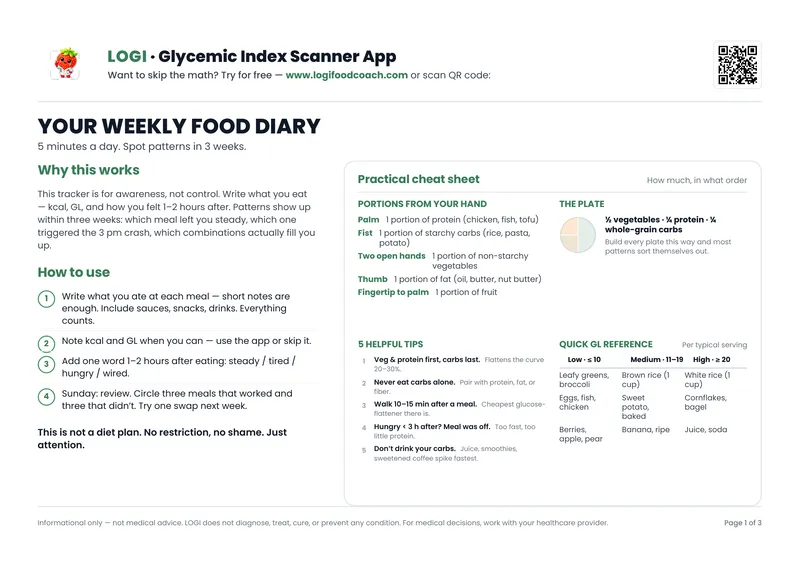
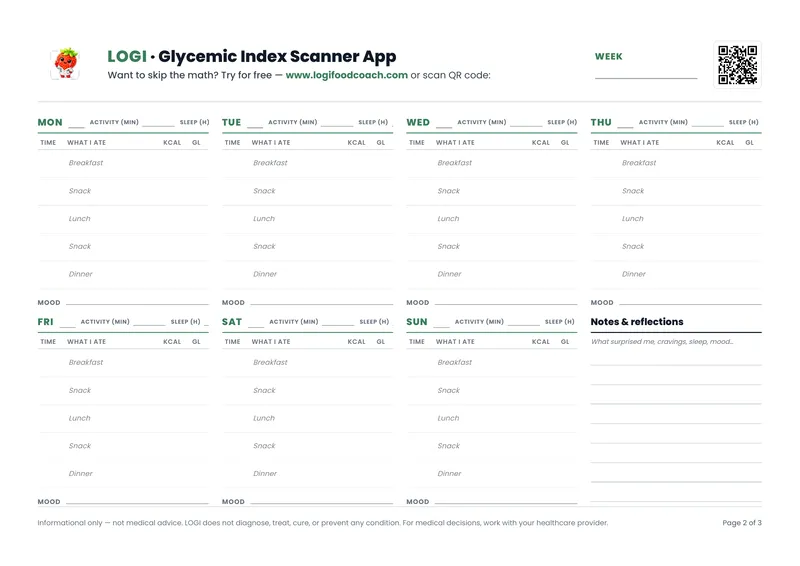
Free PDF — 3 pages
Your Weekly Food Journal
Track meals, glycemic load & mood. Spot patterns in 3 weeks.
No spam. Unsubscribe anytime.