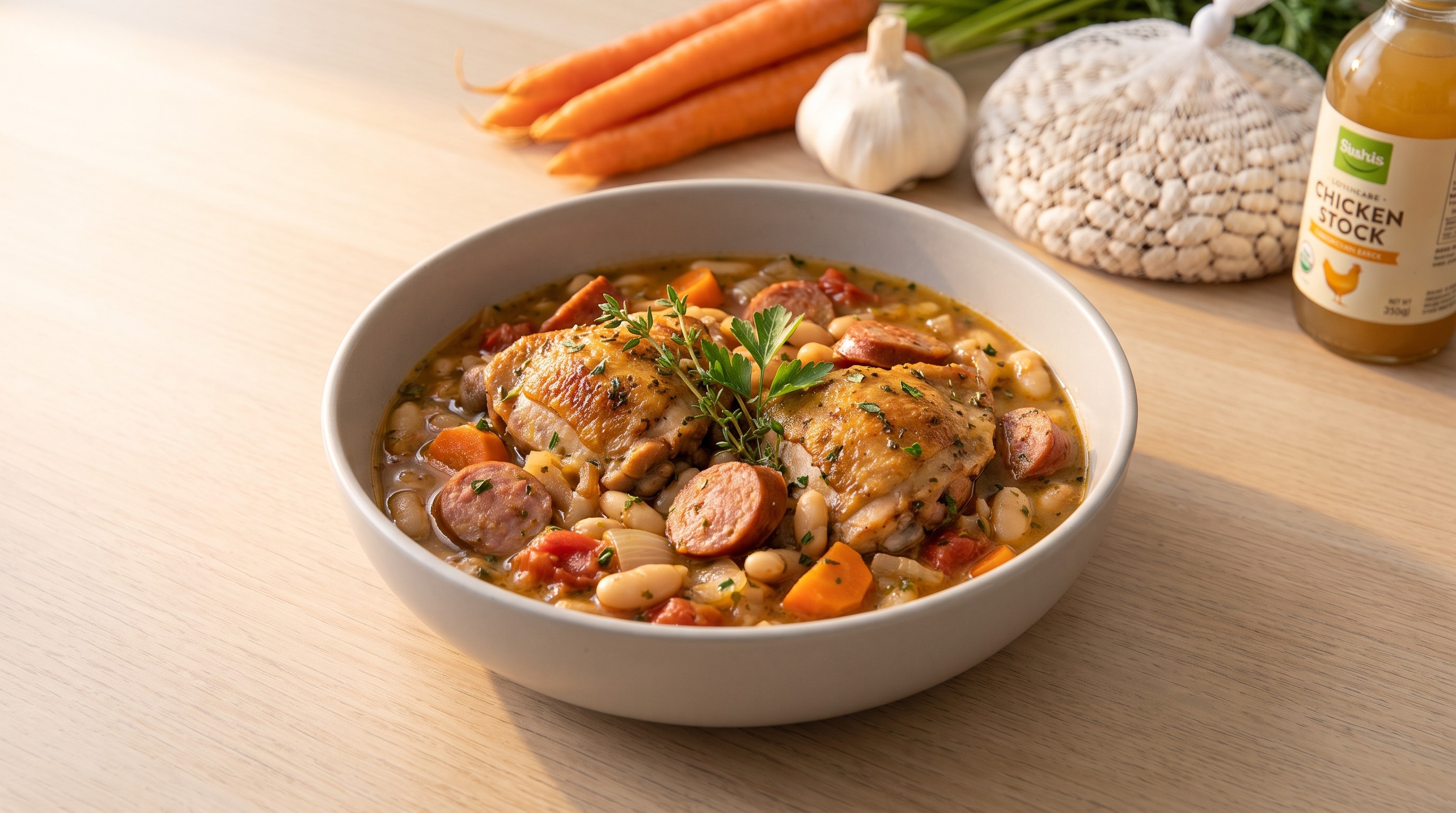
Low-GI Cassoulet — French White Bean Stew Without the Blood Sugar Spike
A rustic French cassoulet built on low-GI white beans, chicken thighs, and pork sausage — hearty comfort food that keeps blood sugar steady.
Cassoulet is one of the great peasant dishes of southwestern France — a slow-baked stew of beans, meat, and aromatics that rewards patience with deep, concentrated flavor. This version is naturally well-suited to a low-glycemic approach because its foundation is white beans, which have a GI of just 31–39 depending on variety. Cannellini and navy beans are rich in soluble fiber and resistant starch, both of which slow glucose absorption and promote a gentle, sustained energy release rather than a sharp spike.
The protein-rich combination of bone-in chicken thighs and coarse-ground pork sausage further blunts any glycemic response by slowing gastric emptying. Meanwhile, the aromatic base of onion, carrot, garlic, and crushed tomatoes adds layers of flavor without adding significant carbohydrate load. The long, slow bake in a low oven transforms everything into a thick, almost creamy stew where the beans absorb the savory stock and tomato.
For optimal blood sugar management, serve this cassoulet as your main evening meal and begin with a small side salad dressed in vinegar or lemon juice — the acetic acid has been shown to reduce post-meal glucose by up to 30%. The high fiber and protein content of this dish also makes it an excellent choice for sustained satiety, helping to prevent late-night snacking. Leftovers reheat beautifully and may actually have a lower glycemic impact the next day, as cooling and reheating increases the resistant starch content of the beans.
Blood Sugar Impact
Very low blood sugar impact expected. The combination of high-fiber cannellini beans, protein-rich chicken thighs, and a low glycemic load of 7.5 should produce a gentle, sustained rise in blood glucose with stable energy for 4-5 hours.
Blood Sugar Tips
- ✓ Eat the protein and vegetables first before the beans to further blunt any glucose response.
- ✓ Enjoy a 10-15 minute walk after the meal to enhance glucose uptake by muscles.
- ✓ Avoid pairing with high-GI sides like white bread or white rice — choose a small green salad or sourdough instead.
🥗 Ingredients
- 250 g White bean
- 4 pcs Chicken thigh
- 200 g Pork sausage
- 1 pcs Yellow onion
- 3 pcs Garlic
- 2 pcs Carrot
- 400 g Crushed tomato
- 500 ml Chicken stock
- 2 pcs Thyme
- 1 pcs Bay leaf
- 1 tbsp Olive oil
- 1 tsp Salt
- 0.5 tsp Black pepper
- 8.8 oz White bean
- 4 pcs Chicken thigh
- 7.1 oz Pork sausage
- 1 pcs Yellow onion
- 3 pcs Garlic
- 2 pcs Carrot
- 14.1 oz Crushed tomato
- 2.1 cups Chicken stock
- 2 pcs Thyme
- 1 pcs Bay leaf
- 1 tbsp Olive oil
- 1 tsp Salt
- 0.5 tsp Black pepper
👨🍳 Instructions
- 1
If starting with dried beans, drain off the soaking liquid, cover with plenty of fresh water, and simmer gently for about 45 minutes until the beans are just tender but still hold their shape. Set aside 200ml of the starchy cooking water — it will thicken the cassoulet beautifully later. If using canned beans, simply drain and rinse them and skip ahead.
- 2
Preheat the oven to 160°C (320°F). Blot the chicken thighs thoroughly with paper towels and season generously with salt and pepper on both sides. Heat the olive oil in a large, heavy, oven-safe pot or Dutch oven over medium-high heat. Place the chicken thighs skin-side down and cook without moving for 5–6 minutes until the skin turns deep golden and releases easily from the pot. Flip and sear the other side for 2 minutes, then transfer to a plate.
- 3
Using the rendered chicken fat already in the pot, brown the sausages whole over medium-high heat, turning occasionally, for 3–4 minutes per side until they develop a rich crust. Transfer them to the plate alongside the chicken.
- 4
Reduce the heat to medium. Add the diced onion and carrots with a pinch of salt and cook for 6–8 minutes, stirring occasionally, until the onion turns translucent and begins to take on a light golden colour. Stir in the minced garlic and cook for one more minute until fragrant.
- 5
Pour in the crushed tomatoes and stir well, using a wooden spoon to scrape up all the caramelized bits stuck to the bottom of the pot — this fond is packed with flavour. Add the chicken stock, thyme sprigs, bay leaf, and all the beans. If you cooked dried beans, pour in the reserved 200ml of bean water as well. Stir everything together and bring to a gentle simmer.
- 6
Slice the browned sausages into thick rounds, roughly 2cm each. Nestle the sausage pieces and the chicken thighs into the bean mixture, arranging the chicken skin-side up so it sits just above the liquid line. This exposed skin is what gives cassoulet its signature bronzed, slightly crisp top.
- 7
Transfer the uncovered pot to the oven and bake for 45 minutes. During this time, the surface will develop a darker, lightly crusted layer, the chicken skin will turn deeply bronzed, and the beans will absorb the stock and tomato into a thick, stew-like consistency. The low, slow heat ensures the beans break down just enough to create a creamy texture while many still hold their shape.
- 8
Remove from the oven and let the cassoulet rest for 10 minutes — this allows the stew to settle and thicken slightly further. Spoon into wide, warmed bowls, giving each serving one chicken thigh, two to three rounds of sausage, and a generous ladle of the bean stew. For the best blood sugar response, start with a small green salad dressed with vinegar before eating the cassoulet, and eat the beans and vegetables before the meat.
📊 Nutrition Per Serving
| Per Serving | Whole Dish | |
|---|---|---|
| Calories | 574 | 2297 |
| Carbs | 26g | 102g |
| Sugars | 8g | 34g |
| Natural Sugars | 8g | 34g |
| Protein | 43g | 173g |
| Fat | 34g | 137g |
| Saturated Fat | 10g | 39g |
| Unsaturated Fat | 24g | 94g |
| Fiber | 7g | 28g |
| Soluble Fiber | 2g | 9g |
| Insoluble Fiber | 5g | 19g |
| Sodium | 1832mg | 7326mg |
Predicted Glucose Response
What if you...
Estimated model — individual responses vary. Not medical advice.
🔄 Lower GI Swaps
Many commercial pork sausages contain breadcrumbs, dextrose, or starch fillers that raise the glycemic load. Choosing sausages made without grain-based fillers or added sugars keeps the GL lower.
Carrots have a moderate-to-high GI (around 39–47 raw, higher when cooked and softened). Celery, zucchini, and turnip have lower GI values and contribute fewer blood-sugar-raising carbohydrates per serving.
Some canned crushed tomatoes contain added sugar that increases glycemic load. Using fresh tomatoes or explicitly no-sugar-added versions eliminates hidden sugars and keeps the GL minimal.
Commercial chicken stocks sometimes contain added sugars, maltodextrin, or corn-derived ingredients that can raise blood sugar. Homemade bone broth or verified sugar-free stock eliminates these hidden glycemic contributors.
🔬 The Science Behind This Recipe
Here's the science explainer:
---
Why This Cassoulet Loves Your Blood Sugar
Cannellini beans are the quiet hero of this dish. Unlike refined carbs that rush into your bloodstream, these white beans are packed with soluble fiber and resistant starch — two things that act like a slow-release mechanism for glucose. The fiber forms a gel-like barrier in your digestive tract, which means sugar trickles into your blood gradually instead of flooding it all at once. With a glycemic index of just 29, this cassoulet sits firmly in the "low" category (anything under 55 qualifies), and the glycemic load of 7.5 per serving tells you that even the total amount of carbs is modest. Remember, glycemic load accounts for portion size — so even a food with a moderate GI can be perfectly blood-sugar-friendly when you're eating a reasonable amount.
The generous protein from chicken thighs and pork sausage does more than satisfy your appetite. Protein significantly slows gastric emptying — the rate at which food leaves your stomach — which means the carbohydrates from the beans enter your bloodstream even more gradually. Fat from the chicken thighs and sausage adds a second layer of protection, further buffering the glucose response. This combination of fiber, protein, and fat is exactly what nutrition researchers call the "trifecta" for stable blood sugar.
Want to maximize the benefits? Try eating a few bites of the onion-and-garlic-rich broth and vegetables before diving into the beans — research suggests that eating fiber and protein before carbohydrates can reduce post-meal glucose spikes by up to 40%. A short 10–15 minute walk after your meal works wonders too, helping your muscles absorb glucose naturally. This cassoulet isn't just comfort food — it's a smart, satisfying meal built for steady energy.
Related recipes
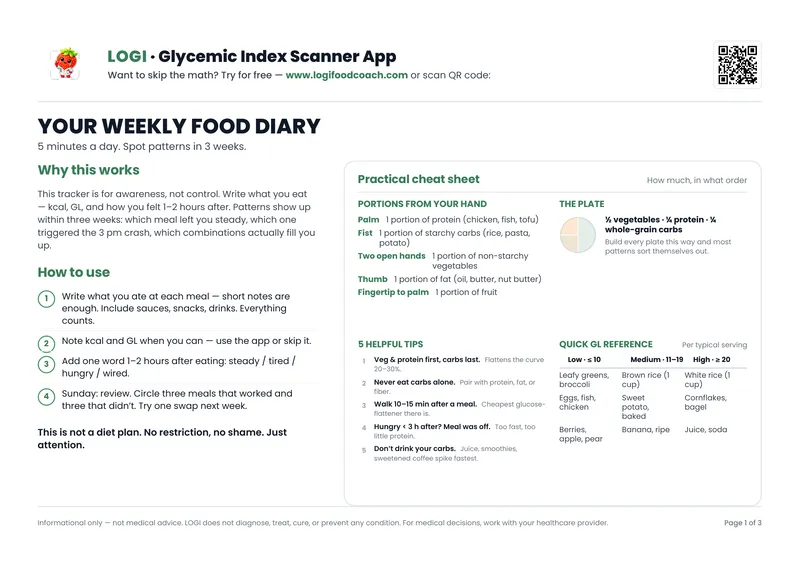
Free PDF — 3 pages
Your Weekly Food Journal
Track meals, glycemic load & mood. Spot patterns in 3 weeks.
No spam. Unsubscribe anytime.