Low-GI Bratapfel with Walnut-Cinnamon Filling
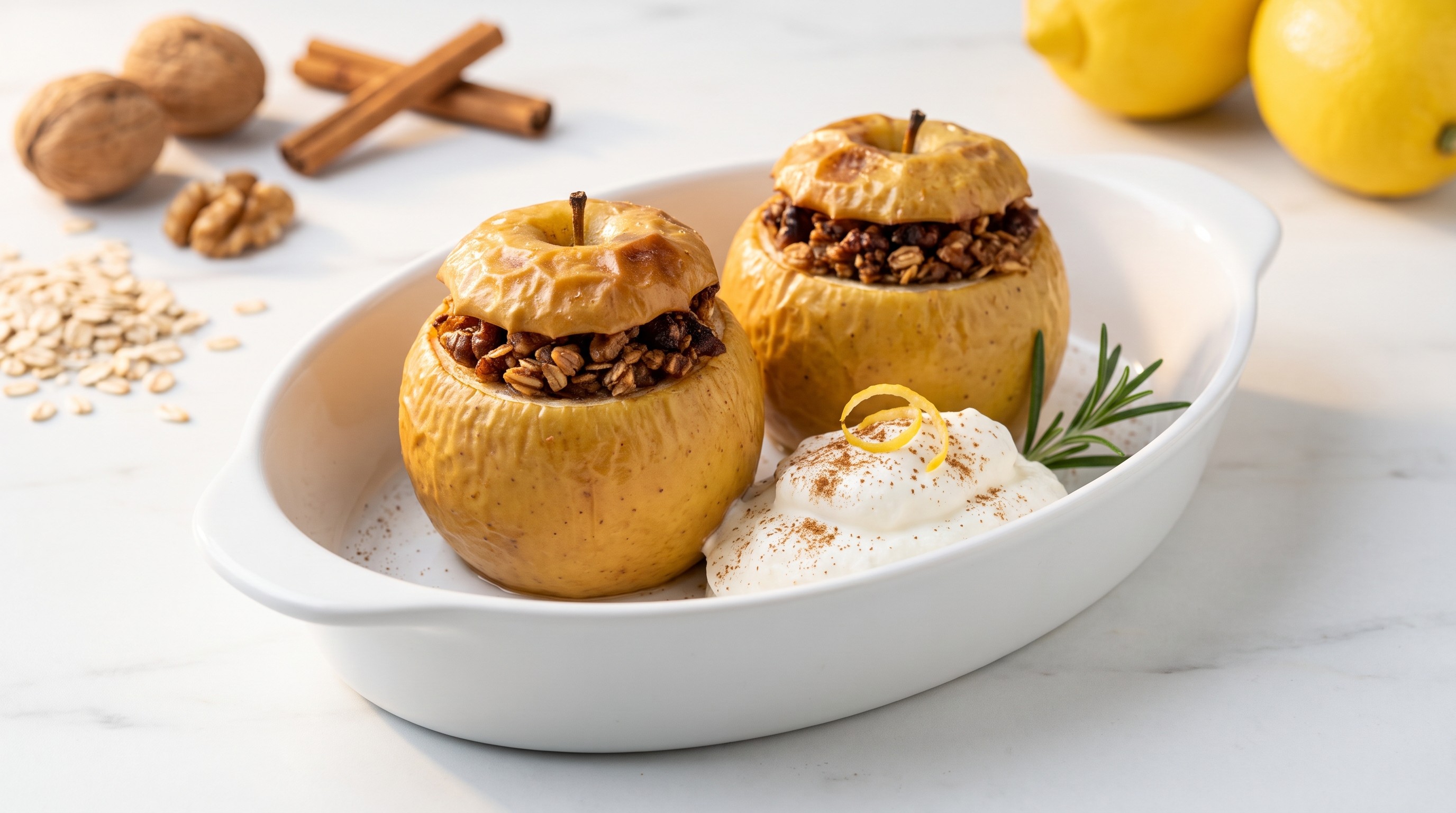
Whole baked apples stuffed with a crunchy walnut-oat-almond filling and warming cinnamon, served with cold vanilla quark — a cozy low-GI German dessert.
Bratapfel — baked apple — is one of Germany's most treasured winter desserts, filling kitchens with the warm scent of cinnamon and caramelising fruit every Advent season. Traditional versions lean on marzipan, sugar syrup, and heavy cream, all of which send blood sugar on a steep ride. This adaptation strips those away and lets the apple do the talking: tart Boskoop or Granny Smith varieties have a lower glycemic index than sweeter cultivars, and baking concentrates their natural sweetness so no added sugar is needed.
The filling is where the magic happens for blood-sugar management. Walnuts, ground almonds, and rolled oats form a trio rich in healthy fats, plant protein, and soluble fibre — three nutrients clinically shown to flatten the post-meal glucose curve. Cinnamon is more than flavour here: studies suggest it may improve insulin sensitivity, making it one of the most blood-sugar-friendly spices in the rack. A squeeze of lemon juice brightens the dish and adds a touch of acidity, which further slows gastric emptying and glucose absorption.
Served alongside cold vanilla quark — a high-protein, low-fat fresh dairy that scores around GI 30 — this dessert delivers genuine indulgence with a remarkably gentle glycemic footprint. For the best response, enjoy it at the end of a meal that included vegetables and protein: the fibre and fat you have already eaten will further buffer any glucose from the apple. Two apples, two servings, forty-five minutes — proof that managing blood sugar never has to mean giving up the desserts you love.
Blood Sugar Impact
With a low GI of 35 and a moderate glycemic load of 13.7, this baked apple dessert should produce a gentle, gradual rise in blood sugar rather than a sharp spike. The combination of fiber from the apple and oats, healthy fats from walnuts, almonds, and butter, plus protein from quark work together to slow glucose absorption, providing stable energy for 2-3 hours.
Blood Sugar Tips
- ✓ Eat the quark topping first or alongside each bite — its protein and fat slow gastric emptying and blunt the glucose response from the baked apple.
- ✓ Enjoy this as a dessert after a protein- and vegetable-rich main course rather than on an empty stomach, so the prior meal's fiber and protein buffer the sugar release.
- ✓ Take a 10-15 minute walk after eating to help your muscles absorb circulating glucose and further flatten any modest blood sugar rise.
🥗 Ingredients
- 2 pcs Tart apple
- 40 g Walnut
- 20 g Rolled oats
- 15 g Ground almond
- 20 g Unsalted butter
- 1 tsp Ground cinnamon
- 0.5 pcs Lemon zest
- 2 tsp Lemon juice
- 100 g Quark
- 0.5 tsp Vanilla extract
- 2 pcs Tart apple
- 1.4 oz Walnut
- 0.7 oz Rolled oats
- 0.5 oz Ground almond
- 0.7 oz Unsalted butter
- 1 tsp Ground cinnamon
- 0.5 pcs Lemon zest
- 2 tsp Lemon juice
- 3.5 oz Quark
- 0.5 tsp Vanilla extract
👨🍳 Instructions
- 1
Heat the oven to 180 °C (355 °F) with a rack set in the centre position. Select a small baking dish just large enough to hold both apples upright.
- 2
Wash and dry the apples. Using a melon baller or a sturdy teaspoon, hollow out the core from the top of each apple, creating a well roughly 3 cm (1¼ in) across. Be careful not to pierce the base — the apple needs to act as a cup for the filling.
- 3
Drizzle the lemon juice into the cavities and over any exposed flesh, tilting the apples so it coats the inside evenly. This prevents browning and adds a gentle acidity that helps moderate glucose absorption.
- 4
In a small mixing bowl, combine the chopped walnuts, rolled oats, ground almonds, cinnamon, lemon zest, and 10 g (about 2 tsp) of the softened butter. Work the mixture with a fork or your fingertips until the butter is evenly distributed and the dry ingredients clump together slightly.
- 5
Spoon the filling into each apple cavity, pressing it down gently with the back of the spoon to pack it tightly. Mound any remaining filling on top. Place a small piece of the remaining butter (about 5 g each) on top of each mound — it will melt during baking and help the filling turn golden.
- 6
Stand the apples upright in the baking dish and pour 3 tablespoons (45 ml) of water into the bottom of the dish. The steam will keep the apples moist and help them cook evenly without drying out.
- 7
Bake for 30–35 minutes until the apples yield easily when pierced with the tip of a knife, the skin has begun to wrinkle and split, and the nut-oat filling is deeply golden. If the filling darkens too quickly, tent loosely with aluminium foil for the final 10 minutes.
- 8
While the apples are in the oven, stir the vanilla extract into the quark until smooth. Keep refrigerated until serving — the temperature contrast between warm apple and cold quark is part of the pleasure. Serve each Bratapfel in a shallow bowl with a generous spoonful of vanilla quark alongside.
📊 Nutrition Per Serving
| Per Serving | Whole Dish | |
|---|---|---|
| Calories | 420 | 839 |
| Carbs | 40g | 79g |
| Sugars | 21g | 43g |
| Added Sugars | 0g | 0g |
| Natural Sugars | 21g | 42g |
| Protein | 13g | 25g |
| Fat | 26g | 52g |
| Saturated Fat | 7g | 14g |
| Unsaturated Fat | 19g | 37g |
| Fiber | 9g | 17g |
| Soluble Fiber | 3g | 6g |
| Insoluble Fiber | 6g | 12g |
| Sodium | 24mg | 48mg |
Predicted Glucose Response
What if you...
Estimated model — individual responses vary. Not medical advice.
🔄 Lower GI Swaps
Granny Smith apples have lower sugar content and a GI of approximately 35 compared to sweeter varieties (GI 40+). Quince and firm green pears contain less natural sugar and more pectin fiber, resulting in slower glucose release when baked and a meaningfully lower glycemic load.
Oat flakes have a moderate GI of around 55 that rises further during baking. Ground flaxseed (GI ~0), chia seeds (GI ~1), and hemp hearts (GI ~0) provide similar bulk and binding in the filling while being rich in soluble fiber and healthy fats, dramatically reducing the recipe's glycemic load.
While ground almonds are already low-GI, they contain roughly 10g net carbs per 100g. Coconut flour (~6g net carbs with very high fiber), lupin flour (~5g net carbs with 40% protein), and ground pumpkin seeds (~5g net carbs) have fewer digestible carbohydrates and more fiber or protein, further reducing the overall glycemic load of the filling.
🔬 The Science Behind This Recipe
Here's the science explainer section:
---
Why This Recipe Works for Your Blood Sugar
Baked apples might sound indulgent, but this recipe is a masterclass in blood sugar-friendly cooking. Whole apples are already one of the lower-sugar fruits thanks to their soluble fiber — particularly pectin, which forms a gel-like substance in your digestive system that slows down how quickly sugar enters your bloodstream. Baking the apple with its skin intact preserves most of that fiber, keeping the natural sugars "locked up" and released gradually rather than all at once. With a glycemic index of just 35, this dish sits firmly in the low-GI category, meaning it produces a slow, gentle rise in blood sugar rather than a sharp spike.
What makes this recipe especially clever is the filling. Walnuts and ground almonds bring a powerful combination of healthy fats, protein, and additional fiber — three nutrients that act as natural "brakes" on digestion. When you eat carbohydrates alongside fat and protein, your stomach empties more slowly, which flattens out the glucose curve. The oat flakes add another layer of slow-release energy thanks to their beta-glucan fiber, which has been well-studied for its ability to moderate blood sugar responses. Even the butter plays a role here, contributing fat that further slows carbohydrate absorption.
It's also worth noting the glycemic load of 13.7 per serving, which is more meaningful than GI alone. Glycemic load accounts for how much carbohydrate you're actually eating — not just how fast it hits your bloodstream. A GL under 10 is considered low and under 20 is moderate, so this dessert lands in a comfortable middle range. To get the most benefit, try enjoying it after a protein-rich meal rather than on an empty stomach, and a short 10-15 minute walk afterward can further help your muscles absorb the glucose. Small strategies like these can make a real difference in how your body handles even naturally sweet foods.
Related recipes
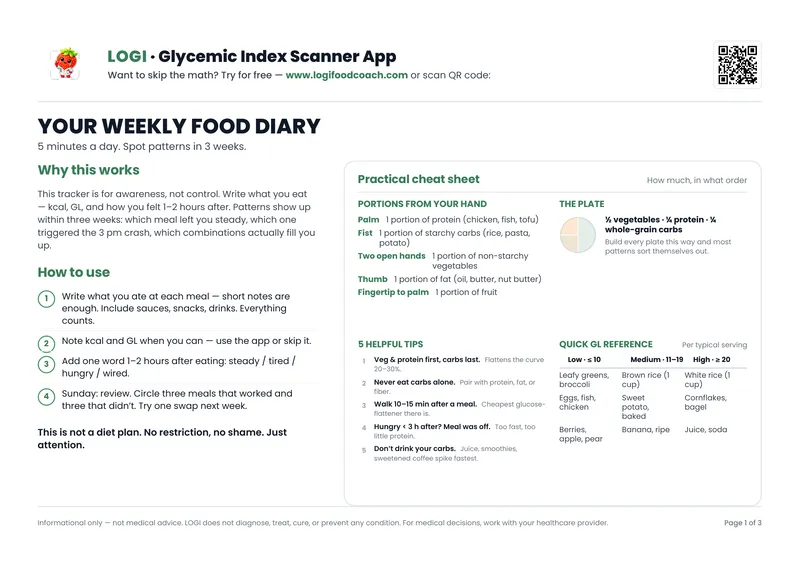
Free PDF — 3 pages
Your Weekly Food Journal
Track meals, glycemic load & mood. Spot patterns in 3 weeks.
No spam. Unsubscribe anytime.