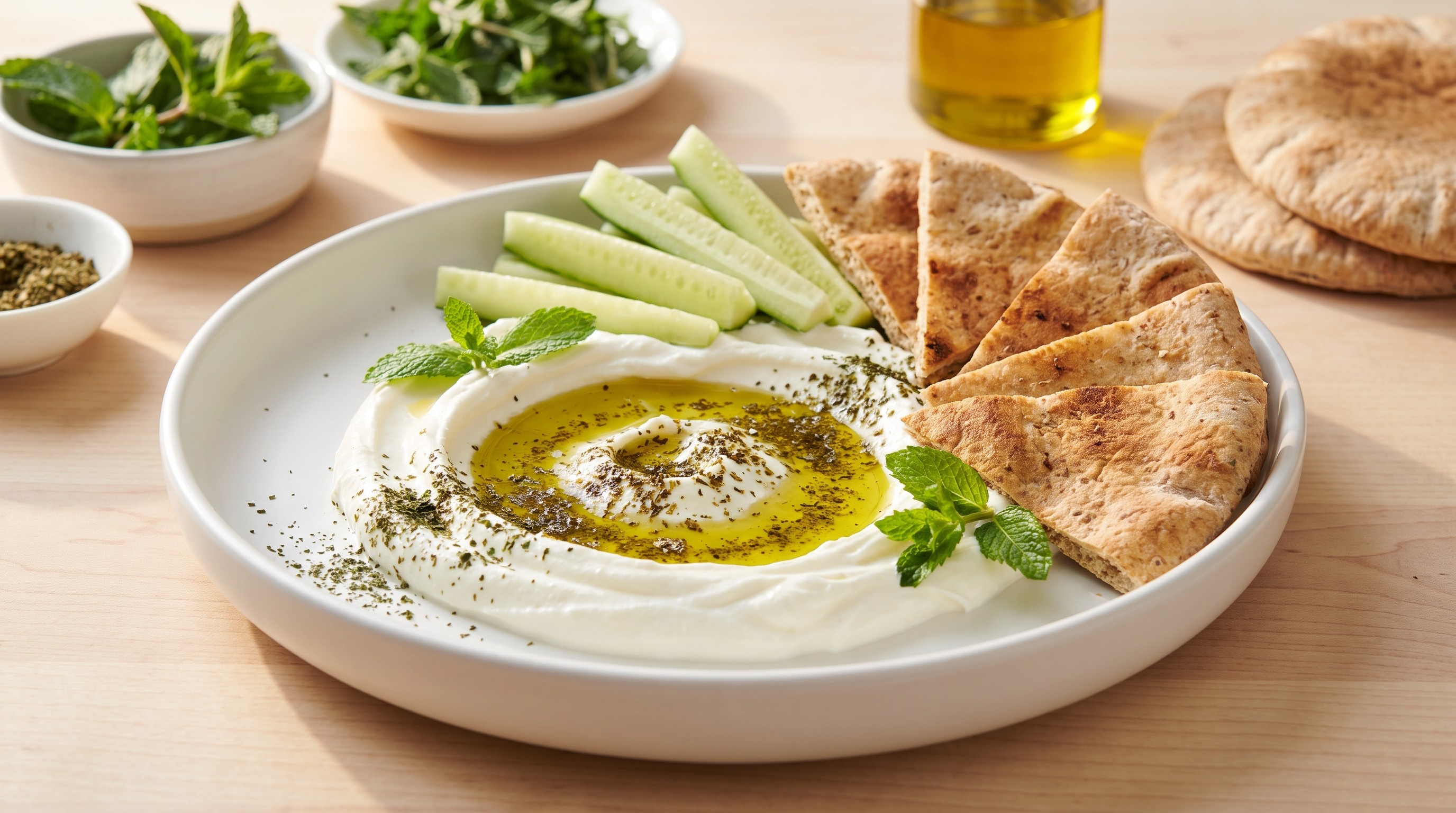
Labneh with Za'atar, Olive Oil, and Wholegrain Pita
Silky, protein-rich labneh pooled with olive oil and fragrant za'atar, served with portioned wholegrain pita — a blood-sugar-friendly Lebanese breakfast plate.
Labneh — the thick, tangy strained yogurt beloved across the Levant — is one of the most naturally blood-sugar-friendly foods you can build a meal around. With roughly eight grams of protein and ten grams of fat per hundred-gram serving, it creates virtually no glucose spike on its own. This classic Lebanese breakfast plate pairs that creamy base with a generous pour of extra-virgin olive oil and a fragrant shower of za'atar, the iconic Middle Eastern herb blend of dried thyme, sumac, and sesame seeds.
The key to keeping this dish gentle on glucose lies in smart portioning and the right bread choice. By using wholegrain pita instead of white, you benefit from intact fiber that slows carbohydrate digestion, and by splitting a single round between two servings the total carb load stays modest. Cool cucumber batons add hydrating crunch and extra fiber with almost zero glycemic impact, making them the ideal dipper alongside the pita wedges.
For the best blood-sugar outcome, start with the cucumber and labneh before reaching for the pita. Eating protein and fat before carbohydrates has been shown to reduce post-meal glucose spikes significantly. This plate practically encourages that order — the labneh and cucumber are so satisfying that the pita becomes an accent rather than the main event. The entire dish comes together in under fifteen minutes with no cooking beyond a quick toast of the pita, making it an ideal weekday breakfast or light lunch.
Blood Sugar Impact
Low to moderate blood sugar impact expected. The high-fat, high-protein labneh combined with fiber from wholegrain pita and cucumber will slow glucose absorption, providing stable energy for 3-4 hours.
Blood Sugar Tips
- ✓ Eat the cucumber and labneh first before the pita to blunt the carbohydrate response.
- ✓ Keep pita to one piece and tear it into smaller portions, eating slowly to spread glucose release over time.
- ✓ Add extra olive oil generously — the healthy fats further slow gastric emptying and reduce the glycemic response of the meal.
🥗 Ingredients
- 200 g Labneh
- 2 tbsp Extra virgin olive oil
- 2 tsp Za'atar
- 1 pcs Cucumber
- 1 pcs Wholegrain pita bread
- 0.5 tsp Dried mint
- 0.25 tsp Flaky sea salt
- 7.1 oz Labneh
- 2 tbsp Extra virgin olive oil
- 2 tsp Za'atar
- 1 pcs Cucumber
- 1 pcs Wholegrain pita bread
- 0.5 tsp Dried mint
- 0.25 tsp Flaky sea salt
👨🍳 Instructions
- 1
Spoon the labneh onto a wide, shallow serving plate. Use the back of the spoon to spread it outward in a single sweeping motion, creating a shallow well in the centre.
- 2
Drizzle the extra-virgin olive oil into the well, allowing it to pool naturally and flow across the surface of the labneh.
- 3
Scatter the za'atar evenly over the oil and labneh, then sprinkle over the dried mint and finish with a pinch of flaky sea salt.
- 4
Trim the ends from the cucumber and cut it into thick batons, roughly 8 cm long and 1 cm wide — sturdy enough to scoop up labneh.
- 5
Place the wholegrain pita in a dry skillet set over medium heat. Toast for one to two minutes on each side until warmed through, pliable, and lightly charred at the edges.
- 6
Transfer the toasted pita to a cutting board and slice it into eight even wedges.
- 7
Arrange the cucumber batons and warm pita wedges alongside the dressed labneh, either on the same plate or on a small board beside it.
- 8
Serve immediately while the pita is still warm. For the gentlest blood-sugar response, dip into the labneh with the cucumber first before moving on to the pita wedges.
📊 Nutrition Per Serving
| Per Serving | Whole Dish | |
|---|---|---|
| Calories | 339 | 677 |
| Carbs | 23g | 46g |
| Sugars | 6g | 12g |
| Natural Sugars | 6g | 12g |
| Protein | 12g | 23g |
| Fat | 22g | 44g |
| Saturated Fat | 7g | 13g |
| Unsaturated Fat | 15g | 30g |
| Fiber | 3g | 6g |
| Soluble Fiber | 1g | 1g |
| Insoluble Fiber | 2g | 4g |
| Sodium | 375mg | 750mg |
Predicted Glucose Response
What if you...
Estimated model — individual responses vary. Not medical advice.
🔄 Lower GI Swaps
Wholegrain pita has a moderate glycemic index of 55–65 on its own. Almond flour flatbread or flaxseed crackers replace most of the starch with protein and healthy fats, reducing the glycemic load of the meal significantly while still providing a satisfying vehicle for scooping the labneh.
This is a functional swap rather than a direct flavor equivalent — cinnamon changes the dish's flavour profile away from traditional Lebanese seasoning but offers a well-studied blood-sugar benefit. Ceylon cinnamon has been shown to improve insulin sensitivity and slow gastric emptying. If you prefer to keep the authentic Lebanese flavour, the original dried mint is perfectly fine as it has negligible glycemic impact.
🔬 The Science Behind This Recipe
Why This Meal Is Kind to Your Blood Sugar
Labneh is essentially concentrated yogurt — most of the lactose (milk sugar) drains away with the whey during straining, leaving a thick paste that is predominantly protein and fat. Because protein and fat trigger minimal insulin response compared with carbohydrates, labneh on its own barely registers on a glucose monitor.
The extra-virgin olive oil amplifies this effect. Dietary fat slows gastric emptying — the rate at which food leaves the stomach and enters the small intestine — which means any carbohydrates eaten alongside it are absorbed more gradually. Studies show that adding olive oil to a carbohydrate-containing meal can reduce the post-meal glucose peak by up to 30 percent.
Wholegrain pita is the main source of carbohydrate in this meal, but two factors keep its impact in check. First, the intact bran and germ in wholegrain flour contain fiber that physically slows enzymatic access to the starch granules inside. Second, by splitting a single pita between two servings, the total carbohydrate load per person stays around 15–18 grams — well within the range that most people can handle without a significant spike. Note that wholegrain pita still carries a moderate glycemic index on its own (roughly 55–65), so the portioning here is deliberate and important.
Cucumber contributes negligible carbohydrate but adds volume, water, and soluble fiber, all of which support slower digestion. Za'atar contains sumac, which preliminary research suggests may have modest blood-sugar-lowering properties, though the amounts used here are too small for a therapeutic effect — consider it a pleasant bonus rather than a primary mechanism.
The suggested eating order — labneh and cucumber first, pita last — leverages a well-documented strategy called "meal sequencing." Research published in Diabetes Care found that eating protein and vegetables before carbohydrates reduced post-meal glucose by roughly 29 percent and insulin by 37 percent compared with eating carbohydrates first. This plate is naturally structured to encourage that sequence.
Related recipes
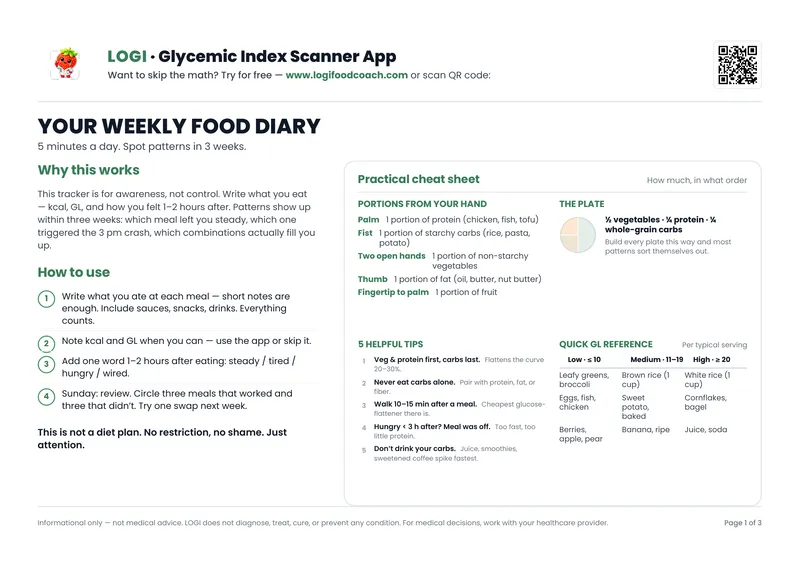
Free PDF — 3 pages
Your Weekly Food Journal
Track meals, glycemic load & mood. Spot patterns in 3 weeks.
No spam. Unsubscribe anytime.