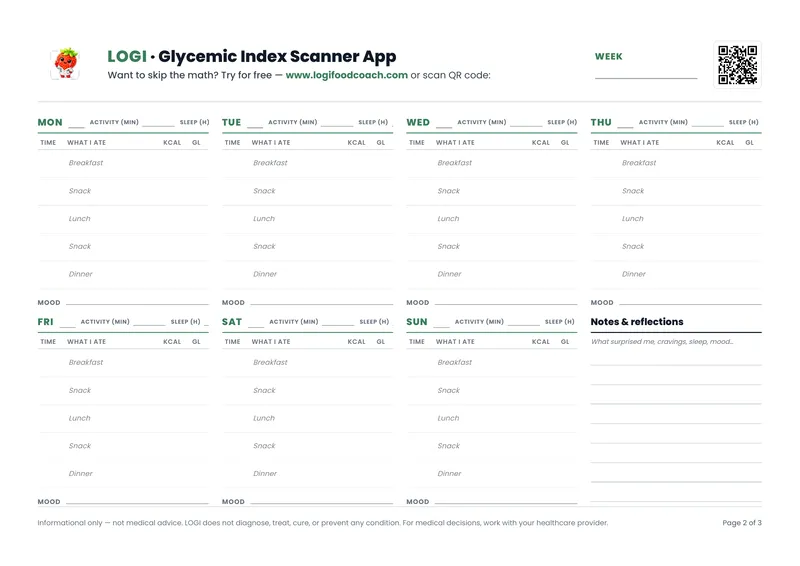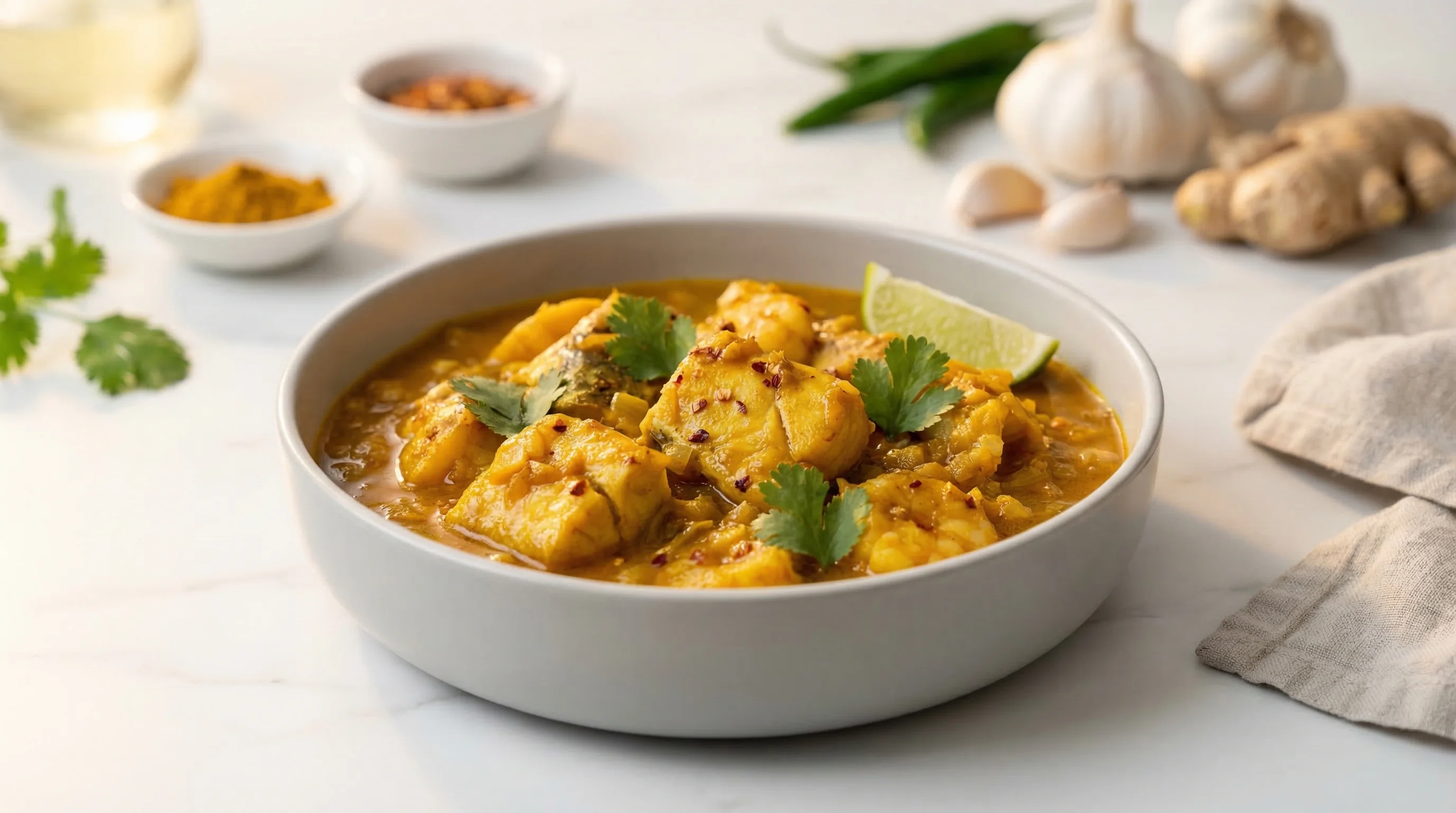
Jamaican Seafood Curry
A vibrant slow-cooked Caribbean curry featuring prawns and white fish in aromatic spices with okra and spinach—naturally low-glycemic and blood sugar friendly.
This authentic Jamaican seafood curry is a perfect example of how traditional Caribbean cooking naturally supports stable blood sugar levels. The combination of lean protein from prawns and white fish, paired with fiber-rich vegetables like okra and spinach, creates a satisfying meal that won't spike your glucose. The slow-cooking method allows the aromatic spices—curry powder, ginger, turmeric, and cinnamon—to develop deep flavors while the coconut milk adds creamy richness without excess carbohydrates.
What makes this curry particularly blood sugar friendly is its high protein content (over 30g per serving) and abundance of non-starchy vegetables. Okra is especially beneficial for glycemic control, as its soluble fiber slows glucose absorption. The cherry tomatoes provide antioxidants and a touch of natural sweetness without the glycemic load of starchy vegetables. The warming spices not only deliver authentic Jamaican flavor but also offer metabolic benefits—turmeric and cinnamon have been shown to support insulin sensitivity.
For optimal blood sugar management, serve this curry with cauliflower rice or a small portion of basmati rice (which has a lower GI than white rice). The lime juice added at the end brightens the flavors and provides vitamin C, which can help moderate the glycemic response. This is an ideal dinner option that keeps you satisfied for hours without the post-meal glucose spike common with carb-heavy curries.
Blood Sugar Impact
Minimal blood sugar impact expected due to the very low glycemic load (3.2) and low GI (18). This curry base should provide stable energy without significant glucose spikes, especially when paired with protein-rich seafood.
Blood Sugar Tips
- ✓ Serve over cauliflower rice or with a small portion of basmati rice instead of white rice to maintain the low glycemic impact
- ✓ Add plenty of non-starchy vegetables like bell peppers, spinach, or green beans to increase fiber and further slow digestion
- ✓ Consume the seafood and vegetables first before any starchy sides to leverage the protein and fat for better blood sugar control
🥗 Ingredients
- 1 pcs large onion, finely chopped
- 2 pcs garlic cloves, crushed
- 5 pcs fresh root ginger, peeled and grated
- 1 pcs medium-hot green chilli, deseeded and finely chopped
- 1 tbsp curry powder
- 0.5 tsp ground cinnamon
- 0.5 tsp dried chilli flakes
- 0.5 tsp ground turmeric
- 0.25 tsp ground cloves or allspice
- 2 tsp nigella seeds
- 1 tsp sweetener granules (optional)
- 200 g chopped tomatoes
- 200 ml reduced-fat coconut milk
- 175 g okra, sliced into 3-4 pieces on the diagonal
- 100 g baby spinach, plus extra leaves to serve
- 200 g cherry tomatoes, halved
- 200 g raw peeled prawns
- 400 g skinless and boneless firm white fish fillets, cut into large chunks
- 1 tbsp lime juice
- 1 pcs large onion, finely chopped
- 2 pcs garlic cloves, crushed
- 5 pcs fresh root ginger, peeled and grated
- 1 pcs medium-hot green chilli, deseeded and finely chopped
- 1 tbsp curry powder
- 0.5 tsp ground cinnamon
- 0.5 tsp dried chilli flakes
- 0.5 tsp ground turmeric
- 0.25 tsp ground cloves or allspice
- 2 tsp nigella seeds
- 1 tsp sweetener granules (optional)
- 7.1 oz chopped tomatoes
- 14 tbsp reduced-fat coconut milk
- 6.2 oz okra, sliced into 3-4 pieces on the diagonal
- 3.5 oz baby spinach, plus extra leaves to serve
- 7.1 oz cherry tomatoes, halved
- 7.1 oz raw peeled prawns
- 14.1 oz skinless and boneless firm white fish fillets, cut into large chunks
- 1 tbsp lime juice
👨🍳 Instructions
- 1
Place the finely chopped onion, crushed garlic, grated ginger, and chopped green chilli into your slow cooker pot. Add the curry powder, ground cinnamon, dried chilli flakes, ground turmeric, ground cloves, and nigella seeds, stirring to coat the aromatics with the spices.
- 2
Pour in the chopped tomatoes and reduced-fat coconut milk. Add the sweetener if using, and season with freshly ground black pepper. Stir everything together until well combined, ensuring the spices are evenly distributed throughout the liquid.
- 3
Cover the slow cooker with its lid and cook on the high setting for 1 hour, allowing the aromatic base to develop deep, complex flavors as the onions soften and the spices bloom in the coconut milk.
- 4
After the first hour, add the sliced okra pieces to the curry base, stirring gently to incorporate. Cover again and continue cooking on high for an additional 2 hours, during which the okra will become tender and release its beneficial soluble fiber into the sauce.
- 5
Stir in the baby spinach and halved cherry tomatoes, allowing them to wilt slightly into the curry. Add the raw peeled prawns, distributing them evenly throughout the pot.
- 6
Season the white fish chunks lightly with black pepper, then carefully arrange them on top of the curry mixture. The fish should sit on the surface rather than being stirred in, which helps it maintain its structure during cooking.
- 7
Cover the slow cooker once more and cook for a final hour on high, until the prawns have turned pink and opaque and the fish flakes easily with a fork, indicating both proteins are cooked through completely.
- 8
Just before serving, stir in the fresh lime juice to brighten all the flavors. Taste and adjust seasoning if needed. Scatter fresh baby spinach leaves over the top of each serving for a vibrant garnish and extra nutrients. Serve immediately with cauliflower rice or a small portion of basmati rice for optimal blood sugar control.
📊 Nutrition Per Serving
| Per Serving | Whole Dish | |
|---|---|---|
| Calories | 332 | 1329 |
| Carbs | 21g | 85g |
| Sugars | 7g | 30g |
| Natural Sugars | 7g | 30g |
| Protein | 35g | 140g |
| Fat | 13g | 54g |
| Saturated Fat | 11g | 43g |
| Unsaturated Fat | 2g | 9g |
| Fiber | 6g | 25g |
| Soluble Fiber | 2g | 8g |
| Insoluble Fiber | 4g | 17g |
| Sodium | 216mg | 863mg |
Predicted Glucose Response
What if you...
Estimated model — individual responses vary. Not medical advice.
🔄 Lower GI Swaps
Fresh tomatoes have a lower glycemic load than canned versions due to less concentrated sugars and no added ingredients. Roasted red peppers and zucchini provide similar texture with even lower carbohydrate content and minimal blood sugar impact.
Coconut cream contains less carbohydrate per serving than full-fat coconut milk. Light coconut milk or unsweetened almond milk with coconut extract significantly reduces the carbohydrate load while maintaining curry creaminess, resulting in lower glycemic impact.
Using leeks (green parts), shallots in smaller quantities, or scallions reduces the total carbohydrate content compared to whole onions while still providing aromatic flavor, thereby lowering the overall glycemic load of the dish.
🔬 The Science Behind This Recipe
This Jamaican Seafood Curry is an exceptional choice for blood sugar management, with a remarkably low glycemic load of just 3.2 and an estimated GI of 18. The secret lies in its foundation of aromatic vegetables and spices that naturally support stable glucose levels. Onions and garlic contain compounds like quercetin and allicin that may improve insulin sensitivity, helping your body process glucose more efficiently. The ginger adds more than just warmth—it contains gingerols that have been shown in studies to enhance glucose uptake by muscle cells, essentially helping sugar move out of your bloodstream and into where it's needed for energy.
The curry powder and green chili pepper are metabolic powerhouses in their own right. Turmeric, a key component of curry powder, contains curcumin which has anti-inflammatory properties that support healthy insulin function. Meanwhile, the capsaicin in chili peppers can temporarily boost metabolism and improve how your body handles carbohydrates after a meal. When combined with protein-rich seafood (which provides sustained energy without spiking blood sugar), these ingredients create a synergistic effect that keeps your glucose response minimal.
To maximize the blood sugar benefits of this dish, serve it over cauliflower rice instead of white rice, or pair it with a small portion of basmati rice mixed with lentils. The fiber from vegetables and protein from seafood will further slow digestion and glucose absorption. Consider eating a small salad before your curry—this "food sequencing" strategy means the fiber hits your system first, creating a protective barrier that blunts the glucose response. A 10-minute walk after your meal can also help muscles absorb glucose more effectively, keeping blood sugar stable.
Related recipes
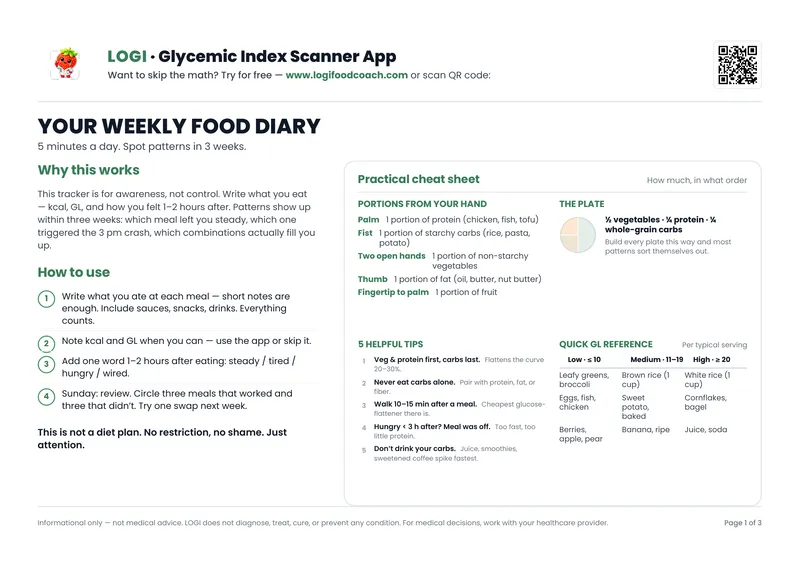
Free PDF — 3 pages
Your Weekly Food Journal
Track meals, glycemic load & mood. Spot patterns in 3 weeks.
No spam. Unsubscribe anytime.