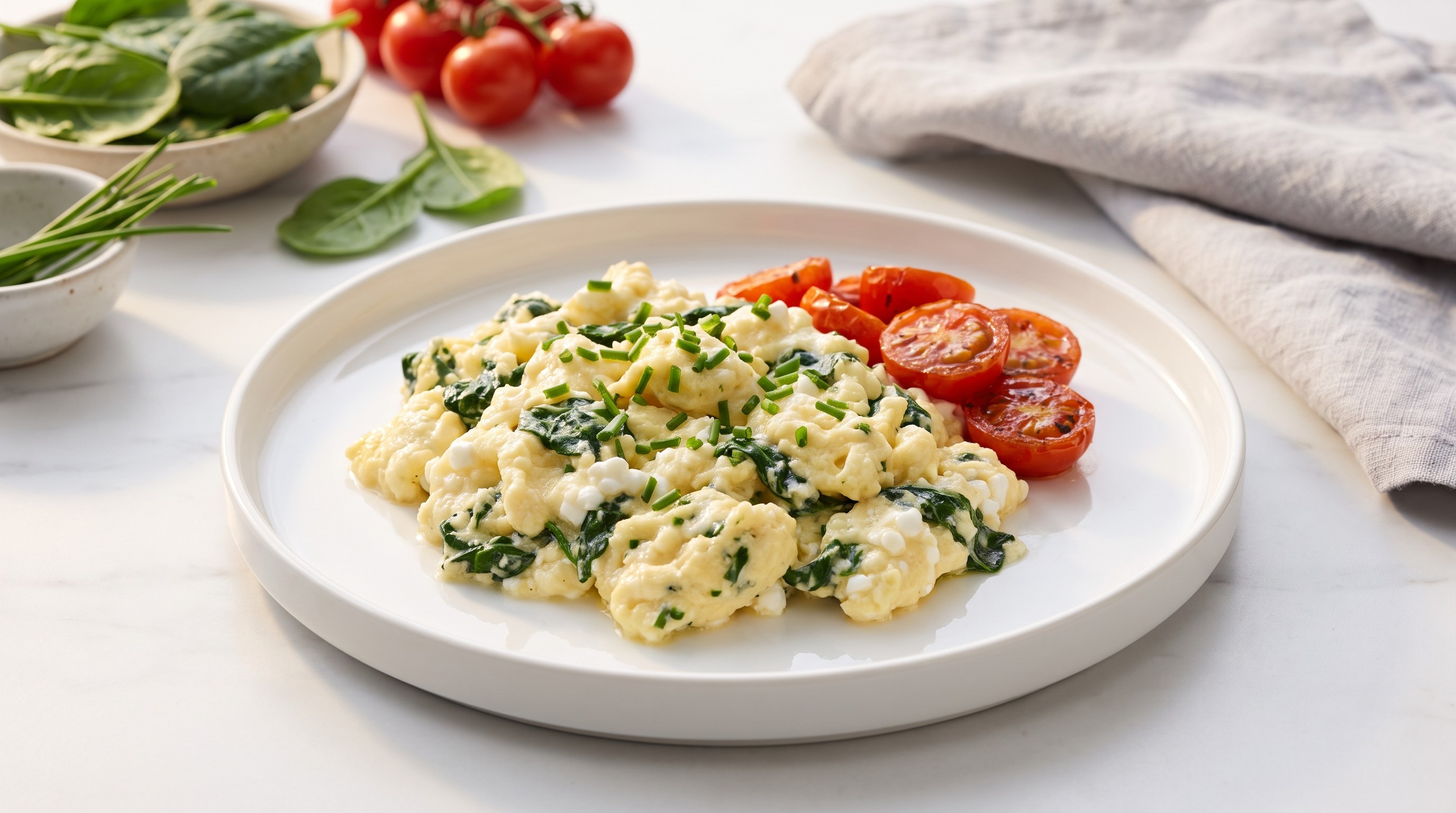
Cottage Cheese Scrambled Eggs with Spinach
Protein-packed scrambled eggs folded with creamy cottage cheese and wilted spinach — a naturally low-GI breakfast ready in just twelve minutes.
This one-pan breakfast is a masterclass in blood-sugar-friendly eating without any sacrifice in flavour. Eggs and full-fat cottage cheese form the protein-rich base, delivering roughly 30 grams of protein per serving with virtually zero glycemic impact. The healthy fats from olive oil and egg yolks slow gastric emptying, which helps keep glucose levels steady well into the afternoon. No bread, no flour, no hidden starches — just clean, satiating ingredients that work with your metabolism rather than against it.
Baby spinach wilts down in seconds, contributing magnesium and fibre — two nutrients that support insulin sensitivity. Blistered cherry tomatoes add a burst of bright acidity and lycopene, a powerful antioxidant whose bioavailability actually increases with gentle cooking in olive oil. Fresh chives scattered over the top bring a mild allium bite and a pop of colour that makes the plate feel restaurant-worthy.
For optimal blood sugar management, eat this as your first meal of the day when cortisol-driven insulin resistance is highest — the high protein and fat content blunts the dawn effect many people experience. Pair it with a small side of sliced avocado or a handful of walnuts for additional healthy fats. If you like, add a squeeze of lemon juice at the table; the acidity has been shown to further flatten the postprandial glucose curve. The key to perfect curds is patience: keep the heat at medium, fold gently, and pull the pan off while the eggs still look slightly wet. Residual heat does the rest.
Blood Sugar Impact
Very minimal blood sugar impact expected. The high protein from eggs and cottage cheese combined with fiber from spinach and tomatoes will provide stable energy for 3-4 hours with virtually no spike.
Blood Sugar Tips
- ✓ Eat the spinach and tomatoes first before the eggs to further blunt any minor glucose response.
- ✓ Pair with a slice of whole-grain sourdough bread if you need more satiety — the protein and fat in this dish will buffer the carbs.
- ✓ Take a short 10-15 minute walk after eating to enhance glucose uptake by your muscles.
🥗 Ingredients
- 1 tbsp Olive oil
- 120 g Cherry tomato
- 80 g Baby spinach
- 4 pcs Egg
- 150 g Cottage cheese
- 0.25 tsp Salt
- 1 pcs Black pepper
- 5 g Chive
- 1 tbsp Olive oil
- 4.2 oz Cherry tomato
- 2.8 oz Baby spinach
- 4 pcs Egg
- 5.3 oz Cottage cheese
- 0.25 tsp Salt
- 1 pcs Black pepper
- 0.2 oz Chive
👨🍳 Instructions
- 1
Slice the cherry tomatoes in half lengthways. Finely snip the chives with scissors or a sharp knife and set aside.
- 2
Warm the olive oil in a large non-stick frying pan over medium-high heat until it shimmers. Place the tomato halves cut-side down in a single layer and let them cook undisturbed for about 2 minutes, until the flat sides blister and pick up light char marks. Lift them onto a small plate and set aside.
- 3
Turn the heat down to medium. Add all of the baby spinach to the pan and toss it with tongs or a spatula for roughly 1 minute until it wilts and reduces in volume. Slide the wilted spinach to the edges of the pan to make room in the centre.
- 4
Crack the eggs into a mixing bowl. Spoon in the cottage cheese, salt, and black pepper. Beat lightly with a fork just until the whites and yolks are loosely combined — you want visible streaks of cottage cheese running through the mixture, not a uniform batter.
- 5
Pour the egg and cottage cheese mixture into the centre of the pan, letting it flow around the spinach. Allow it to sit undisturbed for about 20 seconds until the edges just begin to set.
- 6
Using a flexible spatula, gently fold the set edges toward the centre, tilting the pan so the uncooked egg fills the gaps. Repeat this slow folding motion every 15–20 seconds for 2 to 3 minutes, forming large, soft curds. Avoid constant stirring — patience is what keeps the texture creamy.
- 7
Remove the pan from the heat while the eggs still appear slightly glossy and underdone in places. The residual heat in the pan will carry them to the perfect consistency within 30 seconds.
- 8
Divide the scrambled eggs between two warmed plates. Arrange the blistered cherry tomatoes alongside and scatter the snipped chives generously over the top. Serve immediately.
📊 Nutrition Per Serving
| Per Serving | Whole Dish | |
|---|---|---|
| Calories | 298 | 595 |
| Carbs | 7g | 15g |
| Sugars | 4g | 9g |
| Natural Sugars | 4g | 9g |
| Protein | 23g | 45g |
| Fat | 20g | 40g |
| Saturated Fat | 5g | 11g |
| Unsaturated Fat | 15g | 30g |
| Fiber | 2g | 3g |
| Soluble Fiber | 1g | 1g |
| Insoluble Fiber | 1g | 2g |
| Sodium | 741mg | 1481mg |
Predicted Glucose Response
What if you...
Estimated model — individual responses vary. Not medical advice.
🔄 Lower GI Swaps
Cherry tomatoes have a low GI (~15) but still contribute nearly all of this recipe's glycemic load. Avocado (GI ≈ 0) adds healthy fats that further slow gastric emptying and glucose absorption. Mushrooms and zucchini have negligible carbohydrate content, bringing the overall GL even closer to zero.
Standard cottage cheese has a GI of 10–30 depending on brand and fat content. Full-fat Greek yogurt (GI ~11) offers a higher protein-to-carbohydrate ratio, which improves the insulin response. Full-fat ricotta and cream cheese have even fewer carbohydrates per serving, further reducing glycemic load.
Olive oil already has zero glycemic impact, but upgrading to unfiltered extra-virgin olive oil adds polyphenols (especially oleocanthal) shown to improve post-meal insulin sensitivity. Ghee provides butyrate, a short-chain fatty acid linked to better glucose metabolism. All three options maximize the fat-mediated slowing of carbohydrate absorption from accompanying ingredients.
🔬 The Science Behind This Recipe
Why This Recipe Works for Your Blood Sugar
This dish is a masterclass in blood sugar-friendly eating, and it starts with what's *not* on the plate: refined carbs. Eggs and cottage cheese form the protein-rich backbone here, and protein is one of the most powerful tools for keeping your glucose steady. When you eat protein, your body digests it slowly, releasing energy gradually rather than flooding your bloodstream all at once. Cottage cheese is especially clever — it's packed with casein protein, which digests even more slowly than most proteins, giving you a long, gentle energy curve instead of a sharp spike and crash. Paired with the healthy fats in olive oil, which further slow digestion, this combination acts like a natural brake on glucose absorption.
Then there's spinach, the quiet hero. Leafy greens are rich in fiber and virtually carb-free, which means they add volume and nutrition without nudging your blood sugar at all. Fiber also slows the movement of food through your digestive system, giving your body more time to process everything evenly. If you're building this meal as part of a larger breakfast, here's a practical tip: eat the spinach and tomatoes first, then the eggs and cottage cheese. Research suggests that eating vegetables before other foods can reduce post-meal glucose spikes by up to 30 percent.
With a glycemic load of just 1.8 per serving, this recipe scores remarkably low — anything under 10 is considered gentle on blood sugar. Remember, glycemic load accounts for both the *type* and the *amount* of carbohydrates you're eating, making it far more useful than glycemic index alone. A fifteen-minute walk after eating can further smooth out your glucose response, helping your muscles absorb that energy efficiently. This is the kind of meal that keeps you full, focused, and steady all morning long.
Related recipes
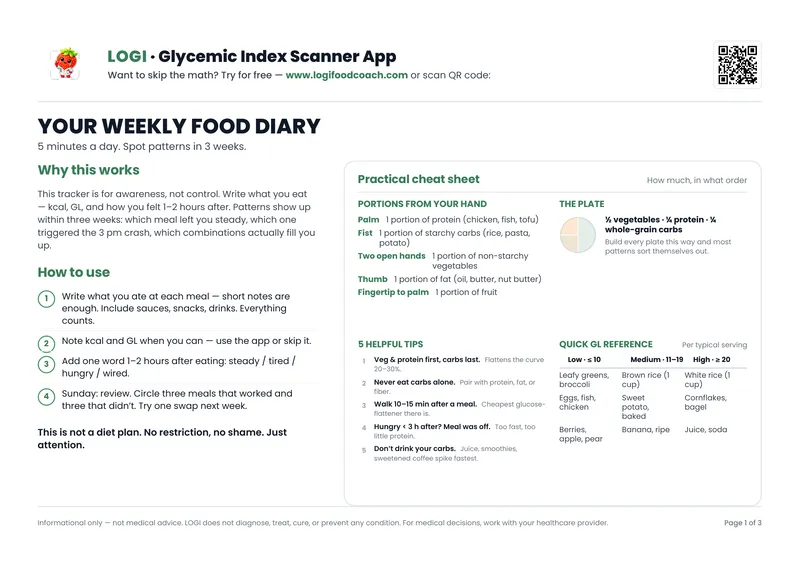
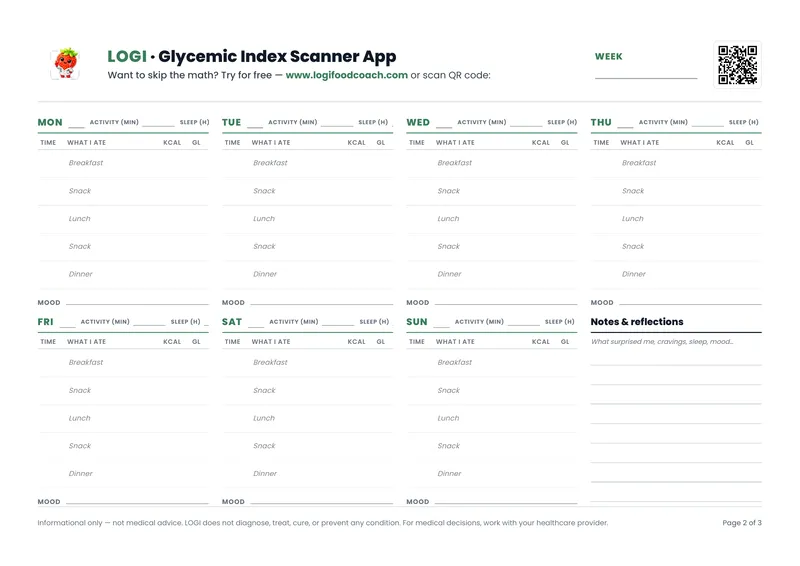
Free PDF — 3 pages
Your Weekly Food Journal
Track meals, glycemic load & mood. Spot patterns in 3 weeks.
No spam. Unsubscribe anytime.