Boerenomelet (Dutch Farmer's Omelette with Spring Vegetables)
A hearty Dutch farmer's omelette packed with asparagus and leek — high in protein, rich in fiber, and naturally low-glycemic for steady energy.
The boerenomelet is a beloved Dutch farmhouse classic — a thick, generous omelette stuffed with whatever vegetables the season offers. This spring rendition pairs tender asparagus tips with sweet, softened leek and a shower of fresh chives, creating a dish that is as vibrant on the plate as it is gentle on your blood sugar. With a glycemic load close to zero, it is one of the most blood-sugar-friendly breakfasts you can make.
Eggs are a cornerstone of low-glycemic eating. They contain virtually no carbohydrates, yet deliver high-quality protein and healthy fats that slow gastric emptying and promote sustained satiety. The vegetables in this omelette — asparagus and leek — contribute soluble fiber that further buffers any glucose response from the small amount of milk used in the batter. Asparagus is also a natural source of chromium, a trace mineral involved in insulin signaling.
For the best blood sugar outcome, serve this omelette alongside a small salad dressed with extra-virgin olive oil and vinegar. The acetic acid in vinegar has been shown to reduce post-meal glucose spikes by up to 30%. If you eat bread on the side, choose a dense, whole-grain sourdough and eat the omelette first — protein and fat before carbohydrates is one of the simplest strategies for flattening your glucose curve. This recipe is ready in under twenty minutes, making it ideal for weekday mornings or a light weekend lunch.
Blood Sugar Impact
Very minimal blood sugar impact expected. With a glycemic load of just 1.0 and a GI of 17, this protein-and-fat-rich omelette with fibrous vegetables will produce a negligible glucose response and provide stable energy for 3-4 hours.
Blood Sugar Tips
- ✓ Eat the asparagus and leeks first before the egg to further blunt any minor glucose response through the fiber-first approach.
- ✓ Pair this omelette with a small side salad dressed in olive oil and vinegar to add extra fiber and healthy fats, extending satiety.
- ✓ Avoid pairing with high-GI sides like white toast or juice—opt for whole-grain bread or fresh fruit instead to keep the overall meal low-glycemic.
🥗 Ingredients
- 4 pcs Egg
- 30 ml Whole milk
- 80 g Leek
- 80 g Asparagus tip
- 1 tsp Olive oil
- 1 tsp Unsalted butter
- 2 tbsp Chive
- 1 tsp Salt
- 4 pcs Egg
- 2 tbsp Whole milk
- 2.8 oz Leek
- 2.8 oz Asparagus tip
- 1 tsp Olive oil
- 1 tsp Unsalted butter
- 2 tbsp Chive
- 1 tsp Salt
👨🍳 Instructions
- 1
Prepare the vegetables: trim the leek and slice the white and pale green parts into thin half-moons (about 80g). Cut the asparagus tips into 3cm pieces. Finely chop the chives and set half aside for finishing.
- 2
Crack the eggs into a mixing bowl. Add the milk, half of the chopped chives, a pinch of salt, and several grinds of black pepper. Whisk briskly until the mixture is fully combined and slightly frothy — about 30 seconds.
- 3
Place a 24cm non-stick frying pan over medium heat. Add the olive oil and butter and let the butter melt and begin to foam gently.
- 4
Add the sliced leek to the pan and cook, stirring occasionally, for about 3 minutes until it has softened and turned translucent. The leek should not take on any colour.
- 5
Scatter the asparagus pieces into the pan and cook for a further 2 minutes, turning them once or twice, until they are just tender and bright green. The vegetables should still have a slight bite.
- 6
Spread the vegetables in an even layer across the base of the pan. Pour the egg mixture over them and tilt the pan gently so the egg flows into every gap. Let it settle without stirring.
- 7
Reduce the heat to medium-low and cook undisturbed for 3 to 4 minutes. The edges should set firmly while the centre remains slightly wobbly — this residual heat will finish cooking the top once folded.
- 8
Using a wide spatula, fold the omelette in half and slide it onto warmed plates. Scatter the reserved chives over the top and serve immediately. For the best blood sugar response, eat the omelette before any bread or starchy side.
📊 Nutrition Per Serving
| Per Serving | Whole Dish | |
|---|---|---|
| Calories | 214 | 428 |
| Carbs | 6g | 12g |
| Sugars | 4g | 8g |
| Natural Sugars | 4g | 8g |
| Protein | 15g | 29g |
| Fat | 15g | 30g |
| Saturated Fat | 5g | 10g |
| Unsaturated Fat | 10g | 20g |
| Fiber | 2g | 3g |
| Soluble Fiber | 0g | 1g |
| Insoluble Fiber | 1g | 2g |
| Sodium | 1321mg | 2641mg |
Predicted Glucose Response
What if you...
Estimated model — individual responses vary. Not medical advice.
🔄 Lower GI Swaps
Whole milk contains lactose, a natural sugar that contributes to glycemic load. Unsweetened plant-based milks or water reduce the sugar content and lower the overall glycemic impact of the omelette.
While butter has a negligible GI, replacing it with oils rich in monounsaturated fats like extra virgin olive oil or avocado oil can help slow gastric emptying and improve post-meal blood sugar response.
Leeks have a moderate carbohydrate content. Spinach, kale, and zucchini are very low in carbohydrates with a GI near zero, resulting in a lower glycemic load per serving.
🔬 The Science Behind This Recipe
Here's the science explainer section:
---
Why This Recipe Works for Blood Sugar
This Dutch Farmer's Omelette is a naturally blood sugar-friendly meal, and the science behind it starts with what's *not* on the plate: refined carbohydrates. Eggs are the star here, and they contain virtually zero carbohydrates while delivering high-quality protein and healthy fats. When you eat protein and fat together, your body digests the meal more slowly, releasing energy gradually rather than flooding your bloodstream with glucose all at once. The olive oil amplifies this effect — dietary fat acts like a natural brake on digestion, keeping you satisfied longer and helping to smooth out any post-meal blood sugar curve.
The spring vegetables in this omelette — leeks and asparagus — bring their own blood sugar benefits. Both are low in digestible carbohydrates and rich in fiber, which slows the absorption of any sugars present in the meal. Asparagus in particular is remarkably low on the glycemic index and provides chromium, a mineral that supports your body's ability to use insulin effectively. Leeks belong to the allium family and contribute prebiotic fiber that feeds beneficial gut bacteria, which emerging research links to improved metabolic health over time.
With a glycemic load of just 1.0 per serving and an estimated GI of 17, this recipe sits firmly in the "low" category on both scales. Remember, glycemic load accounts for the *amount* of carbohydrate in a realistic portion — not just how fast it raises blood sugar. To maximize the benefits, try eating your vegetables first before the egg, and consider a short 10-15 minute walk after your meal. Even gentle movement helps your muscles absorb glucose from the bloodstream, keeping your energy levels steady throughout the morning.
Related recipes
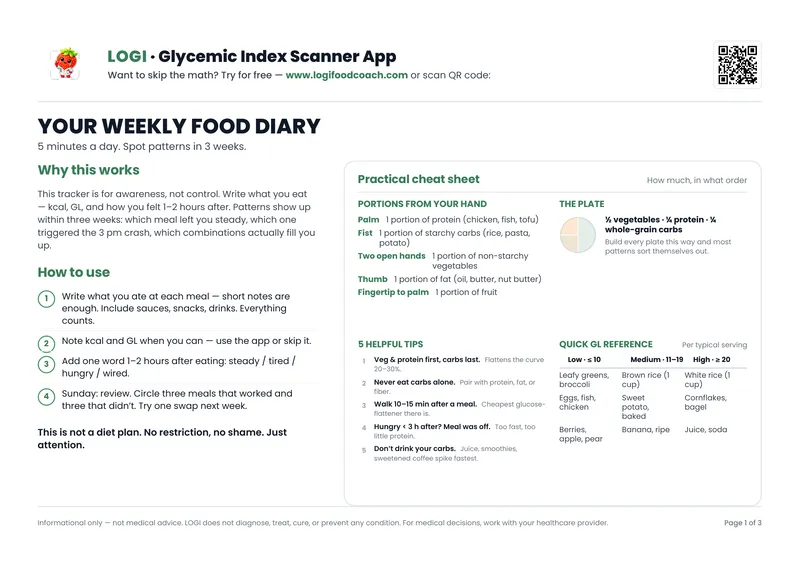
Free PDF — 3 pages
Your Weekly Food Journal
Track meals, glycemic load & mood. Spot patterns in 3 weeks.
No spam. Unsubscribe anytime.