Corn Glycemic Index: Why Corn on the Cob, Cornflour and Cornflakes Are Three Different Foods
Search for the glycemic index of corn and you will find numbers scattered from the high forties to the low eighties, published in reputable places, all describing something called “corn”. None of them is wrong. They are measuring different foods.
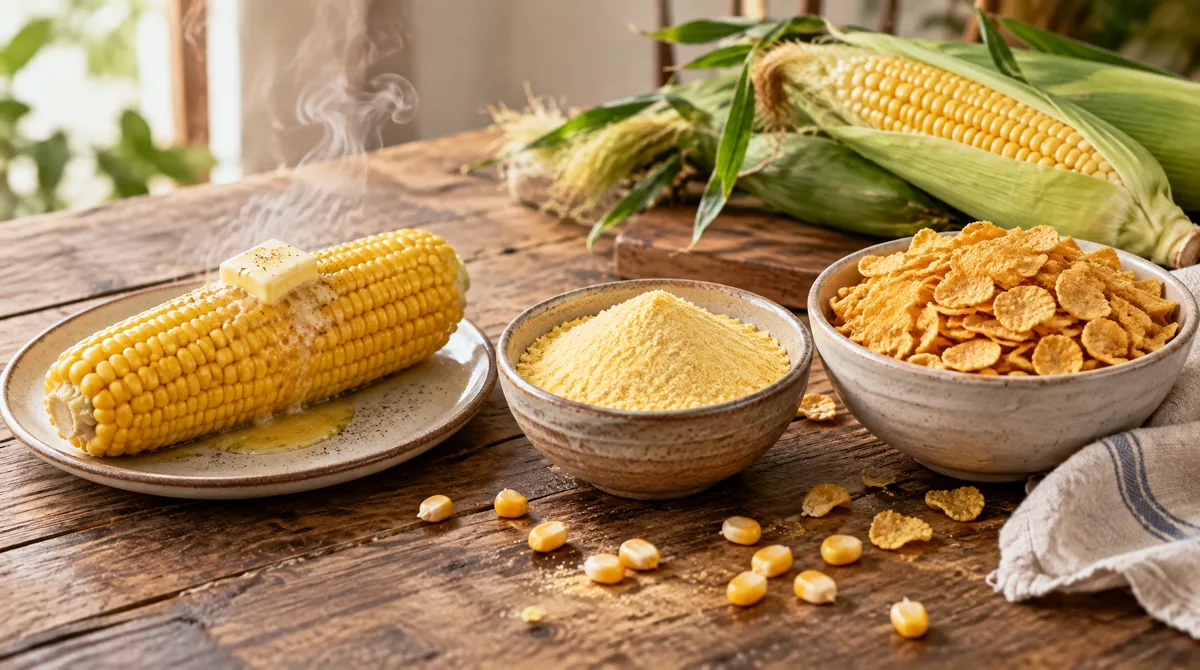
Corn is the clearest case in the whole glycemic-index literature of a single ingredient whose metabolic behaviour is determined by processing rather than by the plant. A cob of sweet corn and a bowl of cornflakes come from the same crop and belong in different columns of the chart. If you have been trying to work out whether corn is “allowed”, the question has no answer until you say which corn.
Why one crop produces such a wide range
The glycemic index measures how quickly a food’s available carbohydrate raises blood glucose, against pure glucose at 100. Two things about a starchy food drive that number: how much the starch has been physically broken open, and how much intact structure — cell walls, fibre, moisture — still surrounds it.
A whole corn kernel is a well-defended package. Its starch sits inside cell walls, behind a tough outer pericarp that survives cooking and, famously, digestion. Enzymes have to work to get at it. Grind that kernel into flour and you have removed every one of those defences at once: the starch is exposed, the surface area is enormous, and digestion is fast.
That is the entire explanation for corn’s spread. The plant did not change. The barrier did.
What the published values actually say
Reported values vary between datasets and between samples, and corn varies more than most foods because ripeness, variety and cooking time all shift the starch. Treating any single figure as exact would be a mistake. The bands, however, are consistent across sources:
| Form of corn | Typical published GI band | Why it sits there |
|---|---|---|
| Sweet corn on the cob, boiled | low-to-mid 50s | Intact kernels, high water content, fibre and cell walls still in place |
| Canned or frozen sweet corn | around 45–55 | Similar structure; canning softens but does not grind |
| Popcorn | roughly 55–65 | Kernel is blown open, but the fragment structure stays coarse |
| Polenta / cornmeal porridge | roughly 65–70 | Ground, then cooked in water — starch fully gelatinised |
| Corn flour / maize flour products | high, often 70s–80s | Finely milled; nothing left to slow digestion |
| Cornflakes | roughly 75–85 | Milled, cooked, rolled and toasted — among the highest GI foods measured |
Read down that column and you are watching the same starch lose its packaging one step at a time.
Two entries deserve a note. Popcorn surprises people who expect an airy snack to behave like a cracker; the kernel explodes but does not pulverise, and what is left is a coarse, high-volume food with a fair amount of fibre. Cornflakes surprise people in the other direction — a breakfast cereal marketed on simplicity sits at the top of the corn range, higher than table sugar by index, because industrial milling and heat-processing do to starch exactly what digestion would otherwise have to do.
The portion question, which the index does not answer
The glycemic index describes speed. It says nothing about quantity, and for corn the quantity differences between forms are large.
Glycemic load — (GI × grams of available carbohydrate per serving) ÷ 100 — puts speed and amount back together. A medium cob of sweet corn carries roughly 17–20 grams of available carbohydrate, which at a GI in the low fifties gives a glycemic load somewhere around 9–10: the top of the low band, or the bottom of the medium one, depending on the cob. A 30-gram bowl of cornflakes carries around 25 grams of carbohydrate at a GI in the high seventies, landing near 20 — the high band, from a portion that looks smaller and satisfies less.
That comparison is the practical core of this article. A whole cob of corn and a modest bowl of cornflakes deliver roughly comparable carbohydrate, and meaningfully different glucose responses, and the cob is also the one with the fibre, the volume, and the chewing.
Grilled or barbecued corn — the form searched for most in French-speaking markets — behaves essentially like boiled corn on the cob. Dry heat browns the surface and concentrates flavour, but it neither grinds the kernel nor adds carbohydrate. What changes the number at a barbecue is what goes on the cob afterwards, not the grilling.
Canned corn, and the label detail worth checking
Canned sweet corn keeps its kernel structure and sits in the same band as fresh. The variable is what it is packed in.
- Packed in water or its own juices: essentially the same food as frozen or fresh.
- Packed with added sugar: common in some markets and easy to miss, since “sweetcorn” already sounds like an explanation for a sweet taste. The added sugar goes straight onto the carbohydrate total.
- Creamed corn: a different product. It contains a starch-thickened sauce and often added sugar, and neither belongs in the whole-kernel band.
Drain and rinse canned corn if the packing liquid is syrupy, and read the carbohydrate line rather than the front of the tin. On a per-portion basis the difference between plain and sweetened canned corn is usually a few grams — small in isolation, and not small if corn is a daily staple.
Corn flour is where the real jump happens
The largest single search demand around corn’s glycemic index is not about the vegetable at all — it is about the flour, in several languages at once. It deserves a direct answer.
Finely milled corn flour and maize flour produce high glycemic responses, and there is no realistic preparation that changes this much. The starch is already exposed; cooking gelatinises it further. Arepas, tortillas made from fine maize flour, cornbread, thickened sauces, and instant maize porridges all inherit that behaviour. Coarser stone-ground meals and nixtamalised masa are somewhat gentler than the finest flours, but the direction of travel is the same.
This is not an argument for eliminating a staple that anchors entire cuisines. It is an argument for treating maize flour the way you would treat wheat flour rather than the way you would treat a vegetable, which is how many glycemic-index charts implicitly invite you to treat anything filed under “corn”:
- Build the meal so the flour is not alone. Beans, eggs, cheese, avocado, meat and vegetables alongside a maize-flour staple change the response of the meal substantially.
- Watch portion drift. Flour-based foods are easy to eat quickly and rarely self-limit the way a cob does.
- Prefer coarser grinds and whole-kernel preparations when the dish allows it.
Cooling, reheating and resistant starch
Cooked and cooled starch partially reorganises into resistant starch, which behaves more like fibre than like carbohydrate — it is fermented in the large intestine rather than digested quickly in the small. Cooked corn, polenta left to set, and corn-based dishes eaten cold or reheated after chilling all gain some resistant starch this way.
The honest framing: the effect is real and reproducible, and it is modest. It shifts a food a little down its band. It does not move corn flour into the vegetable column, and any advice that presents cooling as a way to neutralise a high-GI food is overselling a small effect. Cold polenta is slightly better behaved than hot polenta from the same pot; it is not a different food.
Practical guidance
- Prefer the kernel to the flour whenever the meal allows the substitution. That single choice accounts for most of the range in this article.
- A cob, or roughly 100–150 grams of kernels, is a sensible portion to think of as one starch serving — not as a free vegetable. Corn is a grain that is eaten like a vegetable, and portion intuition tends to follow the vegetable.
- Treat cornflakes as a high-glycemic food, whatever the health framing on the box. If breakfast cereal is the habit, adding protein and fat to the bowl — yoghurt, nuts, seeds — changes the response more than switching cereal brands.
- Popcorn is a reasonable snack at a plain-air-popped, sensible volume. What usually turns it into a problem is the sugar or caramel coating, not the corn.
- Check the tin. Added sugar in canned corn is common and quiet.
- If you use a continuous glucose monitor, corn is one of the most instructive foods to test, precisely because the same crop in five preparations should give you five distinguishable curves. Few foods demonstrate the processing effect so clearly on your own data.
The bigger picture
Corn is the food that best exposes what a glycemic-index chart cannot do. A chart is a list of names, and “corn” is not a food — it is a raw material that reaches the plate in forms with genuinely different metabolic behaviour. A single row on a table cannot hold that, so charts either pick one form and mislead you about the others, or list several and leave you to work out which one is in your kitchen.
The generalisation is worth carrying beyond corn, because the same trap catches oats, rice, potatoes and wheat: the glycemic index of a plant food is mostly a statement about how far that food has been processed from its whole form, and only secondarily about the plant. When two versions of the same ingredient sit in different bands, the processing is doing the work.
Once that is clear, the question stops being “is corn high or low GI” and becomes something answerable — how intact is the starch in front of me, how much of it is on the plate, and what else is in the meal.
Working out which form of a staple you are actually eating, and what a portion of it contributes, is tedious to do by hand for every meal. Logi scans a photo of the plate and estimates the glycemic load of the whole meal — the corn, the beans beside it, and everything else — so the distinction between the cob and the flour shows up as a number rather than as a guess.
This article is educational. It is not medical advice. Individual responses to any food vary widely; if you have diabetes, insulin resistance, or another metabolic condition, discuss dietary choices with your doctor or a registered dietitian.
Foods in this article
Related recipes

Golden Sweet Potato Fritters with Almond Flour and Fermented Pickles
Protein-packed fritters with reduced sweet potato, almond flour, and flaxseed create a blood-sugar friendly meal. Crispy, satisfying, and perfectly balanced.
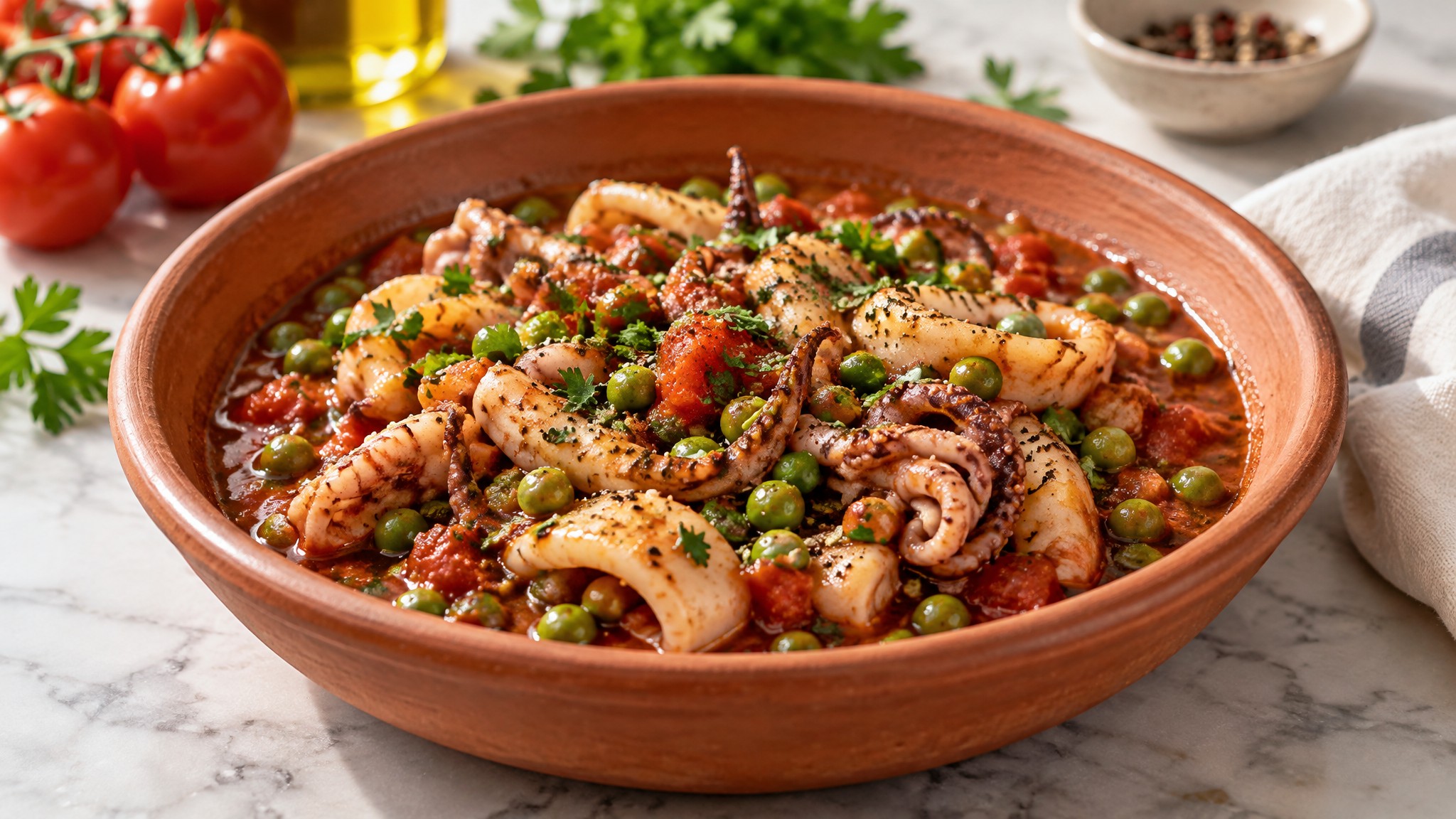
Seppie con Piselli Without the Polenta: Cuttlefish Braised with Peas and Tomato
Venetian cuttlefish braised in white wine and tomato, finished with a double helping of sweet peas — a protein-rich, polenta-free bowl that keeps blood sugar steady.
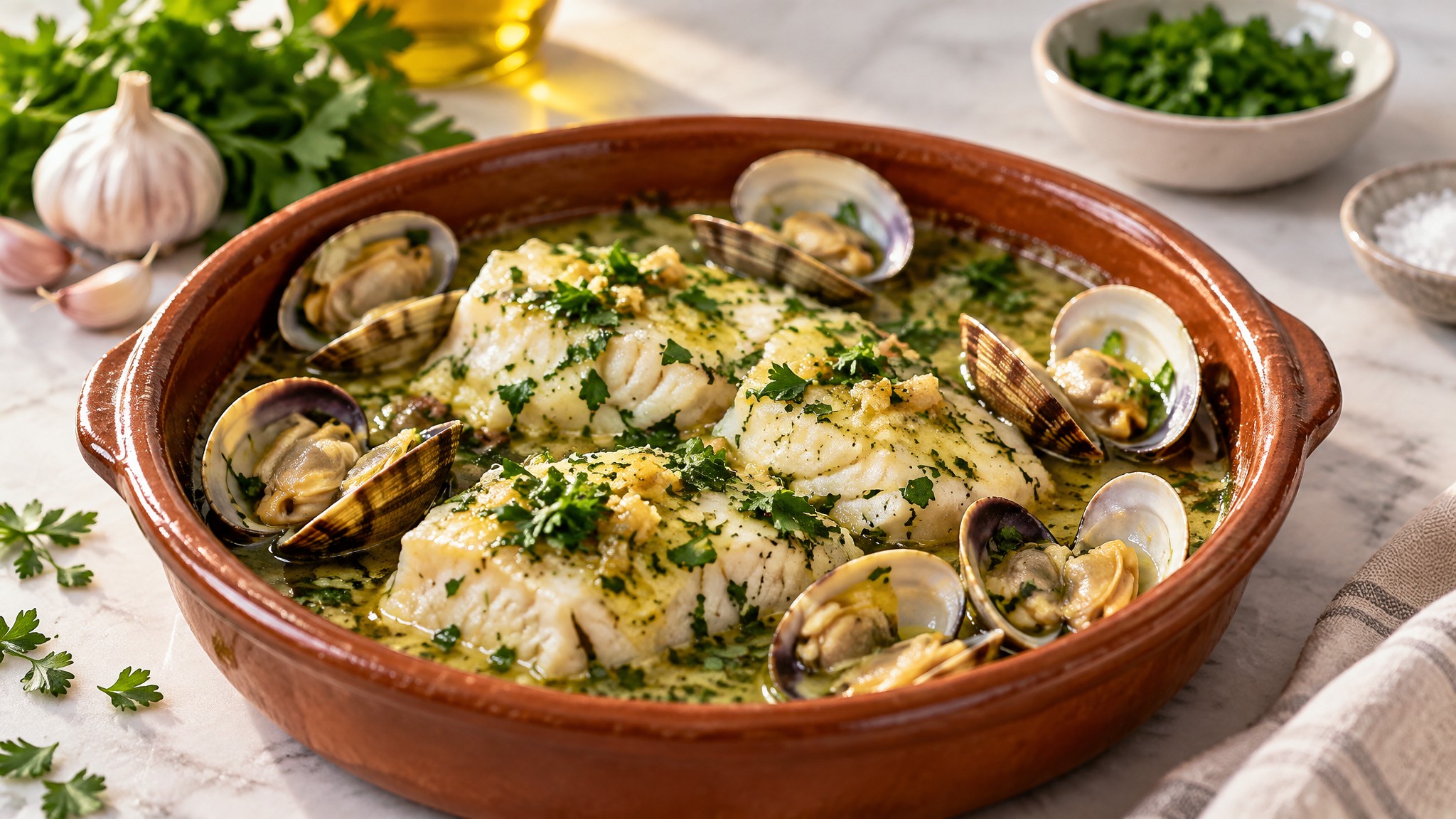
Low-GI Merluza en Salsa Verde with Clams (Flour-Free)
Basque hake and clams in a glossy garlic-parsley sauce. Instead of flour, you swirl the pan to thicken it. Lean protein and olive oil, with a very low glycemic load, ready in 22 minutes.
Take control of your blood sugar
Scan your meals, track glycemic load, and see your patterns — all in one app.
Start Free Trial →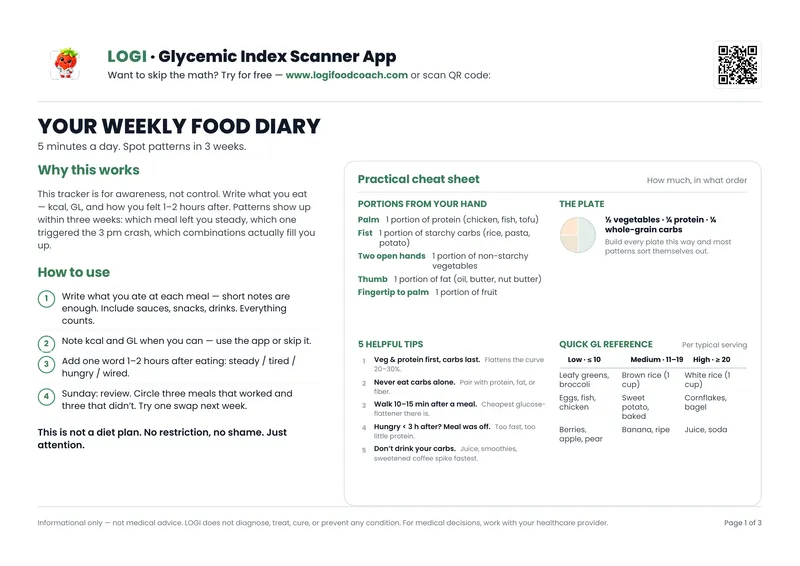
Free PDF — 3 pages
Your Weekly Food Journal
Track meals, glycemic load & mood. Spot patterns in 3 weeks.
No spam. Unsubscribe anytime.