Mexikanischer Schwarzer Bohnen Auflauf mit niedrigem glykämischen Index
Eine blutzuckerfreundliche Variante mexikanischen Komfortessens, bei der ballaststoffreiche schwarze Bohnen mit würzigen Tomaten und Käse geschichtet werden für stabile Energie ohne Blutzuckerspitzen.
Dieser herzhafte mexikanisch inspirierte Auflauf verwandelt Vorratszutaten in eine glykämisch günstige Mahlzeit, die deinen Blutzucker nicht in die Höhe schnellen lässt. Schwarze Bohnen sind ein Nährstoffwunder mit einem niedrigen glykämischen Index von etwa 30, dank ihres außergewöhnlichen Ballaststoff- und resistenten Stärkegehalts, der die Glukoseaufnahme verlangsamt. Kombiniert mit proteinreichem Käse und lycopinhaltigen Tomaten liefert dieses Gericht anhaltende Energie ohne Einbruch. Wir haben das traditionelle Schichtformat neu interpretiert, indem wir Vollkorn- oder Low-Carb-Tortillas in Maßen verwenden und stattdessen das Protein und die Ballaststoffe der Bohnen in den Mittelpunkt stellen. Die Fajita-Gewürze sorgen nicht nur für authentischen mexikanischen Geschmack, sondern enthalten Verbindungen wie Kreuzkümmel und Chili, die die Insulinsensitivität verbessern können. Jede Portion liefert etwa 15 g Ballaststoffe und 20 g Protein und schafft so ein ausgewogenes Makronährstoffprofil, das stabile Blutzuckerwerte fördert. Für optimale glykämische Kontrolle serviere diesen Auflauf mit einem großen Salat, der zuerst gegessen wird, und garniere ihn mit Avocado, griechischem Joghurt oder frischem Koriander. Die Kombination aus löslichen Ballaststoffen aus Bohnen und gesunden Fetten hilft, die glykämische Reaktion weiter zu moderieren, was dies zu einer idealen Abendessenoption für alle macht, die ihren Blutzucker kontrollieren. Jede Portion wiegt etwa 350 g und bietet eine sättigende Mahlzeit, die den Blutzucker 3-4 Stunden lang stabil hält.
Blutzucker-Auswirkung
Moderate Blutzuckerwirkung mit allmählichem Anstieg aufgrund der mittleren glykämischen Last. Die Ballaststoffe aus schwarzen Bohnen und das Protein aus Käse helfen, die Glukoseaufnahme zu verlangsamen und liefern 3-4 Stunden lang anhaltende Energie ohne scharfe Spitzen.
Blutzucker-Tipps
- ✓ Iss vor dem Auflauf einen kleinen Salat oder rohes Gemüse, um die Ballaststoffaufnahme zu erhöhen und die Kohlenhydrataufnahme zu verlangsamen
- ✓ Begrenze die Portionsgröße auf eine Portion und kombiniere sie mit zusätzlichem nicht-stärkehaltigem Gemüse wie Salat, Paprika oder Gurke
- ✓ Mache nach dem Essen einen 10-15-minütigen Spaziergang, um den Muskeln zu helfen, Glukose aufzunehmen und den Blutzuckeranstieg nach der Mahlzeit zu reduzieren
🥗 Zutaten
- 800 g schwarze Bohnen, abgetropft und abgespült
- 1.8 lb schwarze Bohnen, abgetropft und abgespült
- 1.2 oz Fajita-Gewürzmischung
- 1.8 lb gehackte Tomaten mit Chili
👨🍳 Anleitung
- 1
Heize deinen Ofen auf 180°C (160°C Umluft) vor. Fette eine 2-Liter-Auflaufform leicht mit Kochspray oder etwas Olivenöl ein, damit nichts anhaftet.
- 2
Erhitze eine große beschichtete Pfanne bei mittlerer Hitze. Gib die abgetropften schwarzen Bohnen und die zuckerfreie Fajita-Gewürzmischung hinein und rühre, um die Bohnen gleichmäßig mit den Gewürzen zu überziehen. Brate 1-2 Minuten, bis es duftet und die Gewürze ihr Aroma entfalten.
- 3
Gieße die gehackten Tomaten mit Chili ohne Zuckerzusatz zu den gewürzten Bohnen in die Pfanne. Rühre gut um, reduziere dann die Hitze auf niedrig. Lass die Mischung 10 Minuten sanft köcheln und rühre gelegentlich um, bis die Sauce leicht eindickt und sich die Aromen verbinden.
- 4
Während die Bohnenmischung köchelt, schneide jede Tortilla in der Mitte durch, um Halbkreise zu erhalten. Das erleichtert das Schichten und hilft, die Tortillas gleichmäßiger im Auflauf zu verteilen.
- 5
Beginne mit dem Zusammensetzen des Auflaufs: Verteile ein Drittel der Bohnen-Tomaten-Mischung auf dem Boden deiner vorbereiteten Auflaufform. Streue etwa 45 g geriebenen Käse über die Bohnen, dann lege Tortilla-Hälften in einer einzigen Schicht darauf, bei Bedarf leicht überlappend.
- 6
Wiederhole den Schichtvorgang noch zweimal: Bohnenmischung, Käse (45 g pro Schicht) und Tortillas. Für die letzte Schicht lege Tortilla-Hälften obenauf und bestreue sie mit dem restlichen Käse (etwa 50 g), um eine gleichmäßige Abdeckung für ein goldenes, sprudelndes Finish zu gewährleisten.
- 7
Schiebe den zusammengestellten Auflauf in den vorgeheizten Ofen und backe 15 Minuten, bis der Käse geschmolzen, golden und an den Rändern sprudelnd ist.
- 8
Nimm ihn aus dem Ofen und lass ihn 5 Minuten ruhen, bevor du servierst. Das ermöglicht den Schichten, sich leicht zu setzen, für einfacheres Portionieren. Serviere mit einem großen grünen Salat als Beilage und garniere mit Avocadoscheiben, griechischem Joghurt oder frischem Koriander für zusätzliche Nährstoffe und Blutzuckerstabilität.
📊 Nährwerte pro Portion
| Pro Portion | Gesamtes Gericht | |
|---|---|---|
| Kalorien | 665 | 2661 |
| Kohlenhydrate | 97g | 387g |
| Zucker | 9g | 36g |
| Zugesetzter Zucker | 1g | 3g |
| Natürlicher Zucker | 8g | 34g |
| Protein | 35g | 140g |
| Fett | 16g | 64g |
| Gesättigtes Fett | 8g | 31g |
| Ungesättigtes Fett | 8g | 31g |
| Ballaststoffe | 23g | 92g |
| Lösliche Ballaststoffe | 2g | 7g |
| Unlösliche Ballaststoffe | 4g | 15g |
| Natrium | 1912mg | 7648mg |
Vorhergesagte Glukosereaktion
Was wäre, wenn du...
Geschätztes Modell — individuelle Reaktionen variieren. Keine medizinische Beratung.
🔄 Niedrigere GI-Alternativen
Das Weglassen oder Reduzieren von Tortillas senkt die glykämische Last deutlich von 38,3 auf etwa 18-22, was dies zu einer noch besseren Wahl für eine strenge Blutzuckerkontrolle macht. Salatblatt-Wraps liefern praktisch keine Kohlenhydrate und fügen zusätzliche Ballaststoffe und Mikronährstoffe hinzu. Zucchinistreifen tragen zusätzliche wasserlösliche Ballaststoffe bei, die die Glukoseaufnahme weiter verlangsamen. Blumenkohl-Tortillas enthalten nur 3-4 g Netto-Kohlenhydrate im Vergleich zu 15-20 g in Vollkorn-Tortillas, was die glykämische Wirkung um mehr als die Hälfte reduziert und gleichzeitig die geschichtete Auflaufstruktur beibehält.
Während Vollfettkäse minimale glykämische Auswirkungen hat, kann die Reduzierung gesättigter Fettsäuren die Insulinsensitivität langfristig verbessern. Teilentrahmter Mozzarella liefert den gleichen Proteingehalt mit 30 % weniger gesättigten Fettsäuren. Queso Fresco bietet authentischen Geschmack mit einer bröckeligen Textur, die sich gut im Auflauf verteilt und weniger Fett als gereifte Käsesorten enthält. Hefeflocken fügen einen käsigen Umami-Geschmack mit B-Vitaminen und nur Spuren von Fett hinzu, sodass du weniger echten Käse verwenden kannst, während die Geschmackszufriedenheit erhalten bleibt. Diese Austausche erhalten den Proteingehalt, der hilft, den Blutzucker zu stabilisieren, während sie die allgemeine Stoffwechselgesundheit unterstützen.
Viele Dosentomatenprodukte enthalten zugesetzten Zucker, der die glykämische Last um 5-8 Punkte pro Portion erhöhen kann. Die Verwendung von Sorten ohne Zuckerzusatz oder frischen Tomaten eliminiert diese versteckte Quelle schnell wirkender Kohlenhydrate. Frische Jalapeños liefern Capsaicin, das nachweislich die Insulinsensitivität verbessert und die Thermogenese erhöht. Feuergeröstete Tomaten bieten tieferen Geschmack ohne zugesetzten Zucker, während frische Chilischoten zusätzliches Capsaicin und Vitamin C beisteuern. Diese Austausche erhalten das authentische mexikanische Geschmacksprofil und stellen gleichzeitig sicher, dass die glykämische Last im moderaten Bereich bleibt und unerwartete Blutzuckerspitzen durch versteckte Zucker verhindert werden.
Kommerzielle Fajita-Gewürzmischungen enthalten oft zugesetzten Zucker, Maltodextrin oder Maisstärke als Füllstoffe, die 3-5 g schnell wirkende Kohlenhydrate pro Portion hinzufügen und die glykämische Last unerwartet erhöhen können. Eine eigene Mischung herzustellen gewährleistet vollständige Kontrolle über die Zutaten und eliminiert diese versteckten Zucker. Kreuzkümmel enthält Verbindungen, die den Glukosestoffwechsel und die Insulinsensitivität verbessern können. Paprika liefert Antioxidantien ohne den Blutzucker zu beeinflussen. Knoblauch- und Zwiebelpulver fügen Geschmackskomplexität hinzu und tragen nützliche organische Schwefelverbindungen bei. Dieser Austausch erhält das authentische mexikanische Geschmacksprofil und hält gleichzeitig die glykämische Wirkung vorhersehbar und eliminiert unnötige Kohlenhydratquellen, die Blutzuckerschwankungen verursachen könnten.
🔬 Die Wissenschaft hinter diesem Rezept
Schwarze Bohnen sind außergewöhnlich gut für das Blutzuckermanagement, da sie einen niedrigen glykämischen Index von 43 und einen hohen Gehalt an resistenter Stärke haben, die im Dünndarm nicht verdaut wird und im Dickdarm fermentiert, wobei nützliche kurzkettige Fettsäuren entstehen. Die 15 g Ballaststoffe pro Portion verlangsamen die Magenentleerung und Glukoseaufnahme, während die 20 g Protein die Freisetzung von Incretin-Hormonen auslösen, die die Insulinsekretion verbessern. Die Fajita-Gewürze enthalten bioaktive Verbindungen wie Capsaicin aus Chilischoten und Curcumin-verwandte Verbindungen aus Kreuzkümmel, die in Studien gezeigt haben, dass sie die Insulinsensitivität verbessern und Blutzuckerspitzen nach den Mahlzeiten reduzieren. Der Käse liefert Casein-Protein, das die glykämische Reaktion durch verzögerte Magenentleerung weiter moderiert. In Kombination mit dem empfohlenen Salat, der zuerst gegessen wird, bilden die zusätzlichen Ballaststoffe eine Schutzbarriere im Verdauungstrakt, die die Kohlenhydrataufnahme dämpft. Die moderate glykämische Last von 38,3 pro Portion bedeutet, dass diese Mahlzeit den Blutzucker über 3-4 Stunden allmählich anhebt, anstatt eine scharfe Spitze zu verursachen, was sie für Menschen mit Diabetes oder Insulinresistenz geeignet macht, wenn sie als Teil eines ausgewogenen Ernährungsmusters verzehrt wird.
Ähnliche Rezepte
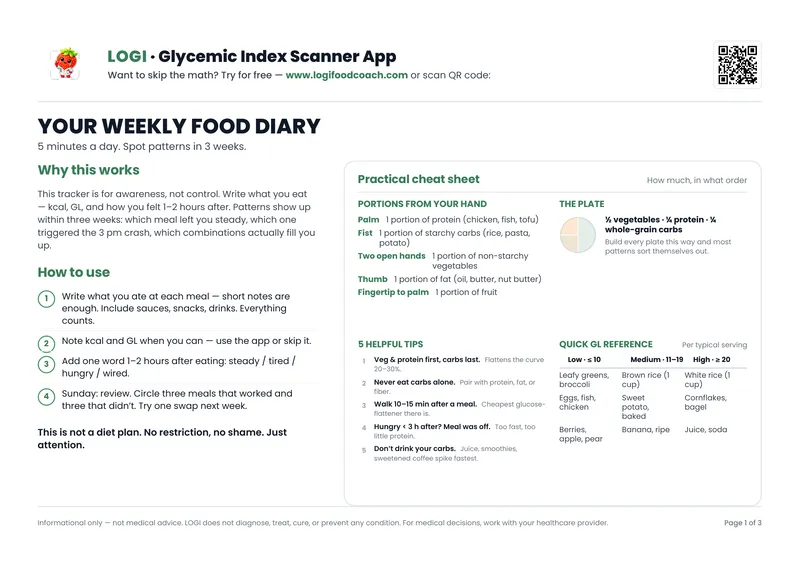
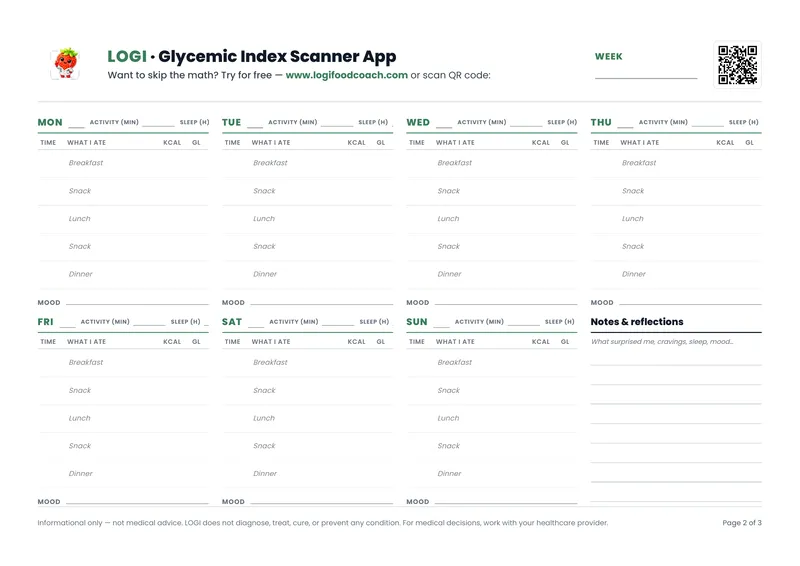
Kostenloses PDF — 3 Seiten
Dein Wochen-Ernährungstagebuch
Mahlzeiten, glykämische Last & Stimmung erfassen. Muster in 3 Wochen erkennen.
Kein Spam. Jederzeit abmeldbar.