Lactose-free greek yogurt (strained, low-fat, with probiotics)
Low GI
GL 0.6 per typical cup (150 g) · GL 0.4 per 100 g
- Very low glycemic load
- Low in healthy fats (0% fat variety)
Lactose-free greek yogurt (strained, low-fat, with probiotics) has a glycemic index of 11, the same as plain Greek yogurt (11). One typical cup (150 g) adds a glycemic load of 0.6.
Updated Jul 4, 2026 · Sources: Logi Nutrition Team (USDA-derived composition, AI-assisted) · Not medical advice · Report an error
Forms of Greek yogurt
- GI 11 · GL 1 per 100 g
 Greek yogurt
 - Greek yogurt (plain, nonfat)GI 11 · GL 0.4 per 100 g thinned with water
- GI 20 · GL 1 per 100 g chocolate
 Cocoa powder and plain greek yogurt combination
 - GI 20 · GL 1 per 100 g full fat
 Full-Fat Greek Yogurt
 - Greek yogurtGI 35 · GL 1 per 100 g sheep milk
- GI 20 · GL 1 per 100 g alfredo sauce
 Greek yogurt alfredo sauce (light)
 - GI 20 · GL 1 per 100 g frosting
 Greek yogurt frosting
 - +29 more
Logi · Manage Insulin Resistance
Lower your blood sugar through smarter food choices
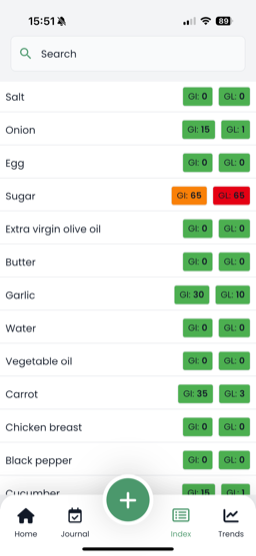
Lactose-free greek yogurt (strained, low-fat, with probiotics) is one of the 11,117 foods Logi scores when you photograph a meal — with the portion.


Nutrition Facts (per 100g)
per 100g
| Calories | 59 kcal |
| Carbohydrates | 3.6 g |
| Sugars (Total) | 3.6 g |
| Natural | 3.6 g |
| Added | 0 g |
| Fiber | 0 g |
| Soluble | 0 g |
| Insoluble | 0 g |
| Protein | 10 g |
| Fat | 0.4 g |
| Saturated | 0.1 g |
| Unsaturated | 0.3 g |
| Sodium | 36 mg |
Processing Level
Why this score?
- Very low glycemic load
- High protein content
- Low in healthy fats (0% fat variety)
- Lack of natural fiber
Allergens
Low-GI recipes on Logi Food Coach
Frequently Asked Questions
What is the glycemic index of Lactose-free greek yogurt (strained, low-fat, with probiotics)?
Lactose-free greek yogurt (strained, low-fat, with probiotics) has a glycemic index of 11 (Low). One typical cup (150 g) has a glycemic load of 0.6; per 100 g the glycemic load is 0.4.
Is Lactose-free greek yogurt (strained, low-fat, with probiotics) good for people with insulin resistance?
Lactose-free greek yogurt (strained, low-fat, with probiotics) has a low glycemic index (11), making it a good option for people with insulin resistance. It causes a slow, gradual rise in blood sugar.
Which form of Greek yogurt has the lowest glycemic load?
Lactose-free greek yogurt (strained, low-fat, with probiotics) has the lowest glycemic load of all forms of Greek yogurt in this database (0.4 per 100 g).
Check Lactose-free greek yogurt (strained, low-fat, with probiotics) in the Logi app, with your portion.