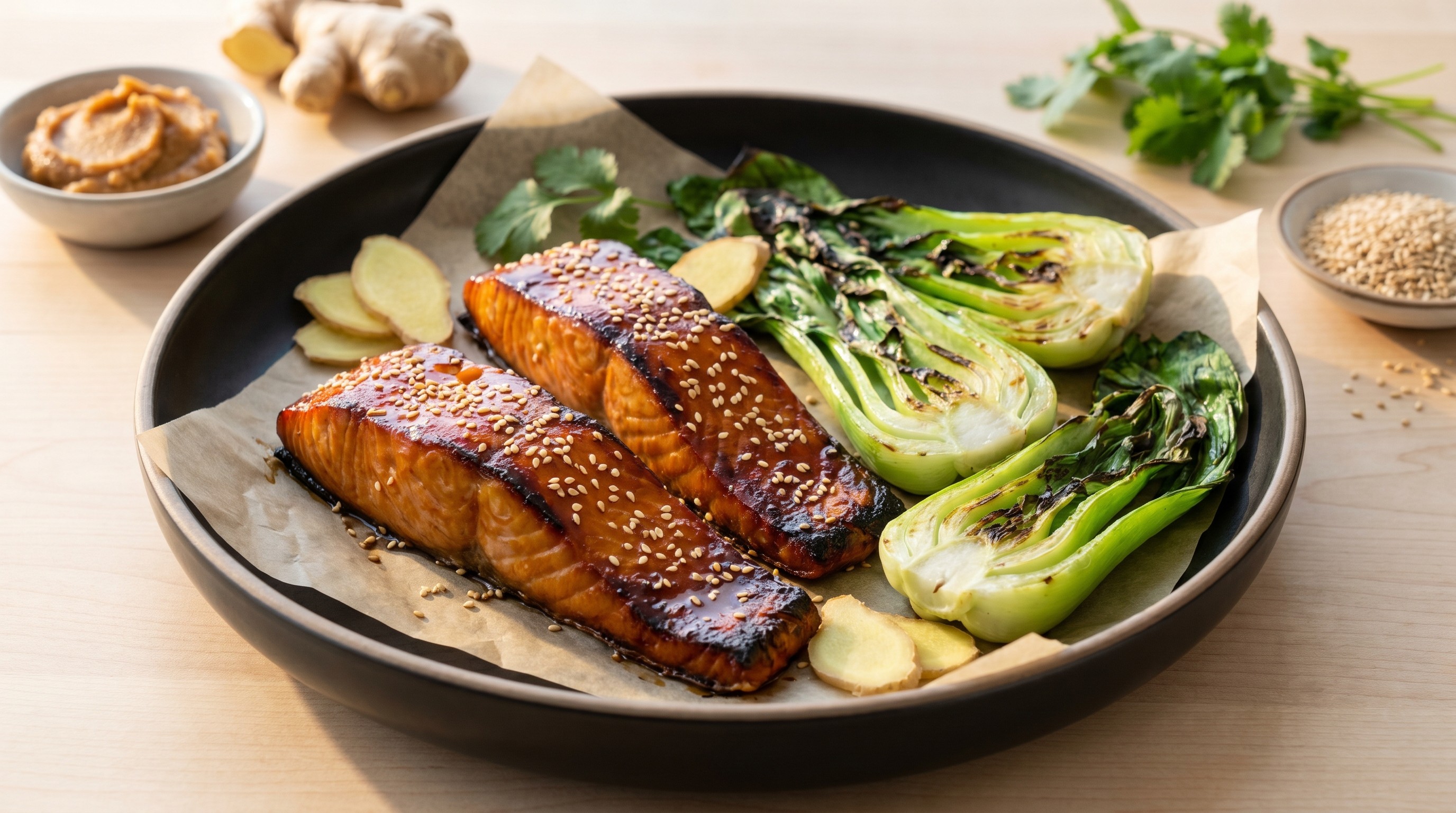
Misomarinert laks med ovnsbakt bok choy
Misolaks og brent bok choy på én plate — naturlig lav GI, rik på omega-3 og protein for stabilt blodsukker og langvarig metthet.
Denne misomarinerte laksen på én plate er en naturlig lavglykemisk kraftpakke. En tykk umamimarinade av hvit miso, tamari og fersk revet ingefær karamelliserer under høy varme og danner en lakkert skorpe over møre laksefileter fulle av omega-3. Baby bok choy stekes ved siden av, og kantene får en lett sviing som gir en behagelig bitterhet som balanserer den salt-søte marinaden. Hele måltidet er praktisk talt uten karbohydrater, noe som gjør det til et ideelt valg for alle som styrer blodsukkeret.
Fra et glykemisk perspektiv jobber hver eneste ingrediens i din favør. Laks gir protein av høy kvalitet og antiinflammatoriske omega-3-fettsyrer, begge deler bremser magetømmingen og demper blodsukkerstigninger etter måltid. Bok choy er en ekstremt lavkalori, fiberrik kålvekst rik på vitamin A, C og K. Hvit miso er riktignok fermentert fra soyabønner og korn, men brukes i så små mengder at karbohydratbidraget er ubetydelig — og selve fermenteringen kan støtte tarmhelsen og forbedre insulinfølsomheten.
For optimal blodsukkerregulering, spis bok choy først før du går videre til laksen. Fiberinnholdet i grønnsaken skaper en buffer i magen som bremser opptak av eventuelle sukkerarter fra marinaden. Kombiner retten med en liten porsjon avkjølt og oppvarmet basmatris eller blomkålris for en enda mer mettende tallerken uten å gå på akkord med dine glykemiske mål.
Blodsukkereffekt
Svært lav påvirkning på blodsukkeret forventet. Det høye innholdet av protein og sunne fettstoffer fra laks kombinert med fiberrik bok choy vil fremme stabile blodsukkernivåer i 3-4 timer, med en glykemisk belastning på bare 3,1 som indikerer ubetydelig glukoserespons.
Blodsukkertips
- ✓ Spis bok choy først før laksen for å få i deg fiber først og ytterligere dempe eventuelle mindre glukosereaksjoner.
- ✓ Ta med en 10-15 minutters gåtur etter måltidet for å forbedre insulinfølsomheten og glukoseopptaket.
- ✓ Unngå å tilsette søtede sauser eller sukkerrike tilbehør; miso-tamari-marinaden gir allerede rik umamismak uten å øke blodsukkeret.
🥗 Ingredienser
- 2 pcs Laksefilet
- 2 tbsp Hvit misopasta
- 1 tbsp Tamari
- 1 tsp Sesamolje
- 10 pcs Ingefær
- 300 g Bok choy
- 1 tbsp Solsikkeolje
- 1 tbsp Sesamfrø
- 2 pcs Laksefilet
- 2 tbsp Hvit misopasta
- 1 tbsp Tamari
- 1 tsp Sesamolje
- 10 pcs Ingefær
- 10.6 oz Bok choy
- 1 tbsp Solsikkeolje
- 1 tbsp Sesamfrø
👨🍳 Instruksjoner
- 1
Varm ovnen til 200 °C med vifte. Dekk en stor stekeplate med bakepapir og sett den til side.
- 2
Bland hvit misopasta, tamari, sesamolje og nyrevet ingefær i en liten bolle. Visp til blandingen danner en jevn, tykk glasur uten klumper.
- 3
Tørk laksefiletene grundig på alle sider med kjøkkenpapir — dette steget er viktig for at glasuren skal feste seg og karamellisere ordentlig i stedet for å dampe av.
- 4
Plasser laksefiletene med skinnsiden ned på den forberedte platen. Fordel halvparten av misoglasuren på kjøttsiden av hver filet og spre den jevnt utover med baksiden av en skje, slik at toppen og sidene dekkes.
- 5
Plasser de halverte bok choy-ene med snittsiden opp rundt laksen, og la det være litt plass mellom stykkene for luftsirkulasjon. Drypp den nøytrale oljen jevnt over bok choy og krydre med en lett klype salt.
- 6
Stek i midten av ovnen i 15–18 minutter. Laksen er ferdig når misoglasuren har karamellisert til en gyllen brun, lett blemmet skorpe og kjøttet flaker lett når du trykker forsiktig med en gaffel. Bok choy-stilkene skal være møre og bladkantene lett forkullet.
- 7
Ta platen ut av ovnen og dryss sesamfrøene over de glaserte laksefiletene mens de fortsatt er varme, slik at frøene fester seg til overflaten.
- 8
Server umiddelbart, og legg bok choy på tallerkenen først — å spise de fiberrike grønnsakene før proteinet hjelper med å bremse glukoseabsorpsjonen. For et mer solid måltid kan du servere med en liten porsjon avkjølt og oppvarmet basmatris eller blomkålris ved siden av.
📊 Ernæring per porsjon
| Per porsjon | Hele retten | |
|---|---|---|
| Kalorier | 484 | 968 |
| Karbohydrater | 10g | 19g |
| Sukker | 3g | 6g |
| Naturlig sukker | 3g | 6g |
| Protein | 39g | 77g |
| Fett | 33g | 66g |
| Mettet fett | 6g | 13g |
| Umettet fett | 27g | 54g |
| Fiber | 3g | 6g |
| Løselig fiber | 1g | 1g |
| Uløselig fiber | 2g | 3g |
| Natrium | 1165mg | 2331mg |
Forutsagt glukoserespons
Hva om du...
Estimert modell — individuelle reaksjoner varierer. Ikke medisinsk råd.
🔄 Lavere GI-alternativer
Rød og hatcho miso er fermentert lenger, noe som gir høyere proteininnhold og lavere glykemisk indeks sammenlignet med hvit miso, som inneholder mer riskoji og dermed flere enkle karbohydrater.
Kokosaminos og flytende aminos inneholder litt mindre restsukker enn noen tamarimerker, noe som bidrar til å holde den totale glykemiske belastningen så lav som mulig.
Ekstra virgin olivenolje og avokadoolje er rike på enumettede fettsyrer og polyfenoler som har vist seg å forbedre insulinfølsomheten og bremse glukoseabsorpsjonen, noe som bidrar til en mer stabil blodsukkerrespons.
🔬 Vitenskapen bak denne oppskriften
Her er vitenskapsforklaringen for denne oppskriften:
---
Hvorfor denne oppskriften fungerer for blodsukkeret
Denne misomarinerte laksen med ovnsbakt bok choy er et utmerket måltid for stabilt blodsukker, og tallene forteller historien: en glykemisk belastning på bare 3,1 per porsjon og en estimert GI på 32. Men hva betyr egentlig disse tallene? Glykemisk indeks (GI) måler hvor raskt en matvare øker blodsukkeret, mens glykemisk belastning (GL) tar hensyn til hvor *mye* karbohydrat du faktisk spiser. En GL under 10 regnes som lav — og med 3,1 registrerer denne retten knapt nok. Det er fordi oppskriften er bygget rundt protein, sunne fettstoffer og grønnsaker med lite stivelse i stedet for raffinerte karbohydrater.
Laks er helten her. Den er rik på både protein og omega-3-fettsyrer, som jobber sammen for å bremse fordøyelsen og skape en gradvis, jevn frigjøring av energi i stedet for en brå topp og fall. Når du spiser protein og fett sammen med karbohydrater — selv den lille mengden naturlig sukker i misopasta — fungerer de som en buffer som bremser hastigheten glukose kommer inn i blodet med. Sesamoljeinnholdet i marinaden legger til et ekstra lag med sunt fett som forsterker denne effekten. I mellomtiden bidrar bok choy med fiber og volum med nesten ingen karbohydratbelastning, noe som hjelper deg å føle deg mett uten å påvirke blodsukkeret i det hele tatt.
For å få mest mulig ut av dette måltidet, prøv å spise bok choy først før du går videre til laksen — forskning tyder på at det å spise grønnsaker før protein og karbohydrater kan flate ut glukoseresponsen ytterligere. En kort 10–15 minutters gåtur etter middag kan også hjelpe musklene dine med å absorbere glukose mer effektivt. Denne oppskriften er et godt eksempel på hvordan deilig, mettende mat og blodsukkervennlig kosthold ikke er motsetninger — de er naturlige partnere.
Relaterte oppskrifter
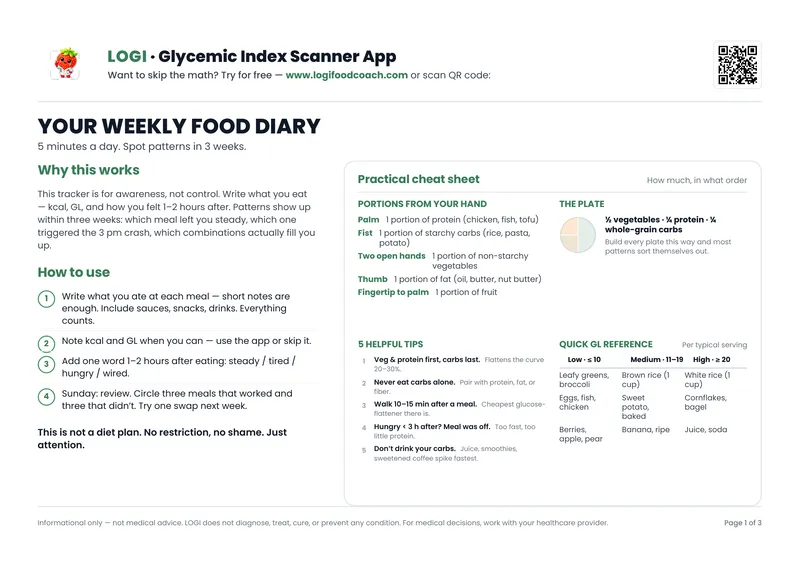
Gratis PDF — 3 sider
Din ukentlige matdagbok
Registrer måltider, glykemisk belastning og humør. Se mønstre på 3 uker.
Ingen spam. Avslutt når du vil.