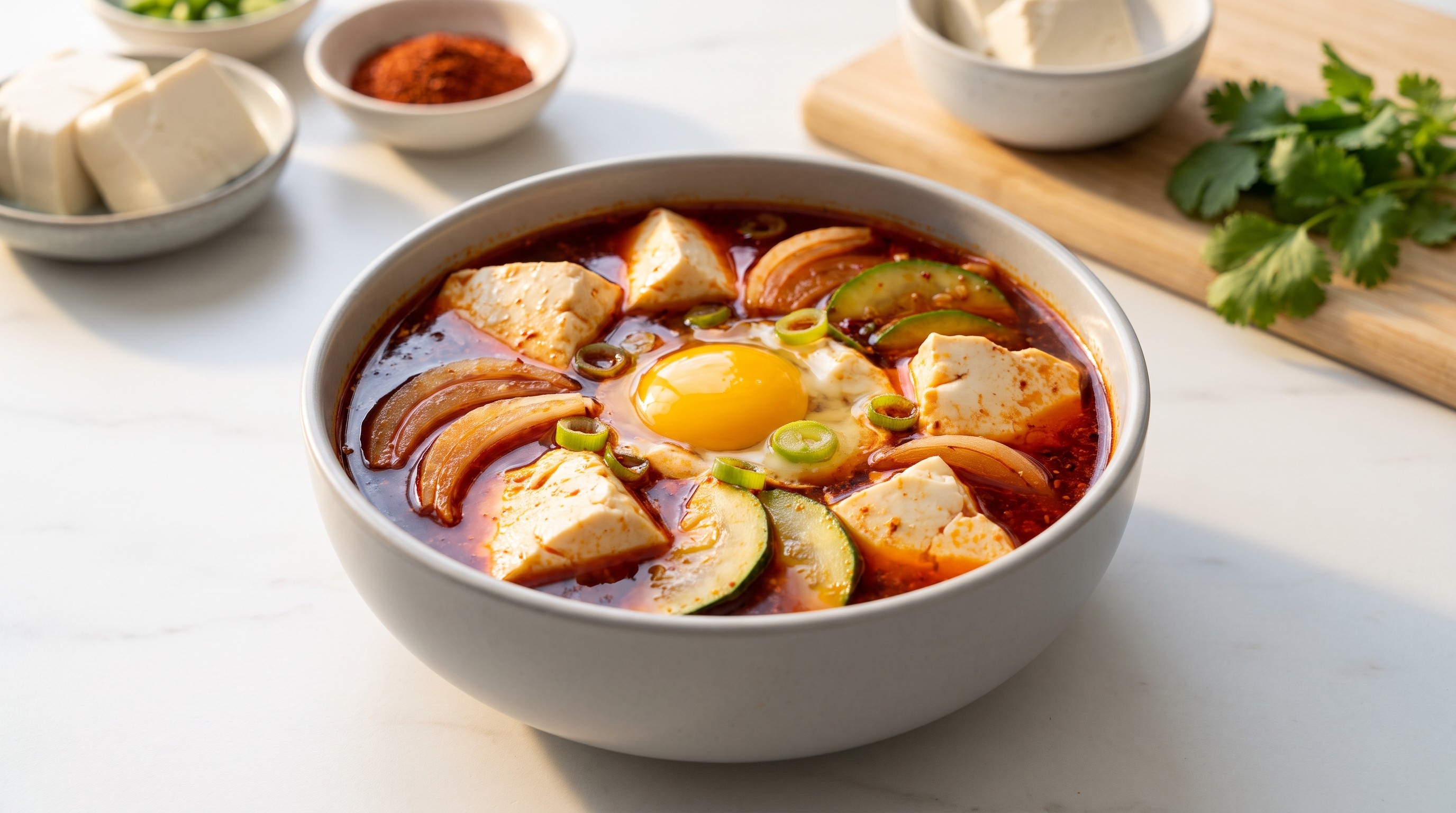
Sundubu Jjigae (Korean Soft Tofu Stew)
A fiery Korean soft tofu stew with pork and runny egg — naturally low-glycemic, high-protein comfort food that keeps blood sugar steady.
Sundubu jjigae is Korean comfort food distilled to its most satisfying essence: pillowy clouds of silken tofu simmered in a brick-red, gochugaru-spiked broth with savoury pork mince and a just-set egg nestled on top. What makes this stew remarkable from a blood-sugar perspective is that it requires no adaptation at all — it is naturally one of the most glycaemic-friendly dishes in any cuisine. The near-zero carbohydrate content of soft tofu, the high-quality protein from pork and egg, and the metabolic-slowing fats in sesame oil combine to produce a meal with a minimal glucose response.
Zucchini adds gentle bulk and fibre without meaningful starch, while garlic and onion contribute prebiotic compounds that support gut health and may improve insulin sensitivity over time. Gochugaru — the coarsely ground Korean red pepper — contains capsaicin, which research links to improved post-meal glucose metabolism. Even the soy sauce, used sparingly, is fermented and virtually carbohydrate-free.
Serve this stew bubbling straight from the pot as a complete standalone meal — no rice needed. The broth is rich, deeply umami, and substantial enough on its own. For an even flatter glucose curve, sip the broth and eat the vegetables before the egg and pork, giving fibre a head start in the digestive tract. Pair with a small side of kimchi for added probiotics and an extra metabolic edge.
Blood Sugar Impact
Very low blood sugar impact expected. The combination of protein from pork and tofu, healthy fats from sesame oil, and fiber from vegetables results in a low glycemic load (8.2) and low GI (38), promoting stable blood sugar levels for 3-4 hours.
Blood Sugar Tips
- ✓ Eat the zucchini and tofu first before sipping the broth to slow gastric emptying and blunt any glucose rise.
- ✓ Avoid pairing with large portions of white rice — opt for a small serving of brown rice or cauliflower rice to keep the overall glycemic load low.
- ✓ Add a splash of vinegar (such as rice vinegar) to the stew or a side dish, as acetic acid has been shown to reduce post-meal blood sugar spikes by up to 30%.
🥗 Ingredients
- 1 tbsp Sesame oil
- 150 g Pork mince
- 1 pcs Onion
- 3 pcs Garlic
- 1.5 tbsp Gochugaru
- 1 tbsp Soy sauce
- 400 g Soft tofu
- 1 pcs Zucchini
- 2 pcs Egg
- 2 pcs Spring onion
- 1 tbsp Sesame oil
- 5.3 oz Pork mince
- 1 pcs Onion
- 3 pcs Garlic
- 1.5 tbsp Gochugaru
- 1 tbsp Soy sauce
- 14.1 oz Soft tofu
- 1 pcs Zucchini
- 2 pcs Egg
- 2 pcs Spring onion
👨🍳 Instructions
- 1
Place a heavy-bottomed pot or Korean stone bowl (ttukbaegi) over medium-high heat and add the sesame oil. Once the oil begins to shimmer, scatter in the pork mince.
- 2
Cook the pork for about 3 minutes, breaking it into small pieces with a wooden spoon, until it is well browned and the edges are starting to turn crispy. The rendered fat will form the flavour base of the broth.
- 3
Push the browned pork to one side of the pot. Add the sliced onion and minced garlic to the cleared space and stir for 1 minute until the garlic is fragrant and the onion begins to soften.
- 4
Add the gochugaru and stir everything together for 30 seconds, coating the pork and aromatics evenly. The oil in the pot should turn a deep, vibrant red.
- 5
Pour in 500 ml of water and add the soy sauce. Raise the heat and bring the broth to a vigorous, rolling boil.
- 6
Spoon the soft tofu into the broth in large, rough chunks — use the back of the spoon to break it into irregular pieces rather than neat cubes. Add the sliced zucchini, reduce the heat to a steady simmer, and cook for 8 minutes until the zucchini is just tender and the broth has reduced and concentrated slightly.
- 7
Crack one egg per serving directly into the bubbling stew, spacing them apart. Cover the pot and cook for 1 to 2 minutes until the egg whites are just set but the yolks remain soft and runny.
- 8
Remove from the heat and scatter the sliced spring onions over the top. Serve immediately while still bubbling, straight from the pot. For the best blood-sugar response, sip the broth and eat the vegetables first before the protein.
📊 Nutrition Per Serving
| Per Serving | Whole Dish | |
|---|---|---|
| Calories | 571 | 1142 |
| Carbs | 21g | 43g |
| Sugars | 7g | 13g |
| Added Sugars | 0g | 1g |
| Natural Sugars | 6g | 12g |
| Protein | 38g | 77g |
| Fat | 39g | 77g |
| Saturated Fat | 10g | 20g |
| Unsaturated Fat | 28g | 57g |
| Fiber | 4g | 7g |
| Soluble Fiber | 1g | 2g |
| Insoluble Fiber | 3g | 5g |
| Sodium | 1031mg | 2062mg |
Predicted Glucose Response
What if you...
Estimated model — individual responses vary. Not medical advice.
🔄 Lower GI Swaps
Processed 'spring onion flavor' seasoning often contains hidden starches, maltodextrin, or added sugars that can spike blood sugar. Fresh spring onions, chives, or leek greens deliver the same aromatic punch with virtually zero glycemic load and added fiber that helps slow glucose absorption.
Many commercial soy sauces contain added sugars or wheat-derived starches that contribute to glycemic load. Sugar-free tamari or liquid aminos provide the same umami depth with negligible carbohydrate content and near-zero GI impact.
Onions contain moderate natural sugars that caramelize and become more rapidly absorbed when cooked at length. Shiitake mushrooms (GI ≈ 0) add savory depth with virtually no blood sugar impact, while celery provides aromatic base with minimal carbohydrates.
Firm and extra-firm tofu have higher protein density per serving compared to soft tofu, which improves the protein-to-carbohydrate ratio of the dish. Higher protein content helps slow gastric emptying and blunts the overall postprandial blood sugar response.
🔬 The Science Behind This Recipe
The Science Behind This Recipe
This stew is a great example of how a meal's overall composition matters more than any single ingredient. With a Glycemic Load of just 8.2 per serving and an estimated GI of 38, Sundubu Jjigae lands firmly in the low-glycemic category. But what makes it so blood-sugar-friendly? It comes down to the combination of protein, healthy fats, and fiber-rich vegetables working together to slow digestion. When your body breaks down food more gradually, glucose enters your bloodstream at a steadier pace — no sharp spike, no energy crash an hour later.
The ground pork and soft tofu deliver a solid dose of protein and fat, two macronutrients that naturally slow gastric emptying — the rate at which food leaves your stomach. This means the small amount of carbohydrates in the onion and other vegetables gets absorbed more slowly. Sesame oil adds another layer of protection: its healthy fats further buffer glucose absorption while contributing rich, nutty flavor. Even the garlic and chili flakes play a supporting role — research suggests both contain compounds that may help improve how your cells respond to insulin over time.
To get the most out of this meal, try a simple strategy: if you're serving it with rice, eat the stew first and the rice last. Starting with the protein-rich broth and vegetables creates a buffer in your digestive system before any starchy carbohydrates arrive. You can also keep the rice portion modest — remember, Glycemic Load accounts for how much you eat, not just what you eat. A small serving of rice alongside this hearty, protein-packed stew keeps the overall meal in a very favorable range. A short 10-to-15-minute walk after eating can further help your muscles use up circulating glucose, making this satisfying Korean classic an excellent choice for steady, sustained energy.
Related recipes
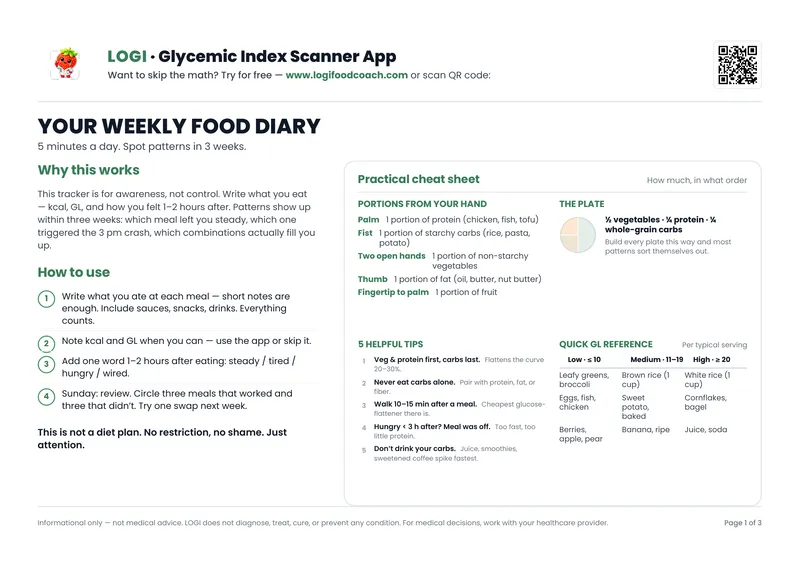
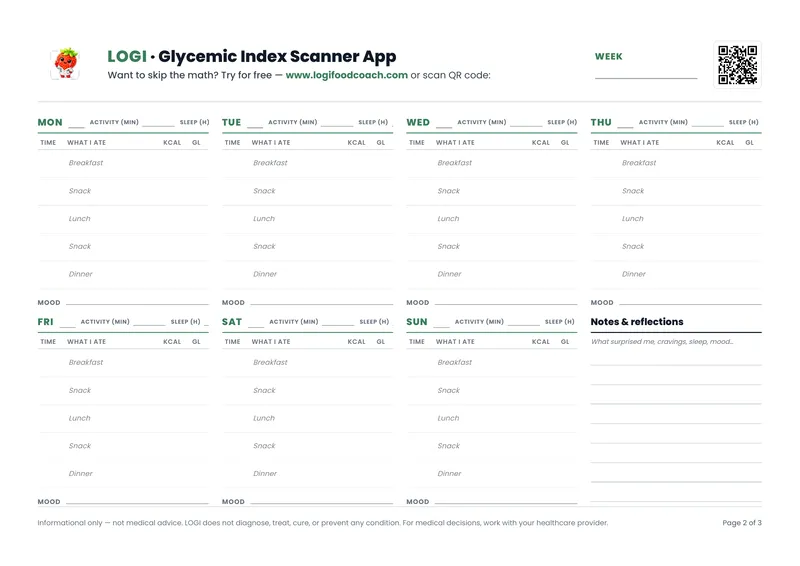
Free PDF — 3 pages
Your Weekly Food Journal
Track meals, glycemic load & mood. Spot patterns in 3 weeks.
No spam. Unsubscribe anytime.