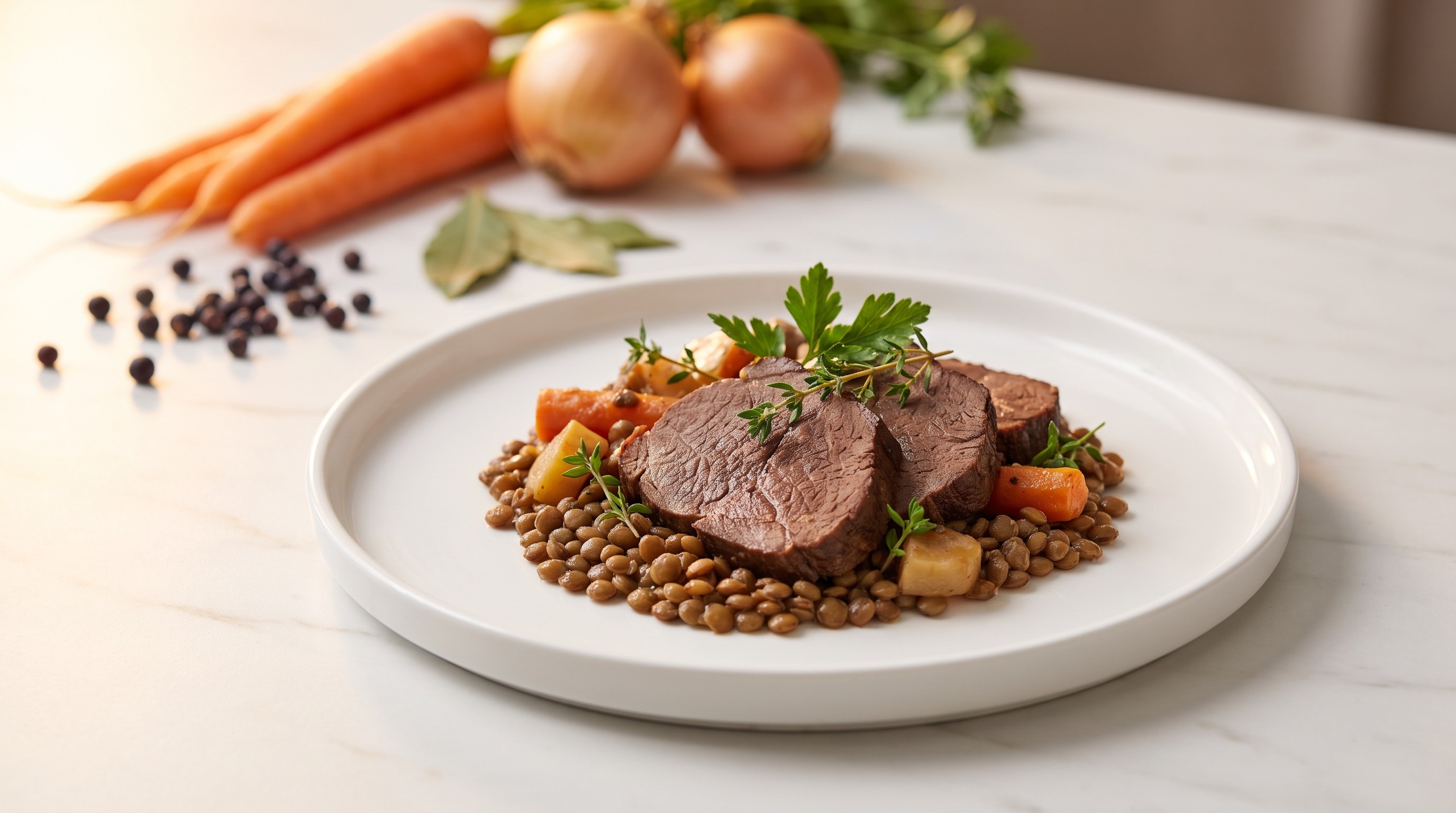
Sauerbraten with Lentils
A tangy, slow-braised German pot roast paired with earthy lentils — naturally low-glycemic comfort food for a satisfying Sunday meal.
Sauerbraten is one of Germany's most celebrated dishes, a pot roast marinated for days in a tangy bath of vinegar, wine, and aromatic spices. This low-glycemic adaptation replaces the traditional gingerbread-thickened gravy with almond flour and swaps starchy potato dumplings for protein-rich green lentils, creating a meal that is deeply satisfying without the blood sugar roller coaster.
The magic of Sauerbraten lies in its patience. A two-day vinegar-wine marinade tenderizes the beef while infusing it with complex, sweet-sour flavor from juniper berries, cloves, and bay leaves. The long, gentle braise transforms a tough cut into fork-tender slices bathed in a silky, reduced sauce. Meanwhile, Le Puy lentils — with a glycemic index of just 25-30 — provide a hearty, fiber-packed base that slows glucose absorption and keeps you full for hours.
For optimal blood sugar management, serve the lentils first and eat a few bites before the meat and sauce. The soluble fiber in lentils creates a gel-like barrier in the digestive tract that moderates the absorption of any sugars from the wine-based sauce. This entire plate is naturally low-GI: the beef contributes zero glycemic load, the almond flour thickener adds healthy fats instead of refined carbs, and the lentils deliver plant protein alongside slow-release carbohydrates. A green salad or steamed green beans on the side rounds out a balanced, blood-sugar-friendly Sunday feast.
Blood Sugar Impact
Very low blood sugar impact expected. The combination of protein-rich beef, fiber-rich lentils, and low-carb vegetables results in a glycemic load of only 4.9, promoting stable blood sugar and sustained energy for 4+ hours.
Blood Sugar Tips
- ✓ Eat the lentils and vegetables before the meat to further slow glucose absorption.
- ✓ Avoid pairing with high-GI sides like white bread or mashed potatoes — choose a green salad or roasted non-starchy vegetables instead.
- ✓ Take a gentle 10-15 minute walk after the meal to enhance glucose uptake by your muscles.
🥗 Ingredients
- 1200 g Beef rump roast
- 500 ml Red wine vinegar
- 250 ml Dry red wine
- 1 pcs Onion
- 2 pcs Carrot
- 3 pcs Bay leaf
- 8 pcs Juniper berry
- 6 pcs Whole clove
- 1 tsp Black peppercorn
- 1 tbsp Olive oil
- 2 tbsp Almond flour
- 300 g Green lentil
- 1 pcs Onion
- 1 tsp Salt
- 2.6 lb Beef rump roast
- 2.1 cups Red wine vinegar
- 1.1 cups Dry red wine
- 1 pcs Onion
- 2 pcs Carrot
- 3 pcs Bay leaf
- 8 pcs Juniper berry
- 6 pcs Whole clove
- 1 tsp Black peppercorn
- 1 tbsp Olive oil
- 2 tbsp Almond flour
- 10.6 oz Green lentil
- 1 pcs Onion
- 1 tsp Salt
👨🍳 Instructions
- 1
Prepare the marinade by combining the red wine vinegar, dry red wine, sliced onion, chopped carrots, 2 bay leaves, juniper berries, whole cloves, and black peppercorns in a large non-reactive bowl or heavy-duty zip-top bag. Stir to combine.
- 2
Place the trimmed beef roast into the marinade, ensuring it is fully submerged. If needed, weigh it down with a small plate. Seal and refrigerate for at least 24 hours, or up to 48 hours for deeper, more complex flavor. Do not exceed 5 days.
- 3
When ready to cook, lift the beef from the marinade and pat it thoroughly dry with paper towels. Pour the marinade through a fine-mesh sieve into a clean bowl, reserving the strained liquid and discarding the solids.
- 4
Heat the olive oil in a heavy Dutch oven over medium-high heat until shimmering. Sear the beef on all sides until a deep golden-brown crust forms, about 8 to 10 minutes total. Season lightly with salt as you turn each side.
- 5
Pour the reserved strained marinade into the Dutch oven — it should reach roughly halfway up the roast. Add a splash of water if needed to reach that level. Bring the liquid to a gentle simmer, then cover with a tight-fitting lid and reduce the heat to low. Braise steadily for about 60 minutes, until the beef is fork-tender but still holds its shape.
- 6
While the beef braises, prepare the lentils. Place the rinsed green lentils, diced onion, remaining bay leaf, and 750 ml (3 cups) of water in a saucepan. Bring to a boil, then reduce heat and simmer uncovered for 25 to 30 minutes until the lentils are tender but still hold their shape. Drain off any excess liquid, discard the bay leaf, and season with salt.
- 7
Transfer the braised beef to a cutting board, tent loosely with aluminium foil, and let it rest for 10 minutes. Meanwhile, strain the braising liquid through a sieve into a clean saucepan and bring it to a boil over medium-high heat.
- 8
Whisk the almond flour into the boiling braising liquid and continue to cook, stirring frequently, until the sauce reduces by about one-third — roughly 5 to 7 minutes. The finished sauce should coat the back of a spoon. Taste and adjust the seasoning; if the sauce is too sharp, stir in a small splash of red wine to round out the acidity. Slice the rested beef against the grain and serve over a bed of lentils, generously ladled with the tangy sauce.
📊 Nutrition Per Serving
| Per Serving | Whole Dish | |
|---|---|---|
| Calories | 642 | 3850 |
| Carbs | 39g | 233g |
| Sugars | 4g | 27g |
| Natural Sugars | 4g | 27g |
| Protein | 70g | 421g |
| Fat | 18g | 109g |
| Saturated Fat | 6g | 37g |
| Unsaturated Fat | 12g | 72g |
| Fiber | 17g | 104g |
| Soluble Fiber | 5g | 31g |
| Insoluble Fiber | 12g | 73g |
| Sodium | 531mg | 3184mg |
Predicted Glucose Response
What if you...
Estimated model — individual responses vary. Not medical advice.
🔄 Lower GI Swaps
Apple cider vinegar has been shown to improve post-meal blood sugar response by slowing gastric emptying and enhancing insulin sensitivity, offering a slight edge over red wine vinegar for glycemic management.
Coconut flour and lupin flour have a lower glycemic index than almond flour and are higher in fiber, which further slows glucose absorption. Flaxseed meal adds soluble fiber and omega-3s that support insulin sensitivity.
While lentils already have a low GI (~30), black soybeans (GI ~15) and lupini beans (GI ~15) have an even lower glycemic index and higher protein-to-carb ratio, resulting in a minimal glycemic load.
Carrots have a moderate GI (~47) that rises significantly when cooked. Celeriac, turnip, and daikon have lower glycemic indices and fewer digestible carbohydrates, reducing the overall glycemic load of the dish.
Lower glycemic impact alternative with better blood sugar response for this recipe context.
🔬 The Science Behind This Recipe
Here's the science explainer for the Sauerbraten with Lentils recipe:
---
Why This Recipe Works for Your Blood Sugar
This Sauerbraten is a blood sugar-friendly powerhouse, and the numbers tell the story: with a glycemic load of just 4.9 per serving and an estimated GI of 13, it falls firmly in the "low" category on both scales. But what makes it so gentle on your glucose levels? It starts with the protein-rich beef rump roast. Protein digests slowly and doesn't cause the rapid rise in blood sugar that refined carbohydrates do. When you eat a meal built around a generous portion of protein like this, your body releases glucose into the bloodstream gradually, keeping energy levels steady rather than creating the familiar spike-and-crash cycle. The natural fats in the beef further slow digestion, acting like a brake on how quickly your meal converts to blood sugar.
Lentils are the quiet star of this dish. They're packed with soluble fiber, which forms a gel-like substance in your digestive tract that physically slows the absorption of sugars. This is why lentils consistently rank among the lowest-GI legumes — they deliver sustained energy without the glucose rush. It's also worth understanding the concept of glycemic load here: while GI measures *how fast* a food raises blood sugar, glycemic load accounts for *how much* carbohydrate you're actually eating. A serving of this Sauerbraten delivers modest carbs wrapped in fiber and protein, which is why the load stays under 5 — remarkably low for a satisfying main course.
The red wine vinegar in the traditional marinade isn't just for flavor — studies suggest that acidity from vinegar can improve your body's response to a meal by slowing gastric emptying. To get the most benefit, try eating the vegetables and lentils before the meat and any side dishes, and consider a 10–15 minute walk after dinner. These simple habits can further smooth out your post-meal glucose curve, making an already blood sugar-friendly meal even better.
Related recipes
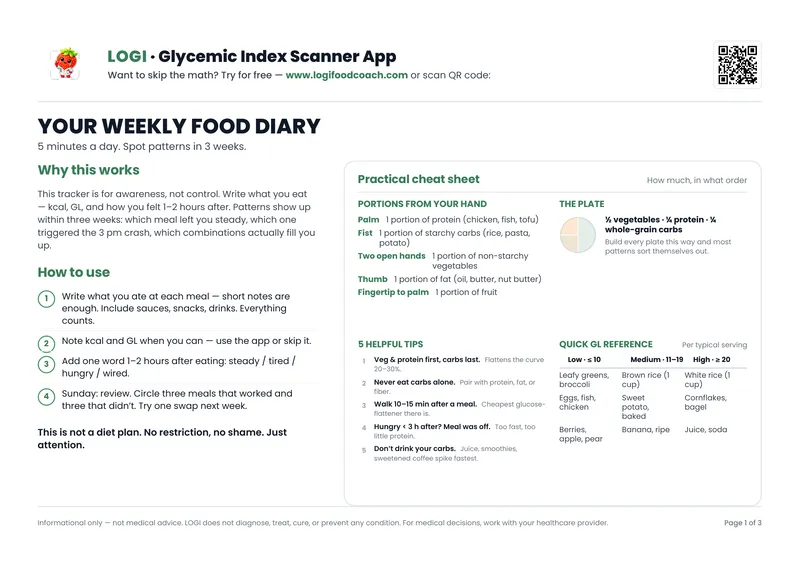
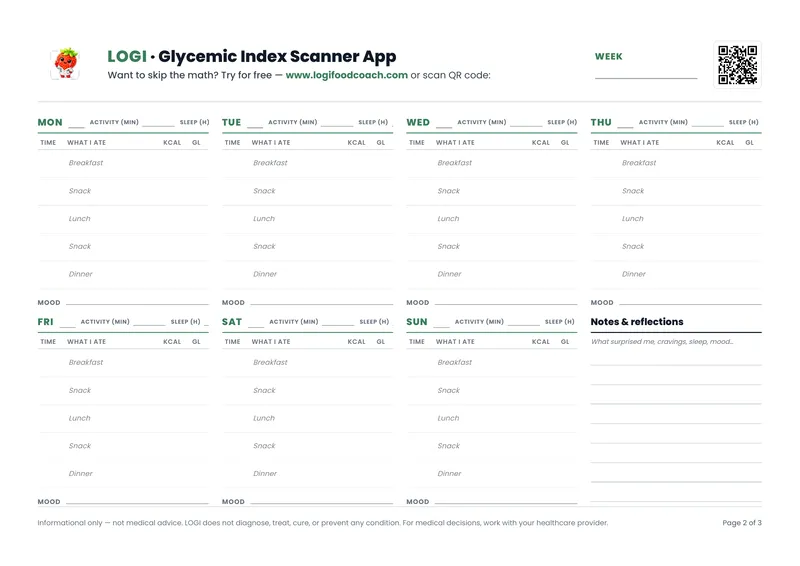
Free PDF — 3 pages
Your Weekly Food Journal
Track meals, glycemic load & mood. Spot patterns in 3 weeks.
No spam. Unsubscribe anytime.