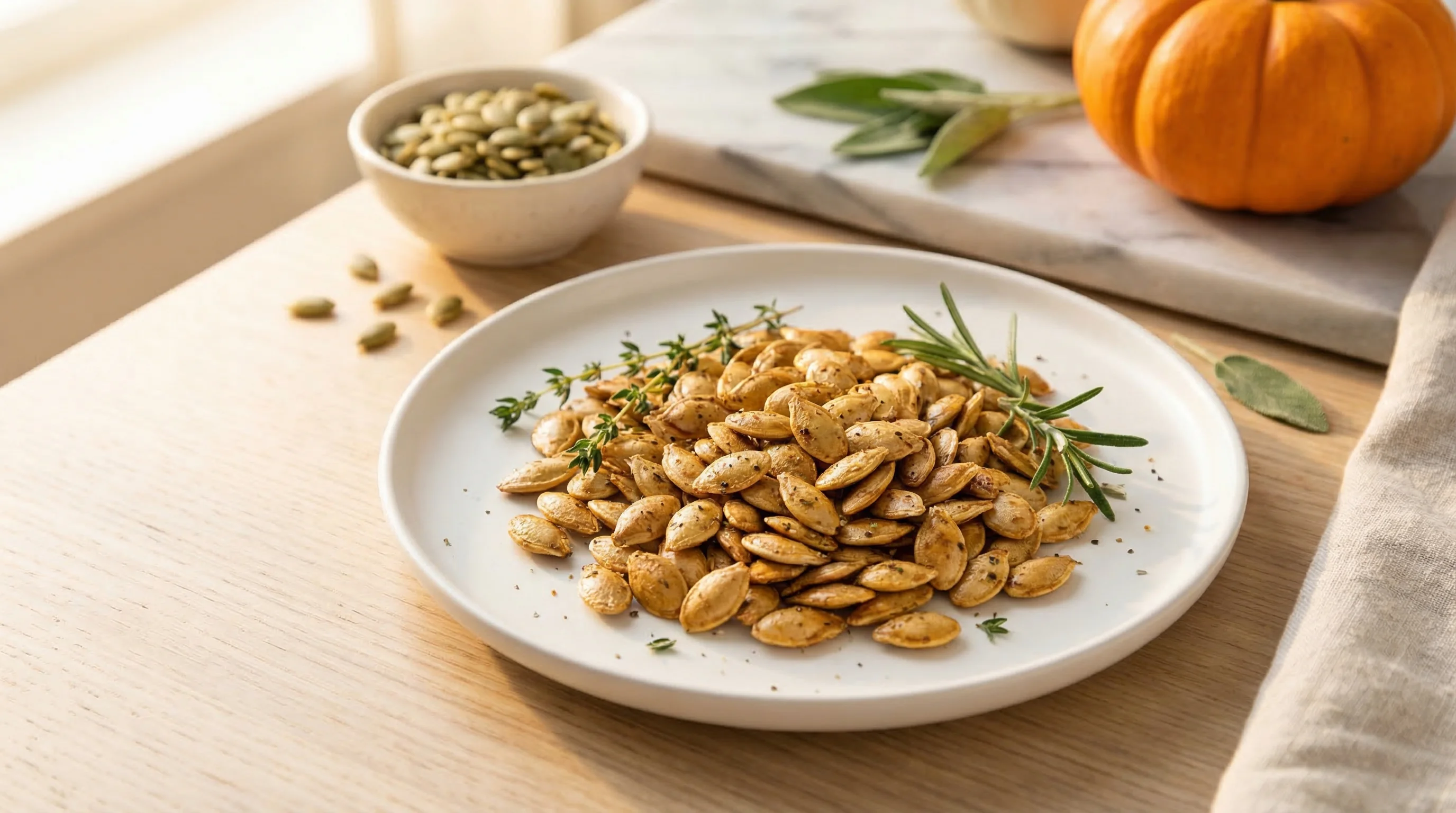
Roasted Pumpkin Seeds
Nutrient-dense, blood sugar-friendly snack packed with protein, healthy fats, and minerals that won't spike glucose levels—perfect for steady energy.
Pumpkin seeds are a nutritional powerhouse and one of the best low-glycemic snacks you can enjoy. With a glycemic index of just 10-25, these crunchy seeds provide sustained energy without causing blood sugar spikes. They're exceptionally rich in magnesium, a mineral that plays a crucial role in insulin sensitivity and glucose metabolism, making them particularly beneficial for blood sugar management.
Each serving delivers approximately 5 grams of protein and 13 grams of healthy fats, primarily omega-6 and omega-9 fatty acids. This macronutrient profile helps slow digestion and promotes satiety, preventing the rapid glucose absorption that occurs with high-carbohydrate snacks. The seeds also contain significant amounts of zinc, iron, and antioxidants that support metabolic health.
For optimal blood sugar control, enjoy pumpkin seeds as a mid-morning or afternoon snack, or pair them with fresh vegetables for added fiber. The combination of protein, healthy fats, and minimal carbohydrates makes them an ideal choice for maintaining stable glucose levels throughout the day. Store in an airtight container to preserve freshness and nutrient content.
Blood Sugar Impact
Minimal to negligible blood sugar impact. The extremely low glycemic index (9) and glycemic load (0.3) mean this snack will provide stable, sustained energy without causing any significant blood sugar spike.
Blood Sugar Tips
- ✓ Enjoy as a between-meal snack to help stabilize blood sugar and prevent energy crashes
- ✓ Pair with a small piece of fruit if you need quick energy, as the healthy fats and protein will slow sugar absorption
- ✓ Keep portion sizes reasonable (about 1/4 cup) as the calories can add up quickly despite the excellent glycemic profile
🥗 Ingredients
- 30 g raw pumpkin seeds (pepitas)
- 1.1 oz raw pumpkin seeds (pepitas)
👨🍳 Instructions
- 1
Preheat your oven to 325°F (165°C) and line a small baking sheet with parchment paper.
- 2
Measure out 30 grams (about 1/4 cup) of raw pumpkin seeds and spread them in a single layer on the prepared baking sheet.
- 3
Optional: Lightly spray or toss seeds with a small amount of olive oil and sprinkle with sea salt, garlic powder, or your preferred low-sodium seasoning.
- 4
Roast the pumpkin seeds in the preheated oven for 10-12 minutes, stirring once halfway through, until they're lightly golden and fragrant.
- 5
Remove from the oven and let the seeds cool on the baking sheet for 3-4 minutes—they'll become crispier as they cool.
- 6
Transfer the roasted seeds to a small bowl or container and enjoy immediately as a satisfying, blood sugar-friendly snack.
- 7
Store any leftover seeds in an airtight container at room temperature for up to 5 days, or refrigerate for extended freshness up to 2 weeks.
📊 Nutrition Per Serving
| Per Serving | Whole Dish | |
|---|---|---|
| Calories | 168 | 168 |
| Carbs | 3g | 3g |
| Sugars | 0g | 0g |
| Natural Sugars | 0g | 0g |
| Protein | 9g | 9g |
| Fat | 15g | 15g |
| Saturated Fat | 3g | 3g |
| Unsaturated Fat | 11g | 11g |
| Fiber | 2g | 2g |
| Soluble Fiber | 0g | 0g |
| Insoluble Fiber | 1g | 1g |
| Sodium | 2mg | 2mg |
Predicted Glucose Response
What if you...
Estimated model — individual responses vary. Not medical advice.
🔄 Lower GI Swaps
Hemp, chia, and flax seeds have virtually zero glycemic impact and provide more omega-3 fatty acids and soluble fiber, which further slows glucose absorption and helps stabilize blood sugar levels even more than pumpkin seeds
🔬 The Science Behind This Recipe
Why This Works for Blood Sugar
Roasted pumpkin seeds are a powerhouse snack for blood sugar management, with an exceptionally low glycemic index of 9 and a glycemic load of just 0.3 per serving. The secret lies in their unique nutritional composition: these seeds are packed with protein, healthy fats, and fiber while being remarkably low in digestible carbohydrates. When you eat pumpkin seeds, your body processes them slowly, releasing minimal glucose into your bloodstream. The high protein content (about 7 grams per ounce) helps stabilize blood sugar by slowing digestion and promoting satiety, while the abundant healthy fats—particularly omega-3 and omega-6 fatty acids—further delay glucose absorption and provide sustained energy without spiking insulin.
What makes pumpkin seeds particularly valuable is their rich magnesium content, a mineral that plays a crucial role in insulin function and glucose metabolism. Studies suggest that adequate magnesium intake may improve insulin sensitivity, helping your cells use glucose more efficiently. The fiber in pumpkin seeds also feeds beneficial gut bacteria, which can positively influence blood sugar regulation over time.
For optimal blood sugar control, enjoy pumpkin seeds as a mid-afternoon snack to prevent energy crashes, or sprinkle them on salads and yogurt to add satisfying crunch while lowering the overall glycemic impact of your meal. Because they're so nutrient-dense, a small handful (about 1-2 ounces) is sufficient to reap the benefits without overdoing calories. Pair them with a piece of fruit if you need something sweet—the protein and fat will help blunt any glucose rise from the fruit's natural sugars.
Related recipes
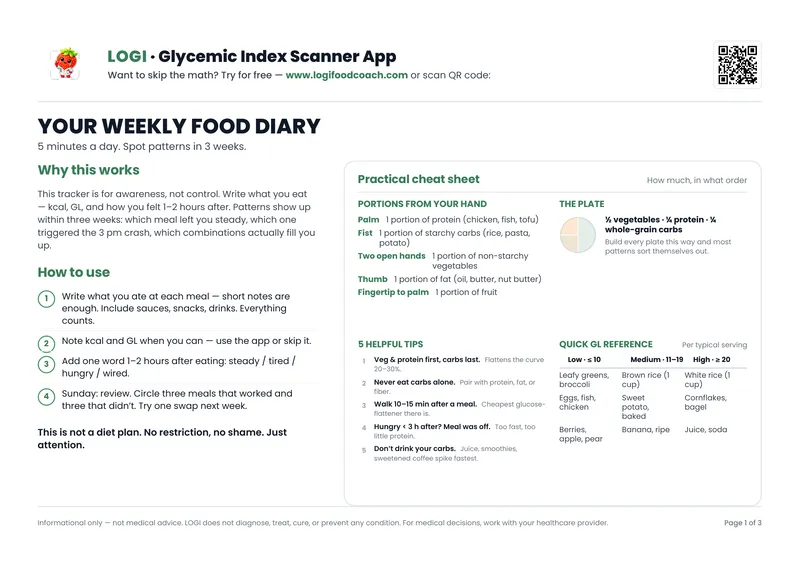
Free PDF — 3 pages
Your Weekly Food Journal
Track meals, glycemic load & mood. Spot patterns in 3 weeks.
No spam. Unsubscribe anytime.