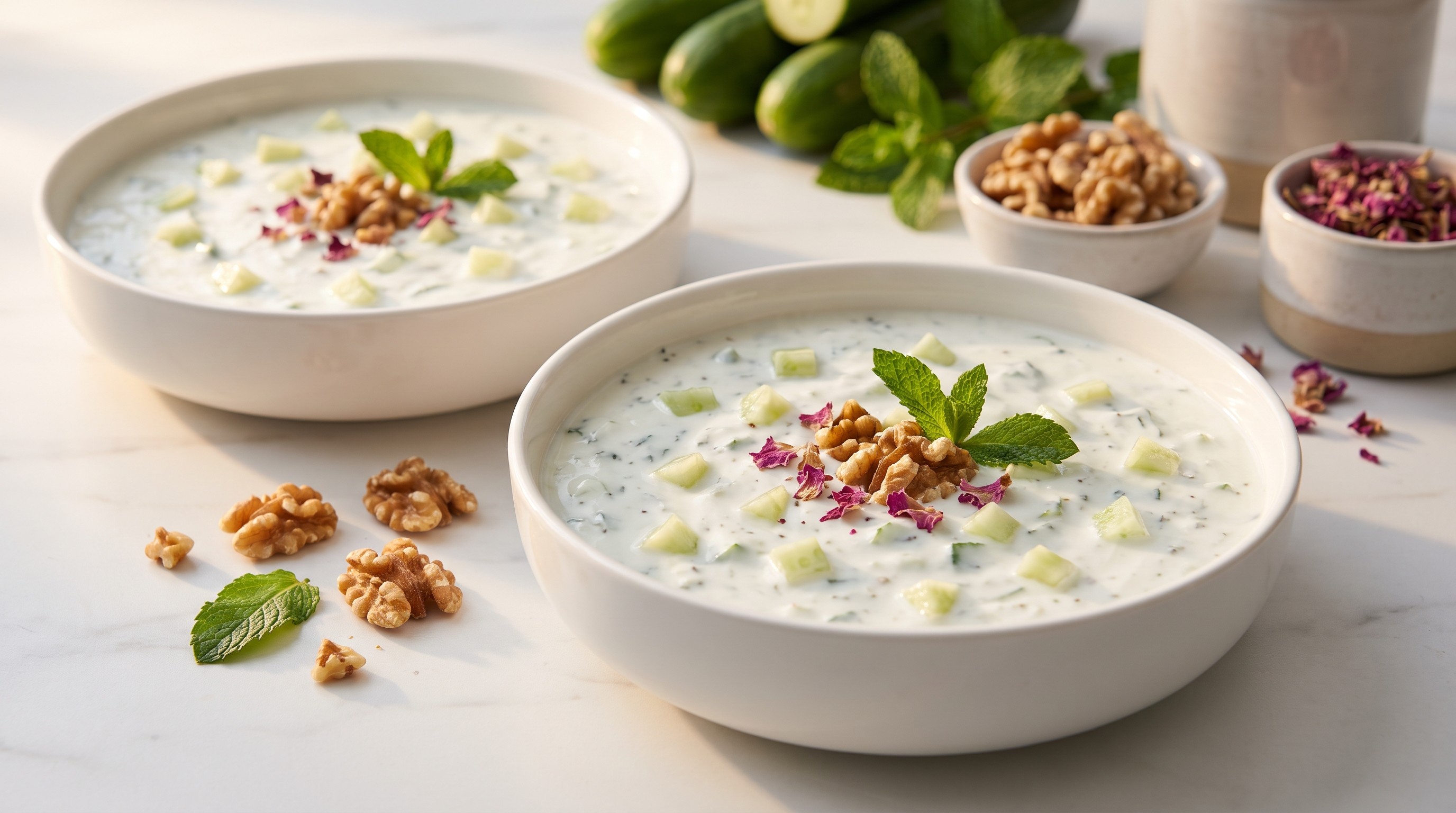
Mast-o Khiar (Persian Yogurt with Cucumber and Herbs)
Creamy full-fat yogurt folded with salted cucumber, crushed walnuts, and fresh mint — a naturally low-glycemic Persian side that steadies blood sugar.
Mast-o khiar is a cold Persian side dish that lands squarely in the sweet spot of blood-sugar-friendly eating without any adaptation at all. Full-fat Greek yogurt provides the base — its combination of protein, fat, and fermentation-derived probiotics slows gastric emptying and blunts postprandial glucose spikes. Cucumber contributes satisfying crunch and hydration with almost zero digestible carbohydrate, while crushed walnuts layer in omega-3 fatty acids, fiber, and a gentle resistance to rapid digestion that further flattens the glucose curve.
The aromatic dimension comes from both fresh and dried mint, each bringing a different character: fresh leaves add bright, cooling sharpness, while dried mint delivers a deeper, almost smoky warmth that blooms when stirred into cold yogurt. A scattering of dried rose petals on top is traditional and not merely decorative — their subtle floral fragrance makes each spoonful feel more complex than its short ingredient list suggests.
Serve mast-o khiar at the start of a meal alongside grilled protein or a grain dish. Eating it first coats the stomach with fat and protein, which clinical research has shown can reduce the glycemic impact of carbohydrates consumed afterward by up to 30 percent. It also makes an excellent mid-afternoon snack on its own — the protein-to-carbohydrate ratio keeps you satiated without triggering an insulin surge. Because every ingredient is already low on the glycemic index, this is one of the rare recipes that needs no modification at all: the Persian classic is the blood-sugar-friendly version.
Blood Sugar Impact
Very minimal blood sugar impact expected. The combination of full-fat Greek yogurt (protein and fat), walnuts (healthy fats and fiber), and cucumber (very low carb) results in an extremely low glycemic load of 2.8, promoting stable blood sugar for 3-4 hours.
Blood Sugar Tips
- ✓ Enjoy as a side dish alongside a protein-rich main course to further blunt any modest carbohydrate absorption from the yogurt.
- ✓ Add an extra handful of walnuts to increase the healthy fat and fiber content, which slows gastric emptying and smooths the glucose curve.
- ✓ Avoid pairing with high-GI flatbreads like white naan; if you want bread, choose a whole-grain or sourdough option to keep the overall meal's glycemic load low.
🥗 Ingredients
- 300 g Greek yogurt
- 200 g Cucumber
- 10 g Mint leaves
- 2 g Dried mint
- 30 g Walnuts
- 2 g Salt
- 1 g Black pepper
- 10.6 oz Greek yogurt
- 7.1 oz Cucumber
- 0.4 oz Mint leaves
- 0.1 oz Dried mint
- 1.1 oz Walnuts
- 0.1 oz Dried rose petals
- 0.1 oz Salt
- 0.0 oz Black pepper
👨🍳 Instructions
- 1
Run your fingers over the cucumber skin — if it feels waxy or unusually thick, peel it; otherwise leave the skin on for extra fiber. Cut the cucumber lengthwise into quarters, then slice across into small cubes of roughly 5 mm.
- 2
Transfer the diced cucumber to a fine-mesh sieve set over a bowl. Sprinkle with about half the salt, toss gently, and leave to drain for 5 minutes. This draws out excess water so the finished dish stays thick rather than watery.
- 3
Place the walnuts on a cutting board and press down firmly with the flat side of a broad knife to crack them into rough, irregular pieces. Avoid crushing them to powder — you want varied textures, from sandy crumbs to chunky shards.
- 4
Tear the fresh mint leaves by hand into small pieces, which releases more aromatic oils than cutting with a blade. Set aside a few whole, unblemished leaves for garnish.
- 5
Spoon the yogurt into a mixing bowl and stir it vigorously with a fork or small whisk until it loosens and becomes uniformly smooth. Full-fat Greek yogurt can be quite stiff, so give it 30 seconds of good stirring.
- 6
Add the drained cucumber to the yogurt along with the dried mint, most of the torn fresh mint, and about two-thirds of the crushed walnuts. Fold everything together with gentle strokes — overmixing will break the cucumber down and thin the yogurt.
- 7
Taste the mixture and season with the remaining salt and the black pepper. Adjust to your preference — the salting step on the cucumber may have contributed enough, so add gradually.
- 8
Divide the mast-o khiar between two shallow bowls, spreading it gently with the back of a spoon. Top each portion with the reserved walnut pieces, whole mint leaves, and a scattering of dried rose petals. Serve immediately while cold.
📊 Nutrition Per Serving
| Per Serving | Whole Dish | |
|---|---|---|
| Calories | 300 | 599 |
| Carbs | 12g | 24g |
| Sugars | 7g | 15g |
| Natural Sugars | 7g | 15g |
| Protein | 16g | 32g |
| Fat | 25g | 50g |
| Saturated Fat | 11g | 21g |
| Unsaturated Fat | 14g | 28g |
| Fiber | 2g | 5g |
| Soluble Fiber | 1g | 1g |
| Insoluble Fiber | 2g | 3g |
| Sodium | 452mg | 904mg |
Predicted Glucose Response
What if you...
Estimated model — individual responses vary. Not medical advice.
🔄 Lower GI Swaps
Labneh and skyr have a higher protein-to-carbohydrate ratio than standard Greek yogurt due to additional straining, which lowers the glycemic load further. Sheep's milk yogurt has more fat and protein per serving, slowing glucose absorption.
Pecans and macadamia nuts have a slightly lower GI than walnuts and a higher ratio of monounsaturated fat, which has been shown to improve postprandial glucose response. Almonds are particularly rich in magnesium, which supports insulin sensitivity.
Cinnamon contains bioactive compounds that may improve insulin sensitivity and lower postprandial blood glucose. Fenugreek seed has soluble fiber that slows carbohydrate digestion, reducing glycemic response. Both offer greater blood-sugar-management benefits than dried mint while complementing the Persian flavor profile.
🔬 The Science Behind This Recipe
Why This Recipe Works for Blood Sugar
Mast-o Khiar is a naturally blood sugar-friendly dish, and the science behind it starts with its star ingredient: full-fat Greek yogurt. Unlike sweetened or low-fat varieties, full-fat Greek yogurt combines protein and healthy fats that work together to slow digestion. When your stomach takes longer to break down food, glucose enters your bloodstream gradually rather than in a sudden rush. The protein in Greek yogurt also triggers a gentle insulin response that helps your cells absorb glucose more efficiently. This is why high-protein, high-fat foods tend to keep you feeling satisfied and energetically steady for hours.
Cucumber and walnuts each play a supporting role in keeping this dish gentle on your blood sugar. Cucumber is mostly water and fiber with virtually no starch, so it adds volume and crunch without contributing any meaningful glucose. Walnuts, meanwhile, are a powerhouse of healthy fats, plant protein, and fiber — a triple combination that further slows the rate at which your body processes the meal. Research consistently shows that adding a handful of nuts to any dish can lower the overall glycemic response. Think of walnuts as a natural "brake pedal" for glucose absorption.
With a glycemic load of just 2.8 per serving and an estimated GI of 23, this recipe scores remarkably low on both measures. Remember, glycemic load accounts for both the type and the amount of carbohydrates in a serving — and this dish simply doesn't have much sugar or starch to begin with. To get even more benefit, try enjoying Mast-o Khiar at the start of your meal before any bread or rice. Eating protein and vegetables first has been shown to reduce post-meal glucose spikes by up to 30 percent. A short 10-minute walk after eating can help further, as gentle movement encourages your muscles to use glucose for energy right when it matters most.
Related recipes
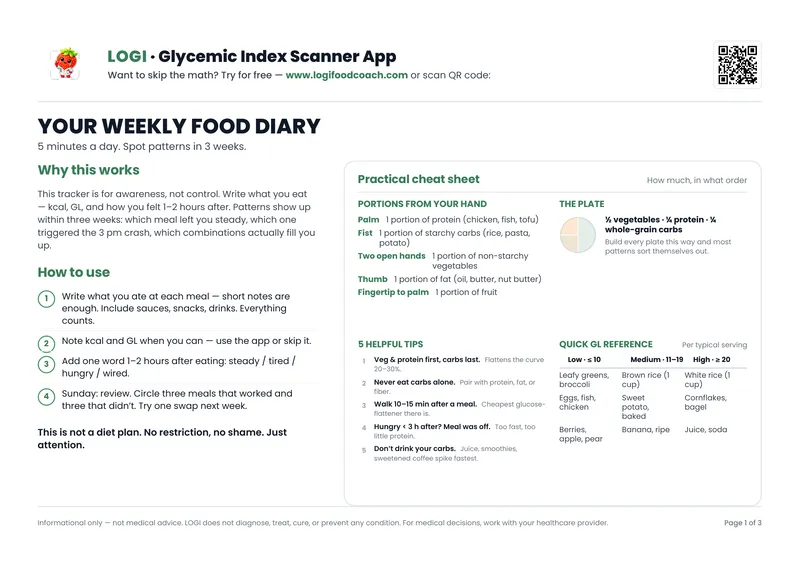
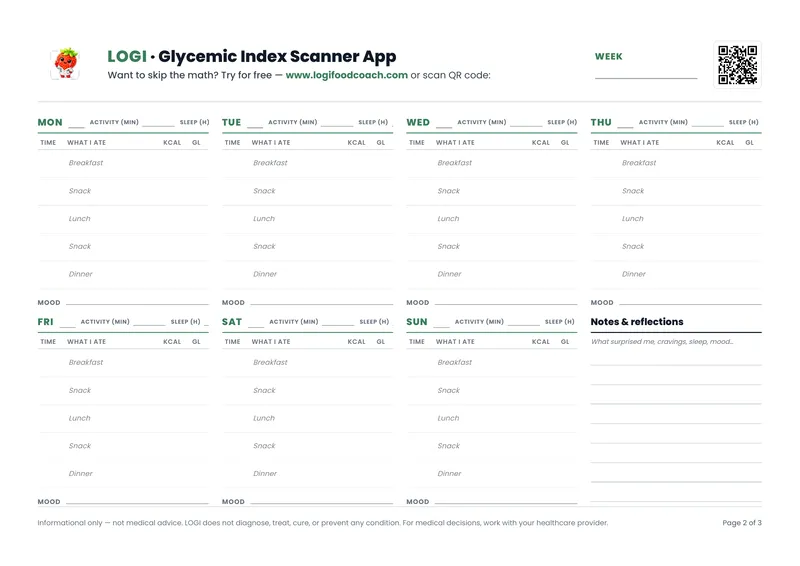
Free PDF — 3 pages
Your Weekly Food Journal
Track meals, glycemic load & mood. Spot patterns in 3 weeks.
No spam. Unsubscribe anytime.