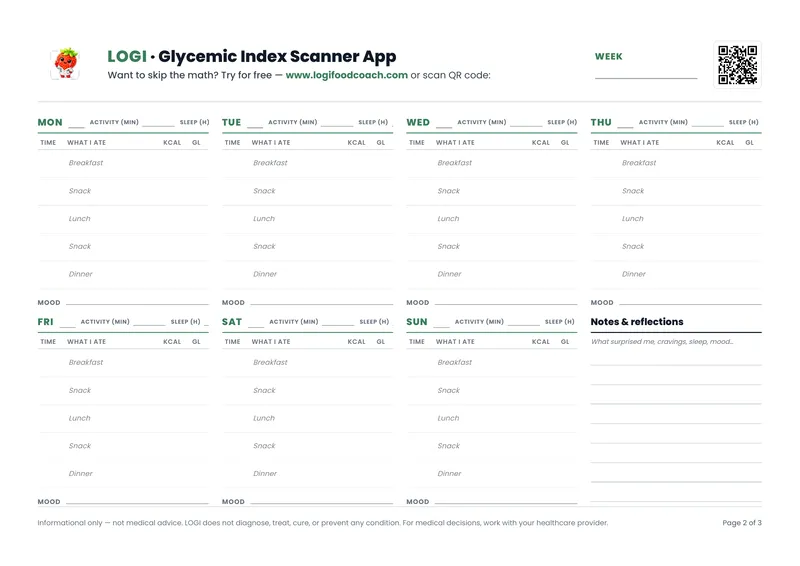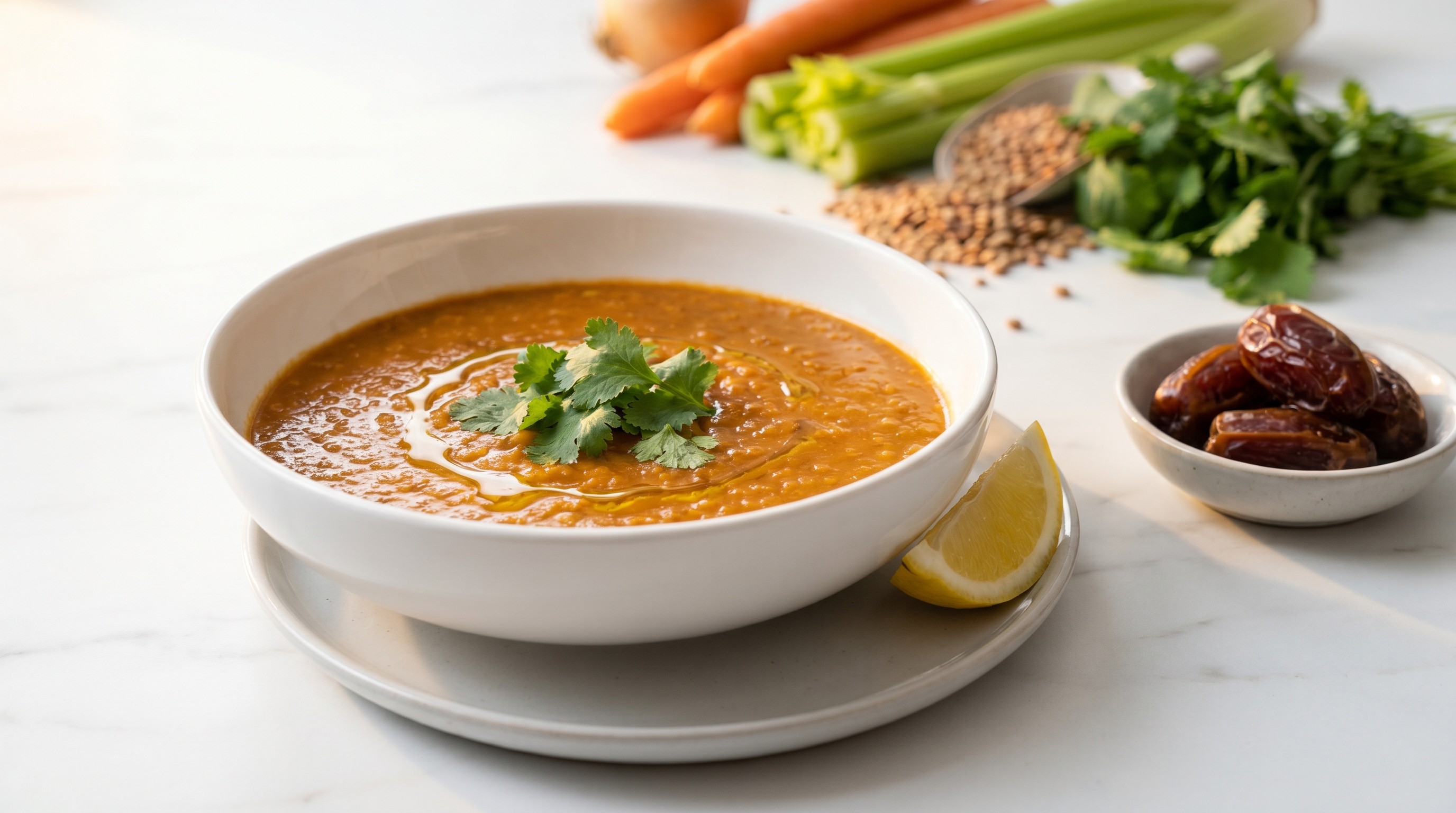
Harira (Moroccan Lentil and Chickpea Soup)
A warmly spiced Moroccan soup brimming with red lentils and chickpeas — naturally low-GI, high in soluble fiber, and ideal for steady blood sugar.
Harira is Morocco's most beloved soup, traditionally served at sundown during Ramadan to gently break the fast. That tradition exists for good reason: the combination of red lentils, chickpeas, and tomatoes creates a meal that raises blood sugar slowly and steadily rather than in a sharp spike. Red lentils (GI ~26) are rich in soluble fiber that forms a gel in the digestive tract, slowing glucose absorption. Chickpeas (GI ~28) contribute resistant starch, which largely bypasses digestion in the small intestine and feeds beneficial gut bacteria instead. The acidity from crushed tomatoes and fresh lemon juice further lowers the effective glycemic impact of the entire bowl.
This version stays true to the classic Moroccan flavour profile — cumin, coriander, turmeric, cinnamon, and smoked paprika — while deliberately omitting the small amount of white flour sometimes added as a thickener. There is no need for it: as the lentils simmer, they break down naturally into a velvety, stew-like body that is every bit as satisfying. The result is a soup with virtually no high-GI ingredients at all.
For optimal blood sugar management, serve this harira as a complete meal rather than a starter. The protein from lentils and chickpeas (roughly 20g per serving) combined with the fiber and healthy fat from olive oil will keep you satiated for hours. If pairing with bread, choose a dense sourdough or seed loaf and eat the soup first — consuming the fiber and protein before any starch significantly flattens the glucose curve. A squeeze of extra lemon at the table adds brightness and provides additional acidity to slow digestion.
Blood Sugar Impact
Low blood sugar impact expected. The combination of lentils and chickpeas provides a high-fiber, high-protein matrix that slows glucose absorption, resulting in a gentle, sustained rise with stable energy for 3-4 hours.
Blood Sugar Tips
- ✓ Eat the soup slowly and mindfully — the legume-rich broth delivers steady glucose, but consuming it too quickly can still cause a modest spike.
- ✓ Pair with a side of whole-grain bread or a small salad dressed with vinegar or lemon juice, as acidity further blunts the glycemic response.
- ✓ Take a 10-15 minute walk after eating to enhance glucose uptake by your muscles and keep blood sugar even flatter.
🥗 Ingredients
- 200 g Red lentil
- 240 g Chickpea
- 400 g Crushed tomato
- 1 pcs Onion
- 2 pcs Celery
- 2 pcs Carrot
- 3 pcs Garlic
- 1 tbsp Olive oil
- 1 tsp Ground cumin
- 1 tsp Ground coriander
- 0.5 tsp Ground turmeric
- 0.5 tsp Ground cinnamon
- 0.5 tsp Smoked paprika
- 1000 ml Vegetable broth
- 30 g Fresh coriander
- 1 pcs Lemon
- 1 tsp Salt
- 7.1 oz Red lentil
- 8.5 oz Chickpea
- 14.1 oz Crushed tomato
- 1 pcs Onion
- 2 pcs Celery
- 2 pcs Carrot
- 3 pcs Garlic
- 1 tbsp Olive oil
- 1 tsp Ground cumin
- 1 tsp Ground coriander
- 0.5 tsp Ground turmeric
- 0.5 tsp Ground cinnamon
- 0.5 tsp Smoked paprika
- 4.2 cups Vegetable broth
- 1.1 oz Fresh coriander
- 1 pcs Lemon
- 1 tsp Salt
👨🍳 Instructions
- 1
Rinse the red lentils under cold running water until the water runs clear, then drain well. Drain and rinse the chickpeas. Set both aside. Zest the lemon and squeeze its juice into a small bowl.
- 2
Warm the olive oil in a large, heavy-bottomed pot over medium heat. Add the diced onion, sliced celery, and diced carrots. Cook for 6 to 7 minutes, stirring occasionally, until the vegetables have softened and begun to turn golden at the edges.
- 3
Add the minced garlic, cumin, ground coriander, turmeric, cinnamon, and smoked paprika to the pot. Stir constantly for about 60 seconds, allowing the spices to bloom in the heat until the kitchen fills with a warm, toasty aroma.
- 4
Pour in the crushed tomatoes and stir thoroughly so the spice mixture is evenly incorporated. Let this cook for about 2 minutes, allowing the tomato to concentrate slightly and develop deeper flavour.
- 5
Add the drained lentils, chickpeas, and vegetable broth to the pot. Raise the heat to bring the soup to a boil, then immediately reduce to a gentle simmer.
- 6
Simmer the soup uncovered for 25 to 30 minutes, stirring every few minutes to prevent the lentils from sticking to the bottom. The soup is ready when the lentils have broken down completely and the consistency is thick and stew-like.
- 7
Remove the pot from the heat. Stir in half of the chopped fresh coriander and all of the lemon juice. Season with salt and freshly ground black pepper, tasting and adjusting until balanced.
- 8
Ladle the harira into bowls and finish each serving with a scatter of the remaining fresh coriander and a pinch of lemon zest. Serve immediately — for the best blood sugar response, enjoy as a complete meal or eat this soup before any accompanying bread or grain.
📊 Nutrition Per Serving
| Per Serving | Whole Dish | |
|---|---|---|
| Calories | 402 | 1609 |
| Carbs | 68g | 270g |
| Sugars | 14g | 55g |
| Natural Sugars | 14g | 55g |
| Protein | 22g | 88g |
| Fat | 6g | 26g |
| Saturated Fat | 1g | 3g |
| Unsaturated Fat | 6g | 22g |
| Fiber | 26g | 102g |
| Soluble Fiber | 7g | 29g |
| Insoluble Fiber | 17g | 69g |
| Sodium | 1543mg | 6174mg |
Predicted Glucose Response
What if you...
Estimated model — individual responses vary. Not medical advice.
🔄 Lower GI Swaps
Chickpeas have a moderate GI (28-33). Black soybeans (GI ~16), lupini beans (GI ~15), and edamame (GI ~15) are among the lowest-GI legumes, helping reduce the overall glycemic load of the soup.
Carrots have a moderate GI (39-47, higher when cooked soft in soup). Zucchini (GI ~15), turnip (GI ~30), and daikon radish (GI ~25) are lower-GI vegetables that maintain the soup's body without raising blood sugar as much.
Crushed/puréed tomatoes have a slightly higher GI than chunky or diced tomatoes because processing breaks down the cell structure, speeding glucose absorption. Using diced tomatoes preserves more intact fiber, slowing digestion and lowering glycemic impact.
Standard red or brown lentils break down quickly when cooked, raising their effective GI. French green (Puy) lentils (GI ~22) and black beluga lentils hold their shape better, digest more slowly, and produce a lower glycemic response.
🔬 The Science Behind This Recipe
Here's the science explainer section:
---
Why This Soup Loves Your Blood Sugar
Harira is a beautiful example of how traditional cooking often gets the science right without trying. The star players here — lentils and chickpeas — are among the lowest-glycemic foods you can eat. Both are packed with soluble fiber, which forms a gel-like barrier in your digestive tract, slowing the rate at which sugars enter your bloodstream. Think of it like a time-release mechanism: instead of a sharp spike followed by a crash, you get a gentle, steady rise in energy. The protein in these legumes (roughly 15–18g per serving combined) further slows digestion, while their resistant starch actually feeds beneficial gut bacteria rather than converting directly to glucose.
The supporting cast matters too. Crushed tomatoes add acidity, and research suggests that acidic foods can lower the glycemic response of an entire meal by slowing gastric emptying. Celery and onion contribute additional fiber and volume with virtually no impact on blood sugar, making each spoonful more filling without adding glycemic load. This is the key concept: glycemic load accounts for both the *type* and *amount* of carbohydrates in a serving. With a GL of about 14 and an estimated GI of just 20, this soup sits comfortably in the "low" category for both measures — meaning it's gentle on your metabolism even in a generous portion.
To get the most from this meal, try pairing it with a small side salad eaten first — vegetables before carbs is a well-studied strategy for flattening your glucose curve. A 10-minute walk after eating can further help your muscles absorb circulating blood sugar. And if you're serving harira with bread, dipping it into the protein-rich broth is a smart move — you're essentially wrapping those bread carbs in a cushion of fiber, fat, and protein that buffers their impact. Traditional wisdom and modern nutrition science agree: this soup is a metabolic win.
Related recipes
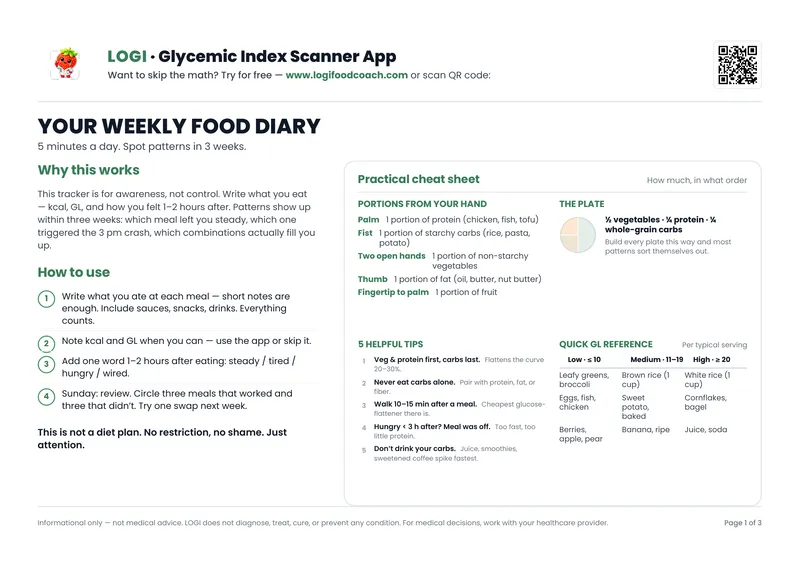
Free PDF — 3 pages
Your Weekly Food Journal
Track meals, glycemic load & mood. Spot patterns in 3 weeks.
No spam. Unsubscribe anytime.