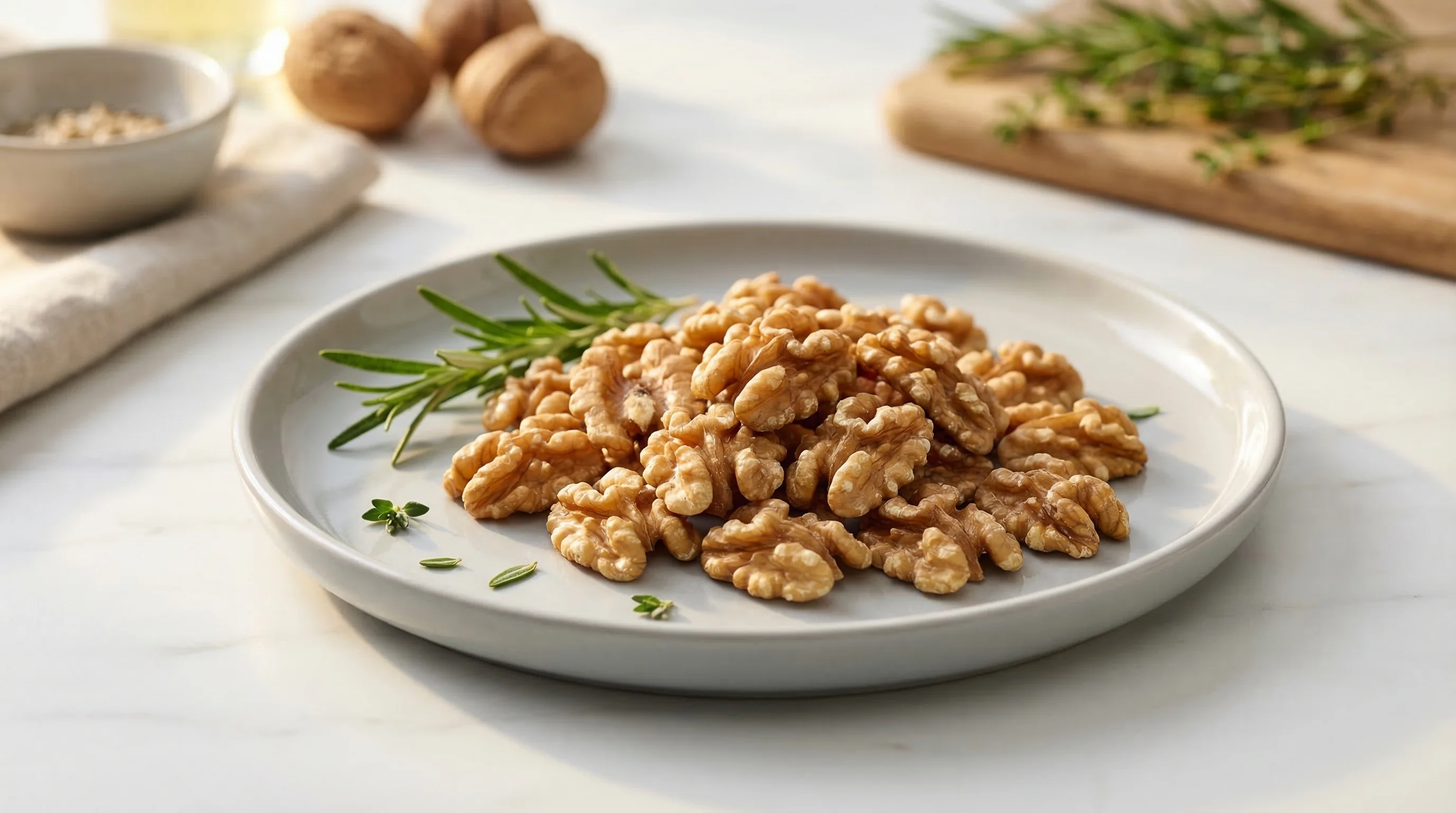
Handful of Walnuts
A perfectly portioned walnut snack that delivers healthy fats, protein, and fiber with minimal impact on blood sugar—ideal for steady energy throughout the day.
Walnuts are a nutritional powerhouse and one of the best snacks for blood sugar management. With a glycemic index near zero, they provide sustained energy without causing glucose spikes. This simple portion-controlled snack delivers omega-3 fatty acids, plant-based protein, and dietary fiber that work together to slow digestion and promote stable blood sugar levels.
The healthy fats in walnuts not only support cardiovascular health but also help moderate the glycemic response of other foods when eaten together. Research shows that consuming nuts regularly can improve insulin sensitivity and reduce the risk of type 2 diabetes. The combination of protein, fiber, and beneficial fats makes walnuts incredibly satiating, helping you feel full longer and reducing cravings for high-glycemic snacks.
This snack is perfect for mid-morning or mid-afternoon when blood sugar tends to dip. Pair with a small piece of fruit for added nutrients, or enjoy alone as a pre-meal appetizer to help blunt the glycemic impact of your main course. The portion size of approximately seven walnut halves (about 1 ounce) provides optimal nutrition without excess calories, making it an ideal choice for anyone focused on metabolic health and blood sugar stability.
Blood Sugar Impact
Minimal to negligible blood sugar impact. Walnuts are extremely low glycemic with high fat and protein content, providing stable energy for 3-4 hours without causing blood sugar spikes.
Blood Sugar Tips
- ✓ Eat walnuts as a snack between meals to help stabilize blood sugar and prevent energy crashes
- ✓ Pair with a small amount of fruit if desired, as the healthy fats will slow sugar absorption
- ✓ Consider eating walnuts 15-20 minutes before a higher-carb meal to reduce the overall glycemic response
🥗 Ingredients
- 28 g walnuts
- 1.0 oz walnuts
👨🍳 Instructions
- 1
Measure out approximately 28 grams of raw walnuts, which equals about 7 walnut halves or 14 individual pieces.
- 2
Place the walnuts in a small bowl or container to help with portion control and mindful eating.
- 3
If desired, lightly toast the walnuts in a dry skillet over medium heat for 2-3 minutes to enhance their flavor and aroma, though this is optional.
- 4
Allow toasted walnuts to cool for a minute before consuming, or enjoy raw walnuts immediately.
- 5
Eat slowly and mindfully, chewing thoroughly to maximize satiety and nutrient absorption, which helps maintain stable blood sugar levels throughout the day.
📊 Nutrition Per Serving
| Per Serving | Whole Dish | |
|---|---|---|
| Calories | 183 | 183 |
| Carbs | 4g | 4g |
| Sugars | 1g | 1g |
| Natural Sugars | 1g | 1g |
| Protein | 4g | 4g |
| Fat | 18g | 18g |
| Saturated Fat | 2g | 2g |
| Unsaturated Fat | 16g | 16g |
| Fiber | 2g | 2g |
| Soluble Fiber | 1g | 1g |
| Insoluble Fiber | 1g | 1g |
| Sodium | 1mg | 1mg |
Predicted Glucose Response
What if you...
Estimated model — individual responses vary. Not medical advice.
🔄 Lower GI Swaps
While walnuts already have an excellent GL of 0.3, almonds have an even lower GL of 0.0 per serving and provide more fiber to further slow glucose absorption. Pecans and macadamia nuts also have negligible GL values and contain healthy fats that help stabilize blood sugar levels even more effectively.
🔬 The Science Behind This Recipe
Why Walnuts Are a Blood Sugar Champion
Walnuts are remarkably effective for blood sugar management, with an extremely low glycemic index of just 7 and a glycemic load of only 0.3 per serving. This makes them one of the best snack choices for anyone monitoring their glucose levels. The secret lies in their unique nutritional composition: walnuts contain minimal carbohydrates (about 4 grams per ounce) but are packed with healthy fats, protein, and fiber. This powerful combination means they provide sustained energy without triggering the rapid blood sugar spikes associated with typical snacks like crackers or fruit alone.
The healthy fats in walnuts—particularly omega-3 fatty acids—play a crucial role in slowing digestion and glucose absorption. When you eat walnuts, these fats create a buffer that moderates how quickly any carbohydrates enter your bloodstream. Additionally, the protein and fiber content work together to promote feelings of fullness and steady energy release. Research shows that including nuts in your diet can actually improve insulin sensitivity over time, meaning your body becomes more efficient at managing blood sugar.
For maximum benefit, enjoy walnuts as a strategic snack between meals or pair them with higher-glycemic foods to reduce the overall glucose impact. For example, adding walnuts to oatmeal or eating them alongside an apple significantly lowers the combined glycemic response compared to eating those carbohydrates alone. A small handful (about 1 ounce or 14 walnut halves) provides these benefits while delivering heart-healthy nutrients. Consider keeping pre-portioned bags in your desk or car for convenient, blood-sugar-friendly snacking throughout the day.
Related recipes
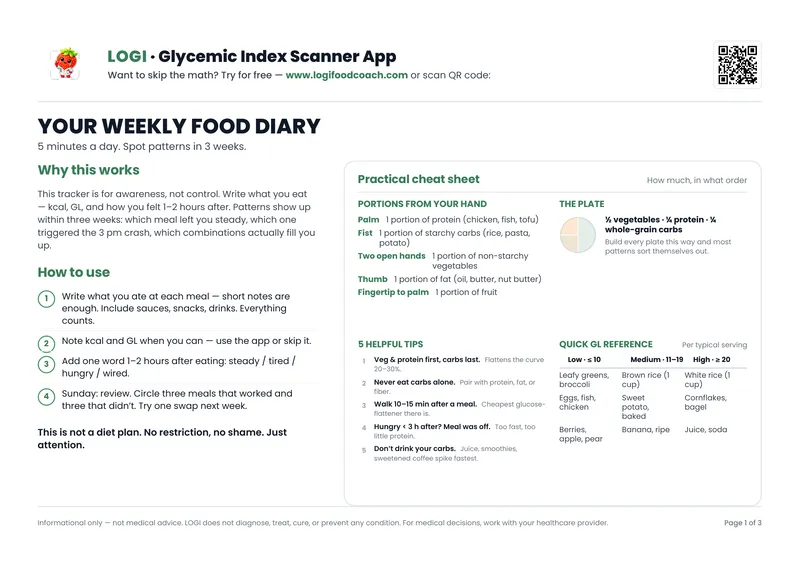
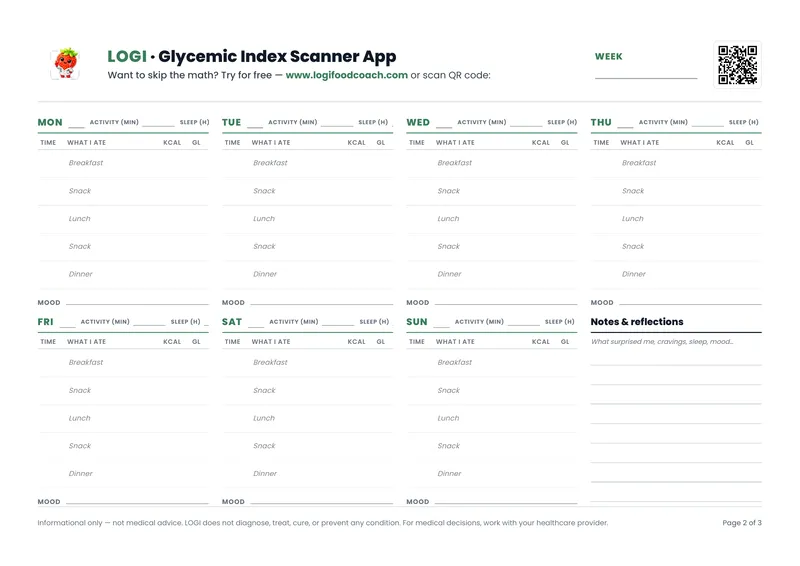
Free PDF — 3 pages
Your Weekly Food Journal
Track meals, glycemic load & mood. Spot patterns in 3 weeks.
No spam. Unsubscribe anytime.