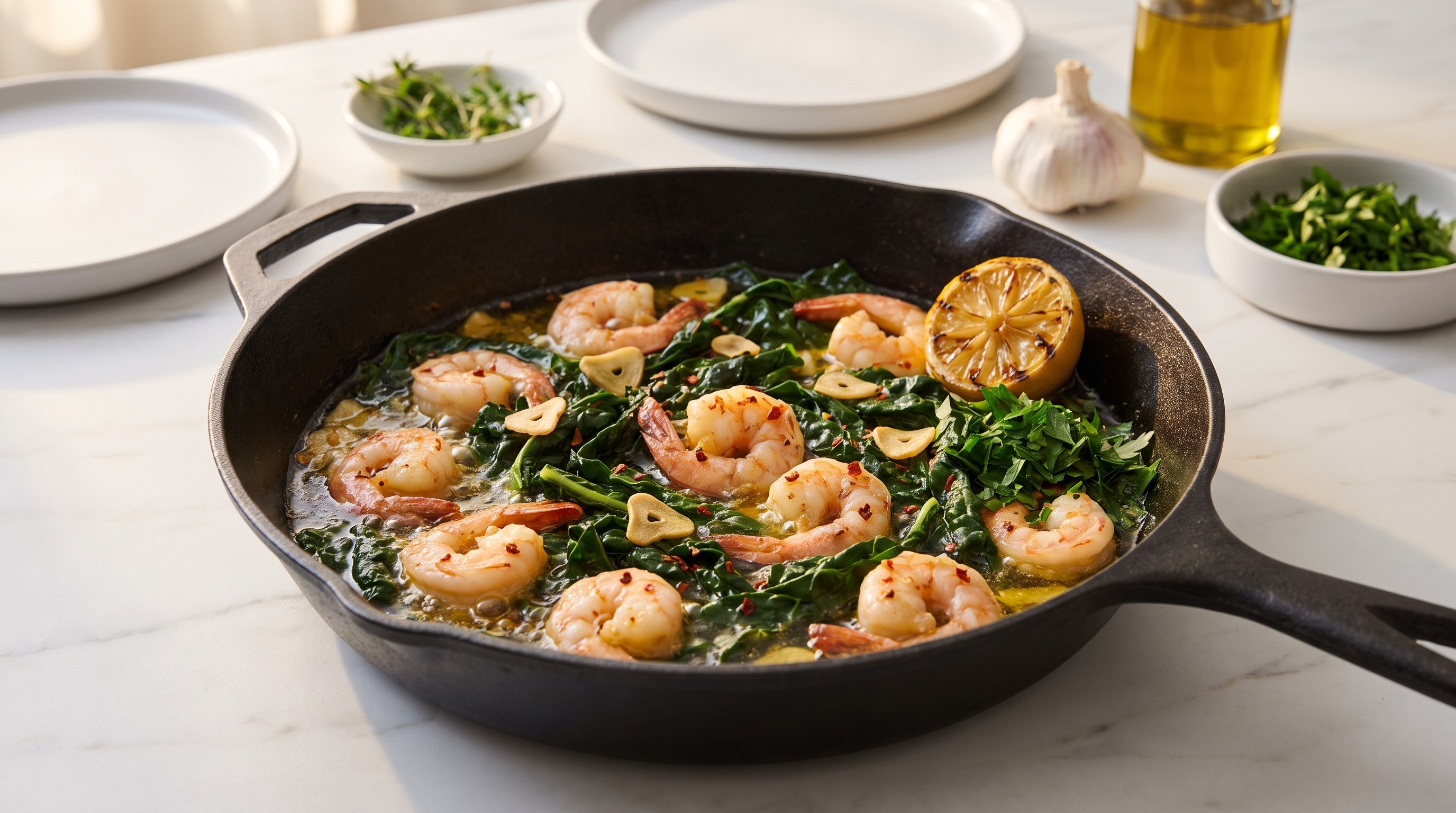
Gambas al Ajillo with Sautéed Cavolo Nero
Garlicky prawns sizzled in olive oil with smoked paprika and chilli, served over wilted cavolo nero — a naturally low-GI Spanish tapas dish.
Gambas al ajillo is one of Spain's most beloved tapas, and it happens to be a near-perfect low-glycemic dish straight out of the gate. Plump prawns are flash-cooked in a generous pool of extra virgin olive oil infused with thinly sliced garlic and dried chilli, creating an intensely aromatic base that carries the dish. The healthy monounsaturated fats in the olive oil slow gastric emptying and help blunt any post-meal glucose rise, while the protein-rich prawns keep you satiated without adding any carbohydrate load at all.
Traditionally this dish arrives with crusty white bread for soaking up the golden oil — a high-glycemic accompaniment that can undo much of its metabolic advantage. Here, cavolo nero (Tuscan kale) steps in as a far superior partner. Wilted in the same garlicky pan juices, its robust, slightly bitter leaves absorb every drop of flavour while contributing fibre, vitamin K, iron, and virtually zero impact on blood sugar. The fibre in cavolo nero further slows digestion and supports steady glucose levels throughout the meal.
A final squeeze of lemon brightens everything and adds vitamin C, which enhances iron absorption from the kale. For optimal blood-sugar management, eat the cavolo nero first to lay down a fibre buffer, then enjoy the prawns. The entire dish comes together in just over twenty minutes, making it an ideal weeknight dinner that is as metabolically smart as it is satisfying.
Blood Sugar Impact
Very low blood sugar impact expected. This protein-and-fat-rich dish with fibrous greens has a GL of 4.5 and estimated GI of 20, meaning it will produce a minimal, slow glucose rise and stable energy for 3-4 hours.
Blood Sugar Tips
- ✓ Eat the cavolo nero first before the prawns to lay down a fiber base that further blunts any minor glucose uptake.
- ✓ Squeeze the lemon generously over the dish — the acidity can slow gastric emptying and reduce glycemic response by up to 20-30%.
- ✓ Pair this tapas-style dish with a small portion of sourdough or legume-based bread rather than white bread to keep the overall meal's glycemic load low.
🥗 Ingredients
- 400 g Prawn
- 60 ml Extra virgin olive oil
- 8 pcs Garlic
- 1 pcs Dried guindilla chilli
- 0.5 tsp Sweet smoked paprika
- 300 g Cavolo nero
- 1 tbsp Flat-leaf parsley
- 1 pcs Lemon
- 0.5 tsp Sea salt flakes
- 14.1 oz Prawn
- 4 tbsp Extra virgin olive oil
- 8 pcs Garlic
- 1 pcs Dried guindilla chilli
- 0.5 tsp Sweet smoked paprika
- 10.6 oz Cavolo nero
- 1 tbsp Flat-leaf parsley
- 1 pcs Lemon
- 0.5 tsp Sea salt flakes
👨🍳 Instructions
- 1
Prepare the ingredients: peel and slice each garlic clove into thin, translucent chips. Strip the cavolo nero leaves away from their tough central ribs and tear each leaf into large, hand-sized pieces. Pat the prawns dry with kitchen paper and set aside.
- 2
Place a wide, heavy-based skillet over medium-low heat and pour in the olive oil. Once the oil begins to shimmer, scatter in the garlic slices and the broken dried chilli. Cook gently for about 2 minutes, stirring frequently, until the garlic turns a pale straw-gold colour and the oil is deeply fragrant. If the garlic begins to darken beyond golden, briefly lift the pan off the heat.
- 3
Turn the heat up to high. Arrange the prawns in a single layer across the pan and season them with the smoked paprika and sea salt flakes. Let the prawns sear undisturbed for about 90 seconds until the undersides turn pink.
- 4
Flip each prawn and cook for a further 90 seconds on the second side. The prawns are done when they are uniformly pink, lightly curled, and opaque throughout. Transfer them to a clean plate and set aside.
- 5
With the pan still over medium-high heat, add the torn cavolo nero leaves directly into the garlicky oil. Toss the leaves to coat them evenly and cook for 3 to 4 minutes, turning occasionally, until the kale is wilted, bright green, and tender but still has a slight bite.
- 6
Return the prawns to the pan, nestling them among the wilted cavolo nero. Scatter the chopped parsley over the top and squeeze both lemon halves generously over everything.
- 7
Give the dish one final toss to combine all the elements, then remove the pan from the heat. Serve immediately straight from the skillet while the oil is still sizzling. For optimal blood-sugar management, eat a few forkfuls of the cavolo nero first — the fibre helps buffer glucose absorption from the rest of the meal.
📊 Nutrition Per Serving
| Per Serving | Whole Dish | |
|---|---|---|
| Calories | 542 | 1084 |
| Carbs | 22g | 44g |
| Sugars | 3g | 6g |
| Natural Sugars | 3g | 6g |
| Protein | 54g | 109g |
| Fat | 29g | 59g |
| Saturated Fat | 4g | 8g |
| Unsaturated Fat | 25g | 50g |
| Fiber | 6g | 13g |
| Soluble Fiber | 2g | 4g |
| Insoluble Fiber | 4g | 9g |
| Sodium | 918mg | 1836mg |
Predicted Glucose Response
What if you...
Estimated model — individual responses vary. Not medical advice.
🔄 Lower GI Swaps
Fenugreek leaves contain soluble fiber and compounds shown to slow carbohydrate digestion and improve insulin sensitivity, actively lowering postprandial blood sugar. Cilantro also contains bioactive compounds associated with improved glucose metabolism.
Adding apple cider vinegar to the lemon finish introduces acetic acid, which studies show can reduce the postprandial glycemic response by 20-30% by slowing gastric emptying. Lime offers a similar low-sugar citrus profile with a slightly lower glycemic load.
Ceylon cinnamon has been shown to improve insulin sensitivity and lower fasting blood glucose by enhancing glucose uptake in cells. Turmeric's curcumin supports healthy blood sugar regulation by improving pancreatic beta-cell function. Both complement the existing paprika rather than fully replacing it.
🔬 The Science Behind This Recipe
Why This Recipe Works for Blood Sugar
This dish is a near-perfect example of how protein, healthy fats, and fiber-rich greens can come together to keep your blood sugar remarkably steady. Prawns are almost pure protein with virtually no carbohydrates, meaning they cause practically zero glucose response on their own. But they do something even more valuable — protein triggers a gentle release of hormones that slow down stomach emptying, which means any carbohydrates you eat alongside them enter your bloodstream gradually rather than all at once. Paired with a generous amount of extra virgin olive oil, you get a double layer of protection: the fat further slows digestion and helps your cells respond more effectively to insulin.
Then there's the cavolo nero — a powerhouse of soluble fiber that acts almost like a sponge in your digestive system, forming a gel-like barrier that slows the absorption of sugars. When you eat fiber-rich greens before or alongside other foods, studies suggest they can meaningfully blunt the glucose spike from an entire meal. This is why eating your vegetables first is one of the simplest and most effective strategies for steadier energy levels throughout the day.
With a glycemic load of just 4.5 per serving, this recipe sits firmly in the "low" category (anything under 10 is considered low). Remember, glycemic load accounts for both the type and the amount of carbohydrates on your plate — and since this dish is built almost entirely on protein, fat, and non-starchy vegetables, there simply isn't much to spike your blood sugar in the first place. For an extra boost, try a 10-15 minute walk after eating — even gentle movement helps your muscles absorb glucose more efficiently, keeping your levels smooth and steady.
Related recipes
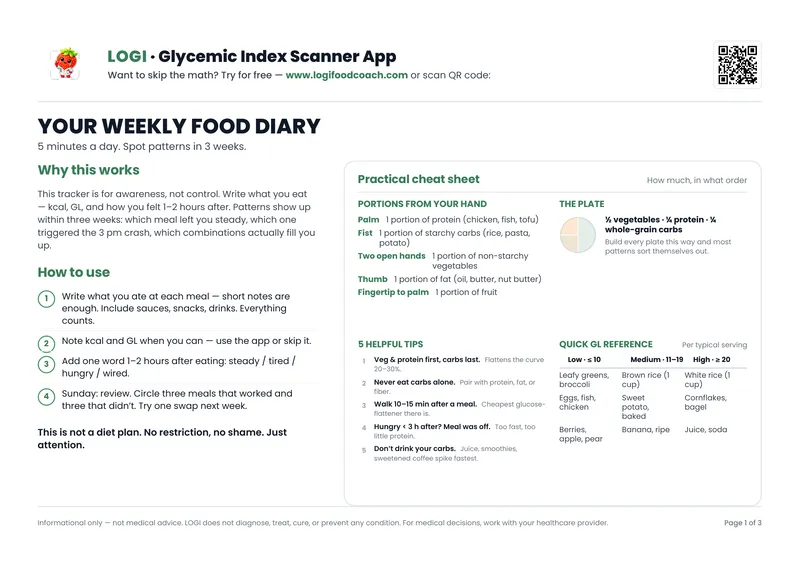
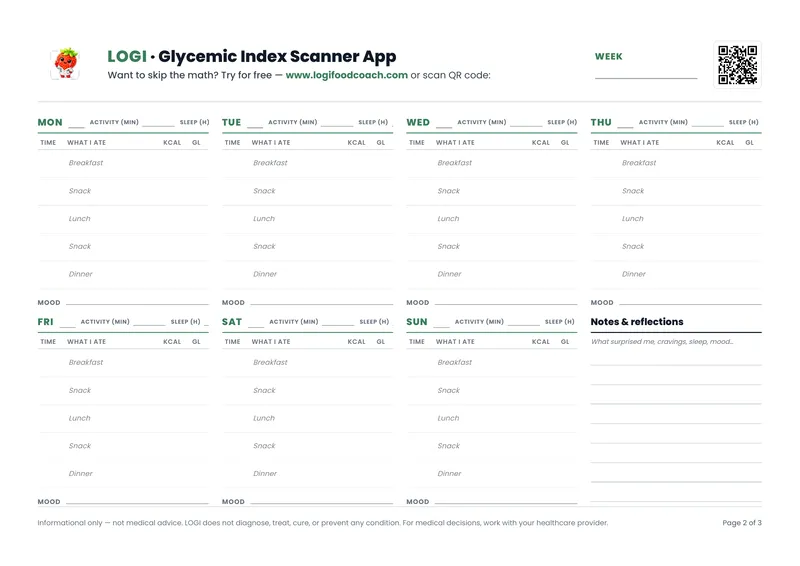
Free PDF — 3 pages
Your Weekly Food Journal
Track meals, glycemic load & mood. Spot patterns in 3 weeks.
No spam. Unsubscribe anytime.