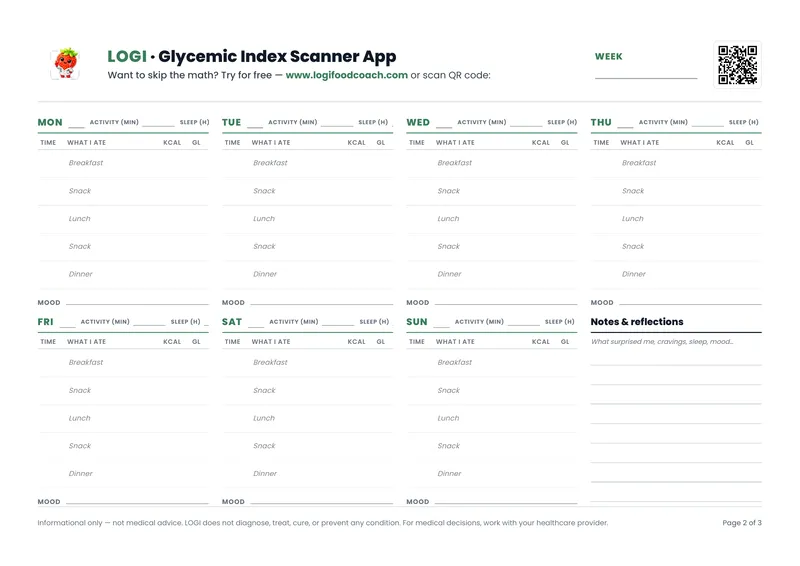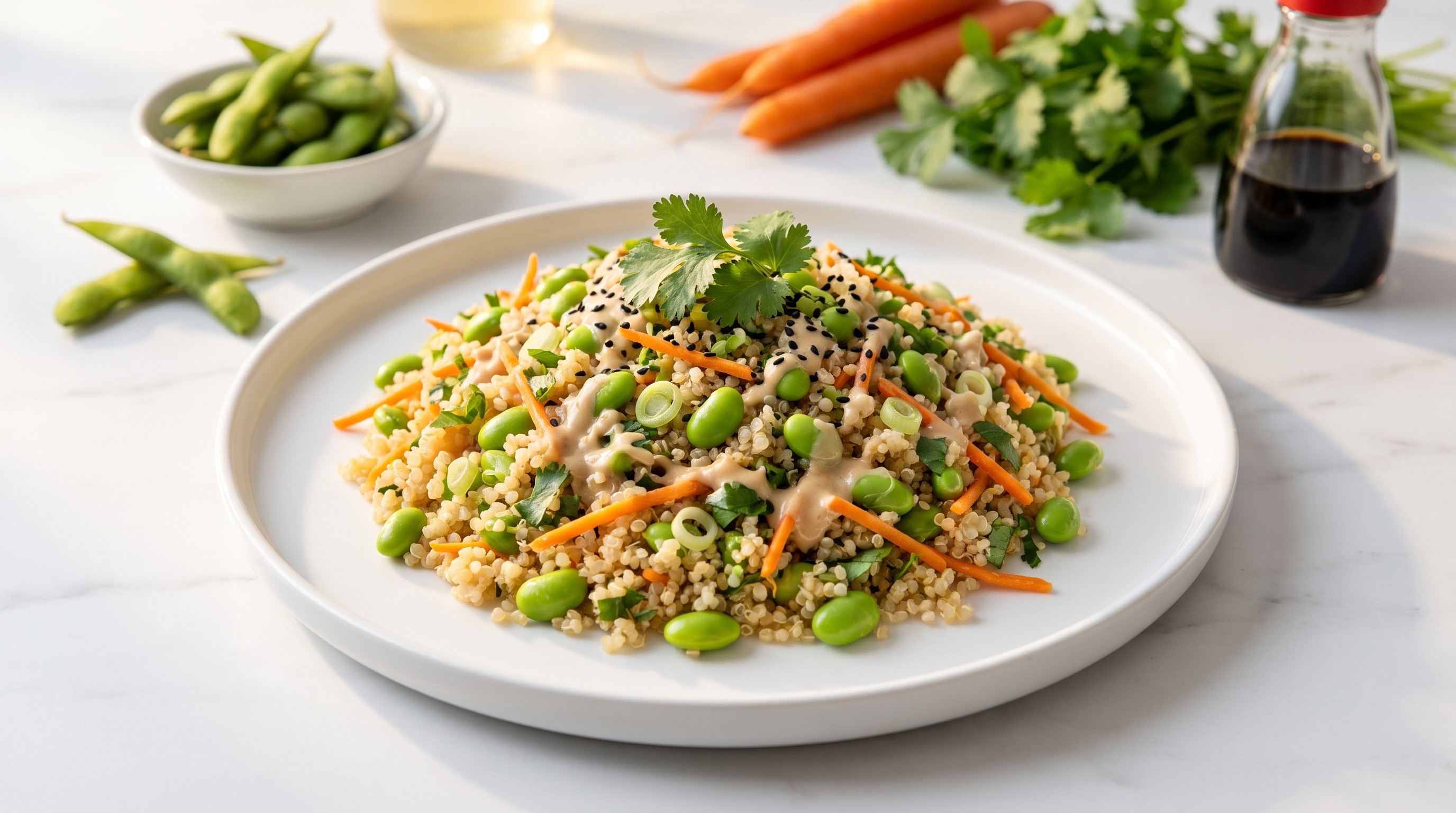
Edamame Quinoa Salad with Sesame Ginger Dressing
A protein-rich Asian-inspired bowl with low-GI quinoa, edamame, and crunchy vegetables in a creamy tahini-ginger dressing for steady energy.
This vibrant lunch bowl brings together two plant-based protein powerhouses — quinoa and edamame — in a dish that delivers steady, sustained energy without the blood sugar rollercoaster. Quinoa has a glycemic index of around 53, placing it firmly in the low-GI category, while edamame adds both protein and fiber that further slow glucose absorption. The result is a meal that keeps you satisfied for hours.
The sesame ginger dressing is where this salad truly shines. Tahini contributes healthy fats and a creamy texture that coats every grain and bean, while fresh ginger adds a bright, warming note that also supports digestion. Rice vinegar and soy sauce bring umami depth without added sugars, and toasted sesame oil rounds everything out with its distinctive nutty aroma. The optional half teaspoon of honey is negligible in glycemic impact when spread across two servings.
From a blood sugar perspective, this bowl follows several smart principles. The combination of protein, healthy fat, and fiber creates a triple brake on glucose absorption. Eating the raw vegetables first — the julienned carrot and spring onions — before moving to the quinoa can further blunt any postprandial spike. This salad also improves with time, making it an ideal meal-prep option for workday lunches when reaching for convenient but high-GI alternatives is most tempting.
Blood Sugar Impact
Very low blood sugar impact expected. The combination of quinoa's moderate GI with high-protein edamame, fiber-rich vegetables, and healthy fats from tahini and sesame oil will produce a gentle, sustained rise in blood glucose with stable energy for 3-4 hours.
Blood Sugar Tips
- ✓ Start with the edamame and vegetables before eating the quinoa to slow gastric emptying and blunt any glucose rise.
- ✓ The tahini and sesame oil provide healthy fats that further slow carbohydrate absorption — make sure to mix the dressing thoroughly through the salad rather than leaving it on the side.
- ✓ Take a 10-15 minute walk after eating to enhance glucose uptake by muscles and keep blood sugar even flatter.
🥗 Ingredients
- 80 g Quinoa
- 200 g Edamame
- 1 pcs Carrot
- 2 pcs Spring onion
- 1 tbsp Cilantro
- 1 tbsp Tahini
- 1 tbsp Rice vinegar
- 2 tsp Soy sauce
- 1 tsp Sesame oil
- 1 tsp Ginger
- 1 tsp Sesame seeds
- 0.5 tsp Honey
- 2.8 oz Quinoa
- 7.1 oz Edamame
- 1 pcs Carrot
- 2 pcs Spring onion
- 1 tbsp Cilantro
- 1 tbsp Tahini
- 1 tbsp Rice vinegar
- 2 tsp Soy sauce
- 1 tsp Sesame oil
- 1 tsp Ginger
- 1 tsp Sesame seeds
- 0.5 tsp Honey
👨🍳 Instructions
- 1
Place the quinoa in a fine-mesh sieve and rinse thoroughly under cold running water for about 30 seconds, rubbing the grains gently between your fingers. This washes away the natural saponin coating that can leave a bitter, soapy taste. Shake off excess water and set aside to drain.
- 2
Set a medium saucepan over medium heat and add the drained quinoa. Stir continuously for about 2 minutes until the grains look dry and you notice a light, nutty aroma. Toasting before boiling enhances flavor and helps keep the grains separate once cooked.
- 3
Pour 160 ml (about 2/3 cup) of cold water into the saucepan with the toasted quinoa and add a small pinch of salt. Bring to a boil, then reduce the heat to the lowest setting and cover tightly. Simmer undisturbed for 12 minutes, then remove from the heat and let the quinoa steam with the lid on for another 5 minutes. Uncover and fluff with a fork, then spread on a plate to cool slightly.
- 4
While the quinoa cooks, bring a small pot of water to a rolling boil. Add the frozen edamame and cook for 4 minutes until tender but still bright green. Drain immediately and rinse under cold running water to stop the cooking and bring the beans to room temperature for the salad.
- 5
Prepare the vegetables while the grains and beans cook. Peel the carrot and cut it into thin julienne strips or grate it on the coarse side of a box grater. Thinly slice the spring onions on the diagonal, keeping some of the green tops for color. Roughly chop the cilantro or mint if using.
- 6
Make the dressing by whisking together the tahini, rice vinegar, soy sauce, toasted sesame oil, freshly grated ginger, sesame seeds, and honey (if using) in a small bowl. The consistency should be smooth and pourable, like thin cream. If it seems too thick, stir in 1 to 2 teaspoons of warm water until it loosens up.
- 7
Combine the slightly cooled quinoa, edamame, julienned carrot, spring onions, and fresh herbs in a large mixing bowl. Drizzle the dressing over everything and toss gently with a spatula or two forks until each ingredient is evenly coated. Taste and adjust with a pinch of salt or an extra splash of rice vinegar if needed.
- 8
Divide the salad between two bowls and serve at room temperature for the best flavor. Alternatively, pack into airtight glass containers and refrigerate for up to 3 days — the flavors deepen overnight, making this an excellent meal-prep option. For optimal blood sugar management, eat the raw vegetables first, then the protein-rich edamame, and finish with the quinoa.
📊 Nutrition Per Serving
| Per Serving | Whole Dish | |
|---|---|---|
| Calories | 297 | 593 |
| Carbs | 28g | 57g |
| Sugars | 6g | 12g |
| Natural Sugars | 6g | 12g |
| Protein | 17g | 33g |
| Fat | 15g | 29g |
| Saturated Fat | 2g | 4g |
| Unsaturated Fat | 13g | 25g |
| Fiber | 9g | 18g |
| Soluble Fiber | 3g | 5g |
| Insoluble Fiber | 6g | 13g |
| Sodium | 573mg | 1145mg |
Predicted Glucose Response
What if you...
Estimated model — individual responses vary. Not medical advice.
🔄 Lower GI Swaps
Quinoa has a moderate GI (53). Cauliflower rice has a negligible glycemic impact, hulled barley (GI ~28) and black lentils (GI ~32) are among the lowest-GI grain/legume alternatives, all significantly reducing the dish's glycemic load.
Honey has a high GI (58–70) and adds pure sugar. Monk fruit and stevia have a GI of 0, while yacon syrup (GI ~1) provides sweetness with virtually no blood sugar impact.
Carrots have a moderate GI (~47) that can rise when finely grated or cooked. Cucumber (GI ~15), zucchini (GI ~15), and radish (GI ~15) offer crunch and freshness with a much lower glycemic impact.
Some rice vinegars contain added sugar, which raises their glycemic impact. Apple cider vinegar and white wine vinegar are sugar-free and studies show acetic acid can help blunt post-meal blood sugar spikes.
🔬 The Science Behind This Recipe
Here's the science explainer for the Edamame Quinoa Salad:
---
Why This Recipe Works for Your Blood Sugar
This salad is a masterclass in blood sugar-friendly eating, and it starts with two powerhouse ingredients: quinoa and edamame. Quinoa is often called a grain, but it's actually a seed — and unlike white rice or couscous, it comes packed with both fiber and protein. That combination is key, because fiber slows down how quickly your body breaks food into glucose, while protein helps your cells respond more effectively to that glucose. The result? A gentle, steady rise in energy rather than the sharp spike-and-crash cycle you might get from refined carbs. Edamame takes this even further by adding plant-based protein and healthy fats, both of which act like a "speed bump" for digestion, giving your body more time to process what you've eaten.
Here's where the concept of Glycemic Load comes in — and it's a game-changer. You may have heard of the Glycemic Index (GI), which ranks foods by how fast they raise blood sugar. But GI alone doesn't tell the whole story because it ignores portion size. Glycemic Load factors in how much carbohydrate you're actually eating per serving. This salad has a GL of just 8.8, which falls in the "low" category, meaning it's unlikely to cause a meaningful glucose spike even though quinoa contains carbs. The amount matters just as much as the type.
Want to make this meal work even harder for you? Try eating the vegetables and edamame first, saving the quinoa for last — research suggests this simple order change can reduce glucose spikes by up to 30%. Adding the sesame ginger dressing isn't just delicious; the fat from sesame oil further slows carbohydrate absorption. And if you can, take a 10-15 minute walk after eating. Light movement helps your muscles pull glucose from your bloodstream, acting like a natural buffer. Small habits, big difference.
Related recipes
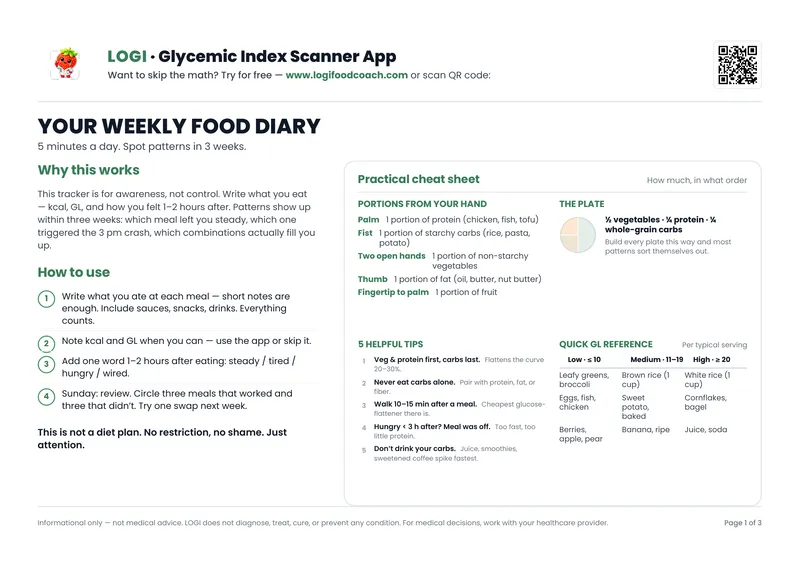
Free PDF — 3 pages
Your Weekly Food Journal
Track meals, glycemic load & mood. Spot patterns in 3 weeks.
No spam. Unsubscribe anytime.