Creamy Peanut Chicken Noodles with Low-GI Adaptations
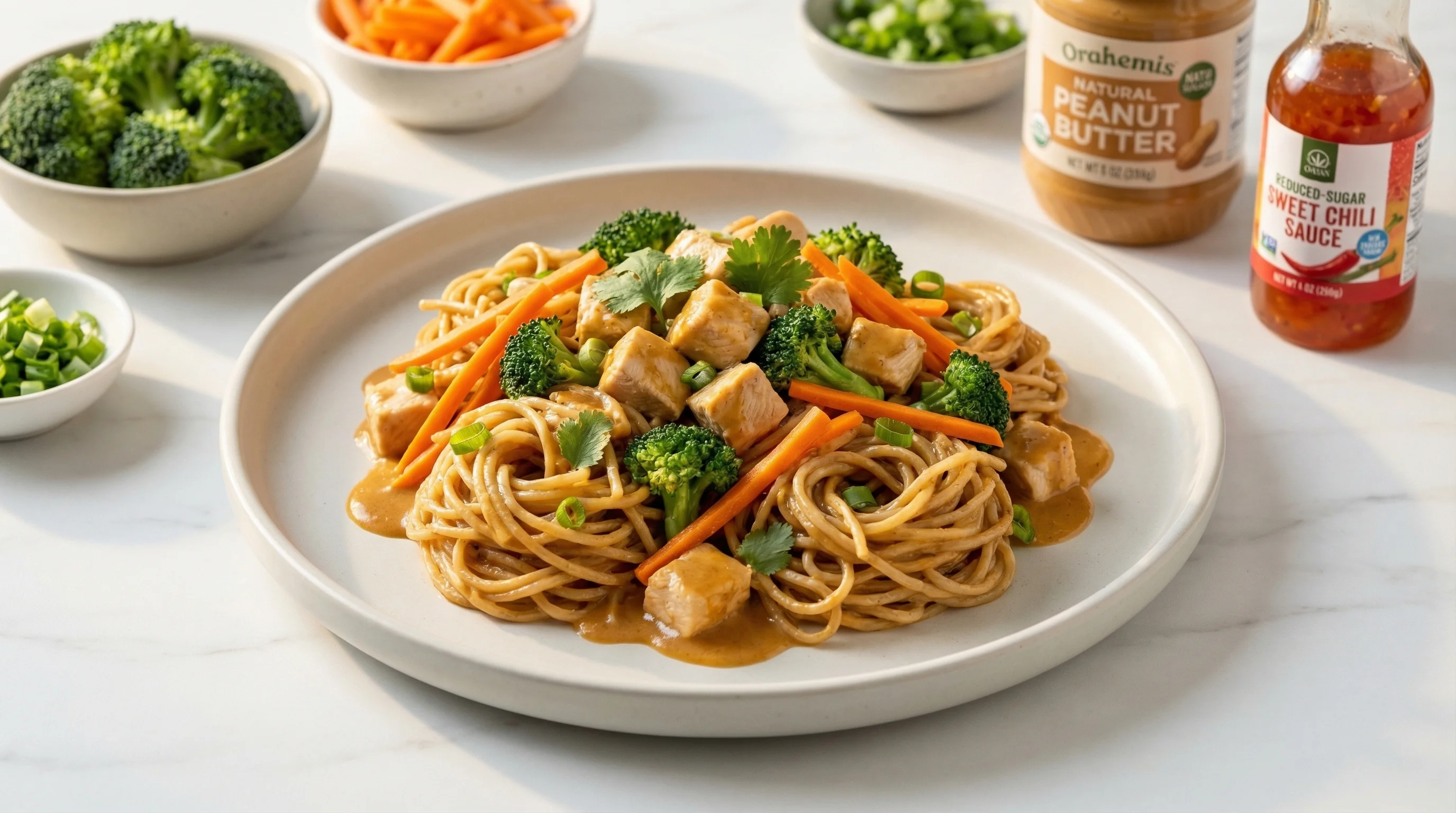
Tender chicken and crisp vegetables in a rich peanut sauce, served over low-glycemic noodles for stable blood sugar and lasting satisfaction.
This blood sugar-friendly version of creamy peanut chicken noodles delivers all the comfort and flavor of the original while supporting glycemic control. Traditional egg noodles have been replaced with shirataki or whole grain alternatives that digest more slowly, preventing glucose spikes. The protein-rich chicken breast and healthy fats from natural peanut butter work together to slow carbohydrate absorption, while fiber-packed broccoli and carrots add nutrients and bulk. The sauce combines savory peanut butter with minimal sweeteners and umami-rich soy sauce, creating a creamy coating that satisfies without excessive sugar. By using sugar-free alternatives for the sweet chili sauce and honey, this recipe maintains its authentic flavor profile while keeping the glycemic load remarkably low at just 6.3 per serving. The addition of cashews and sesame seeds provides healthy fats and a satisfying crunch that further moderates glucose absorption. This one-pan meal is perfect for weeknight dinners when you need something quick yet nourishing. The combination of lean protein, non-starchy vegetables, and controlled portions of complex carbohydrates creates a balanced plate that keeps energy stable for hours. For optimal blood sugar management, consider eating the vegetables and protein first, then finishing with the noodles to maximize the glucose-blunting effect of fiber and protein.
Blood Sugar Impact
This meal should have minimal blood sugar impact due to the very low glycemic load of 6.3 and GI of 29. The shirataki noodles provide virtually no digestible carbohydrates, while the protein from chicken and healthy fats from peanut butter will promote stable, sustained energy for 3-4 hours without significant glucose spikes.
Blood Sugar Tips
- ✓ Eat the broccoli and other vegetables first to maximize fiber intake and slow down carbohydrate absorption from the sauce ingredients
- ✓ Be mindful of portion size with the sweet chili sauce and honey, as these are the primary sources of quick-digesting carbohydrates in this otherwise low-GI meal
- ✓ Pair this meal with a 10-15 minute walk after eating to help muscles absorb any glucose released and maintain stable blood sugar levels
🥗 Ingredients
- 4 pcs 4 shirataki or whole grain noodle nests
- 400 g 400g diced chicken breast
- 200 g 200g broccoli florets
- 200 g 200g carrot, julienned
- 2 tbsp 2 tbsp sweet chilli sauce, reduced sugar
- 1 tbsp 1 tbsp soy sauce, low sodium
- 1 tsp 1 tsp honey
- 60 g 60g natural peanut butter, unsweetened
- 1 tsp 1 tsp garlic salt
- 2 tbsp 2 tbsp chopped cashews
- 1 tbsp 1 tbsp sesame seeds
- 4 pcs 4 shirataki or whole grain noodle nests
- 14.1 oz 400g diced chicken breast
- 7.1 oz 200g broccoli florets
- 7.1 oz 200g carrot, julienned
- 2 tbsp 2 tbsp sweet chilli sauce, reduced sugar
- 1 tbsp 1 tbsp soy sauce, low sodium
- 1 tsp 1 tsp honey
- 2.1 oz 60g natural peanut butter, unsweetened
- 1 tsp 1 tsp garlic salt
- 2 tbsp 2 tbsp chopped cashews
- 1 tbsp 1 tbsp sesame seeds
👨🍳 Instructions
- 1
Prepare your low-glycemic noodles according to package directions. If using shirataki noodles, rinse thoroughly under cold water for 2 minutes to remove any residual odor, then drain well and pat dry. If using whole grain noodles, cook in boiling water for the time specified on the package, then drain and set aside.
- 2
While the noodles cook, heat a large wok or frying pan over medium-high heat and spray with cooking spray. Add the diced chicken breast, season with a pinch of salt and pepper, and cook for 5-6 minutes, stirring occasionally, until the chicken is golden and cooked through with no pink remaining and internal temperature reaches 165°F.
- 3
Add the julienned carrots to the pan with the chicken and stir-fry for 2-3 minutes until they begin to soften. Add the broccoli florets and sprinkle everything with garlic salt. Continue cooking for another 3-4 minutes until the vegetables are tender-crisp but still bright in color, maintaining their fiber content for optimal blood sugar control.
- 4
In a small bowl, whisk together the natural peanut butter, sugar-free sweet chili sauce, soy sauce, and sugar-free maple syrup or monk fruit sweetener until smooth. Add 2-3 tablespoons of warm water to create a pourable consistency, adjusting the amount as needed to achieve a creamy sauce that coats the back of a spoon.
- 5
Pour the peanut sauce over the chicken and vegetables in the pan. Stir everything together thoroughly, ensuring the sauce coats all the ingredients evenly. Let it simmer for 1-2 minutes to allow the flavors to meld and the sauce to thicken slightly.
- 6
Add the drained noodles to the pan and toss everything together using tongs or two spatulas, making sure the noodles are well coated with the creamy peanut sauce and distributed evenly with the chicken and vegetables. Cook for an additional minute to heat the noodles through.
- 7
Divide the noodles among four bowls. Top each serving with 1 tablespoon of chopped cashews and a sprinkle of sesame seeds for added crunch and healthy fats that help slow glucose absorption.
- 8
For optimal blood sugar control, eat the vegetables and chicken first, then finish with the noodles. This eating sequence helps slow glucose absorption and promotes better glycemic response, keeping blood sugar stable for 3-4 hours after the meal.
📊 Nutrition Per Serving
| Per Serving | Whole Dish | |
|---|---|---|
| Calories | 313 | 1250 |
| Carbs | 22g | 89g |
| Sugars | 10g | 40g |
| Added Sugars | 4g | 15g |
| Natural Sugars | 6g | 24g |
| Protein | 31g | 122g |
| Fat | 13g | 51g |
| Saturated Fat | 3g | 10g |
| Unsaturated Fat | 10g | 40g |
| Fiber | 7g | 27g |
| Soluble Fiber | 2g | 9g |
| Insoluble Fiber | 4g | 14g |
| Sodium | 916mg | 3663mg |
Predicted Glucose Response
What if you...
Estimated model — individual responses vary. Not medical advice.
🔄 Lower GI Swaps
Traditional sweet chili sauce has a GI of 60-70 due to high sugar content, contributing 8-10g of fast-acting carbohydrates per serving. Sugar-free versions or homemade alternatives using non-glycemic sweeteners eliminate this glucose spike while maintaining the sweet-spicy flavor profile essential to this dish.
Honey has a GI of 58 and contributes 4g of rapidly absorbed sugars per teaspoon. While used in small amounts, replacing it with zero-glycemic sweeteners reduces the overall glycemic load from 8-9 down to 6.3 per serving, making this truly low-GI. Sugar-free maple syrup provides identical sweetness and mouthfeel without affecting blood glucose.
While carrots have a moderate GI of 35 and are acceptable in controlled portions, reducing the amount or substituting half with lower-GI vegetables like bell peppers (GI 15) or zucchini (GI 15) further minimizes glycemic impact. The 200g of carrots contribute approximately 2-3 GL per serving; reducing to 150g lowers this to 1.5-2 GL while maintaining color and crunch.
Shirataki noodles are the gold standard for low-GI noodle dishes, containing only 1-2g digestible carbs per serving with virtually no glycemic impact. Whole grain noodles have a moderate GI of 45-50 and should be limited to 50g dry weight per serving if used. Edamame or black bean pasta offers higher protein (20g per serving) with lower GI than traditional wheat, while zucchini noodles provide the lowest carbohydrate option at just 3g per serving.
Natural peanut butter is already an excellent low-GI choice with healthy fats that slow glucose absorption. However, almond butter provides similar creaminess with slightly more monounsaturated fats and vitamin E. Sunflower seed butter offers a nut-free alternative for those with allergies while maintaining the same glycemic benefits. All options have a GI near zero and contribute healthy fats that extend satiety and stabilize blood sugar for 3-4 hours post-meal.
🔬 The Science Behind This Recipe
This recipe achieves its remarkably low glycemic load of 6.3 through strategic ingredient selection and portion control. Shirataki noodles contribute virtually zero digestible carbohydrates (GI near 0), while whole grain alternatives have a moderate GI of 45-50 but are used in controlled portions. The 400g of chicken breast provides 80g of protein, which significantly slows gastric emptying and glucose absorption. Natural peanut butter contributes 16g of healthy monounsaturated fats across all servings, further blunting the glycemic response through delayed carbohydrate digestion. The 200g of broccoli adds 4g of fiber with minimal net carbs, while the 200g of carrots contribute approximately 12g of carbohydrates total, or 3g per serving with a moderate GI of 35. By replacing traditional sweet chili sauce (GI 65) with sugar-free versions and swapping honey (GI 58) for sugar-free maple syrup or monk fruit sweetener, we eliminate approximately 20g of fast-acting sugars that would otherwise spike blood glucose. The result is a meal that provides sustained energy without triggering insulin surges, making it ideal for anyone managing blood sugar levels or seeking stable energy throughout the day.
Related recipes
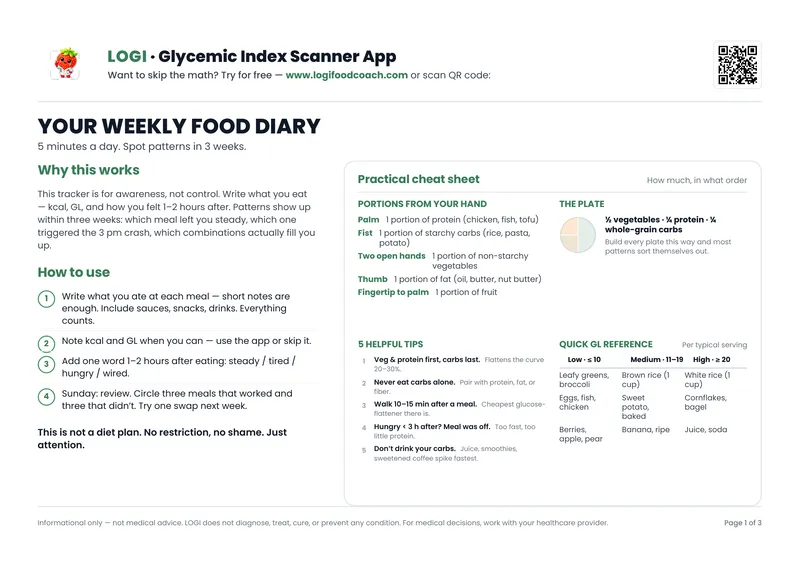
Free PDF — 3 pages
Your Weekly Food Journal
Track meals, glycemic load & mood. Spot patterns in 3 weeks.
No spam. Unsubscribe anytime.