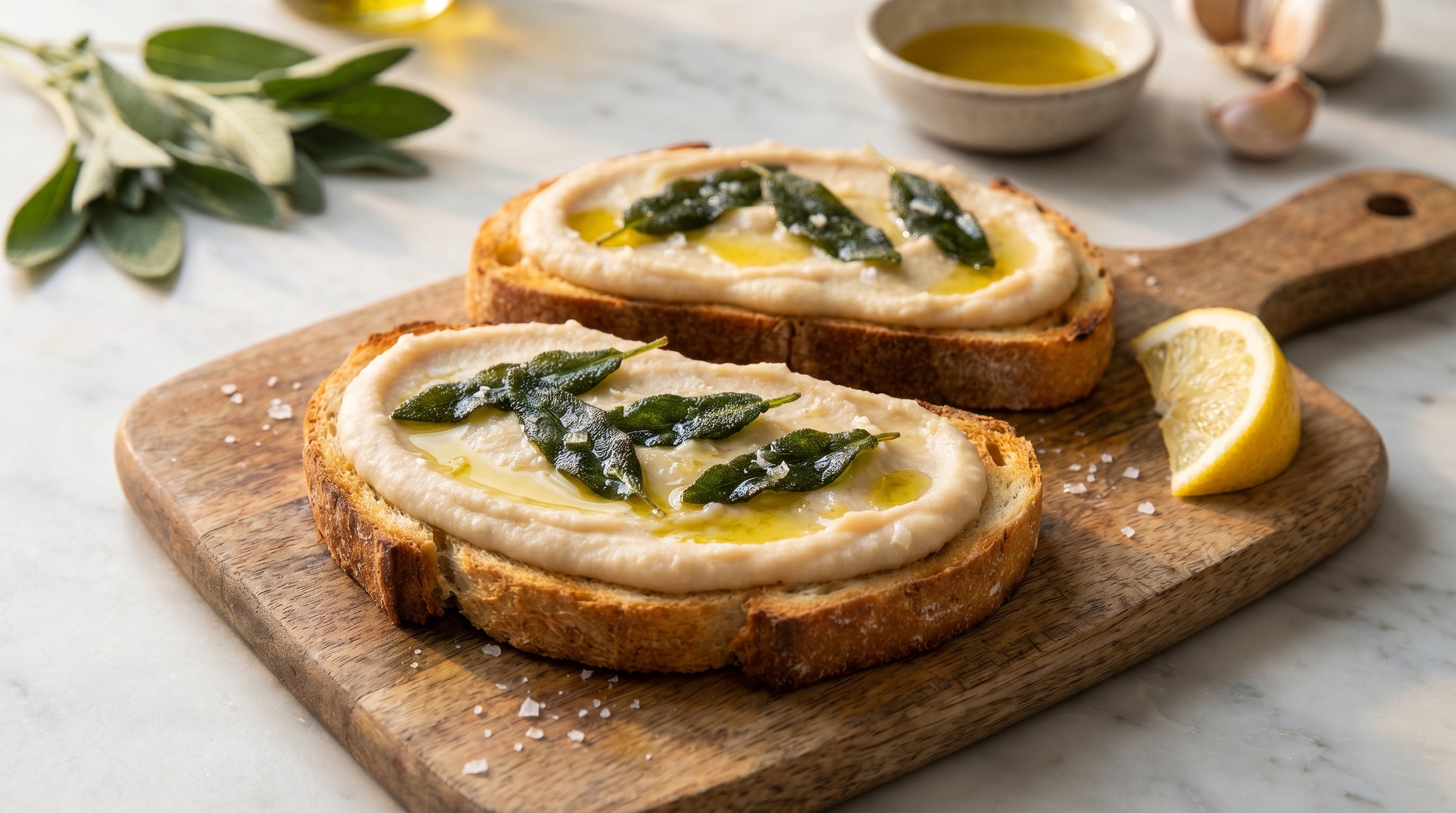
Bruschetta con Cannellini e Salvia (White Bean and Crispy Sage Bruschetta)
Fiber-rich cannellini beans mashed with garlic and lemon on sourdough toast, crowned with crispy fried sage — a low-GI Italian antipasto in 15 minutes.
This elegant bruschetta proves that blood-sugar-friendly eating and Italian simplicity are natural partners. Cannellini beans are a glycemic standout: their combination of plant protein and soluble fiber creates a slow, steady glucose curve rather than the sharp spike you'd get from a plain bread appetizer. Mashed with raw garlic, fresh lemon juice, and good olive oil, they become a luxuriously creamy spread that needs nothing else.
The bread matters. Sourdough's natural fermentation produces organic acids that measurably lower the glycemic response compared to conventional white bread — studies show reductions of 25–30%. Whole-grain rye is even better, with a GI in the low 40s. Either choice gives you a sturdy, flavorful base that works with your metabolism rather than against it. Rubbing the hot toast with a raw garlic clove is a classic Tuscan trick that infuses every bite without overpowering the beans.
Fried sage leaves are the finishing touch that elevates this from snack to something worth sitting down for. A brief swim in hot olive oil turns them brittle, translucent, and intensely aromatic — all crunch and herbal perfume. The sage-infused oil left behind becomes your drizzle. Pair this bruschetta with a side salad dressed in vinegar to further blunt any glucose response, and eat the vegetables first if you can. The entire dish comes together in under fifteen minutes, making it an ideal starter when you want something impressive without effort.
Blood Sugar Impact
Low to moderate impact — the cannellini beans provide protein, fiber, and resistant starch that significantly slow glucose absorption, while the sourdough's fermentation process lowers its effective GI compared to regular bread. Expect a gentle, sustained rise with stable energy for 2-3 hours.
Blood Sugar Tips
- ✓ Eat the bean topping first before biting into the bread to front-load fiber and protein, which slows gastric emptying and blunts the carbohydrate response from the sourdough.
- ✓ Drizzle extra olive oil generously — the healthy fats further slow glucose absorption and increase satiety.
- ✓ Take a 10-15 minute walk after eating to help your muscles absorb circulating glucose and flatten the post-meal curve.
🥗 Ingredients
- 2 pcs Sourdough bread
- 240 g Cannellini beans
- 1 pcs Garlic
- 16 pcs Sage
- 3 tbsp Extra virgin olive oil
- 1 tbsp Lemon juice
- 0.5 tsp Flaky sea salt
- 0.25 tsp Black pepper
- 2 pcs Sourdough bread
- 8.5 oz Cannellini beans
- 1 pcs Garlic
- 16 pcs Sage
- 3 tbsp Extra virgin olive oil
- 1 tbsp Lemon juice
- 0.5 tsp Flaky sea salt
- 0.25 tsp Black pepper
👨🍳 Instructions
- 1
Place the bread slices under a hot grill or into a toaster and cook until they are golden-brown and firm to the touch. The goal is a crisp surface that will hold the bean spread without turning soggy.
- 2
While the toast is still hot, take half of the garlic clove and rub the cut side across the surface of each slice. The rough, warm bread acts like a grater, releasing garlic oils directly into the crust.
- 3
Warm 1 tablespoon of olive oil in a small saucepan over medium-low heat. Mince the remaining garlic half, add it to the pan, and stir gently for about 1 minute until fragrant and softened but not browned.
- 4
Add the drained cannellini beans and lemon juice to the saucepan. Stir everything together and let the beans warm through for about 2 minutes, allowing them to absorb the garlic and citrus flavours.
- 5
Remove the pan from the heat. Using a fork or the back of a spoon, mash the beans to a rough, textured spread — leave some pieces intact for body. Season generously with salt and black pepper, then taste and adjust.
- 6
Heat the remaining 2 tablespoons of olive oil in a small frying pan over medium-high heat. When the surface shimmers, lay the sage leaves in a single layer. Fry for 30 to 45 seconds until they stop sizzling, darken slightly, and turn translucent. Lift them out with a slotted spoon and set on a paper towel to crisp as they cool. Reserve the sage-infused oil in the pan.
- 7
Spoon the bean mixture generously onto each garlic-rubbed toast, spreading it thickly to the edges. Arrange 3 to 4 crispy sage leaves on top of each bruschetta, pressing them lightly into the beans.
- 8
Drizzle the reserved sage-infused oil from the frying pan over each bruschetta. Finish with a pinch of flaky sea salt and a crack of black pepper, then serve immediately while the toast is still warm and the sage is crisp.
📊 Nutrition Per Serving
| Per Serving | Whole Dish | |
|---|---|---|
| Calories | 453 | 905 |
| Carbs | 53g | 106g |
| Sugars | 2g | 4g |
| Natural Sugars | 2g | 4g |
| Protein | 13g | 26g |
| Fat | 22g | 44g |
| Saturated Fat | 3g | 7g |
| Unsaturated Fat | 19g | 37g |
| Fiber | 10g | 19g |
| Soluble Fiber | 1g | 2g |
| Insoluble Fiber | 2g | 4g |
| Sodium | 910mg | 1819mg |
Predicted Glucose Response
What if you...
Estimated model — individual responses vary. Not medical advice.
🔄 Lower GI Swaps
Sourdough has a moderate GI (~54). Whole grain rye (GI ~41), sprouted grain bread (GI ~36), and pumpernickel (GI ~41) all produce a significantly lower blood sugar spike due to higher fiber content and intact grain structure that slows glucose absorption.
Cannellini beans have a moderate GI (~31). Chickpeas (GI ~28), green lentils (GI ~22), and black beans (GI ~24) have even lower glycemic indexes, providing a slower, more sustained release of glucose into the bloodstream.
While raw garlic already has a negligible glycemic impact, roasting or using black garlic concentrates flavor so you can use less bread per serving as a vehicle, indirectly helping to lower the overall glycemic load of the dish.
🔬 The Science Behind This Recipe
Here's the science explainer section:
---
Why This Bruschetta Loves Your Blood Sugar
This isn't your typical bruschetta — and your blood sugar will notice the difference. The star here is the cannellini bean topping, which transforms a simple piece of toast into a balanced, slow-digesting meal. White beans are packed with both fiber and plant protein, two nutrients that act like a gentle brake on digestion. Instead of bread sugars rushing into your bloodstream all at once, the beans create a slower, steadier release of energy. Think of it like the difference between pouring water from a bucket versus letting it flow through a garden hose — same amount, very different impact.
Sourdough bread already has a leg up on regular white bread thanks to its fermentation process, which partially breaks down starches and produces organic acids that slow glucose absorption. But the real magic happens when you pair it with a generous drizzle of extra virgin olive oil. The healthy fats in olive oil further slow gastric emptying — the rate at which food leaves your stomach — giving your body more time to process those carbohydrates gradually. This is why the estimated GI of this dish sits at just 27, well within the low-glycemic range.
Here's a practical tip worth remembering: the concept of glycemic load tells us that *how much* carbohydrate you eat matters just as much as *what kind*. At 14.2 per serving, this recipe's glycemic load is moderate and very manageable. To get even more benefit, try eating any side salad or vegetables before reaching for the bruschetta, and consider a short 10-15 minute walk after your meal — both are simple, evidence-backed strategies that can further smooth out your body's glucose response. Every ingredient in this dish is pulling its weight to keep your energy steady and satisfying.
Related recipes
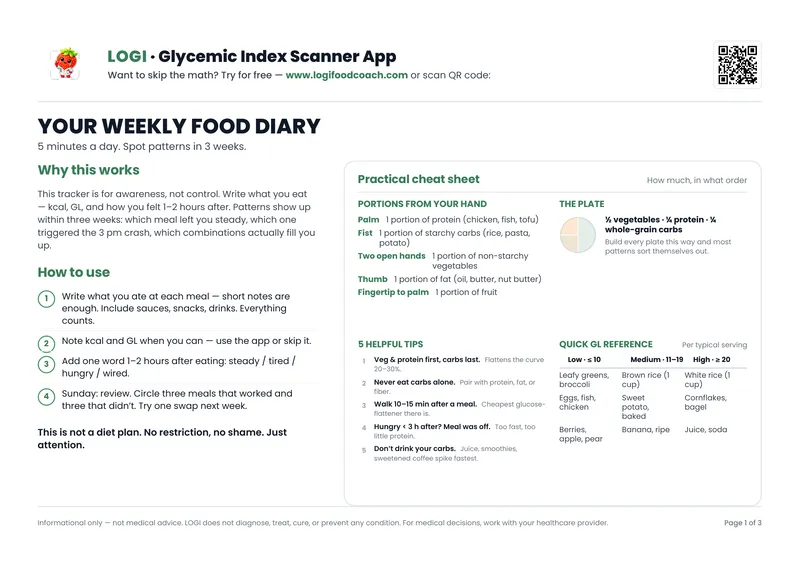
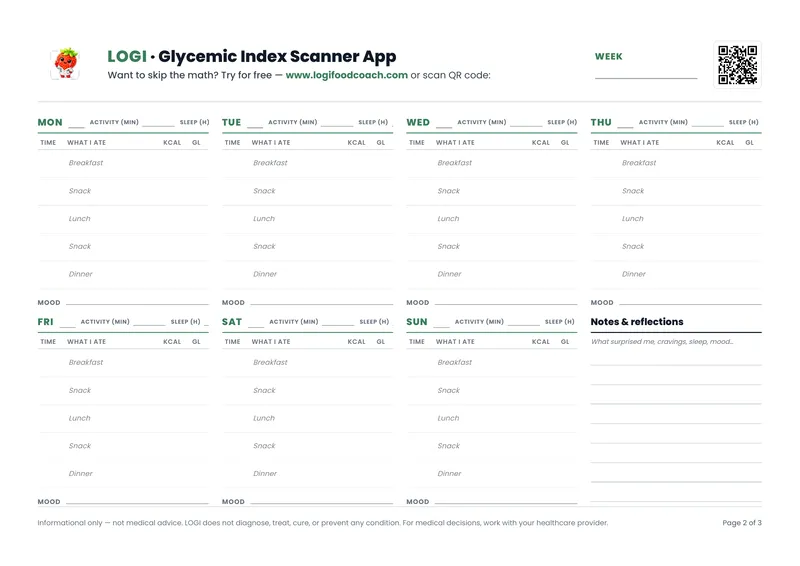
Free PDF — 3 pages
Your Weekly Food Journal
Track meals, glycemic load & mood. Spot patterns in 3 weeks.
No spam. Unsubscribe anytime.