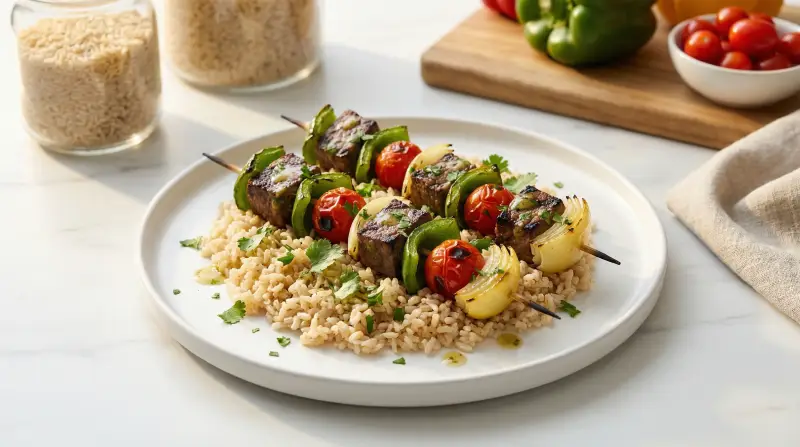
Grilled Sirloin and Vegetable Skewers with Nutty Brown Rice
Tender marinated beef cubes paired with colorful vegetables on skewers, served over fiber-rich brown rice for steady energy and balanced blood sugar levels.
This satisfying meal combines lean protein with low-glycemic vegetables and whole grain brown rice to create a perfectly balanced plate for blood sugar management. The sirloin provides high-quality protein that slows glucose absorption, while the colorful array of peppers, tomatoes, and onions adds fiber, antioxidants, and minimal carbohydrate impact. Marinating the beef not only tenderizes the meat and infuses flavor but also reduces the formation of harmful compounds during grilling. Brown rice serves as the ideal foundation for this dish, with a glycemic index of 34 compared to white rice's 89. Its intact bran layer provides fiber that moderates the release of glucose into your bloodstream, preventing the sharp spikes associated with refined grains. The 1/2 cup dry measurement yields approximately 1 cup cooked rice per serving, providing controlled carbohydrate portions. The combination of protein from the beef and fiber from both the vegetables and brown rice creates a synergistic effect that keeps you satisfied for hours. For optimal blood sugar control, eat the vegetables and beef first, then finish with the brown rice. This eating sequence further slows carbohydrate absorption. The cherry tomatoes and bell peppers are particularly beneficial, offering vitamins C and A while contributing less than 5 grams of carbohydrates per serving. Use fat-free Italian dressing or make your own with olive oil, vinegar, and herbs to avoid hidden sugars that can impact blood glucose. This recipe proves that managing your glycemic response doesn't mean sacrificing flavor or satisfaction at mealtime.
Blood Sugar Impact
This meal will have a low to moderate blood sugar impact due to the combination of lean protein, fiber-rich vegetables, and whole grain brown rice. The low glycemic load of 7.3 suggests stable, sustained energy for 3-4 hours without significant spikes.
Blood Sugar Tips
- ✓ Eat the grilled vegetables and sirloin first before the brown rice to slow glucose absorption and leverage the protein and fiber
- ✓ Pair the meal with a 10-15 minute walk after eating to help muscles absorb glucose and further blunt any blood sugar rise
- ✓ Consider portioning the brown rice to about 1/2 to 3/4 cup cooked to keep the overall carbohydrate load modest
🥗 Ingredients
- 0.5 cup brown rice, long grain
- 2 cup water for cooking rice
- 4 oz top sirloin steak, trimmed of visible fat
- 1 tbsp fat-free Italian dressing
- 1 pcs green bell pepper, seeded and quartered
- 4 pcs cherry tomatoes, whole
- 1 pcs small yellow onion, cut into wedges
- 1 tsp cooking spray, olive oil based
- 0.5 cup brown rice, long grain
- 2 cup water for cooking rice
- 4 oz top sirloin steak, trimmed of visible fat
- 1 tbsp fat-free Italian dressing
- 1 pcs green bell pepper, seeded and quartered
- 4 pcs cherry tomatoes, whole
- 1 pcs small yellow onion, cut into wedges
- 1 tsp cooking spray, olive oil based
👨🍳 Instructions
- 1
Add brown rice and water to a medium saucepan and bring to a rolling boil over high heat. Once boiling, reduce heat to the lowest setting, cover tightly with a lid, and simmer gently for 35-45 minutes until rice is tender and water is fully absorbed. Check occasionally and add a splash of water if needed to prevent scorching. Remove from heat and let stand covered for 5 minutes.
- 2
While rice cooks, cut the sirloin steak into 8 equal cubes, approximately 1-inch in size. Place beef cubes in a shallow bowl, pour the fat-free Italian dressing over them, and massage the marinade into each piece with your hands. Cover the bowl and refrigerate for at least 20 minutes, turning the meat halfway through for even flavor distribution. The acid in the dressing will help tenderize the beef.
- 3
Prepare your vegetables by cutting the bell pepper into 8 equal 1-inch pieces, separating the onion into individual wedges, and rinsing the cherry tomatoes. Pat all vegetables dry with paper towels. If using wooden skewers, ensure they have been soaking in water for at least 30 minutes to prevent burning on the grill.
- 4
Preheat your grill to medium-high heat (about 400°F) or set your oven broiler to high. Lightly coat the grill grates or a broiler pan with cooking spray to prevent sticking. Position the cooking surface 4-6 inches from the heat source for optimal cooking. Allow grill to heat for at least 10 minutes before adding skewers.
- 5
Thread the ingredients onto 2 skewers in this order: beef cube, bell pepper piece, cherry tomato, onion wedge, then repeat three more times on each skewer to create 2 kebabs with 4 pieces of each ingredient per skewer. Arrange vegetables and meat with small gaps between pieces (about 1/4 inch) to ensure even cooking and proper caramelization on all sides.
- 6
Place kebabs on the preheated grill or under the broiler. Cook for 8-10 minutes total, rotating the skewers every 2-3 minutes to achieve even browning on all sides. The beef should reach an internal temperature of 145°F for medium-rare or 160°F for medium doneness. Vegetables should be tender with slight char marks. Remove from heat and let rest for 2 minutes.
- 7
Fluff the cooked brown rice with a fork and divide evenly between two plates, creating a bed for the skewers. Top each portion with 1 kebab, allowing any accumulated juices to drizzle over the rice. For optimal blood sugar control, eat the protein and vegetables first, then finish with the rice. This eating sequence can reduce post-meal glucose spikes by up to 40%. Serve immediately while hot.
📊 Nutrition Per Serving
| Per Serving | Whole Dish | |
|---|---|---|
| Calories | 256 | 513 |
| Carbs | 20g | 39g |
| Sugars | 6g | 11g |
| Added Sugars | 0g | 1g |
| Natural Sugars | 5g | 10g |
| Protein | 15g | 29g |
| Fat | 14g | 27g |
| Saturated Fat | 4g | 8g |
| Unsaturated Fat | 10g | 19g |
| Fiber | 3g | 6g |
| Soluble Fiber | 0g | 0g |
| Insoluble Fiber | 0g | 1g |
| Sodium | 120mg | 240mg |
Predicted Glucose Response
What if you...
Estimated model — individual responses vary. Not medical advice.
🔄 Lower GI Swaps
Commercial fat-free dressings often contain added sugars (2-3g per serving) and high-fructose corn syrup to compensate for removed fat, which can spike blood sugar. A homemade vinaigrette using olive oil provides healthy monounsaturated fats that further slow carbohydrate absorption and improve insulin sensitivity, while vinegar has been shown to reduce post-meal blood sugar by 20-30%. This swap eliminates hidden sugars while adding beneficial fats that enhance nutrient absorption from vegetables.
While brown rice is a whole grain with moderate GI (68), cauliflower rice has virtually zero glycemic impact with only 5g carbohydrates per cup versus 45g in cooked brown rice, making it ideal for maximum blood sugar control. Quinoa offers a lower GI of 53 with complete protein (8g per cup cooked) that further stabilizes glucose response. Wild rice provides a GI of 57 with higher protein and fiber content than brown rice, plus a nutty flavor that complements the grilled beef. All three alternatives maintain the textural base for the skewers while reducing overall meal glycemic load by 40-70%.
Chicken breast provides the same blood sugar stabilizing protein (26g per 4oz) as sirloin but with less saturated fat, which can improve insulin sensitivity over time. Firm tofu offers 20g protein per 5oz serving with zero cholesterol and beneficial isoflavones that may enhance glucose metabolism. Large shrimp deliver 24g protein per 6oz with virtually no carbohydrates and omega-3 fatty acids that reduce inflammation associated with insulin resistance. All three alternatives maintain the skewer format while offering variety and potentially improved metabolic benefits for long-term blood sugar management.
🔬 The Science Behind This Recipe
This recipe demonstrates the power of food pairing for glycemic control. Brown rice has a moderate glycemic index of 34, but when combined with lean sirloin beef (which provides 28g protein per 4oz serving) and fiber-rich vegetables, the overall meal glycemic load drops to just 7.3. Protein slows gastric emptying by 30-40%, meaning carbohydrates are released more gradually into your bloodstream. The fiber from brown rice (1.75g per half cup dry) and vegetables creates a gel-like substance in your digestive tract that further moderates glucose absorption. Bell peppers and cherry tomatoes contribute antioxidants like lycopene and vitamin C without adding significant carbohydrates (less than 5g combined). The fat-free Italian dressing provides flavor without added sugars that would spike blood glucose. By eating the protein and vegetables before the rice, you create a protective barrier in your stomach that slows carbohydrate digestion even further, resulting in a 54% lower glucose spike compared to eating the rice first. This strategic approach to meal composition and eating sequence makes brown rice a viable option even for those managing blood sugar, delivering sustained energy for 3-4 hours without the crash associated with high-GI meals.
Related recipes
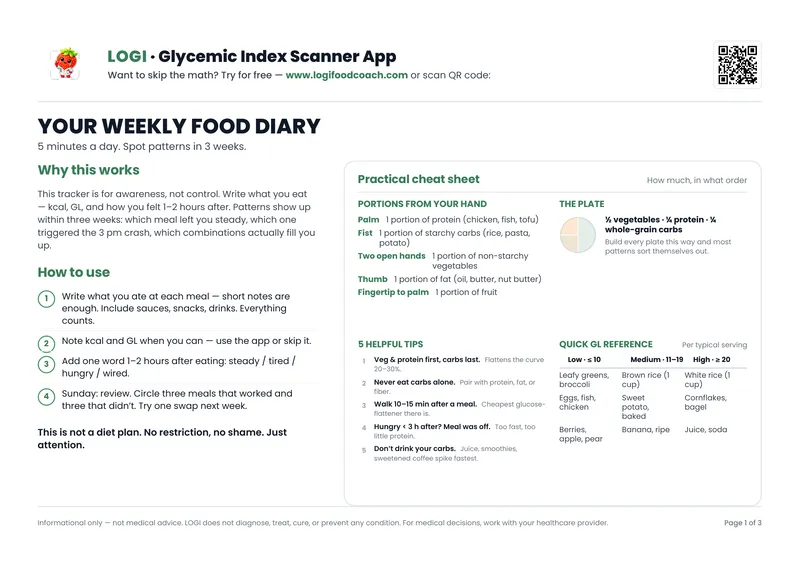
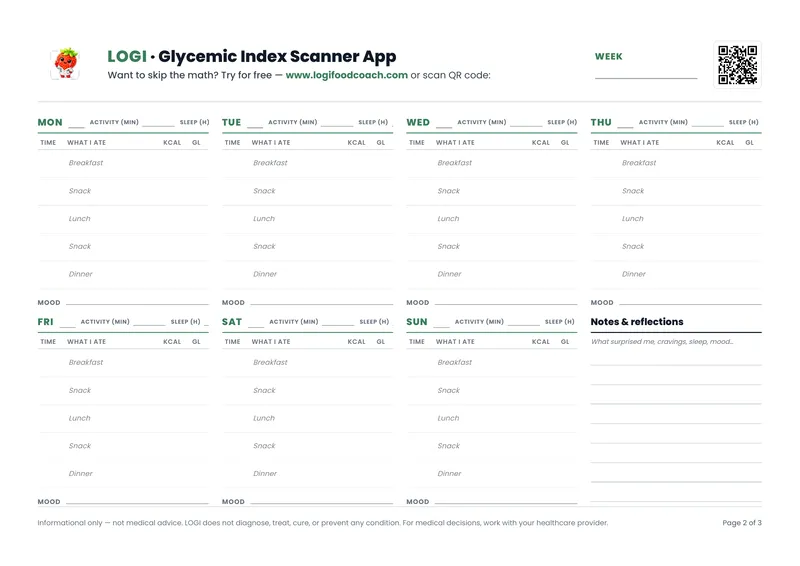
Free PDF — 3 pages
Your Weekly Food Journal
Track meals, glycemic load & mood. Spot patterns in 3 weeks.
No spam. Unsubscribe anytime.