Instant Noodles and Blood Sugar — What Actually Happens, and How to Eat Them Better
A packet of instant noodles is one of the most quietly disruptive foods you can eat if you are watching your blood sugar.
It is not the worst thing on the supermarket shelf — sugar-frosted breakfast cereal, white bread, sweetened yoghurt drinks all push glucose higher. But instant noodles tend to fly under the radar. They are savoury rather than sweet, they feel like a “real meal” rather than a snack, and most people eat them in a hurry without really thinking about what is in the bowl. The result is a fast, sharp glucose rise that catches people who are otherwise careful by surprise.
This piece looks at what is actually happening in the bowl, why it lands the way it does, and four small adjustments that change the shape of the glucose curve without asking you to give up instant noodles entirely. The aim is not to demonise the food — most of us reach for it at some point — but to understand it well enough to make better choices when we do.
What is in a typical packet
A standard packet of instant noodles — Nissin Cup Noodles, Shin Ramyun, Maggi, Indomie, Nongshim, Mama — varies in detail but follows the same template:
- 60 to 90 grams of pre-fried, dried wheat noodles
- a powdered or paste seasoning packet (salt, MSG, dried vegetables, flavour compounds)
- sometimes a small sachet of oil or chilli paste
The noodles themselves are refined wheat flour, fried briefly in palm oil to dehydrate them, then dried. This combination of refined starch plus frying creates a texture that rehydrates quickly when boiling water hits it, and a starch structure that digests very quickly in the small intestine.
A single packet typically contains:
- 50 to 65 grams of carbohydrate
- 2 to 3 grams of fibre (so most of the carbohydrate is the rapidly-digested kind)
- 7 to 10 grams of protein (mostly from the wheat, which is not a high-quality protein source)
- 14 to 20 grams of fat (mainly from the frying oil)
- 1,500 to 2,400 mg of sodium
The glycemic index of plain instant noodles is around 50 to 60. That sounds moderate. The glycemic load per packet is where the problem lies: published values for typical packets sit between 28 and 40 per serving. For comparison, a slice of white bread has a glycemic load of about 10. A small bowl of cooked white rice (150 g) is around 24. A packet of instant noodles is one of the harder single-meal glucose loads in everyday food.
Why the spike is sharper than the GI number suggests
The published glycemic index of a food is measured in a lab, on a fasted volunteer, eating the food on its own with water. Real-life eating is different. Three things conspire to make instant noodles hit harder than the lab number predicts:
The noodles are pre-cooked and dehydrated. Pre-fried, dried noodles rehydrate into a structure that digests faster than freshly cooked pasta or homemade noodles. The starch granules have already been gelatinised once in manufacturing. Your small intestine does less work to break them down.
The meal is usually eaten quickly. Instant noodles are convenience food. Most people eat them in five to ten minutes, often standing at a counter or in front of a screen. Faster eating produces a steeper glucose curve for any starchy meal — the body has less time to release insulin in proportion to what is arriving.
There is almost no protein or fibre to slow things down. The seasoning packet adds salt and flavour but no meaningful nutrition. The noodles themselves have a small amount of low-quality protein and very little fibre. Nothing in the bowl is doing the work that protein, fat and fibre normally do to flatten a glucose curve.
The combination produces what people with continuous glucose monitors often describe as a “narrow tower” — a fast rise to a high peak, then a fast fall, often with a noticeable energy slump an hour or two later as glucose comes back down. Those slumps are part of why a packet of instant noodles can leave you hungry again surprisingly quickly.
Four adjustments that change the shape of the curve
You do not have to give up instant noodles to make them less disruptive. Four small changes, used together, can move the glycemic load of the meal down meaningfully and slow the rise considerably.
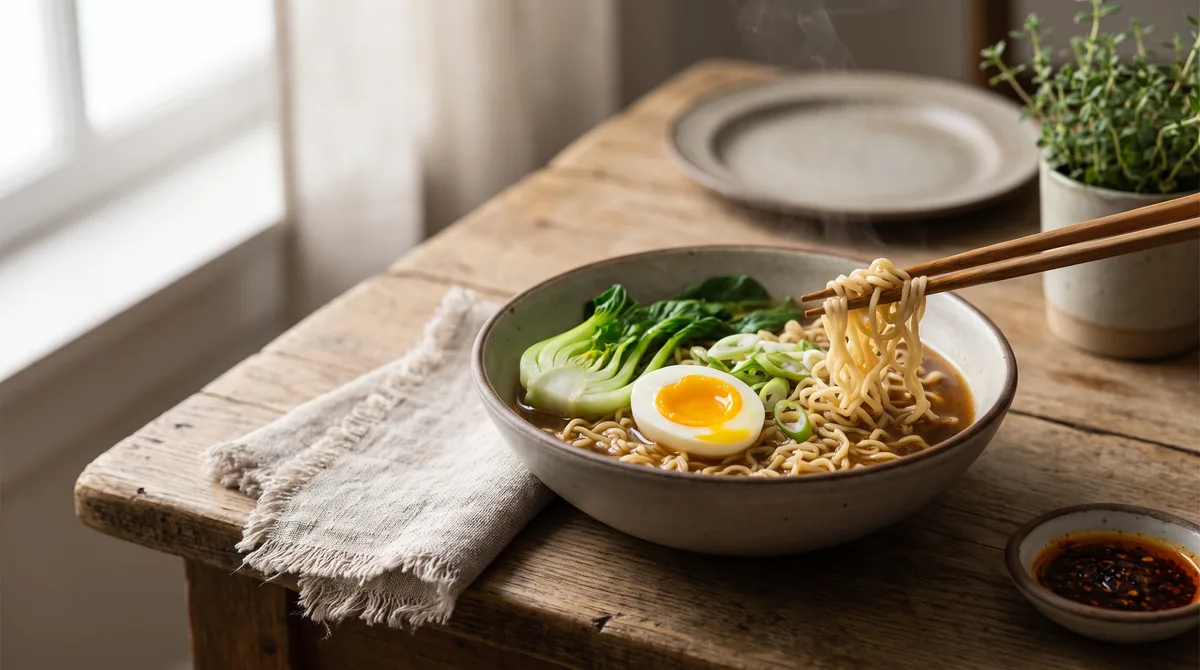
Add a protein. This is the single biggest lever. Two eggs cracked into the bowl while the noodles cook, a piece of leftover grilled chicken sliced on top, a small tin of sardines, half a block of firm tofu cubed in, a handful of edamame. Twenty grams of protein in the bowl is enough to noticeably soften the glucose response. Eggs are the easiest option because they are almost always at hand and they cook in the same boiling water.
Add a vegetable. A handful of frozen spinach, a few stalks of bok choy, half a sliced cucumber on the side, kimchi spooned in at the end, sautéed mushrooms, leftover stir-fried greens. The fibre slows starch digestion and the volume helps you feel full on a smaller portion of noodles. Frozen vegetables work fine for this. The point is not haute cuisine — it is putting something in the bowl that is not refined wheat.
Use less of the noodle block. Most adults can eat half to two-thirds of a standard packet and still feel that they had a meal, especially with protein and vegetables added. Half a packet of noodles brings the carbohydrate load from 50–65 g down to 25–32 g, which is a meaningfully gentler curve. The leftover dry noodle block keeps fine in the cupboard for tomorrow.
Skip half the seasoning packet, or use a smaller amount. Instant noodle seasoning is engineered to taste intense — it is supposed to do the flavour work that real broth and aromatics would do in a slower-cooked dish. Using half the packet, especially when you have added a protein and a vegetable that bring their own savour, drops the sodium load considerably and makes the meal land less aggressively overall. High sodium does not directly raise blood sugar, but it tends to push people towards more carbohydrate-heavy comfort foods later in the day; lower sodium meals are easier to follow with sensible choices afterwards.
A bowl of instant noodles built this way — half a packet of noodles, half the seasoning, two eggs, a handful of greens, a spoonful of kimchi — comes in at a glycemic load of around 15 to 18, which is the same band as a moderate rice or pasta dish. It is still not as gentle as something like chawanmushi or miso soup with tofu, but it is far from the steep narrow tower of a plain packet.
What about “low-carb” or “konjac” noodle alternatives
There are reasonable alternatives if you reach for instant noodles often enough that the small adjustments do not feel like enough.
Konjac (shirataki) noodles are made from glucomannan fibre. They have almost no carbohydrate, almost no calories, and a slightly rubbery texture that takes some adjusting to. They work well in soup-style dishes where the broth and toppings do the flavour work. A packet of dry instant seasoning over konjac noodles with eggs and greens is an unusual but genuinely low-glycemic bowl.
Buckwheat soba noodles (look for 100% buckwheat — many supermarket versions are mostly wheat) have a glycemic index closer to 45 and a higher protein content than wheat noodles. They take five to seven minutes to cook fresh, which is slower than instant but not dramatically so.
Chickpea or lentil pasta varieties have come a long way in the last five years. Most have glycemic loads about half of conventional wheat pasta and considerably more protein and fibre. They can be used as a base for instant-noodle-style quick soups with stock cubes and frozen vegetables.
None of these are required. They are options for people who eat instant noodles often enough that a structural change makes sense.
A note for people watching their weight
If weight management is part of why you are paying attention to how food affects blood sugar, instant noodles deserve some specific attention. The combination of fast carbohydrate, low protein, and high sodium tends to produce hunger again within two to three hours of eating — which often pushes people towards a second meal or snack sooner than they would have otherwise. Over a week, that pattern can add up to several hundred extra calories that nobody quite remembers eating.
The same four adjustments above — protein, vegetables, less noodle, less seasoning — also tend to make the meal more satisfying for longer, which is the more useful lever for weight than counting individual calories.
Weight management is not just about food, though. The three things that show up over and over again in the research are: what you eat, how you move, and how you sleep. None of them work in isolation. If you are eating better, moving regularly, and sleeping well and weight still feels stuck, that is a reasonable point to talk to a doctor or a registered dietitian. If weight is affecting your mental or physical health, that conversation is worth having sooner rather than later.
The bigger picture
Instant noodles are a useful case study because they reveal how three things conspire to make a food more glucose-disruptive than its label suggests: the processing, the speed of eating, and the absence of anything to slow the meal down. Once you can see those three factors in instant noodles, you can see them in other foods too — breakfast cereal eaten quickly with milk, white-bread sandwiches eaten at a desk in five minutes, supermarket sushi with a sweet sauce eaten standing up.
The fix is structurally the same in every case. Add a protein. Add a vegetable. Slow down a little. Use less of the refined-starch base than the package suggests. The names of the foods change. The principle does not.
Instant noodles are not the enemy. Eating them five times a week with nothing else in the bowl, in five minutes, at a desk, is the part worth changing.
Logi is an app for understanding how food affects blood sugar. It is not a substitute for medical advice. If you have insulin resistance, prediabetes or diabetes, talk to your doctor or a registered dietitian before making significant changes to how you eat.
Related recipes

Low-Glycemic Instant Pot Tofu Scramble with Greens
A protein-rich, blood sugar-friendly breakfast ready in 20 minutes. Packed with fiber from greens and tomatoes, this savory scramble keeps you satisfied.

Creamy Peanut Chicken Noodles with Low-GI Adaptations
Tender chicken and crisp vegetables in a rich peanut sauce, served over low-glycemic noodles for stable blood sugar and lasting satisfaction.

Low-GI Laksa with Shirataki Noodles
Aromatic coconut curry laksa with near-zero-carb shirataki noodles and tender chicken thigh — all the soul-warming richness with minimal blood sugar impact.
Take control of your blood sugar
Scan your meals, track glycemic load, and see your patterns — all in one app.
Start Free Trial →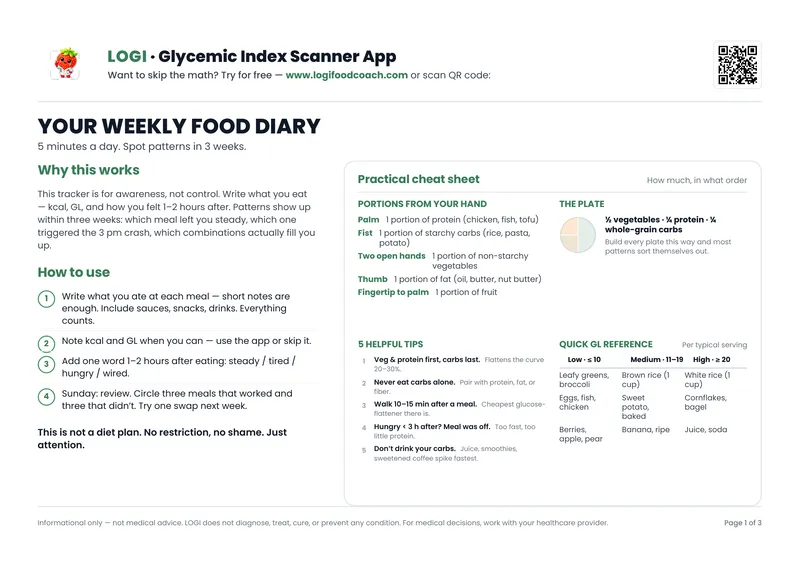
Free PDF — 3 pages
Your Weekly Food Journal
Track meals, glycemic load & mood. Spot patterns in 3 weeks.
No spam. Unsubscribe anytime.